How to Avoid Buying a Flooded Used Car
After every hurricane season, tens of thousands of flooded cars get cleaned up and resold. Here's how to spot one before it ruins you.
Check the car you're reading about
Free VIN decode and recall check
Factory specs and open NHTSA recalls in seconds. No sign-up.

How to avoid buying a flooded used car has become a year-round buyer skill, not just a hurricane-season concern. After major storms, an estimated 350,000 to 500,000 vehicles get totaled by insurance, and a disturbing percentage of those reappear on the used market within 18 months, often with washed titles after being shipped across state lines. Flood damage is brutal because it doesn't show up day one, it surfaces months later as electrical gremlins, mold, and rust eating wiring harnesses from the inside. This guide gives you a complete checklist to catch a flooded car before you write a check.
Why Flooded Cars Keep Reappearing on the Market
Flooded Cars Keep Reappearing on the Market matters more than most car buyers realize. The decisions you make at this stage shape the next 5–10 years of ownership cost, reliability, and resale outcome. Skipping the homework here is exactly how buyers end up overpaying or, worse, locked into a vehicle that drains money for years.
In 2026, the used car market is in a different place than it was even two years ago. Inventory has loosened, off-lease vehicles are returning to dealer lots in large numbers, and average prices have softened from their pandemic peaks. That makes flooded used car a more rewarding question to answer in 2026 than at almost any time in the last five years — but only if you know what to look for.
Think about the 5-year picture, not the first month of ownership. The car that's $1,500 cheaper today but costs $4,000 more to maintain over 5 years isn't actually cheaper. The "boring" choice that holds resale value is often the smart financial choice. Buyers who optimize for the long term consistently end up with more money in their pockets — and ironically, just as much fun on the road.
Quick fact
The average new-car loan in the US in 2026 runs 68 months — meaning today's buyers stay in their cars longer than ever. Choosing well at purchase pays back for years.
Title Washing Across State Lines Explained
The paperwork that protects you most: signed bill of sale (with VIN, mileage, and price), original title (signed over by the seller), proof of any active liens being released, current registration, emissions certificate if your state requires one, and a receipt for any deposit. Take photos of all of it before you drive away. If the seller can't produce the title, do not buy the car — period.
A vehicle history report cuts through guesswork in seconds. Pulling a VIN check before you spend hours on a test drive lets you confirm reported mileage, ownership chain, title brand, accident records, and whether the vehicle has been declared a total loss in any state. The $7.99 spend has saved buyers from five-figure mistakes thousands of times — and at this point in the buying process there's no good reason to skip it.
9 Physical Signs of Hidden Water Damage
Think about the 5-year picture, not the first month of ownership. The car that's $1,500 cheaper today but costs $4,000 more to maintain over 5 years isn't actually cheaper. The "boring" choice that holds resale value is often the smart financial choice. Buyers who optimize for the long term consistently end up with more money in their pockets — and ironically, just as much fun on the road.
In 2026, the used car market is in a different place than it was even two years ago. Inventory has loosened, off-lease vehicles are returning to dealer lots in large numbers, and average prices have softened from their pandemic peaks. That makes flooded used car a more rewarding question to answer in 2026 than at almost any time in the last five years — but only if you know what to look for.
A vehicle history report cuts through guesswork in seconds. Pulling a VIN check before you spend hours on a test drive lets you confirm reported mileage, ownership chain, title brand, accident records, and whether the vehicle has been declared a total loss in any state. The $7.99 spend has saved buyers from five-figure mistakes thousands of times — and at this point in the buying process there's no good reason to skip it.
Electrical Tests Anyone Can Run in the Driveway
In 2026, the used car market is in a different place than it was even two years ago. Inventory has loosened, off-lease vehicles are returning to dealer lots in large numbers, and average prices have softened from their pandemic peaks. That makes flooded used car a more rewarding question to answer in 2026 than at almost any time in the last five years — but only if you know what to look for.
A vehicle history report cuts through guesswork in seconds. Pulling a VIN check before you spend hours on a test drive lets you confirm reported mileage, ownership chain, title brand, accident records, and whether the vehicle has been declared a total loss in any state. The $7.99 spend has saved buyers from five-figure mistakes thousands of times — and at this point in the buying process there's no good reason to skip it.
Think about the 5-year picture, not the first month of ownership. The car that's $1,500 cheaper today but costs $4,000 more to maintain over 5 years isn't actually cheaper. The "boring" choice that holds resale value is often the smart financial choice. Buyers who optimize for the long term consistently end up with more money in their pockets — and ironically, just as much fun on the road.
Smell, Mildew, and HVAC Red Flags
A vehicle history report cuts through guesswork in seconds. Pulling a VIN check before you spend hours on a test drive lets you confirm reported mileage, ownership chain, title brand, accident records, and whether the vehicle has been declared a total loss in any state. The $7.99 spend has saved buyers from five-figure mistakes thousands of times — and at this point in the buying process there's no good reason to skip it.
Think about the 5-year picture, not the first month of ownership. The car that's $1,500 cheaper today but costs $4,000 more to maintain over 5 years isn't actually cheaper. The "boring" choice that holds resale value is often the smart financial choice. Buyers who optimize for the long term consistently end up with more money in their pockets — and ironically, just as much fun on the road.
In 2026, the used car market is in a different place than it was even two years ago. Inventory has loosened, off-lease vehicles are returning to dealer lots in large numbers, and average prices have softened from their pandemic peaks. That makes flooded used car a more rewarding question to answer in 2026 than at almost any time in the last five years — but only if you know what to look for.
Using a VIN Check to Confirm Flood History
A vehicle history report cuts through guesswork in seconds. Pulling a VIN check before you spend hours on a test drive lets you confirm reported mileage, ownership chain, title brand, accident records, and whether the vehicle has been declared a total loss in any state. The $7.99 spend has saved buyers from five-figure mistakes thousands of times — and at this point in the buying process there's no good reason to skip it.
Before you commit to anything, run through a simple inspection routine. Walk the car from front to back. Check tire wear patterns (cupping or feathering points to alignment or suspension issues). Open the hood and look at the engine bay for oil leaks, corroded battery terminals, and aftermarket wiring that could indicate a poorly executed repair. Inside, sit in every seat, test every switch, and pay close attention to dashboard warning lights when you cycle the ignition.
There are a few non-negotiable red flags worth memorizing. Mismatched paint between adjacent panels usually means collision repair. A musty interior smell almost always means water intrusion at some point. Uneven panel gaps suggest frame work. And any seller who refuses to share the VIN before you visit — or insists on a quick cash-only deal — has something to hide. Trust your instincts and walk away when something doesn't add up.
Final Thoughts
Flooded cars are the single most common form of disclosed-but-hidden damage moving through the used market, and even careful buyers fall for them. Inspect the seat tracks, the spare tire well, the seatbelt webbing, and every electrical connector you can reach, then confirm with a database lookup. If the price feels too good for the trim and miles, assume water until proven otherwise. Before any used-car commitment, especially on a vehicle from a coastal or flood-prone state, run a vehicle history report to cross-check title brands, insurance records, and prior registrations.
About the author
CarCheckerVIN Editorial Team
In-house automotive research team
The CarCheckerVIN editorial team combines decades of automotive industry, dealer, and journalism experience to produce trustworthy buying, selling, and ownership guidance backed by NMVTIS, NICB, and manufacturer data.
Keep reading

Consumers Auto Loan: How to Finance Your Next Car Without Getting Burned
A consumers auto loan is the single biggest variable in your car deal — bigger than the sticker price. Here's how to lock in the best rate before you ever step on a lot.
Oct 16, 2026 · 10 min read
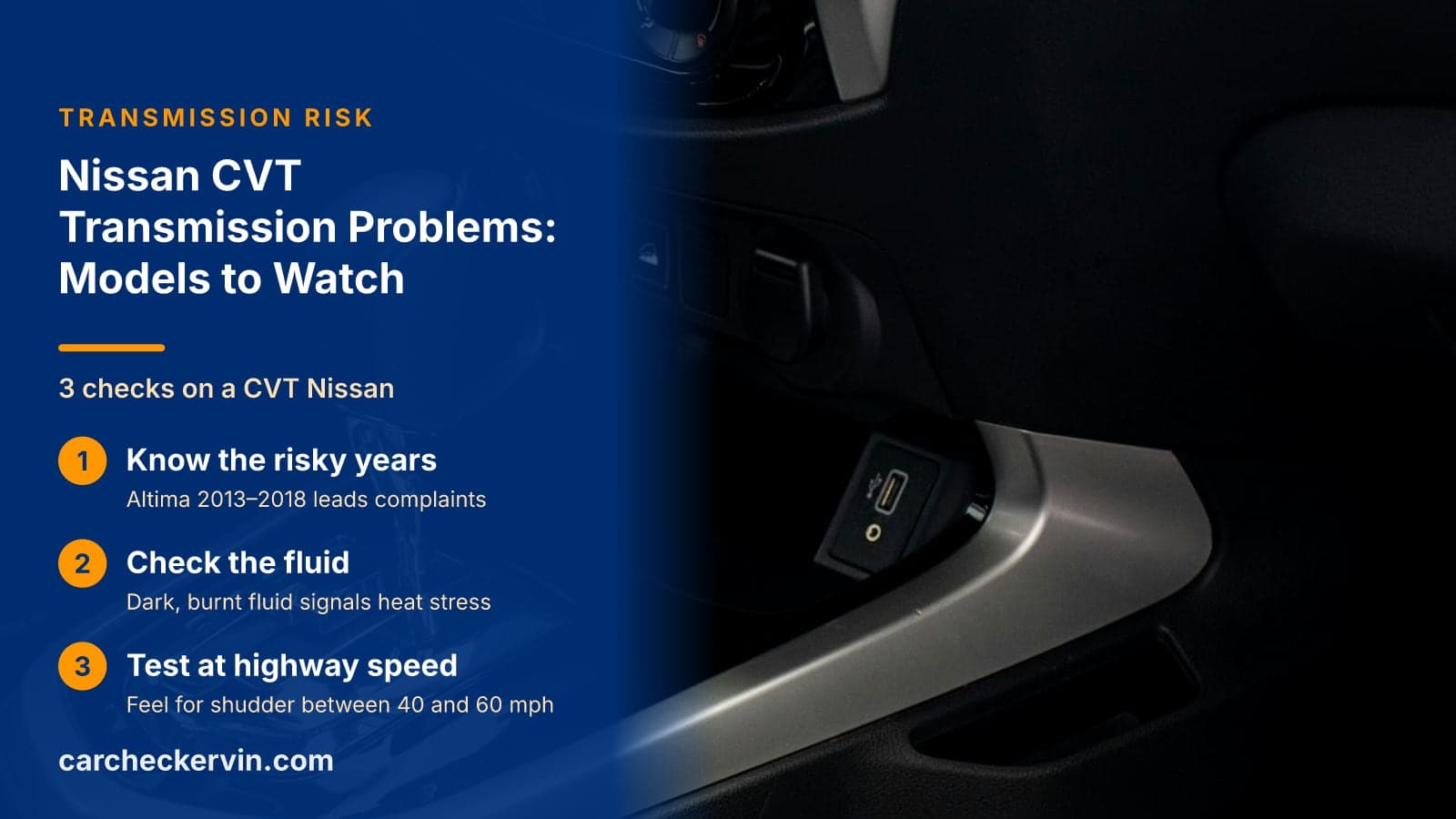
What Nissan Cars Have CVT Transmission Problems — And What to Do Before You Buy
CVT trouble is real across multiple Nissan models. Before you buy a used Altima, Sentra, or Rogue, know which years are risky, what repairs cost, and whether a Nissan CVT transmission recall covers it.
Oct 16, 2026 · 12 min read
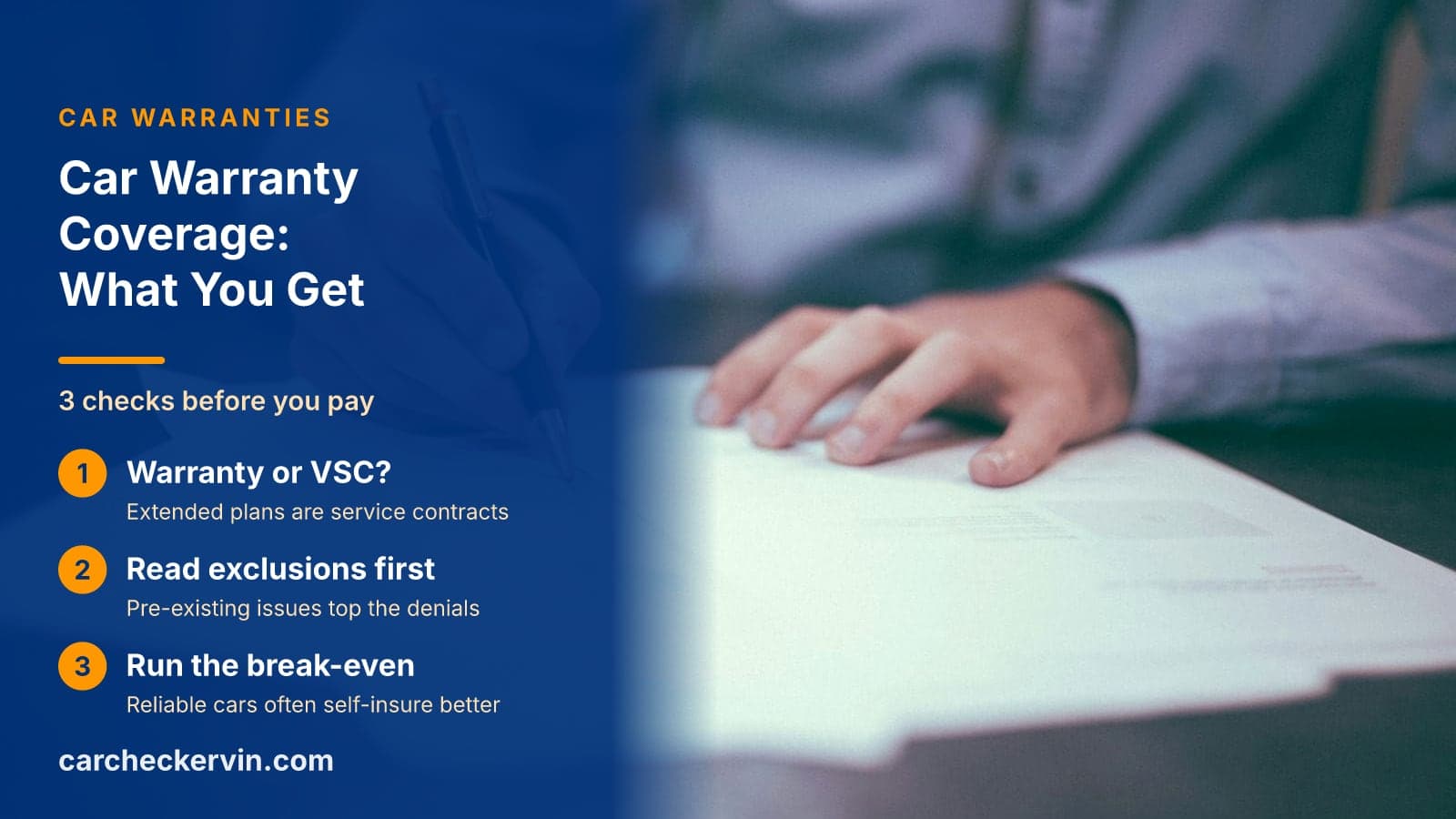
Car Warranty Coverage: What You Actually Get and What to Watch Out For
Before you buy a used car or sign an extended warranty contract, know exactly what car warranty coverage includes, what it excludes, and which plans deliver real value.
Oct 15, 2026 · 11 min read