Best Used Cars Under $10,000 in 2026
Twelve reliable used cars under $10K that won't bleed your wallet on repairs.
Check the car you're reading about
Free VIN decode and recall check
Factory specs and open NHTSA recalls in seconds. No sign-up.
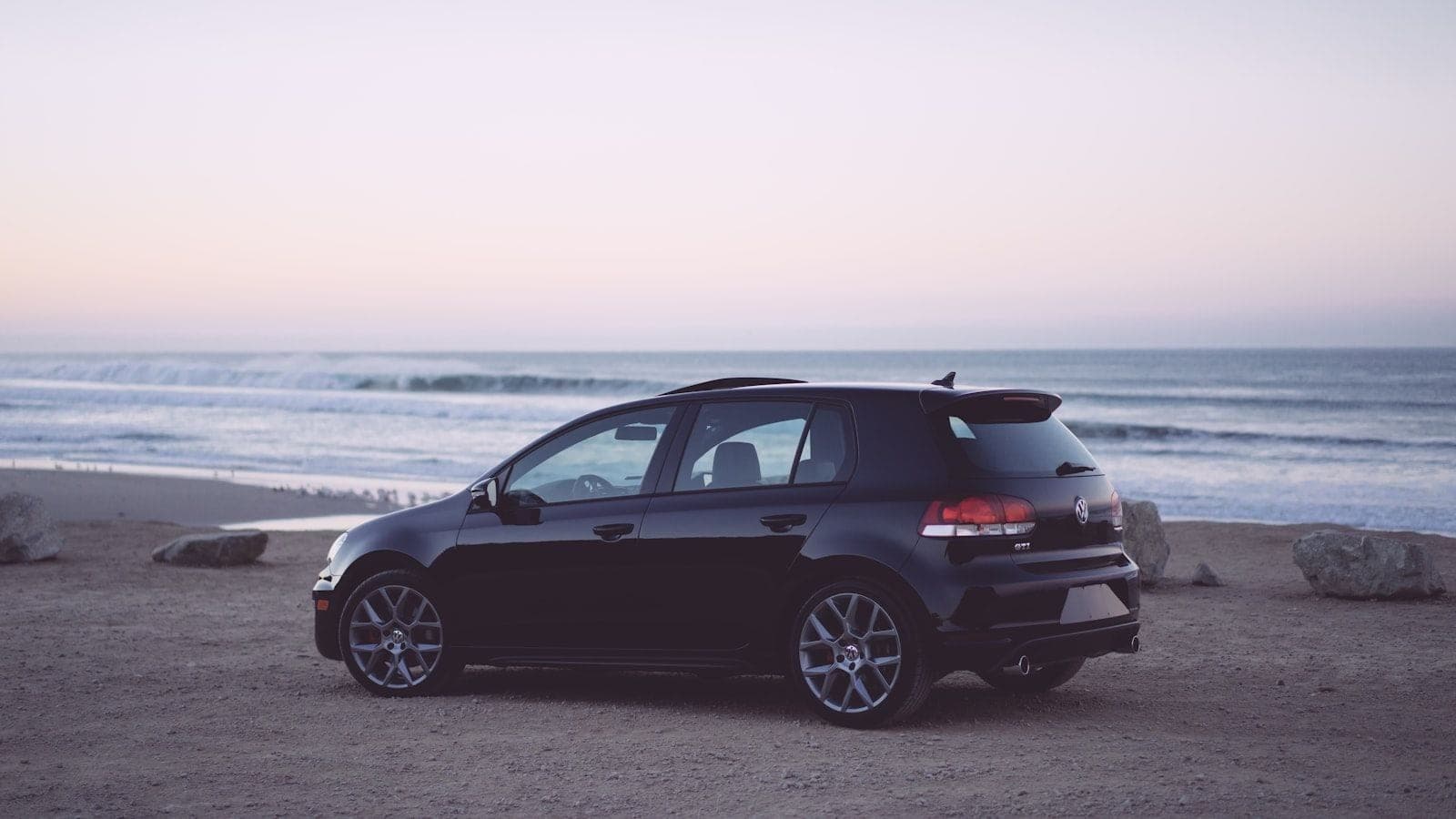
Finding a reliable used car for under $10,000 in 2026 is harder than it was five years ago, but it's still very possible if you know which models hold up and which to walk away from. This guide ranks the 12 most reliable picks under $10K based on Consumer Reports reliability scores, average repair costs from RepairPal, and 5-year resale value data — plus the real-world inspection checks every buyer should run before signing anything.
Why $10,000 Is the Sweet Spot
In 2026, the used car market is in a different place than it was even two years ago. Inventory has loosened, off-lease vehicles are returning to dealer lots in large numbers, and average prices have softened from their pandemic peaks. That makes best used cars under $10000 a more rewarding question to answer in 2026 than at almost any time in the last five years — but only if you know what to look for.
Think about the 5-year picture, not the first month of ownership. The car that's $1,500 cheaper today but costs $4,000 more to maintain over 5 years isn't actually cheaper. The "boring" choice that holds resale value is often the smart financial choice. Buyers who optimize for the long term consistently end up with more money in their pockets — and ironically, just as much fun on the road.
$10,000 Is the Sweet Spot matters more than most car buyers realize. The decisions you make at this stage shape the next 5–10 years of ownership cost, reliability, and resale outcome. Skipping the homework here is exactly how buyers end up overpaying or, worse, locked into a vehicle that drains money for years.
What to Inspect Before You Sign
A vehicle history report cuts through guesswork in seconds. Pulling a VIN check before you spend hours on a test drive lets you confirm reported mileage, ownership chain, title brand, accident records, and whether the vehicle has been declared a total loss in any state. The $7.99 spend has saved buyers from five-figure mistakes thousands of times — and at this point in the buying process there's no good reason to skip it.
Before you commit to anything, run through a simple inspection routine. Walk the car from front to back. Check tire wear patterns (cupping or feathering points to alignment or suspension issues). Open the hood and look at the engine bay for oil leaks, corroded battery terminals, and aftermarket wiring that could indicate a poorly executed repair. Inside, sit in every seat, test every switch, and pay close attention to dashboard warning lights when you cycle the ignition.
There are a few non-negotiable red flags worth memorizing. Mismatched paint between adjacent panels usually means collision repair. A musty interior smell almost always means water intrusion at some point. Uneven panel gaps suggest frame work. And any seller who refuses to share the VIN before you visit — or insists on a quick cash-only deal — has something to hide. Trust your instincts and walk away when something doesn't add up.
Don't skip this
If a seller refuses to let you take the car to an independent mechanic for a pre-purchase inspection, walk away. A real seller has nothing to hide — and the $150 PPI fee is the cheapest insurance in the entire purchase.
Our Top 12 Picks for Under $10,000
Every model below carries above-average reliability across Consumer Reports owner surveys, J.D. Power dependability data, and long-running owner forums. Prices reflect typical private-party asking in mid-2026 for cars in clean condition with 80,000–130,000 miles. Mileage and condition vary widely at this price point, so a VIN check and a pre-purchase inspection are non-negotiable.
1. Toyota Corolla (2014–2017) — $7,500 to $10,000
The default answer for cheap reliable transportation. The 1.8L 4-cylinder is famously durable, the CVT (or available 6-speed manual) holds up well, and parts are everywhere. Real-world fuel economy lands around 32 city / 41 highway. Verify it wasn't a rental fleet car by running a VIN history check — fleet usage is common in this year range.
2. Honda Civic (2014–2016) — $7,800 to $10,000
The R18 1.8L engine in the LX/EX trims is one of the most reliable powertrains Honda has built. Comfortable to live with, easy to find parts for, and excellent resale means you'll get most of your money back when you eventually sell. Skip the 2016 Civic with the 1.5T if you want the simplest ownership experience.
3. Mazda3 (2014–2018) — $7,000 to $10,000
The best-driving compact car you can buy under $10,000. The Skyactiv 2.0L and 2.5L engines are reliable and return mid-30s MPG, and the chassis is genuinely engaging. Watch for worn rear suspension bushings on higher-mileage examples — a $400 repair if caught before it eats tires.
4. Toyota Prius (2012–2015) — $6,500 to $9,500
A 50-MPG hybrid for under $9,000 is hard to beat on running costs. Hybrid battery replacement is the headline fear, but Gen-3 packs commonly last 200,000+ miles, and rebuilt packs run around $1,500 installed. The known weak spot is EGR cooler clogging — ask whether it has been cleaned and confirm with a compression check.
5. Honda Fit (2015–2018) — $8,000 to $10,000
The Magic Seat folds flat in seconds and turns this subcompact into a cargo van. The 1.5L 4-cylinder is bulletproof, real-world fuel economy is in the mid-30s, and the car is so simple that most maintenance is DIY-friendly. Salt-belt examples can hide rust under the rear wheel arches — inspect carefully.
6. Toyota Camry (2012–2014) — $8,000 to $10,000
Mid-size comfort, a roomy back seat, and the same 2.5L 4-cylinder or 3.5L V6 that powers Lexus models. The 4-cylinder on certain build dates can consume oil — check level on the test drive and verify whether the dealer ever performed the oil-control ring service campaign. The V6 is virtually trouble-free.
7. Honda Accord (2013–2015) — $8,500 to $10,000
Refined, comfortable, and the K24 2.4L engine is one of the longest-lived Honda has produced. The CVT-equipped trims need their fluid changed on Honda's schedule (every 30k–40k miles); skipped service is the #1 reason for early failure. The 6-speed manual on Sport trims is a hidden gem if you can find one.
8. Subaru Impreza (2015–2017) — $7,500 to $10,000
Standard all-wheel drive at this price is rare, and that alone makes the Impreza worth a look in snow-belt states. The head-gasket issues that haunted earlier Subarus are mostly behind these years, but verify cooling-system service in the records and look for any oil-coolant cross-contamination on the dipstick.
9. Hyundai Elantra (2017–2019) — $7,500 to $10,000
Big interior, modern infotainment for the price, and you may catch the tail end of Hyundai's 10-year / 100,000-mile powertrain warranty if the car is below the mileage cap and you're the second owner. Stick with the 2.0L Nu engine; the 1.4T in Eco trims has a fussier service interval and a smaller specialist network.
10. Ford Fusion (2013–2015) — $6,500 to $9,500
A genuinely comfortable mid-size with a quiet cabin and big trunk for short money. Critical: avoid the 1.6L EcoBoost — coolant intrusion failure is a documented pattern. Stick to the 2.5L 4-cylinder (the rental-fleet workhorse) or the 2.0L EcoBoost in SE/Titanium trims, both of which are far more reliable.
11. Kia Soul (2014–2017) — $7,000 to $9,500
Cavernous for its footprint, easy to park, and dirt simple to live with. The 2.0L engine is the reliable pick — the 1.6L GDI engine in base trims had piston/oil-consumption issues that triggered a class action, so prefer the 2.0L in Plus or Exclaim trims.
12. Nissan Frontier (2012–2015) — $9,000 to $10,000+
The simplest, toughest small truck you can still buy under $10k. The 4.0L V6 and 5-speed automatic are essentially unkillable. Critical: on 2010–2013 examples, verify the radiator-into-transmission coolant cross-contamination issue was addressed (factory radiator replaced) — if the original radiator is still in there, walk away or budget for a transmission rebuild.
Models to Avoid in This Price Range
The models below appear at attractive prices in this range for a reason — owner-reported failure rates, costly repairs, or shrinking dealer networks make total cost of ownership much higher than the sticker suggests. Avoiding these saves more money than any negotiation tactic on the right car would.
Chrysler 200 (2015–2017)
The ZF 9-speed automatic was the headline issue — harsh shifts, software updates that never fully resolved customer complaints, and replacement costs in the $4,000–$6,000 range. Resale values collapsed accordingly. Easy to find under $7,000, easy to regret.
Dodge Journey (2009–2020)
Underpowered base engine, poor crash-test scores compared to peers, and a Consumer Reports reliability rating that sat at the bottom of the segment for most of its run. Cheap because nobody wants one used.
Fiat 500 / 500L (2012–2019)
Quirky to look at, painful to own. Electrical gremlins are common, parts can take weeks to source, and the U.S. dealer network has shrunk significantly since Stellantis pulled back. Repair anywhere outside a major metro is a real problem.
Nissan Altima (2013–2018)
The Jatco CVT failure rate between 80,000 and 120,000 miles is well documented. Transmission replacement runs $3,500–$5,000 — often more than the car is worth at that mileage. If you must consider one, demand a transmission fluid sample and a recent service record.
Ford Focus (2012–2018, PowerShift dual-clutch)
The DPS6 dual-clutch transmission shuddered, slipped, and failed early enough that Ford settled a class-action lawsuit. Many cars on the market today are post-settlement repairs that may or may not have actually been fixed. Avoid any Focus with the PowerShift; the 6-speed manual is fine.
Jeep Compass / Patriot (2007–2017)
Underwhelming on every axis — CVT durability, interior quality, fuel economy, and crash scores all rate below segment average. Better Jeep options exist for the money, and far better non-Jeep options.
How to Run a VIN Check on a Cheap Car
A vehicle history report cuts through guesswork in seconds. Pulling a VIN check before you spend hours on a test drive lets you confirm reported mileage, ownership chain, title brand, accident records, and whether the vehicle has been declared a total loss in any state. The $7.99 spend has saved buyers from five-figure mistakes thousands of times — and at this point in the buying process there's no good reason to skip it.
Before you commit to anything, run through a simple inspection routine. Walk the car from front to back. Check tire wear patterns (cupping or feathering points to alignment or suspension issues). Open the hood and look at the engine bay for oil leaks, corroded battery terminals, and aftermarket wiring that could indicate a poorly executed repair. Inside, sit in every seat, test every switch, and pay close attention to dashboard warning lights when you cycle the ignition.
There are a few non-negotiable red flags worth memorizing. Mismatched paint between adjacent panels usually means collision repair. A musty interior smell almost always means water intrusion at some point. Uneven panel gaps suggest frame work. And any seller who refuses to share the VIN before you visit — or insists on a quick cash-only deal — has something to hide. Trust your instincts and walk away when something doesn't add up.
Don't skip this
If a seller refuses to let you take the car to an independent mechanic for a pre-purchase inspection, walk away. A real seller has nothing to hide — and the $150 PPI fee is the cheapest insurance in the entire purchase.
Negotiating the Best Deal
Sticker price tells you almost nothing about real ownership cost. Insurance, fuel, scheduled maintenance, and depreciation routinely add up to more than the purchase price over a 5-year hold. When you compare options, look at the total — not just the monthly payment. RepairPal averages, Kelley Blue Book 5-year cost-to-own data, and your own zip code's insurance quotes will paint a much fuller picture than any window sticker ever can.
Negotiation succeeds when you've done the homework everyone else skips. Know the model's market price range from KBB and Edmunds. Know what comparable cars are selling for in your zip code on AutoTrader. Know the dealer's invoice price (not just MSRP) on a new car or trade-in value on a used one. Walking in with that data turns a high-pressure sales pitch into a calm comparison conversation — and that's where the discount lives.
Think about the 5-year picture, not the first month of ownership. The car that's $1,500 cheaper today but costs $4,000 more to maintain over 5 years isn't actually cheaper. The "boring" choice that holds resale value is often the smart financial choice. Buyers who optimize for the long term consistently end up with more money in their pockets — and ironically, just as much fun on the road.
Final Thoughts
Buying a sub-$10K used car is mostly about avoiding the wrong cars. Stick to the picks above, run a full VIN check, get a $100-$150 pre-purchase inspection, and you'll likely get 5-7 trouble-free years out of your purchase. Skip these steps and you're rolling dice with your transportation budget.
About the author
CarCheckerVIN Editorial Team
In-house automotive research team
The CarCheckerVIN editorial team combines decades of automotive industry, dealer, and journalism experience to produce trustworthy buying, selling, and ownership guidance backed by NMVTIS, NICB, and manufacturer data.
Keep reading

Consumers Auto Loan: How to Finance Your Next Car Without Getting Burned
A consumers auto loan is the single biggest variable in your car deal — bigger than the sticker price. Here's how to lock in the best rate before you ever step on a lot.
Oct 16, 2026 · 10 min read
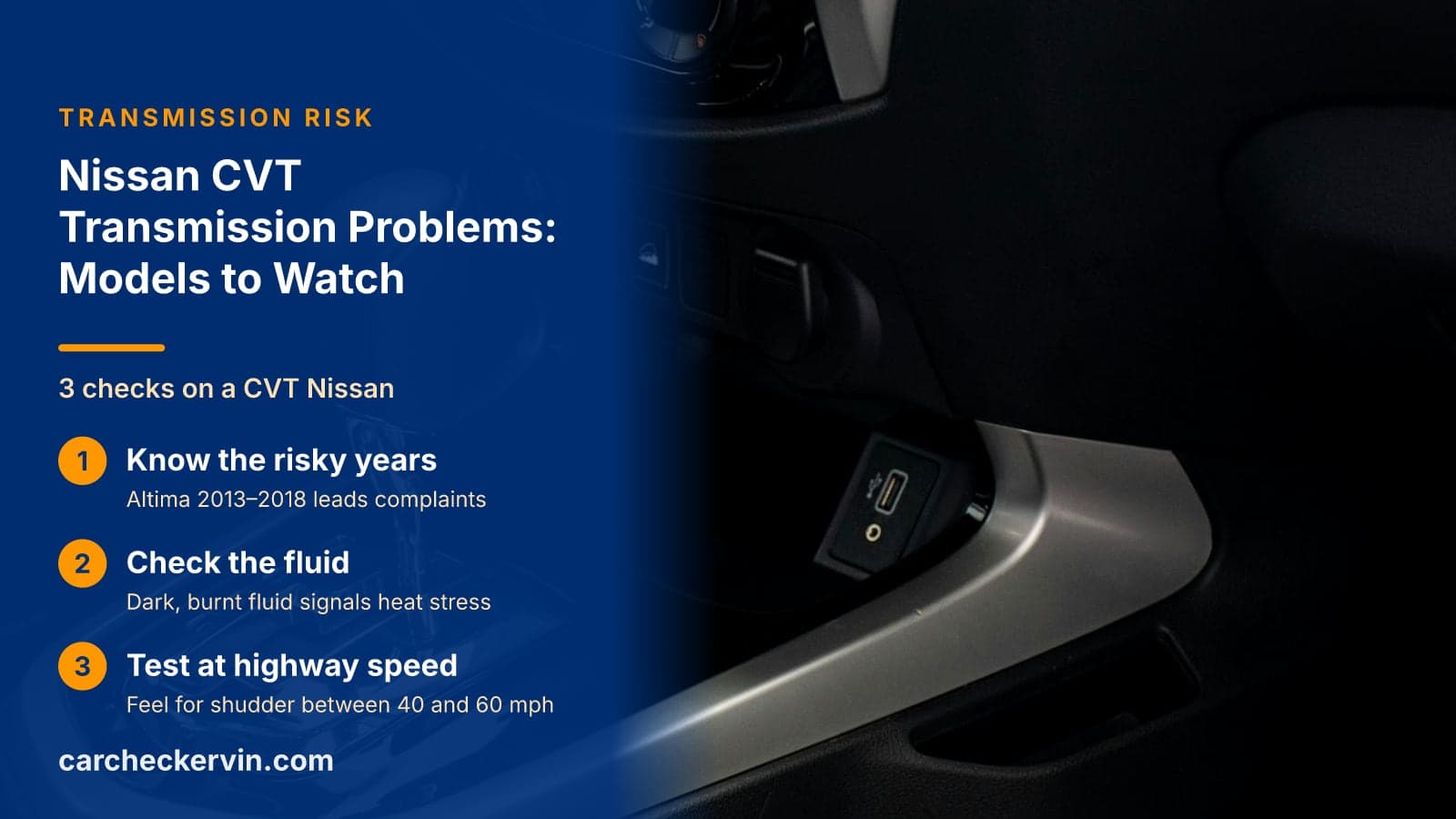
What Nissan Cars Have CVT Transmission Problems — And What to Do Before You Buy
CVT trouble is real across multiple Nissan models. Before you buy a used Altima, Sentra, or Rogue, know which years are risky, what repairs cost, and whether a Nissan CVT transmission recall covers it.
Oct 16, 2026 · 12 min read

Car Warranty Coverage: What You Actually Get and What to Watch Out For
Before you buy a used car or sign an extended warranty contract, know exactly what car warranty coverage includes, what it excludes, and which plans deliver real value.
Oct 15, 2026 · 11 min read