Financing vs Paying Cash for a Car: 2026 Math
Paying cash isn't always the smart move — and financing isn't always the dumb one. Here's the actual math at 2026 rates.
Check the car you're reading about
Free VIN decode and recall check
Factory specs and open NHTSA recalls in seconds. No sign-up.

The financing vs paying cash for a car decision used to have a simple answer: cash, every time. But 2026 changed the math. With average auto loan rates pushing 8 percent and high-yield savings paying north of 5 percent on the same dollars, the spread between borrowing and investing has narrowed dramatically depending on your credit. For some buyers, financing now genuinely wins on net cost. For others, paying cash still saves thousands. Which side you land on depends on three numbers most people never run, and this guide walks you through every one of them.
Where Auto Loan Rates Stand in 2026
Negotiation succeeds when you've done the homework everyone else skips. Know the model's market price range from KBB and Edmunds. Know what comparable cars are selling for in your zip code on AutoTrader. Know the dealer's invoice price (not just MSRP) on a new car or trade-in value on a used one. Walking in with that data turns a high-pressure sales pitch into a calm comparison conversation — and that's where the discount lives.
Get pre-approved before you set foot in a dealership. Credit unions consistently offer the lowest auto loan rates, often 1–3 points below dealer financing. Walking in with a pre-approval letter completely changes the dynamic — the F&I manager has to either beat your rate or lose the financing margin entirely. Either way you win. And never sign a contract you don't fully understand; ask the F&I manager to explain every line item.
The Opportunity Cost of Paying Cash
Sticker price tells you almost nothing about real ownership cost. Insurance, fuel, scheduled maintenance, and depreciation routinely add up to more than the purchase price over a 5-year hold. When you compare options, look at the total — not just the monthly payment. RepairPal averages, Kelley Blue Book 5-year cost-to-own data, and your own zip code's insurance quotes will paint a much fuller picture than any window sticker ever can.
Negotiation succeeds when you've done the homework everyone else skips. Know the model's market price range from KBB and Edmunds. Know what comparable cars are selling for in your zip code on AutoTrader. Know the dealer's invoice price (not just MSRP) on a new car or trade-in value on a used one. Walking in with that data turns a high-pressure sales pitch into a calm comparison conversation — and that's where the discount lives.
Think about the 5-year picture, not the first month of ownership. The car that's $1,500 cheaper today but costs $4,000 more to maintain over 5 years isn't actually cheaper. The "boring" choice that holds resale value is often the smart financial choice. Buyers who optimize for the long term consistently end up with more money in their pockets — and ironically, just as much fun on the road.
When Financing Beats Cash on Pure Math
A vehicle history report cuts through guesswork in seconds. Pulling a VIN check before you spend hours on a test drive lets you confirm reported mileage, ownership chain, title brand, accident records, and whether the vehicle has been declared a total loss in any state. The $7.99 spend has saved buyers from five-figure mistakes thousands of times — and at this point in the buying process there's no good reason to skip it.
Think about the 5-year picture, not the first month of ownership. The car that's $1,500 cheaper today but costs $4,000 more to maintain over 5 years isn't actually cheaper. The "boring" choice that holds resale value is often the smart financial choice. Buyers who optimize for the long term consistently end up with more money in their pockets — and ironically, just as much fun on the road.
In 2026, the used car market is in a different place than it was even two years ago. Inventory has loosened, off-lease vehicles are returning to dealer lots in large numbers, and average prices have softened from their pandemic peaks. That makes financing vs cash car a more rewarding question to answer in 2026 than at almost any time in the last five years — but only if you know what to look for.
When Paying Cash Wins Despite Higher Rates
Think about the 5-year picture, not the first month of ownership. The car that's $1,500 cheaper today but costs $4,000 more to maintain over 5 years isn't actually cheaper. The "boring" choice that holds resale value is often the smart financial choice. Buyers who optimize for the long term consistently end up with more money in their pockets — and ironically, just as much fun on the road.
In 2026, the used car market is in a different place than it was even two years ago. Inventory has loosened, off-lease vehicles are returning to dealer lots in large numbers, and average prices have softened from their pandemic peaks. That makes financing vs cash car a more rewarding question to answer in 2026 than at almost any time in the last five years — but only if you know what to look for.
A vehicle history report cuts through guesswork in seconds. Pulling a VIN check before you spend hours on a test drive lets you confirm reported mileage, ownership chain, title brand, accident records, and whether the vehicle has been declared a total loss in any state. The $7.99 spend has saved buyers from five-figure mistakes thousands of times — and at this point in the buying process there's no good reason to skip it.
The Hybrid Strategy: Big Down + Short Term
In 2026, the used car market is in a different place than it was even two years ago. Inventory has loosened, off-lease vehicles are returning to dealer lots in large numbers, and average prices have softened from their pandemic peaks. That makes financing vs cash car a more rewarding question to answer in 2026 than at almost any time in the last five years — but only if you know what to look for.
A vehicle history report cuts through guesswork in seconds. Pulling a VIN check before you spend hours on a test drive lets you confirm reported mileage, ownership chain, title brand, accident records, and whether the vehicle has been declared a total loss in any state. The $7.99 spend has saved buyers from five-figure mistakes thousands of times — and at this point in the buying process there's no good reason to skip it.
Think about the 5-year picture, not the first month of ownership. The car that's $1,500 cheaper today but costs $4,000 more to maintain over 5 years isn't actually cheaper. The "boring" choice that holds resale value is often the smart financial choice. Buyers who optimize for the long term consistently end up with more money in their pockets — and ironically, just as much fun on the road.
How Credit Score Changes the Whole Equation
Get pre-approved before you set foot in a dealership. Credit unions consistently offer the lowest auto loan rates, often 1–3 points below dealer financing. Walking in with a pre-approval letter completely changes the dynamic — the F&I manager has to either beat your rate or lose the financing margin entirely. Either way you win. And never sign a contract you don't fully understand; ask the F&I manager to explain every line item.
Negotiation succeeds when you've done the homework everyone else skips. Know the model's market price range from KBB and Edmunds. Know what comparable cars are selling for in your zip code on AutoTrader. Know the dealer's invoice price (not just MSRP) on a new car or trade-in value on a used one. Walking in with that data turns a high-pressure sales pitch into a calm comparison conversation — and that's where the discount lives.
Get pre-approved
A 30-minute call to your local credit union can save you $1,500–$3,000 over the life of the loan. Pre-approved buyers also negotiate the actual car price better because they're not distracted by monthly-payment math.
Final Thoughts
Choosing between financing and paying cash is really a choice about where your money works hardest. At today's rates, a buyer with strong credit might come out ahead financing and keeping cash invested, while a buyer with average credit will almost always save by paying outright. Run the actual numbers using your APR offer and your alternative return, not generic advice from a decade ago. Whichever path you take, always pull a VIN check on the car first so neither your cash nor your loan ends up funding a hidden mess.
About the author
CarCheckerVIN Editorial Team
In-house automotive research team
The CarCheckerVIN editorial team combines decades of automotive industry, dealer, and journalism experience to produce trustworthy buying, selling, and ownership guidance backed by NMVTIS, NICB, and manufacturer data.
Keep reading

Consumers Auto Loan: How to Finance Your Next Car Without Getting Burned
A consumers auto loan is the single biggest variable in your car deal — bigger than the sticker price. Here's how to lock in the best rate before you ever step on a lot.
Oct 16, 2026 · 10 min read
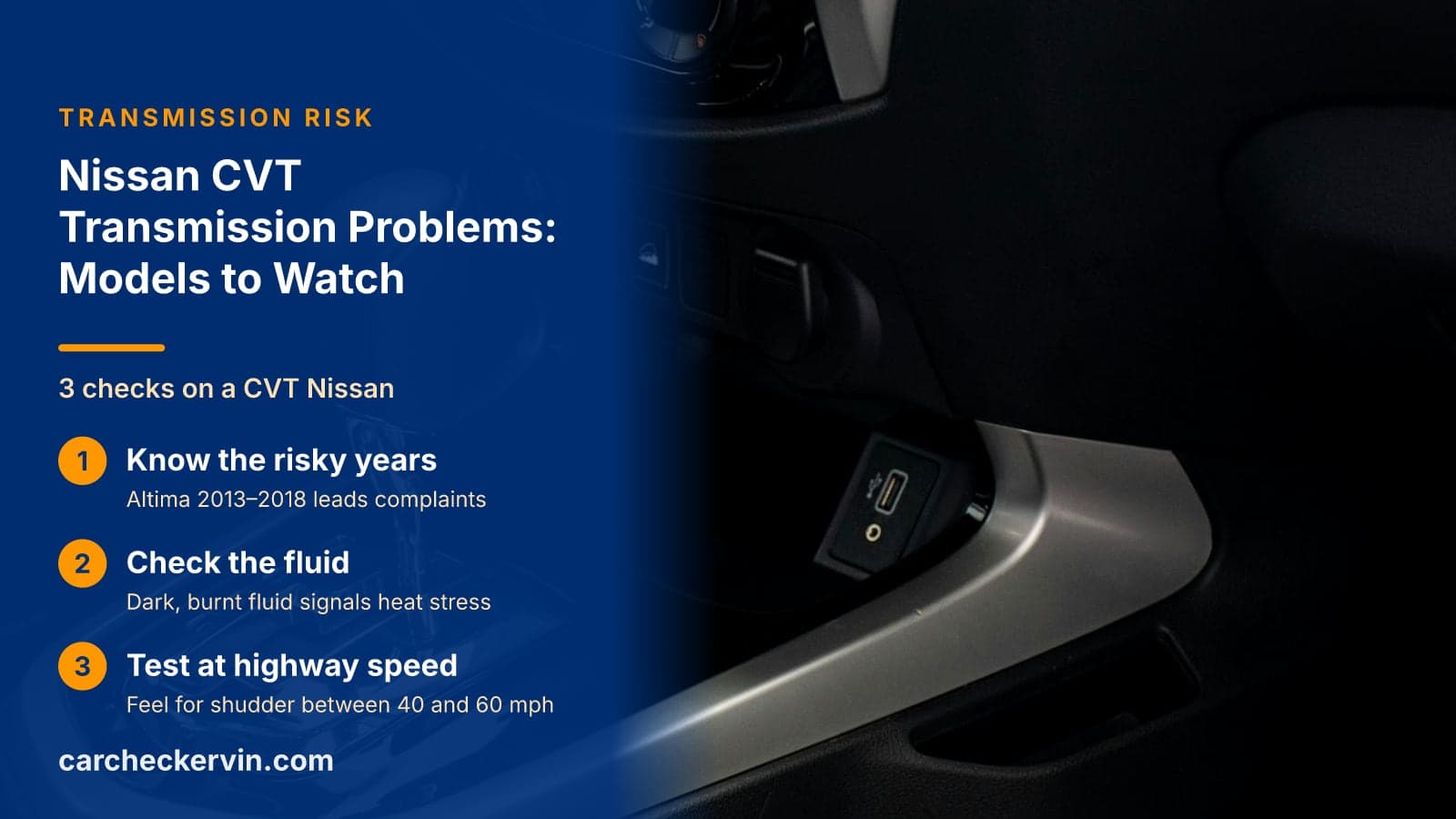
What Nissan Cars Have CVT Transmission Problems — And What to Do Before You Buy
CVT trouble is real across multiple Nissan models. Before you buy a used Altima, Sentra, or Rogue, know which years are risky, what repairs cost, and whether a Nissan CVT transmission recall covers it.
Oct 16, 2026 · 12 min read
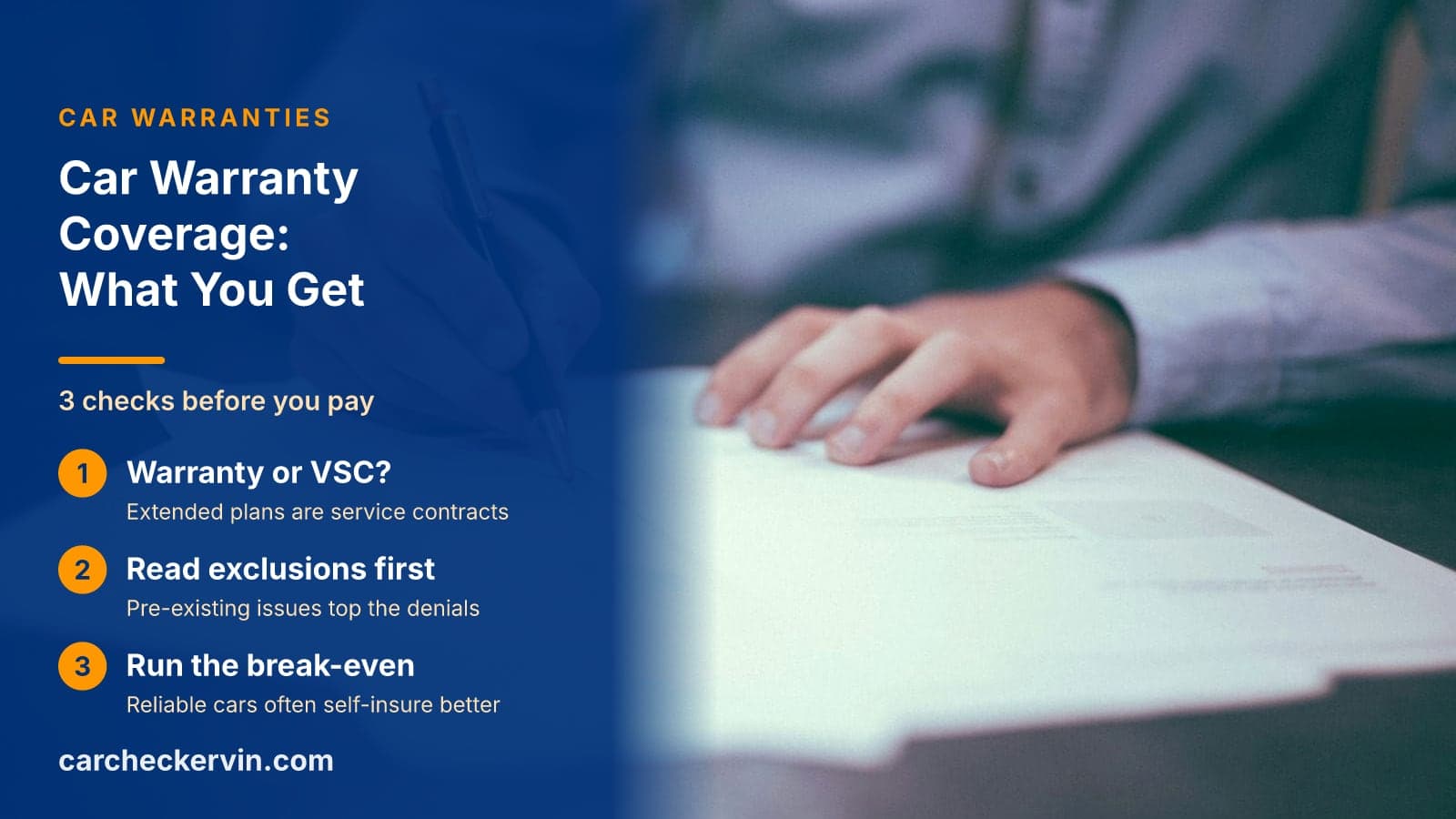
Car Warranty Coverage: What You Actually Get and What to Watch Out For
Before you buy a used car or sign an extended warranty contract, know exactly what car warranty coverage includes, what it excludes, and which plans deliver real value.
Oct 15, 2026 · 11 min read