Spark Plug Replacement: Costs and Intervals
Iridium plugs can last 100,000 miles — copper plugs barely make 30,000. Here's how to know which you have and when they're actually due.
Check the car you're reading about
Free VIN decode and recall check
Factory specs and open NHTSA recalls in seconds. No sign-up.

Spark plugs are the cheapest major tune-up part in your engine, yet skipping them is one of the most common causes of premature ignition coil failure, fuel economy loss, and eventual catalytic converter damage. The interval depends heavily on plug type — copper, platinum, or iridium — and modern engines are far less forgiving of worn plugs than older designs. Knowing the actual interval for your engine, the warning signs, and the fair 2026 cost protects far more than just the plugs themselves.
Why Spark Plugs Matter More Than People Think
Think about the 5-year picture, not the first month of ownership. The car that's $1,500 cheaper today but costs $4,000 more to maintain over 5 years isn't actually cheaper. The "boring" choice that holds resale value is often the smart financial choice. Buyers who optimize for the long term consistently end up with more money in their pockets — and ironically, just as much fun on the road.
Spark Plugs Matter More Than People Think matters more than most car buyers realize. The decisions you make at this stage shape the next 5–10 years of ownership cost, reliability, and resale outcome. Skipping the homework here is exactly how buyers end up overpaying or, worse, locked into a vehicle that drains money for years.
In 2026, the used car market is in a different place than it was even two years ago. Inventory has loosened, off-lease vehicles are returning to dealer lots in large numbers, and average prices have softened from their pandemic peaks. That makes spark plug replacement interval a more rewarding question to answer in 2026 than at almost any time in the last five years — but only if you know what to look for.
Copper, Platinum, and Iridium Lifespans
In 2026, the used car market is in a different place than it was even two years ago. Inventory has loosened, off-lease vehicles are returning to dealer lots in large numbers, and average prices have softened from their pandemic peaks. That makes spark plug replacement interval a more rewarding question to answer in 2026 than at almost any time in the last five years — but only if you know what to look for.
A vehicle history report cuts through guesswork in seconds. Pulling a VIN check before you spend hours on a test drive lets you confirm reported mileage, ownership chain, title brand, accident records, and whether the vehicle has been declared a total loss in any state. The $7.99 spend has saved buyers from five-figure mistakes thousands of times — and at this point in the buying process there's no good reason to skip it.
Think about the 5-year picture, not the first month of ownership. The car that's $1,500 cheaper today but costs $4,000 more to maintain over 5 years isn't actually cheaper. The "boring" choice that holds resale value is often the smart financial choice. Buyers who optimize for the long term consistently end up with more money in their pockets — and ironically, just as much fun on the road.
Real Replacement Intervals by Engine Type
A vehicle history report cuts through guesswork in seconds. Pulling a VIN check before you spend hours on a test drive lets you confirm reported mileage, ownership chain, title brand, accident records, and whether the vehicle has been declared a total loss in any state. The $7.99 spend has saved buyers from five-figure mistakes thousands of times — and at this point in the buying process there's no good reason to skip it.
Think about the 5-year picture, not the first month of ownership. The car that's $1,500 cheaper today but costs $4,000 more to maintain over 5 years isn't actually cheaper. The "boring" choice that holds resale value is often the smart financial choice. Buyers who optimize for the long term consistently end up with more money in their pockets — and ironically, just as much fun on the road.
In 2026, the used car market is in a different place than it was even two years ago. Inventory has loosened, off-lease vehicles are returning to dealer lots in large numbers, and average prices have softened from their pandemic peaks. That makes spark plug replacement interval a more rewarding question to answer in 2026 than at almost any time in the last five years — but only if you know what to look for.
Symptoms of Worn Plugs You Shouldn't Ignore
Think about the 5-year picture, not the first month of ownership. The car that's $1,500 cheaper today but costs $4,000 more to maintain over 5 years isn't actually cheaper. The "boring" choice that holds resale value is often the smart financial choice. Buyers who optimize for the long term consistently end up with more money in their pockets — and ironically, just as much fun on the road.
In 2026, the used car market is in a different place than it was even two years ago. Inventory has loosened, off-lease vehicles are returning to dealer lots in large numbers, and average prices have softened from their pandemic peaks. That makes spark plug replacement interval a more rewarding question to answer in 2026 than at almost any time in the last five years — but only if you know what to look for.
A vehicle history report cuts through guesswork in seconds. Pulling a VIN check before you spend hours on a test drive lets you confirm reported mileage, ownership chain, title brand, accident records, and whether the vehicle has been declared a total loss in any state. The $7.99 spend has saved buyers from five-figure mistakes thousands of times — and at this point in the buying process there's no good reason to skip it.
DIY vs Shop: 2026 Cost Comparison
If you're handy enough to swap your own oil, you can probably handle 80% of routine maintenance: brake pads, air filters, cabin filters, spark plugs, and basic fluid changes. The savings add up — DIY oil changes alone save $40–$80 per service over a quick-lube shop, and brake jobs save $300–$600 per axle. YouTube has a video for nearly every common job on every common car, and the tools you need pay for themselves on the first or second job.
Sticker price tells you almost nothing about real ownership cost. Insurance, fuel, scheduled maintenance, and depreciation routinely add up to more than the purchase price over a 5-year hold. When you compare options, look at the total — not just the monthly payment. RepairPal averages, Kelley Blue Book 5-year cost-to-own data, and your own zip code's insurance quotes will paint a much fuller picture than any window sticker ever can.
Negotiation succeeds when you've done the homework everyone else skips. Know the model's market price range from KBB and Edmunds. Know what comparable cars are selling for in your zip code on AutoTrader. Know the dealer's invoice price (not just MSRP) on a new car or trade-in value on a used one. Walking in with that data turns a high-pressure sales pitch into a calm comparison conversation — and that's where the discount lives.
Why You Should Never Stretch the Interval
You Should Never Stretch the Interval matters more than most car buyers realize. The decisions you make at this stage shape the next 5–10 years of ownership cost, reliability, and resale outcome. Skipping the homework here is exactly how buyers end up overpaying or, worse, locked into a vehicle that drains money for years.
In 2026, the used car market is in a different place than it was even two years ago. Inventory has loosened, off-lease vehicles are returning to dealer lots in large numbers, and average prices have softened from their pandemic peaks. That makes spark plug replacement interval a more rewarding question to answer in 2026 than at almost any time in the last five years — but only if you know what to look for.
Think about the 5-year picture, not the first month of ownership. The car that's $1,500 cheaper today but costs $4,000 more to maintain over 5 years isn't actually cheaper. The "boring" choice that holds resale value is often the smart financial choice. Buyers who optimize for the long term consistently end up with more money in their pockets — and ironically, just as much fun on the road.
Quick fact
The average new-car loan in the US in 2026 runs 68 months — meaning today's buyers stay in their cars longer than ever. Choosing well at purchase pays back for years.
Final Thoughts
Spark plugs are one of the smallest maintenance line items with one of the largest downstream impacts. Stay on the right interval for your plug type, and never let cheap plugs strand expensive coils. Before you buy any used vehicle, run a VIN check and ask for service history — engines that have lived with worn plugs often hide ignition coil and converter damage that won't show up until weeks after you take delivery.
About the author
CarCheckerVIN Editorial Team
In-house automotive research team
The CarCheckerVIN editorial team combines decades of automotive industry, dealer, and journalism experience to produce trustworthy buying, selling, and ownership guidance backed by NMVTIS, NICB, and manufacturer data.
Keep reading
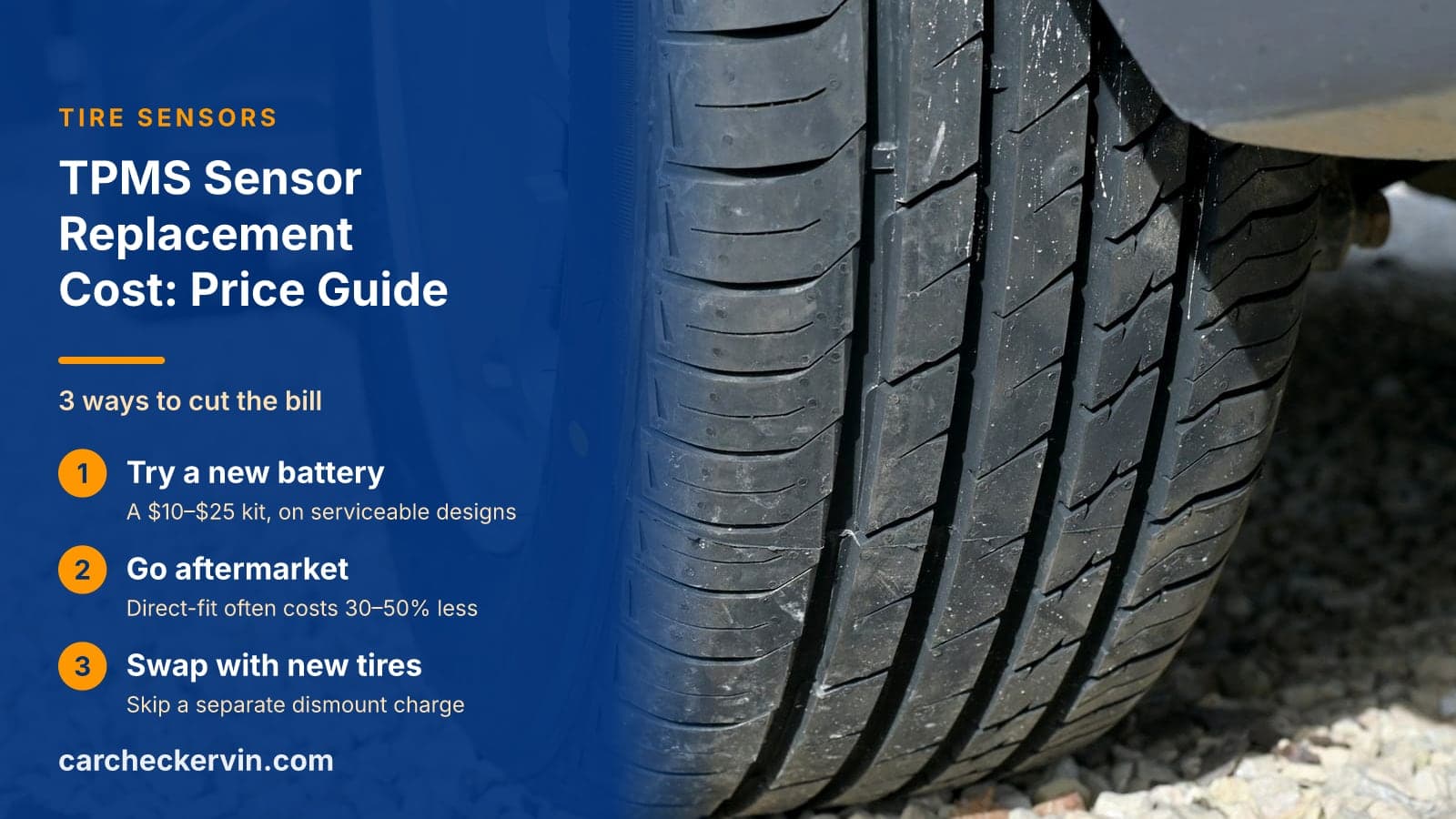
TPMS Sensor Replacement Cost: What You'll Really Pay
Your TPMS light just won't quit. Before you pay a dealer $250 per sensor, here's what every option actually costs — and when a $15 fix might be all you need.
Sep 28, 2026 · 10 min read
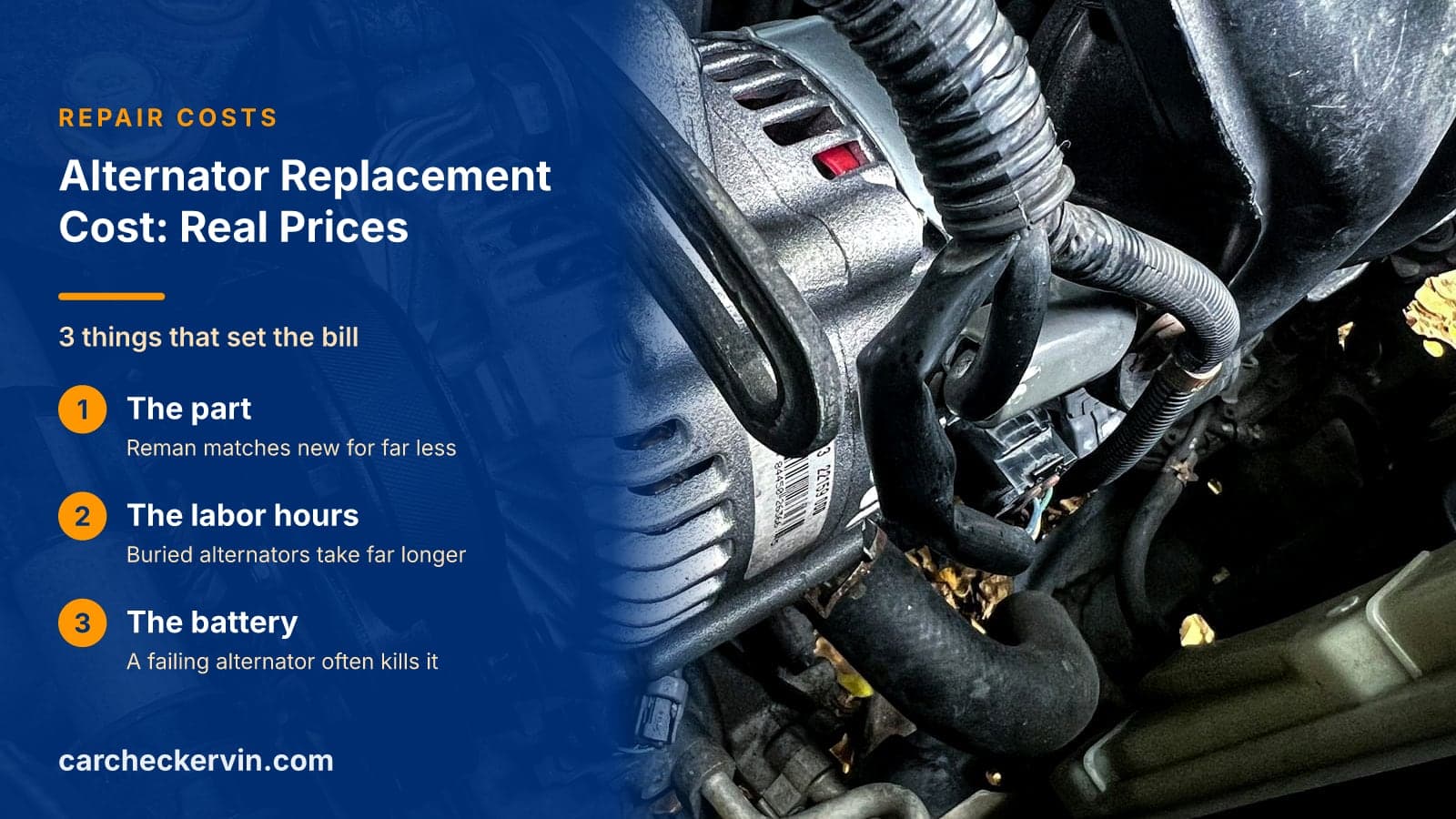
Alternator Replacement Cost: What You'll Actually Pay
Your alternator is dying and you need a number. Here's what alternator replacement actually costs by vehicle type, where to save, and when the repair bill should change your plans for the car.
Sep 28, 2026 · 10 min read
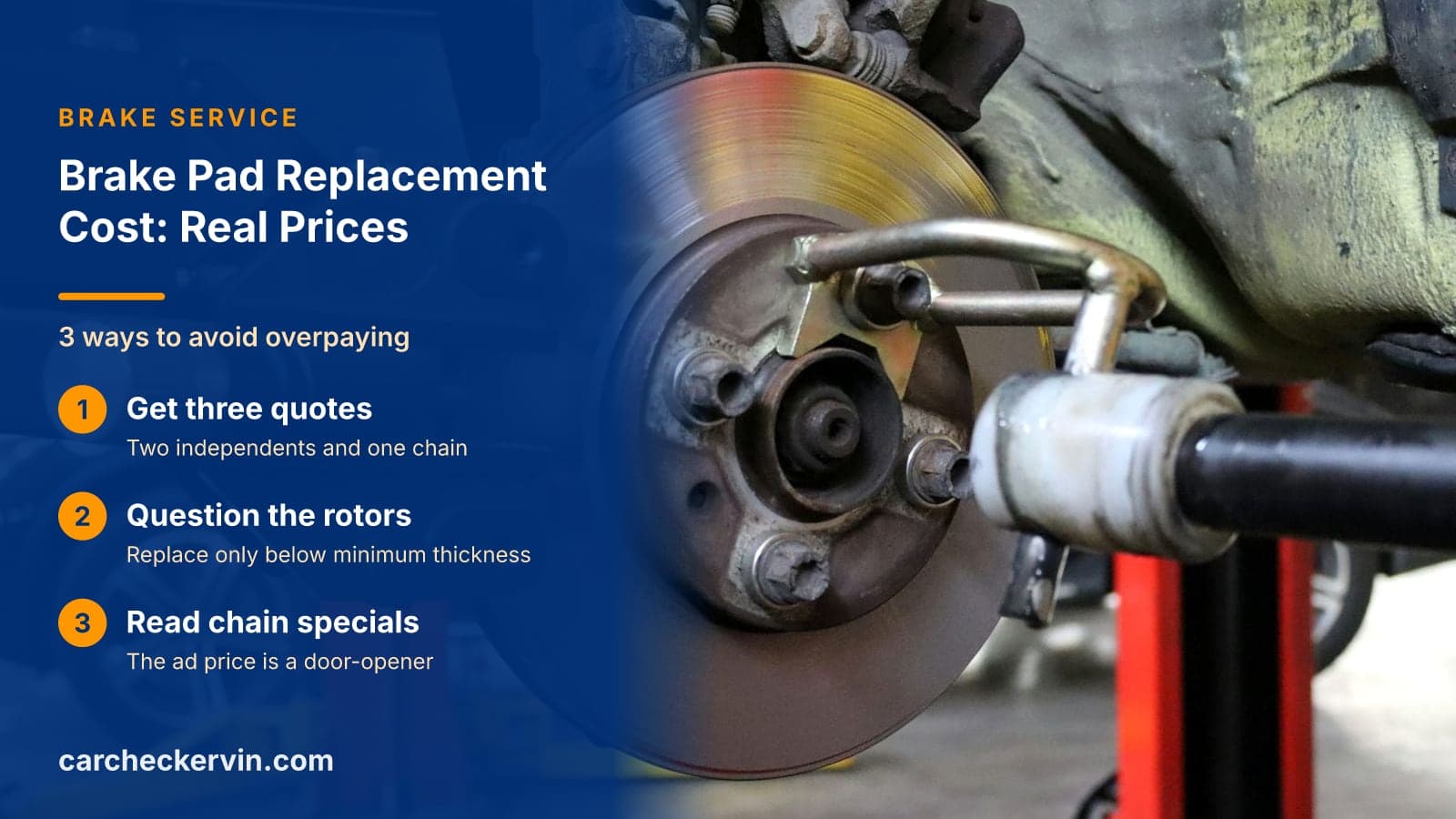
Brake Pad Replacement Cost: What You'll Actually Pay
Brake pad replacement cost varies widely by vehicle and shop. Here's what you'll actually pay per axle, when you can skip rotors, and how to avoid overpaying at chains or dealerships.
Sep 28, 2026 · 9 min read