Timing Belt vs Timing Chain: Maintenance Guide
Skip the timing belt service and your engine can grenade. Here's the difference between belts and chains — and what each one really costs.
Check the car you're reading about
Free VIN decode and recall check
Factory specs and open NHTSA recalls in seconds. No sign-up.
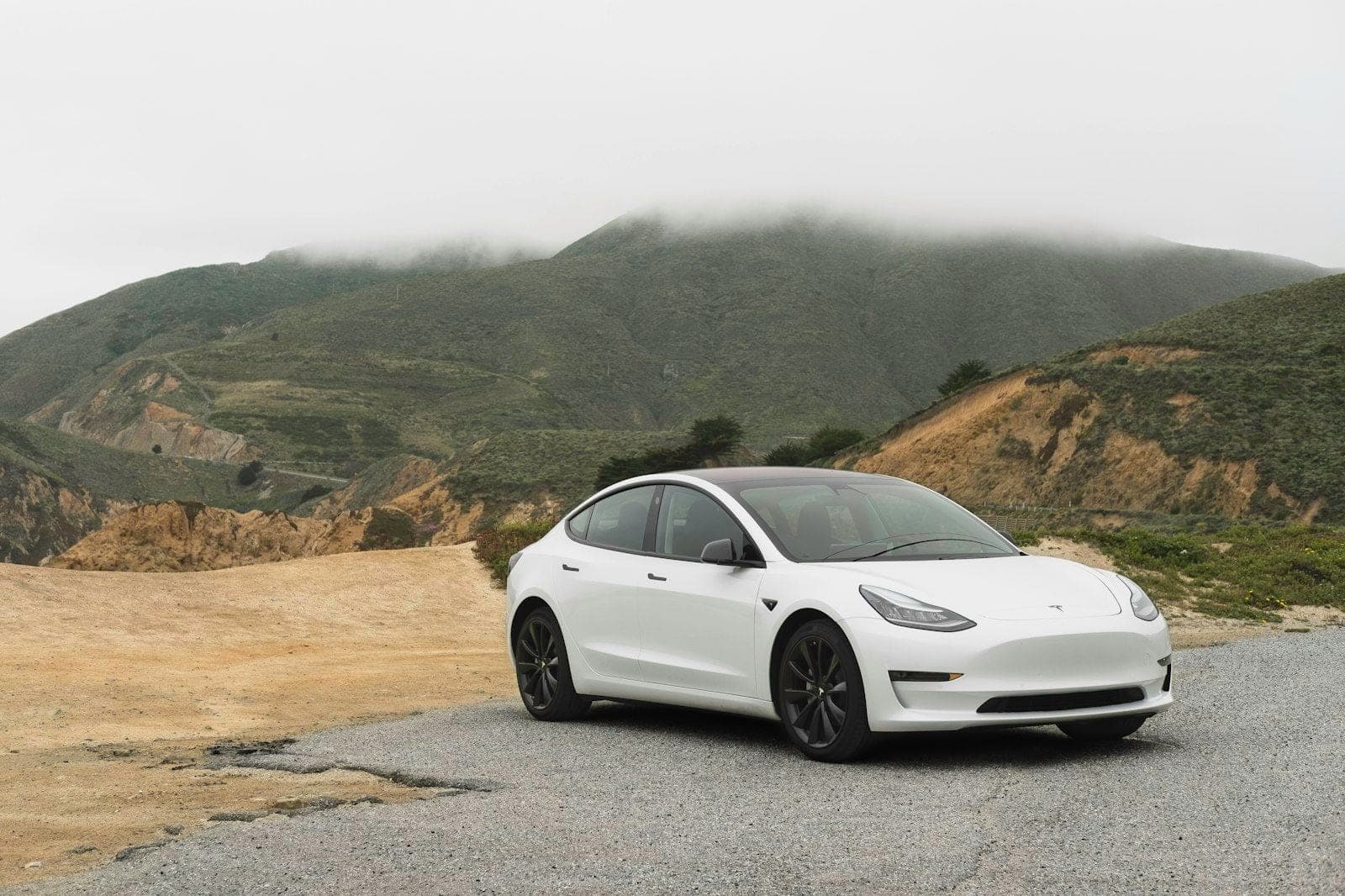
The timing system is the most important component in your engine that you'll probably never look at — and the difference between a timing belt and a timing chain dramatically changes how you should maintain it. Belts have hard replacement intervals; ignoring them can destroy an engine in a single moment. Chains last longer but aren't truly lifetime parts the way some manuals imply. Knowing which one your engine has, what it costs to service, and what happens if you don't is essential ownership knowledge.
What the Timing System Actually Does
A vehicle history report cuts through guesswork in seconds. Pulling a VIN check before you spend hours on a test drive lets you confirm reported mileage, ownership chain, title brand, accident records, and whether the vehicle has been declared a total loss in any state. The $7.99 spend has saved buyers from five-figure mistakes thousands of times — and at this point in the buying process there's no good reason to skip it.
Think about the 5-year picture, not the first month of ownership. The car that's $1,500 cheaper today but costs $4,000 more to maintain over 5 years isn't actually cheaper. The "boring" choice that holds resale value is often the smart financial choice. Buyers who optimize for the long term consistently end up with more money in their pockets — and ironically, just as much fun on the road.
In 2026, the used car market is in a different place than it was even two years ago. Inventory has loosened, off-lease vehicles are returning to dealer lots in large numbers, and average prices have softened from their pandemic peaks. That makes timing belt vs timing chain a more rewarding question to answer in 2026 than at almost any time in the last five years — but only if you know what to look for.
Belt vs Chain: How to Tell Which You Have
Reliability rankings come from real-world data: Consumer Reports surveys hundreds of thousands of owners, J.D. Power tracks problems per 100 vehicles, and forums like Bimmerforums or HondaTech compile owner-reported failure modes you won't find anywhere else. The picks above all carry above-average marks across multiple sources — single-source rankings are easy to game, but consensus across CR, J.D. Power, and owner forums is hard to fake.
When you compare brands head-to-head, the differences sharpen quickly. Toyota and Honda lead long-term reliability surveys but charge a premium upfront. Hyundai and Kia have closed the gap dramatically on quality while undercutting on price. Domestic brands like Ford and Chevrolet excel at trucks but lag in compact and mid-size segments. German brands deliver on driving feel but punish owners with maintenance costs. There is no "best" brand — only the best fit for your specific needs.
Service Intervals for Belts (and Why They Matter)
Service Intervals for Belts (and Why They Matter) matters more than most car buyers realize. The decisions you make at this stage shape the next 5–10 years of ownership cost, reliability, and resale outcome. Skipping the homework here is exactly how buyers end up overpaying or, worse, locked into a vehicle that drains money for years.
In 2026, the used car market is in a different place than it was even two years ago. Inventory has loosened, off-lease vehicles are returning to dealer lots in large numbers, and average prices have softened from their pandemic peaks. That makes timing belt vs timing chain a more rewarding question to answer in 2026 than at almost any time in the last five years — but only if you know what to look for.
Think about the 5-year picture, not the first month of ownership. The car that's $1,500 cheaper today but costs $4,000 more to maintain over 5 years isn't actually cheaper. The "boring" choice that holds resale value is often the smart financial choice. Buyers who optimize for the long term consistently end up with more money in their pockets — and ironically, just as much fun on the road.
Why Chains Need Attention Too
In 2026, the used car market is in a different place than it was even two years ago. Inventory has loosened, off-lease vehicles are returning to dealer lots in large numbers, and average prices have softened from their pandemic peaks. That makes timing belt vs timing chain a more rewarding question to answer in 2026 than at almost any time in the last five years — but only if you know what to look for.
Think about the 5-year picture, not the first month of ownership. The car that's $1,500 cheaper today but costs $4,000 more to maintain over 5 years isn't actually cheaper. The "boring" choice that holds resale value is often the smart financial choice. Buyers who optimize for the long term consistently end up with more money in their pockets — and ironically, just as much fun on the road.
Chains Need Attention Too matters more than most car buyers realize. The decisions you make at this stage shape the next 5–10 years of ownership cost, reliability, and resale outcome. Skipping the homework here is exactly how buyers end up overpaying or, worse, locked into a vehicle that drains money for years.
Interference vs Non-Interference Engines
When you compare brands head-to-head, the differences sharpen quickly. Toyota and Honda lead long-term reliability surveys but charge a premium upfront. Hyundai and Kia have closed the gap dramatically on quality while undercutting on price. Domestic brands like Ford and Chevrolet excel at trucks but lag in compact and mid-size segments. German brands deliver on driving feel but punish owners with maintenance costs. There is no "best" brand — only the best fit for your specific needs.
Reliability rankings come from real-world data: Consumer Reports surveys hundreds of thousands of owners, J.D. Power tracks problems per 100 vehicles, and forums like Bimmerforums or HondaTech compile owner-reported failure modes you won't find anywhere else. The picks above all carry above-average marks across multiple sources — single-source rankings are easy to game, but consensus across CR, J.D. Power, and owner forums is hard to fake.
True 2026 Replacement Costs
In 2026, the used car market is in a different place than it was even two years ago. Inventory has loosened, off-lease vehicles are returning to dealer lots in large numbers, and average prices have softened from their pandemic peaks. That makes timing belt vs timing chain a more rewarding question to answer in 2026 than at almost any time in the last five years — but only if you know what to look for.
A vehicle history report cuts through guesswork in seconds. Pulling a VIN check before you spend hours on a test drive lets you confirm reported mileage, ownership chain, title brand, accident records, and whether the vehicle has been declared a total loss in any state. The $7.99 spend has saved buyers from five-figure mistakes thousands of times — and at this point in the buying process there's no good reason to skip it.
Think about the 5-year picture, not the first month of ownership. The car that's $1,500 cheaper today but costs $4,000 more to maintain over 5 years isn't actually cheaper. The "boring" choice that holds resale value is often the smart financial choice. Buyers who optimize for the long term consistently end up with more money in their pockets — and ironically, just as much fun on the road.
Final Thoughts
The timing system is one of the few maintenance items where neglect can total a car overnight. If you're shopping used, especially anything with an interference engine, a documented timing belt service is one of the most valuable history items you can find. Always run a VIN check on any used car you're considering — and ask the seller for receipts, because a missing timing belt service can turn an apparent bargain into a four-figure surprise within months.
About the author
CarCheckerVIN Editorial Team
In-house automotive research team
The CarCheckerVIN editorial team combines decades of automotive industry, dealer, and journalism experience to produce trustworthy buying, selling, and ownership guidance backed by NMVTIS, NICB, and manufacturer data.
Keep reading
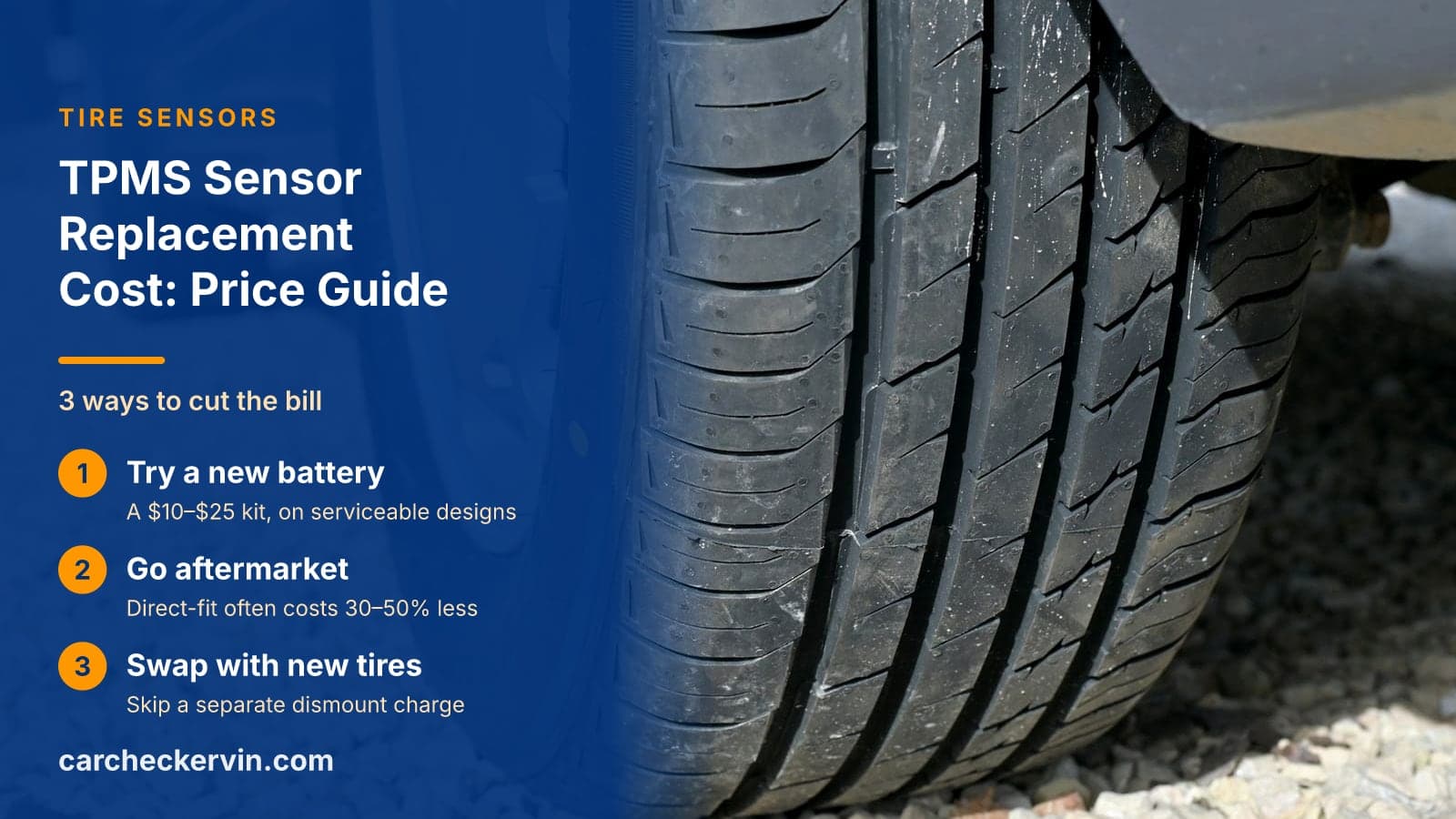
TPMS Sensor Replacement Cost: What You'll Really Pay
Your TPMS light just won't quit. Before you pay a dealer $250 per sensor, here's what every option actually costs — and when a $15 fix might be all you need.
Sep 28, 2026 · 10 min read
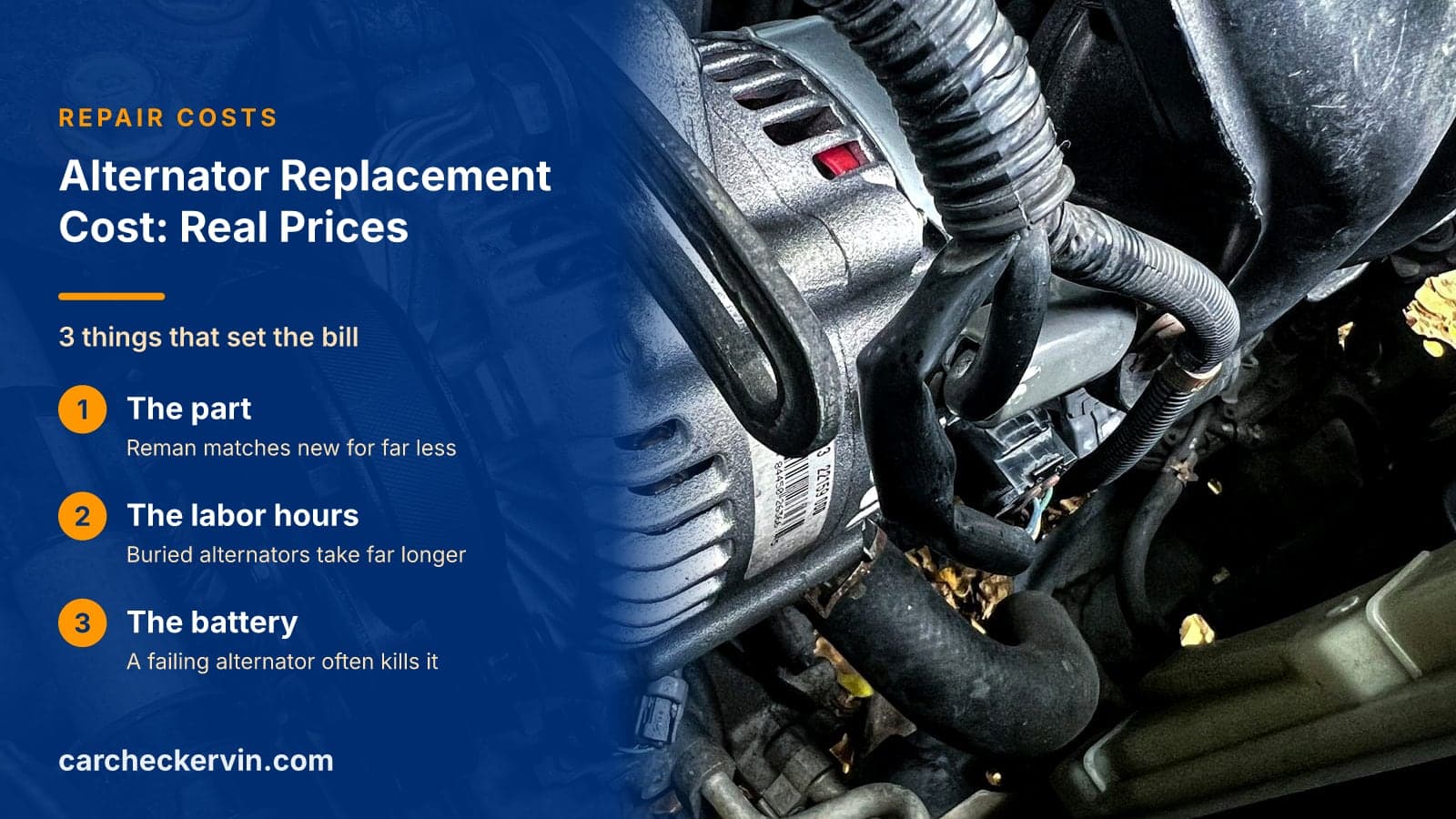
Alternator Replacement Cost: What You'll Actually Pay
Your alternator is dying and you need a number. Here's what alternator replacement actually costs by vehicle type, where to save, and when the repair bill should change your plans for the car.
Sep 28, 2026 · 10 min read
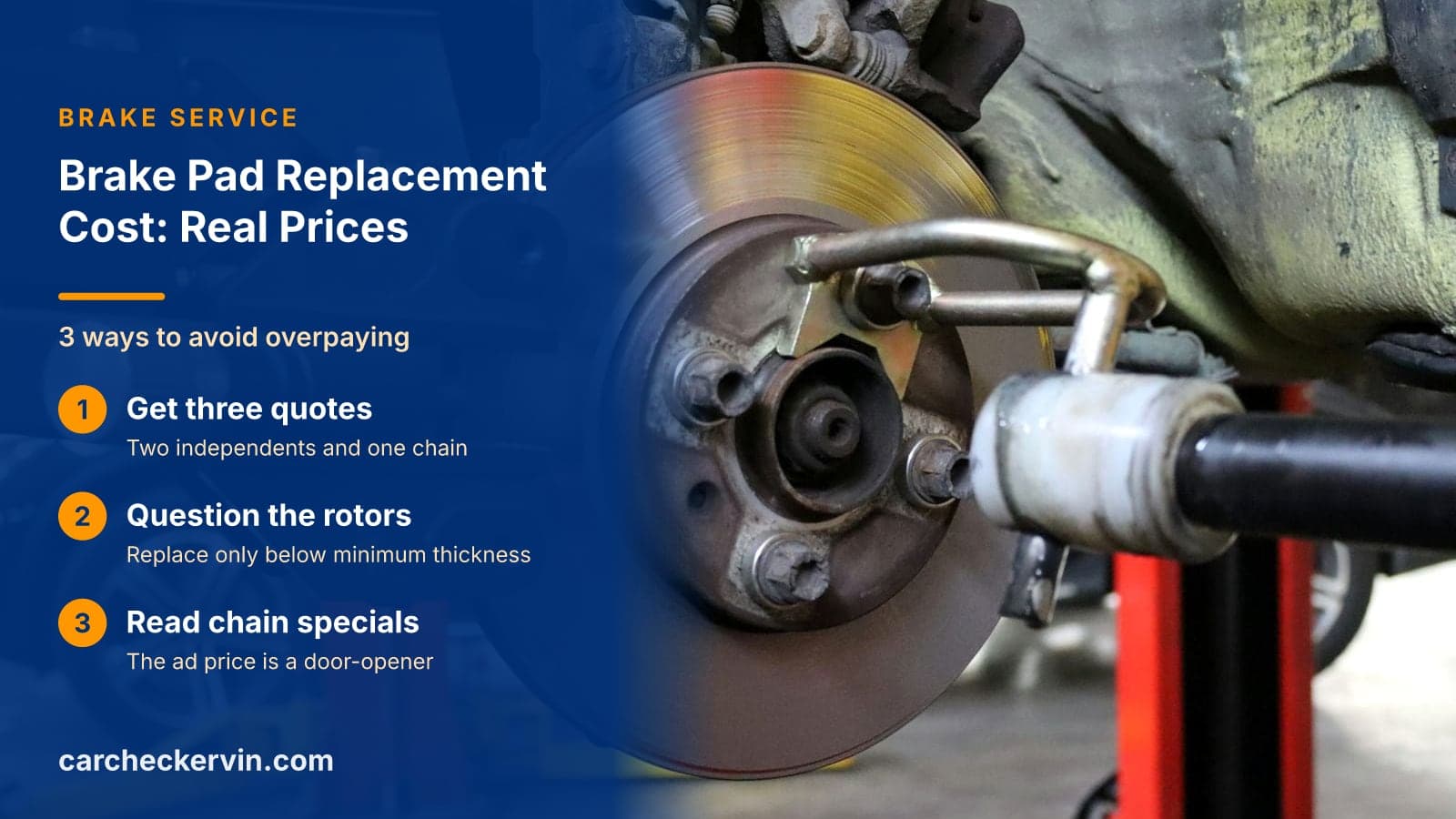
Brake Pad Replacement Cost: What You'll Actually Pay
Brake pad replacement cost varies widely by vehicle and shop. Here's what you'll actually pay per axle, when you can skip rotors, and how to avoid overpaying at chains or dealerships.
Sep 28, 2026 · 9 min read