Used Car Prices in 2026: Where the Market Is Heading
Inventory is finally rebuilding and rates are cooling — but used car prices in 2026 won't crash. Here's what the next 12 months really look like.
Check the car you're reading about
Free VIN decode and recall check
Factory specs and open NHTSA recalls in seconds. No sign-up.
On this page· 7
- The State of the Used Car Market Heading Into 2026
- What's Driving Prices Right Now: Supply, Demand, and Rates
- Segment-by-Segment 2026 Price Forecast
- When Prices Are Likely to Soften (And by How Much)
- Smart Buying Windows: The Best Months in 2026
- How to Time Your Purchase Without Getting Burned
- Final Thoughts

After years of pandemic-driven distortion, the used car market is finally normalizing — but not in the way most buyers expected. Wholesale auction prices have ticked up again in early 2026, leasing returns remain thin, and interest rates are sliding only slowly. If you're hoping to buy used this year, the question isn't whether prices will crash — they won't — but where they'll land relative to a vehicle's true long-term value. This guide walks through the data, the seasonal patterns, and the practical timing windows that matter.
The State of the Used Car Market Heading Into 2026
A vehicle history report cuts through guesswork in seconds. Pulling a VIN check before you spend hours on a test drive lets you confirm reported mileage, ownership chain, title brand, accident records, and whether the vehicle has been declared a total loss in any state. The $7.99 spend has saved buyers from five-figure mistakes thousands of times — and at this point in the buying process there's no good reason to skip it.
Think about the 5-year picture, not the first month of ownership. The car that's $1,500 cheaper today but costs $4,000 more to maintain over 5 years isn't actually cheaper. The "boring" choice that holds resale value is often the smart financial choice. Buyers who optimize for the long term consistently end up with more money in their pockets — and ironically, just as much fun on the road.
In 2026, the used car market is in a different place than it was even two years ago. Inventory has loosened, off-lease vehicles are returning to dealer lots in large numbers, and average prices have softened from their pandemic peaks. That makes used car prices 2026 a more rewarding question to answer in 2026 than at almost any time in the last five years — but only if you know what to look for.
What's Driving Prices Right Now: Supply, Demand, and Rates
Before you commit to anything, run through a simple inspection routine. Walk the car from front to back. Check tire wear patterns (cupping or feathering points to alignment or suspension issues). Open the hood and look at the engine bay for oil leaks, corroded battery terminals, and aftermarket wiring that could indicate a poorly executed repair. Inside, sit in every seat, test every switch, and pay close attention to dashboard warning lights when you cycle the ignition.
Test drive for at least 30 minutes if the seller will allow it. Five-minute spins around the block hide everything that matters. You want time at highway speed (transmission shift quality, alignment pull, wind noise), time stopped (idle smoothness, AC performance), and time on rough pavement (suspension noises, steering feedback). Bring a notebook and write down anything that feels off — the human memory is bad at compiling minor issues into a clear picture.
What to test during your drive:
- Highway speed (60+ mph) for at least 10 minutes — listen for vibration, wind noise, transmission behavior
- Hard acceleration from a stop — confirms engine response and transmission shift quality
- Hard braking from 40 mph in a safe area — feel for pulsing or pulling
- Tight parking lot turns at low speed — listen for CV joint clicking
- Highway off-ramp at moderate speed — checks suspension and steering feel under load
Segment-by-Segment 2026 Price Forecast
Sticker price tells you almost nothing about real ownership cost. Insurance, fuel, scheduled maintenance, and depreciation routinely add up to more than the purchase price over a 5-year hold. When you compare options, look at the total — not just the monthly payment. RepairPal averages, Kelley Blue Book 5-year cost-to-own data, and your own zip code's insurance quotes will paint a much fuller picture than any window sticker ever can.
Negotiation succeeds when you've done the homework everyone else skips. Know the model's market price range from KBB and Edmunds. Know what comparable cars are selling for in your zip code on AutoTrader. Know the dealer's invoice price (not just MSRP) on a new car or trade-in value on a used one. Walking in with that data turns a high-pressure sales pitch into a calm comparison conversation — and that's where the discount lives.
Think about the 5-year picture, not the first month of ownership. The car that's $1,500 cheaper today but costs $4,000 more to maintain over 5 years isn't actually cheaper. The "boring" choice that holds resale value is often the smart financial choice. Buyers who optimize for the long term consistently end up with more money in their pockets — and ironically, just as much fun on the road.
When Prices Are Likely to Soften (And by How Much)
A vehicle history report cuts through guesswork in seconds. Pulling a VIN check before you spend hours on a test drive lets you confirm reported mileage, ownership chain, title brand, accident records, and whether the vehicle has been declared a total loss in any state. The $7.99 spend has saved buyers from five-figure mistakes thousands of times — and at this point in the buying process there's no good reason to skip it.
Think about the 5-year picture, not the first month of ownership. The car that's $1,500 cheaper today but costs $4,000 more to maintain over 5 years isn't actually cheaper. The "boring" choice that holds resale value is often the smart financial choice. Buyers who optimize for the long term consistently end up with more money in their pockets — and ironically, just as much fun on the road.
In 2026, the used car market is in a different place than it was even two years ago. Inventory has loosened, off-lease vehicles are returning to dealer lots in large numbers, and average prices have softened from their pandemic peaks. That makes used car prices 2026 a more rewarding question to answer in 2026 than at almost any time in the last five years — but only if you know what to look for.
Smart Buying Windows: The Best Months in 2026
In 2026, the used car market is in a different place than it was even two years ago. Inventory has loosened, off-lease vehicles are returning to dealer lots in large numbers, and average prices have softened from their pandemic peaks. That makes used car prices 2026 a more rewarding question to answer in 2026 than at almost any time in the last five years — but only if you know what to look for.
Reliability rankings come from real-world data: Consumer Reports surveys hundreds of thousands of owners, J.D. Power tracks problems per 100 vehicles, and forums like Bimmerforums or HondaTech compile owner-reported failure modes you won't find anywhere else. The picks above all carry above-average marks across multiple sources — single-source rankings are easy to game, but consensus across CR, J.D. Power, and owner forums is hard to fake.
Think about the 5-year picture, not the first month of ownership. The car that's $1,500 cheaper today but costs $4,000 more to maintain over 5 years isn't actually cheaper. The "boring" choice that holds resale value is often the smart financial choice. Buyers who optimize for the long term consistently end up with more money in their pockets — and ironically, just as much fun on the road.
How to Time Your Purchase Without Getting Burned
In 2026, the used car market is in a different place than it was even two years ago. Inventory has loosened, off-lease vehicles are returning to dealer lots in large numbers, and average prices have softened from their pandemic peaks. That makes used car prices 2026 a more rewarding question to answer in 2026 than at almost any time in the last five years — but only if you know what to look for.
A vehicle history report cuts through guesswork in seconds. Pulling a VIN check before you spend hours on a test drive lets you confirm reported mileage, ownership chain, title brand, accident records, and whether the vehicle has been declared a total loss in any state. The $7.99 spend has saved buyers from five-figure mistakes thousands of times — and at this point in the buying process there's no good reason to skip it.
Think about the 5-year picture, not the first month of ownership. The car that's $1,500 cheaper today but costs $4,000 more to maintain over 5 years isn't actually cheaper. The "boring" choice that holds resale value is often the smart financial choice. Buyers who optimize for the long term consistently end up with more money in their pockets — and ironically, just as much fun on the road.
Final Thoughts
The 2026 used car market rewards patient, well-informed buyers and punishes anyone shopping on emotion. Track the Manheim index, watch for late-summer dealer inventory bulges, and never let a sales pitch override your homework. Before you commit to any used vehicle in 2026, run a full VIN check — pricing only matters if the underlying car is what the seller claims. A vehicle history report turns a guess into a fact and protects every dollar you're about to spend.
About the author
CarCheckerVIN Editorial Team
In-house automotive research team
The CarCheckerVIN editorial team combines decades of automotive industry, dealer, and journalism experience to produce trustworthy buying, selling, and ownership guidance backed by NMVTIS, NICB, and manufacturer data.
Keep reading
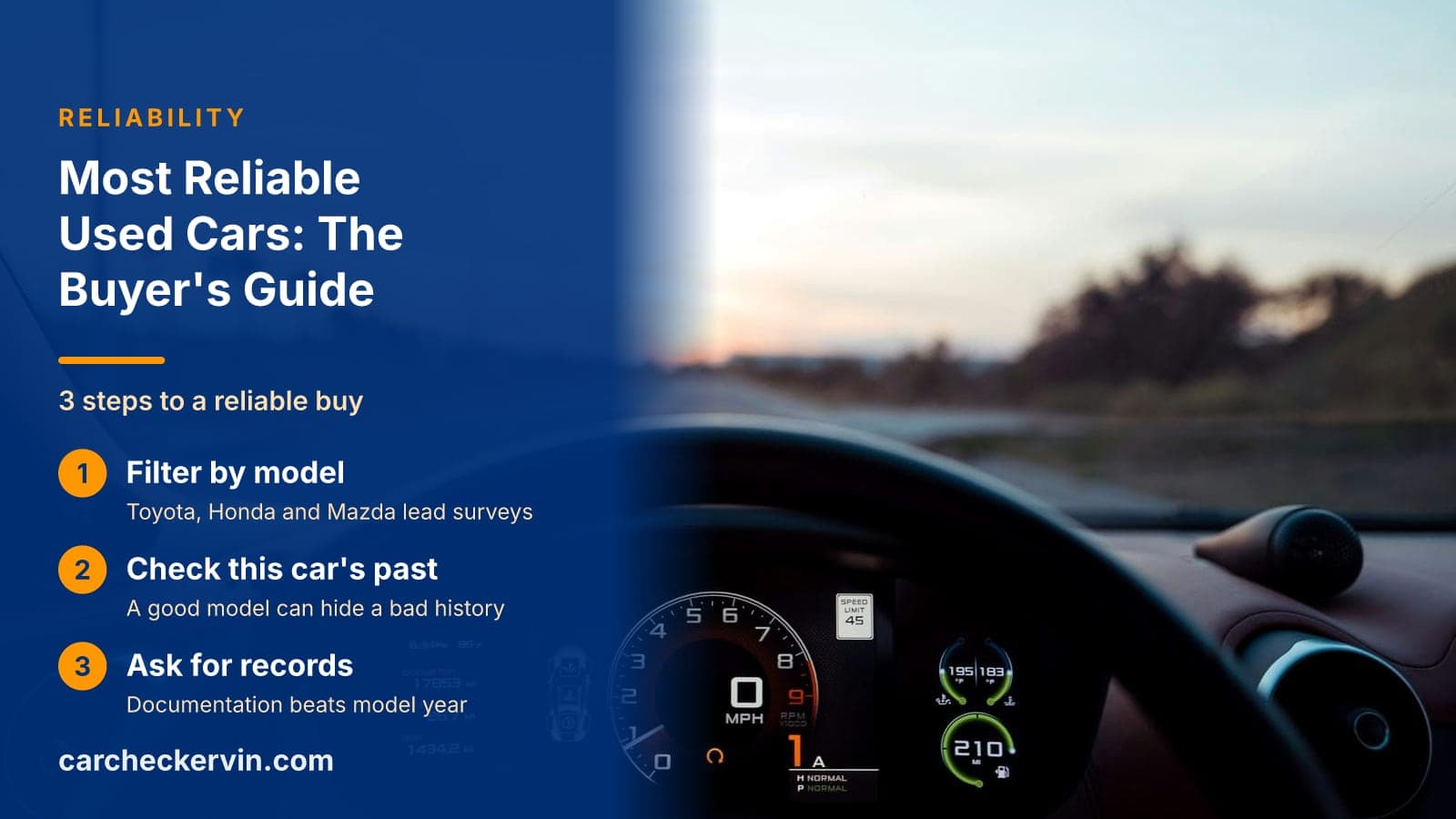
Most Reliable Used Cars: How to Pick One Without Getting Burned
Reliability isn't a sticker on the window — it's a track record you have to dig for. Here's how to find the most reliable used cars at every budget, backed by real data.
Sep 30, 2026 · 12 min read
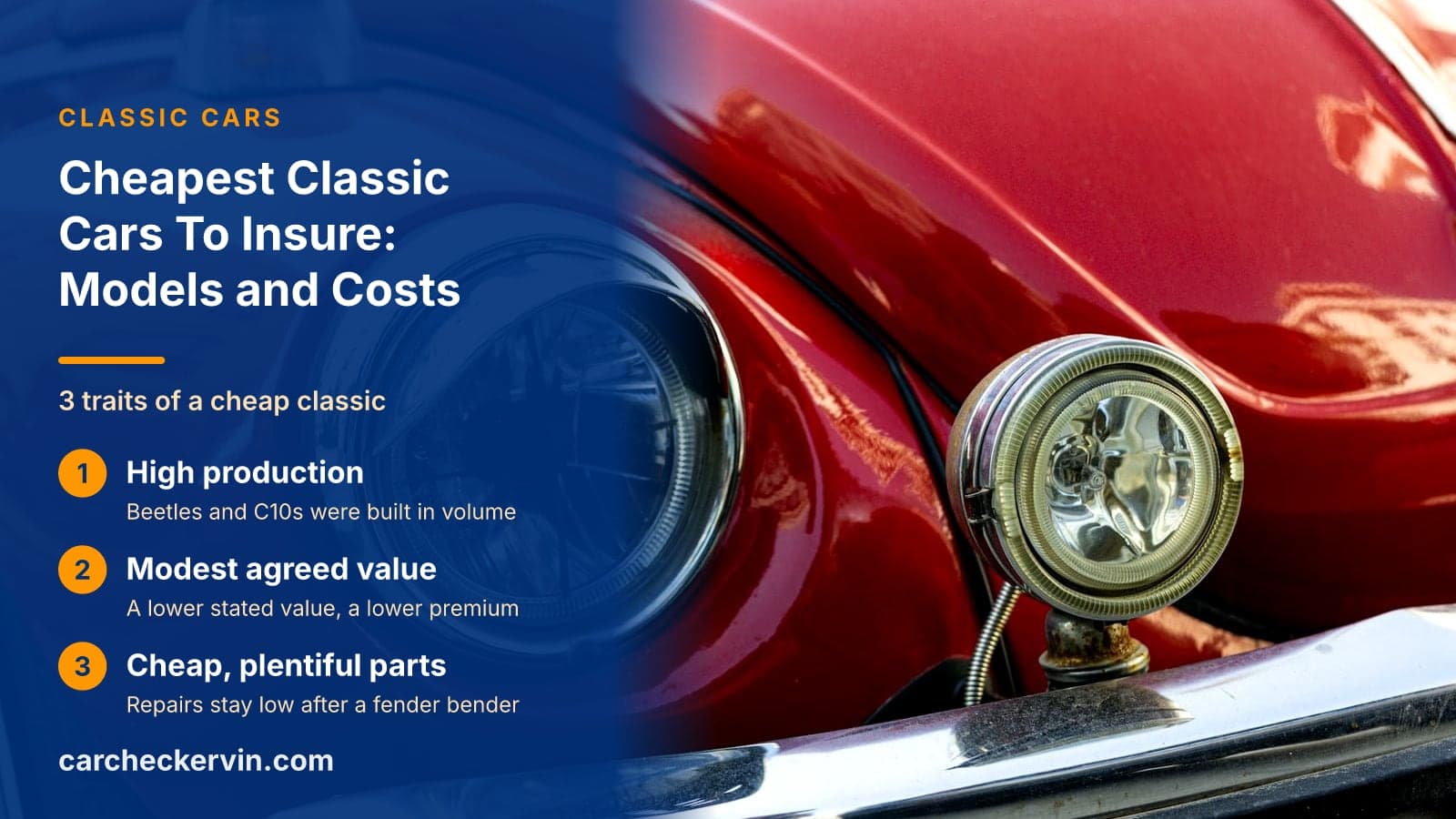
Cheapest Classic Cars To Insure: An Investigative Look at Premiums, Models, and Hidden Costs
Classic car insurance can cost far less than standard auto coverage—but only if you pick the right vehicle and the right carrier. Here's what the numbers actually show.
Sep 27, 2026 · 10 min read
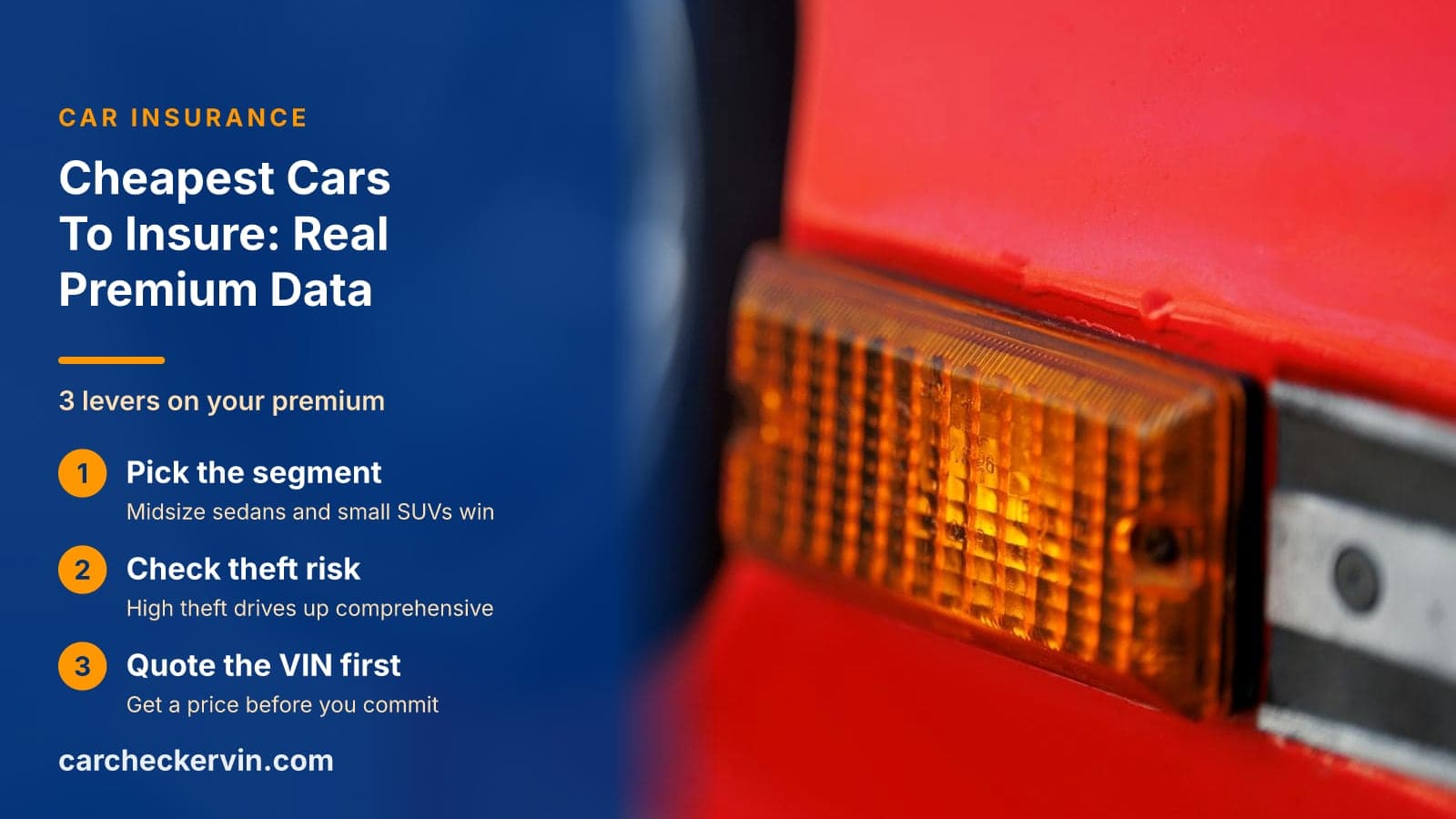
Cheapest Cars To Insure: An Investigative Look at What Actually Lowers Your Premium
Which vehicles actually cost the least to insure in 2025? We dug into insurer loss data, IIHS crash ratings, and NHTSA theft stats to separate marketing fluff from real savings.
Sep 27, 2026 · 9 min read