Used Hybrid Buying Guide: Battery Health Matters Most
Most used hybrid buyers obsess over MPG and ignore the one number that ruins ownership: battery state of health.
Check the car you're reading about
Free VIN decode and recall check
Factory specs and open NHTSA recalls in seconds. No sign-up.

Writing a used hybrid buying guide that actually helps starts with one uncomfortable truth: the battery decides everything. A 12-year-old Prius with a healthy pack will run for another 100,000 miles, while the same car with a tired pack is a $3,500 problem waiting to surface. State of health, not state of charge, is the number that matters, and most sellers can't or won't share it. Hybrid batteries don't fail in a clean cliff drop either, they degrade gradually, killing fuel economy long before triggering a warning light. This guide shows how to measure it before you buy.
How Hybrid Batteries Actually Age
A vehicle history report cuts through guesswork in seconds. Pulling a VIN check before you spend hours on a test drive lets you confirm reported mileage, ownership chain, title brand, accident records, and whether the vehicle has been declared a total loss in any state. The $7.99 spend has saved buyers from five-figure mistakes thousands of times — and at this point in the buying process there's no good reason to skip it.
Think about the 5-year picture, not the first month of ownership. The car that's $1,500 cheaper today but costs $4,000 more to maintain over 5 years isn't actually cheaper. The "boring" choice that holds resale value is often the smart financial choice. Buyers who optimize for the long term consistently end up with more money in their pockets — and ironically, just as much fun on the road.
In 2026, the used car market is in a different place than it was even two years ago. Inventory has loosened, off-lease vehicles are returning to dealer lots in large numbers, and average prices have softened from their pandemic peaks. That makes used hybrid buying guide a more rewarding question to answer in 2026 than at almost any time in the last five years — but only if you know what to look for.
State of Health vs State of Charge Explained
When you compare brands head-to-head, the differences sharpen quickly. Toyota and Honda lead long-term reliability surveys but charge a premium upfront. Hyundai and Kia have closed the gap dramatically on quality while undercutting on price. Domestic brands like Ford and Chevrolet excel at trucks but lag in compact and mid-size segments. German brands deliver on driving feel but punish owners with maintenance costs. There is no "best" brand — only the best fit for your specific needs.
Reliability rankings come from real-world data: Consumer Reports surveys hundreds of thousands of owners, J.D. Power tracks problems per 100 vehicles, and forums like Bimmerforums or HondaTech compile owner-reported failure modes you won't find anywhere else. The picks above all carry above-average marks across multiple sources — single-source rankings are easy to game, but consensus across CR, J.D. Power, and owner forums is hard to fake.
Brand-by-Brand Hybrid Battery Track Record
Reliability rankings come from real-world data: Consumer Reports surveys hundreds of thousands of owners, J.D. Power tracks problems per 100 vehicles, and forums like Bimmerforums or HondaTech compile owner-reported failure modes you won't find anywhere else. The picks above all carry above-average marks across multiple sources — single-source rankings are easy to game, but consensus across CR, J.D. Power, and owner forums is hard to fake.
When you compare brands head-to-head, the differences sharpen quickly. Toyota and Honda lead long-term reliability surveys but charge a premium upfront. Hyundai and Kia have closed the gap dramatically on quality while undercutting on price. Domestic brands like Ford and Chevrolet excel at trucks but lag in compact and mid-size segments. German brands deliver on driving feel but punish owners with maintenance costs. There is no "best" brand — only the best fit for your specific needs.
How to Test Battery Health Before You Buy
Test drive for at least 30 minutes if the seller will allow it. Five-minute spins around the block hide everything that matters. You want time at highway speed (transmission shift quality, alignment pull, wind noise), time stopped (idle smoothness, AC performance), and time on rough pavement (suspension noises, steering feedback). Bring a notebook and write down anything that feels off — the human memory is bad at compiling minor issues into a clear picture.
Before you commit to anything, run through a simple inspection routine. Walk the car from front to back. Check tire wear patterns (cupping or feathering points to alignment or suspension issues). Open the hood and look at the engine bay for oil leaks, corroded battery terminals, and aftermarket wiring that could indicate a poorly executed repair. Inside, sit in every seat, test every switch, and pay close attention to dashboard warning lights when you cycle the ignition.
Replacement Costs, Reman Options, and Warranties
Think about the 5-year picture, not the first month of ownership. The car that's $1,500 cheaper today but costs $4,000 more to maintain over 5 years isn't actually cheaper. The "boring" choice that holds resale value is often the smart financial choice. Buyers who optimize for the long term consistently end up with more money in their pockets — and ironically, just as much fun on the road.
In 2026, the used car market is in a different place than it was even two years ago. Inventory has loosened, off-lease vehicles are returning to dealer lots in large numbers, and average prices have softened from their pandemic peaks. That makes used hybrid buying guide a more rewarding question to answer in 2026 than at almost any time in the last five years — but only if you know what to look for.
A vehicle history report cuts through guesswork in seconds. Pulling a VIN check before you spend hours on a test drive lets you confirm reported mileage, ownership chain, title brand, accident records, and whether the vehicle has been declared a total loss in any state. The $7.99 spend has saved buyers from five-figure mistakes thousands of times — and at this point in the buying process there's no good reason to skip it.
Best Used Hybrids to Buy in 2026 by Budget
Reliability rankings come from real-world data: Consumer Reports surveys hundreds of thousands of owners, J.D. Power tracks problems per 100 vehicles, and forums like Bimmerforums or HondaTech compile owner-reported failure modes you won't find anywhere else. The picks above all carry above-average marks across multiple sources — single-source rankings are easy to game, but consensus across CR, J.D. Power, and owner forums is hard to fake.
Think about the 5-year picture, not the first month of ownership. The car that's $1,500 cheaper today but costs $4,000 more to maintain over 5 years isn't actually cheaper. The "boring" choice that holds resale value is often the smart financial choice. Buyers who optimize for the long term consistently end up with more money in their pockets — and ironically, just as much fun on the road.
In 2026, the used car market is in a different place than it was even two years ago. Inventory has loosened, off-lease vehicles are returning to dealer lots in large numbers, and average prices have softened from their pandemic peaks. That makes used hybrid buying guide a more rewarding question to answer in 2026 than at almost any time in the last five years — but only if you know what to look for.
Final Thoughts
A used hybrid is one of the smartest ways to buy efficient transportation, but only if you go in eyes open about the battery. Insist on a state of health scan from a hybrid-savvy mechanic, weigh replacement cost into your offer, and favor brands with proven battery longevity like Toyota and Lexus over early-generation outliers. Reman batteries with warranty coverage are a valid path back from a tired pack, but knowing the condition before purchase is what protects your wallet. Before you commit to any used hybrid candidate, always pull a VIN check so accident history and title status sit alongside the battery numbers in your decision.
About the author
CarCheckerVIN Editorial Team
In-house automotive research team
The CarCheckerVIN editorial team combines decades of automotive industry, dealer, and journalism experience to produce trustworthy buying, selling, and ownership guidance backed by NMVTIS, NICB, and manufacturer data.
Keep reading

Consumers Auto Loan: How to Finance Your Next Car Without Getting Burned
A consumers auto loan is the single biggest variable in your car deal — bigger than the sticker price. Here's how to lock in the best rate before you ever step on a lot.
Oct 16, 2026 · 10 min read
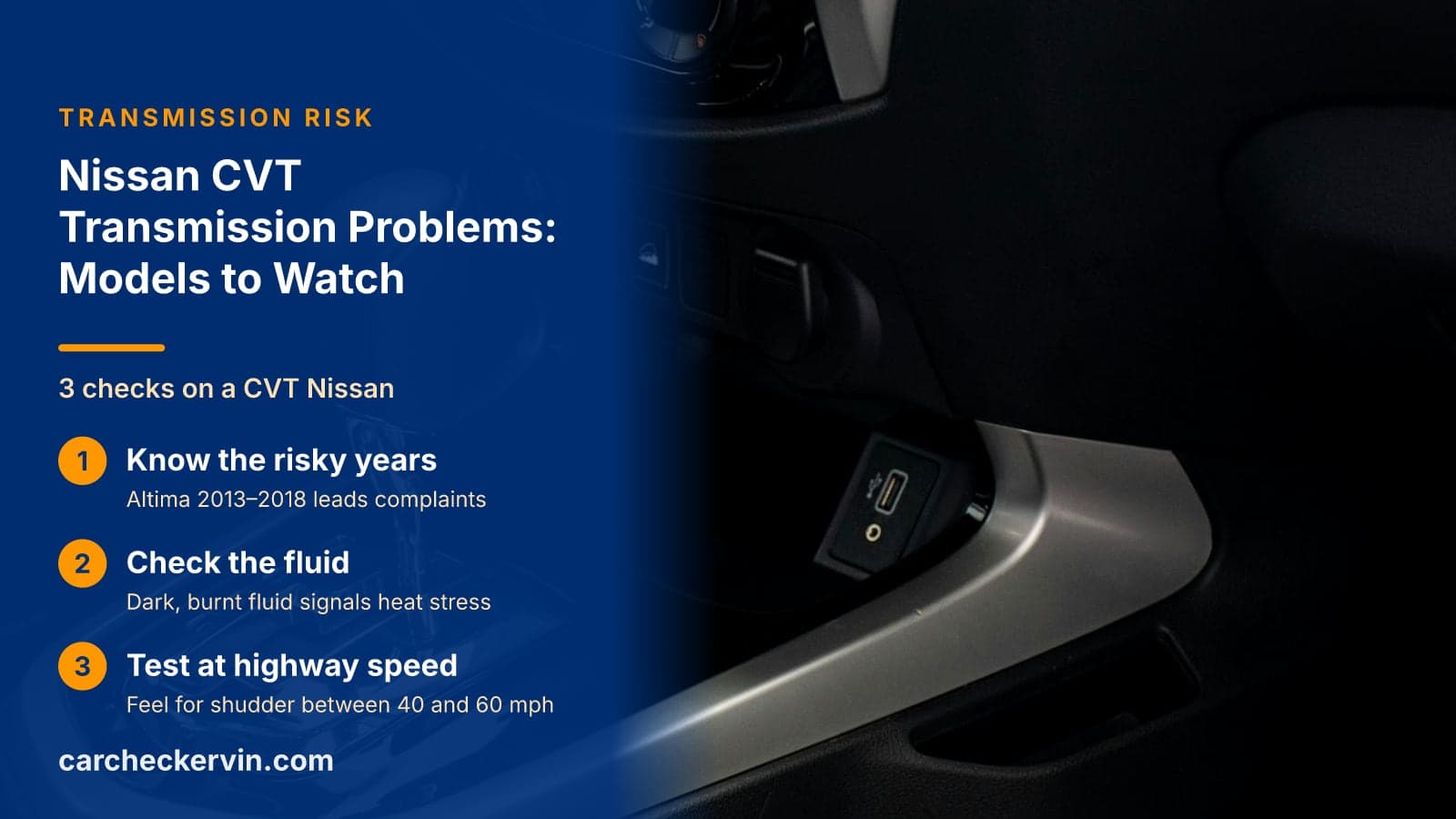
What Nissan Cars Have CVT Transmission Problems — And What to Do Before You Buy
CVT trouble is real across multiple Nissan models. Before you buy a used Altima, Sentra, or Rogue, know which years are risky, what repairs cost, and whether a Nissan CVT transmission recall covers it.
Oct 16, 2026 · 12 min read

Car Warranty Coverage: What You Actually Get and What to Watch Out For
Before you buy a used car or sign an extended warranty contract, know exactly what car warranty coverage includes, what it excludes, and which plans deliver real value.
Oct 15, 2026 · 11 min read