When to Replace Tires: Tread Depth Guide
The 2/32 rule isn't enough anymore. Here's the modern guide to knowing exactly when your tires are done — before they get you stuck or hurt.
Check the car you're reading about
Free VIN decode and recall check
Factory specs and open NHTSA recalls in seconds. No sign-up.

Tires are the only thing connecting your car to the road, but most drivers replace them only when they fail an inspection — long after they've stopped performing safely. Modern testing shows that wet-weather stopping distances rise dramatically once tread drops below 4/32 of an inch, well before the legal 2/32 minimum. Knowing when to replace tires isn't just a maintenance question; it's the single most important safety decision most drivers will make this year. Here's the modern, data-backed guide.
Why 2/32 of an Inch Isn't Safe in the Wet
Safety isn't just an airbag count. Modern crash data from IIHS and NHTSA goes deeper: small overlap front, side impact, roof strength, head restraint geometry, and the effectiveness of standard active-safety features like automatic emergency braking and lane keep assist. The IIHS Top Safety Pick+ rating is the gold standard, and it filters out a surprising amount of the fleet — especially older sedans and budget compacts that aged out of current standards.
2/32 of an Inch Isn't Safe in the Wet matters more than most car buyers realize. The decisions you make at this stage shape the next 5–10 years of ownership cost, reliability, and resale outcome. Skipping the homework here is exactly how buyers end up overpaying or, worse, locked into a vehicle that drains money for years.
In 2026, the used car market is in a different place than it was even two years ago. Inventory has loosened, off-lease vehicles are returning to dealer lots in large numbers, and average prices have softened from their pandemic peaks. That makes when to replace tires a more rewarding question to answer in 2026 than at almost any time in the last five years — but only if you know what to look for.
How to Read Tread Wear Indicators
Think about the 5-year picture, not the first month of ownership. The car that's $1,500 cheaper today but costs $4,000 more to maintain over 5 years isn't actually cheaper. The "boring" choice that holds resale value is often the smart financial choice. Buyers who optimize for the long term consistently end up with more money in their pockets — and ironically, just as much fun on the road.
In 2026, the used car market is in a different place than it was even two years ago. Inventory has loosened, off-lease vehicles are returning to dealer lots in large numbers, and average prices have softened from their pandemic peaks. That makes when to replace tires a more rewarding question to answer in 2026 than at almost any time in the last five years — but only if you know what to look for.
A vehicle history report cuts through guesswork in seconds. Pulling a VIN check before you spend hours on a test drive lets you confirm reported mileage, ownership chain, title brand, accident records, and whether the vehicle has been declared a total loss in any state. The $7.99 spend has saved buyers from five-figure mistakes thousands of times — and at this point in the buying process there's no good reason to skip it.
The Penny Test, Quarter Test, and Modern Alternatives
Before you commit to anything, run through a simple inspection routine. Walk the car from front to back. Check tire wear patterns (cupping or feathering points to alignment or suspension issues). Open the hood and look at the engine bay for oil leaks, corroded battery terminals, and aftermarket wiring that could indicate a poorly executed repair. Inside, sit in every seat, test every switch, and pay close attention to dashboard warning lights when you cycle the ignition.
Test drive for at least 30 minutes if the seller will allow it. Five-minute spins around the block hide everything that matters. You want time at highway speed (transmission shift quality, alignment pull, wind noise), time stopped (idle smoothness, AC performance), and time on rough pavement (suspension noises, steering feedback). Bring a notebook and write down anything that feels off — the human memory is bad at compiling minor issues into a clear picture.
Age Matters: Why 6-Year-Old Tires Are Done
In 2026, the used car market is in a different place than it was even two years ago. Inventory has loosened, off-lease vehicles are returning to dealer lots in large numbers, and average prices have softened from their pandemic peaks. That makes when to replace tires a more rewarding question to answer in 2026 than at almost any time in the last five years — but only if you know what to look for.
Think about the 5-year picture, not the first month of ownership. The car that's $1,500 cheaper today but costs $4,000 more to maintain over 5 years isn't actually cheaper. The "boring" choice that holds resale value is often the smart financial choice. Buyers who optimize for the long term consistently end up with more money in their pockets — and ironically, just as much fun on the road.
Age Matters: Why 6-Year-Old Tires Are Done matters more than most car buyers realize. The decisions you make at this stage shape the next 5–10 years of ownership cost, reliability, and resale outcome. Skipping the homework here is exactly how buyers end up overpaying or, worse, locked into a vehicle that drains money for years.
Uneven Wear: What It's Telling You
Think about the 5-year picture, not the first month of ownership. The car that's $1,500 cheaper today but costs $4,000 more to maintain over 5 years isn't actually cheaper. The "boring" choice that holds resale value is often the smart financial choice. Buyers who optimize for the long term consistently end up with more money in their pockets — and ironically, just as much fun on the road.
In 2026, the used car market is in a different place than it was even two years ago. Inventory has loosened, off-lease vehicles are returning to dealer lots in large numbers, and average prices have softened from their pandemic peaks. That makes when to replace tires a more rewarding question to answer in 2026 than at almost any time in the last five years — but only if you know what to look for.
A vehicle history report cuts through guesswork in seconds. Pulling a VIN check before you spend hours on a test drive lets you confirm reported mileage, ownership chain, title brand, accident records, and whether the vehicle has been declared a total loss in any state. The $7.99 spend has saved buyers from five-figure mistakes thousands of times — and at this point in the buying process there's no good reason to skip it.
Picking Replacement Tires for 2026 Conditions
In 2026, the used car market is in a different place than it was even two years ago. Inventory has loosened, off-lease vehicles are returning to dealer lots in large numbers, and average prices have softened from their pandemic peaks. That makes when to replace tires a more rewarding question to answer in 2026 than at almost any time in the last five years — but only if you know what to look for.
A vehicle history report cuts through guesswork in seconds. Pulling a VIN check before you spend hours on a test drive lets you confirm reported mileage, ownership chain, title brand, accident records, and whether the vehicle has been declared a total loss in any state. The $7.99 spend has saved buyers from five-figure mistakes thousands of times — and at this point in the buying process there's no good reason to skip it.
Think about the 5-year picture, not the first month of ownership. The car that's $1,500 cheaper today but costs $4,000 more to maintain over 5 years isn't actually cheaper. The "boring" choice that holds resale value is often the smart financial choice. Buyers who optimize for the long term consistently end up with more money in their pockets — and ironically, just as much fun on the road.
Final Thoughts
Tires are the cheapest major safety investment you can make in any vehicle — replace them before they're done, not after. And if you're shopping a used car, look closely at tire condition during your inspection, because a fresh set masks years of alignment issues underneath. Always pull a VIN check, too: accident records or frame damage can drive uneven tire wear long after a quick repair, and only a full vehicle history report tells you what really happened.
About the author
CarCheckerVIN Editorial Team
In-house automotive research team
The CarCheckerVIN editorial team combines decades of automotive industry, dealer, and journalism experience to produce trustworthy buying, selling, and ownership guidance backed by NMVTIS, NICB, and manufacturer data.
Keep reading
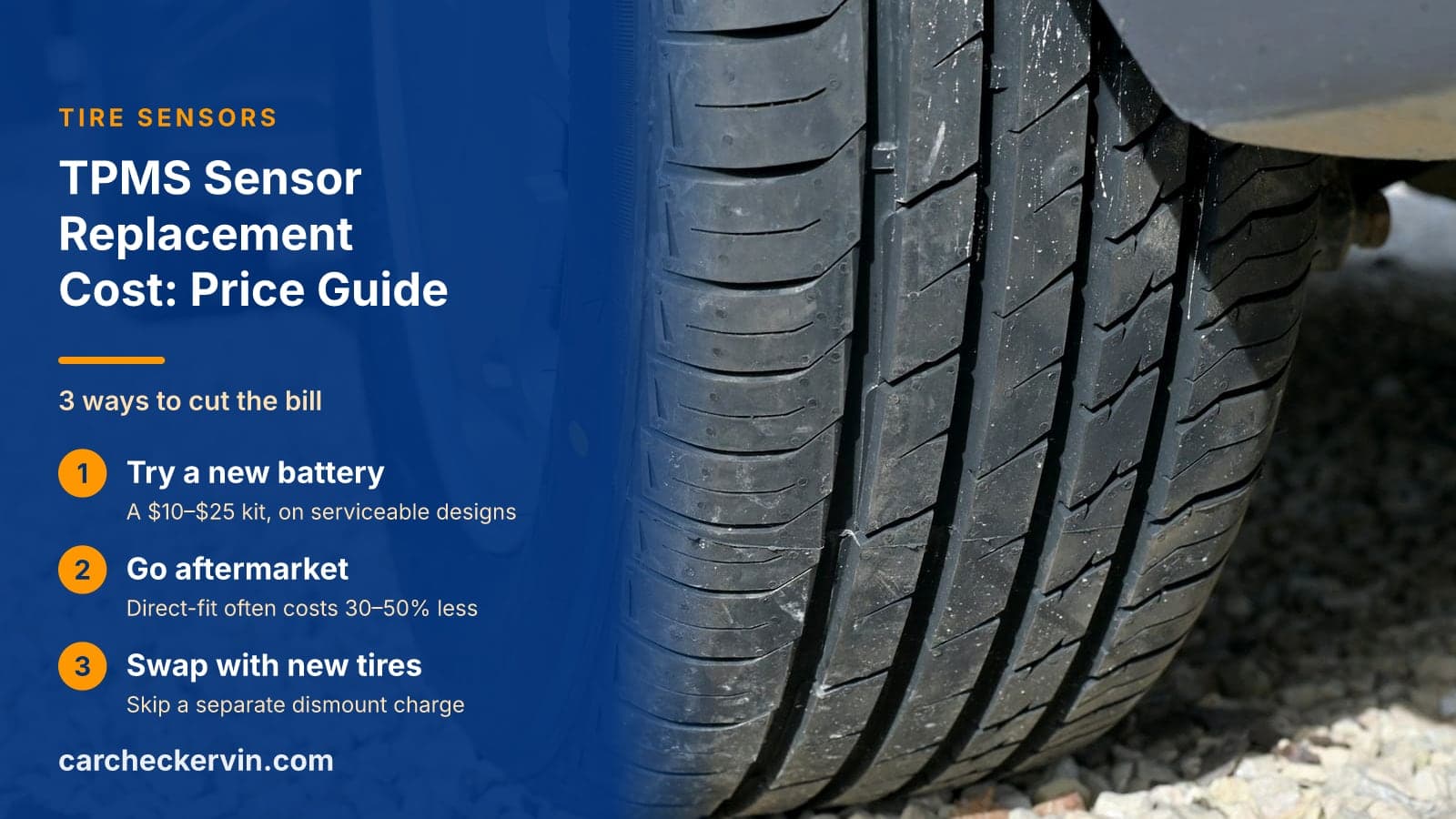
TPMS Sensor Replacement Cost: What You'll Really Pay
Your TPMS light just won't quit. Before you pay a dealer $250 per sensor, here's what every option actually costs — and when a $15 fix might be all you need.
Sep 28, 2026 · 10 min read
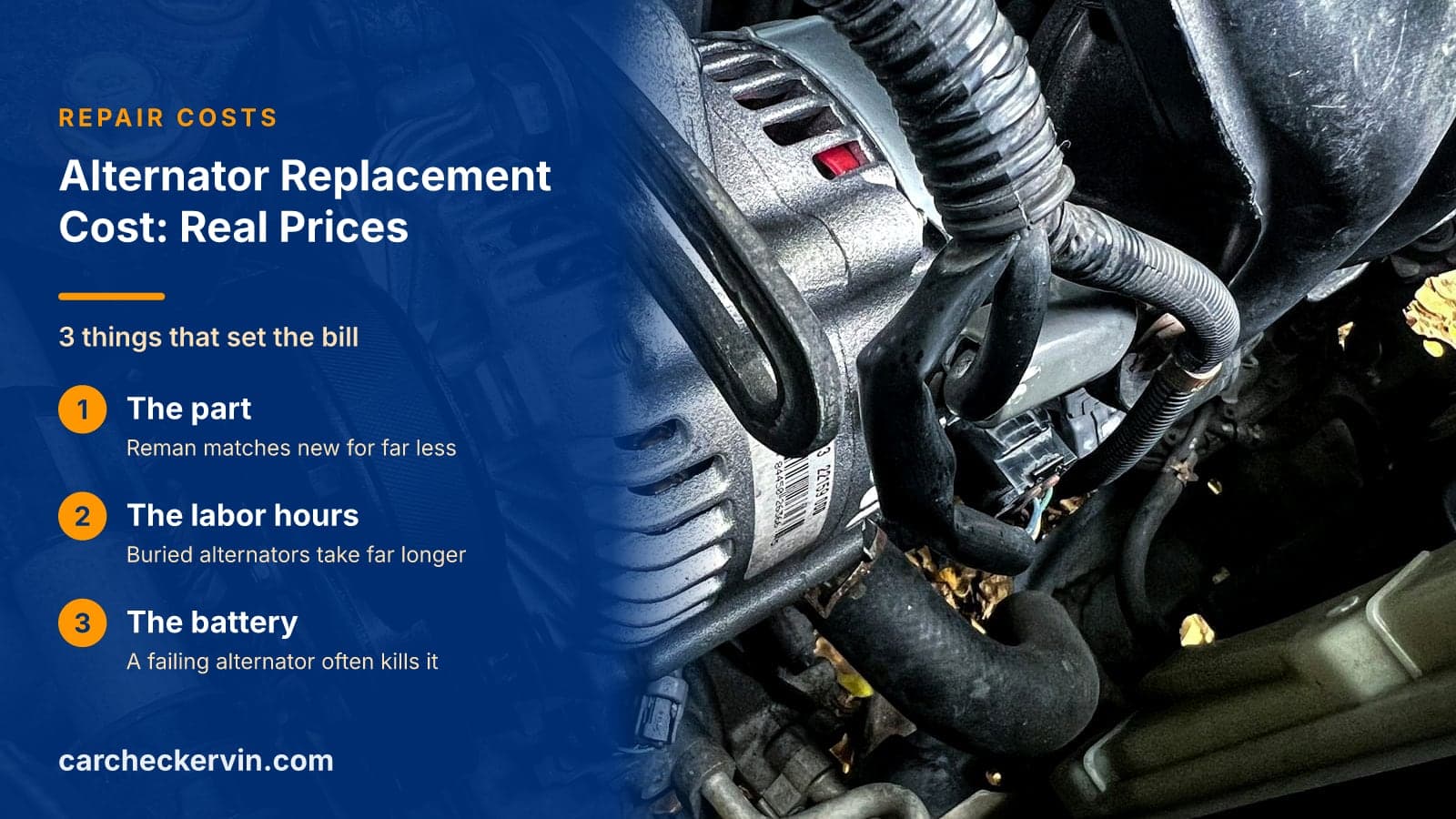
Alternator Replacement Cost: What You'll Actually Pay
Your alternator is dying and you need a number. Here's what alternator replacement actually costs by vehicle type, where to save, and when the repair bill should change your plans for the car.
Sep 28, 2026 · 10 min read
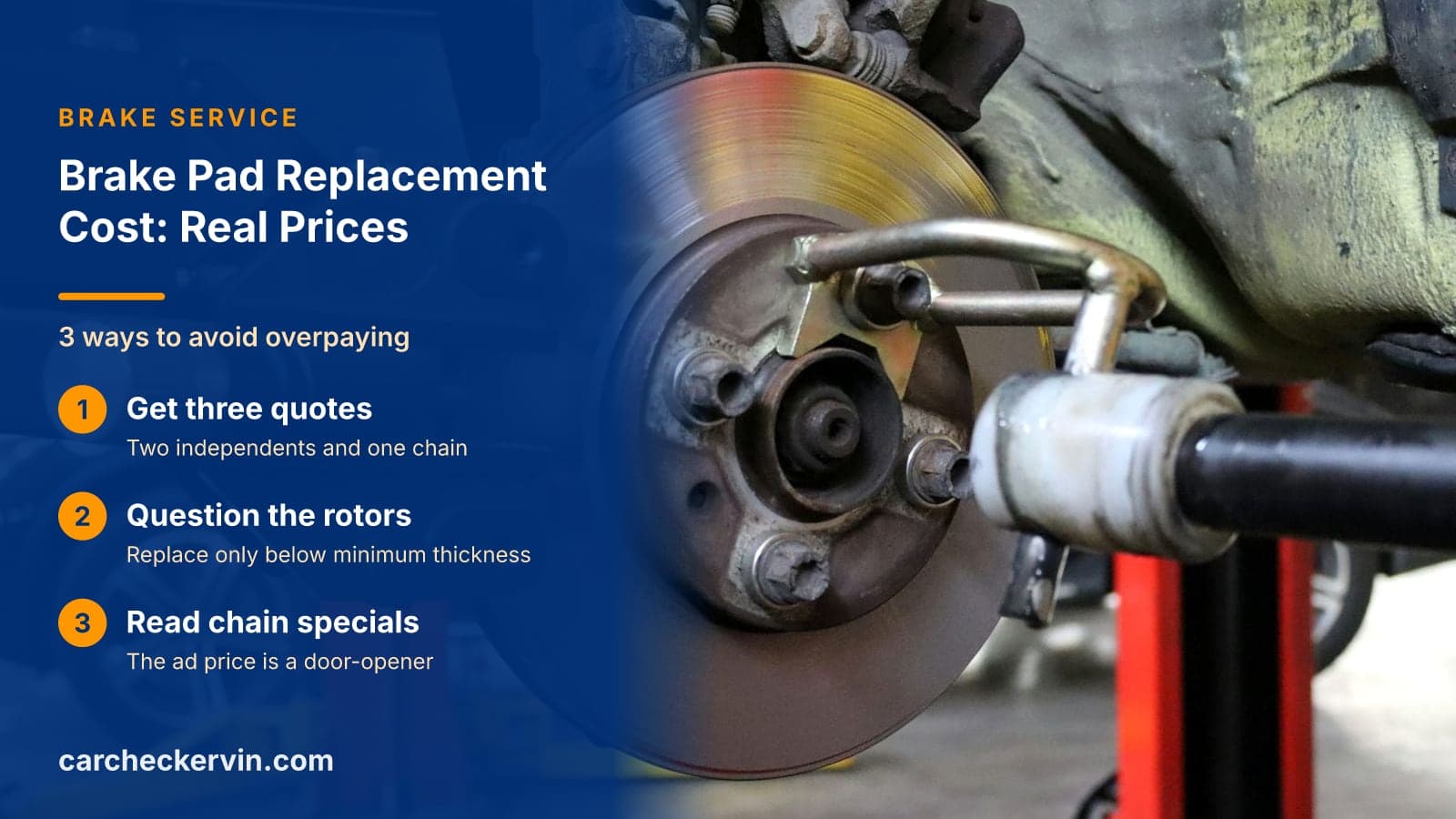
Brake Pad Replacement Cost: What You'll Actually Pay
Brake pad replacement cost varies widely by vehicle and shop. Here's what you'll actually pay per axle, when you can skip rotors, and how to avoid overpaying at chains or dealerships.
Sep 28, 2026 · 9 min read