Importing an American car to the UK? Read its US past first
HMRC, the approval test and DVLA will all check the car in turn. None of them reads what happened to it in America — and if it turns out to be seriously damaged, the VAT and duty you have paid do not come back. Its title, mileage and auction record are one VIN away.
Check the US record before you pay for shipping
Enter the 17-character VIN. The preview is free; the full report is £16.99 for UK buyers, one payment, no subscription.
256-bit encryption · No account · No data stored
Quick Answer
- How do I check the history of an American car before importing it?
- By its VIN — the 17-character number at the base of the windscreen, on the door pillar and on the US title. A US history report reads what American records hold: title brands such as salvage or junk, dated odometer readings, auction listings, insurance records and how the car was used. Nothing in the UK import paperwork carries that past.
- What are the steps to import an American car to the UK?
- GOV.UK lists 6 for a shipped car: an import declaration, VAT and customs duty at the border, telling HMRC within 14 days through NOVA, vehicle approval, registering and taxing with DVLA, and insurance. You can be prosecuted for using the car on a public road before they are done, except to drive to a pre-booked MOT or approval test.
- Why check the US history before paying duty?
- Because a seriously damaged vehicle cannot be registered in the UK, and GOV.UK says you will not be refunded any VAT, customs duty or vehicle approval fee you paid before finding out. For an American car, that damage is usually recorded on its US title — which you can read by VIN before the car is shipped.
Why an American car's history is still in America
An American car arrives with a title issued by a US state and a life recorded in American databases. British records start the day DVLA registers it. Nothing links the two except the VIN, which is the same on both sides of the Atlantic.
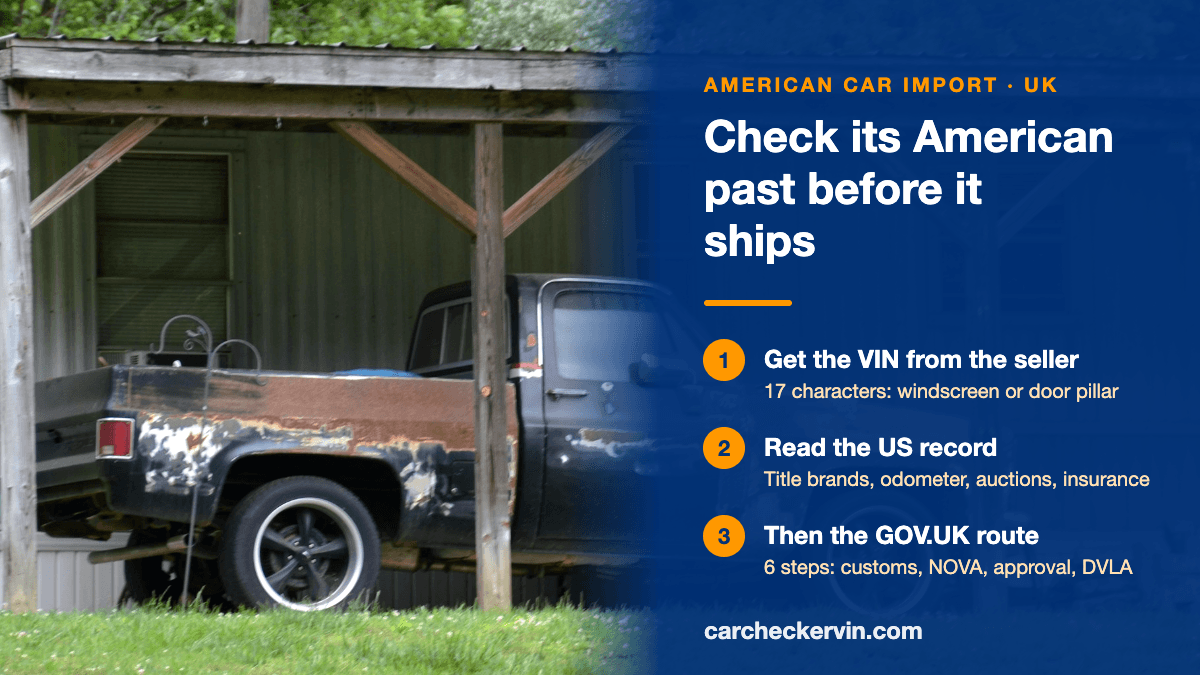
The UK process checks what it is designed to check. Customs collects tax; the approval test confirms the car meets safety and environmental standards on the day; DVLA records a keeper. A car written off by an insurer in Texas, rebuilt and shipped can pass the inspection on its merits. Its US title still carries the brand.
The GOV.UK rule that makes the check urgent
GOV.UK is direct about it: you cannot register and tax a ‘seriously damaged’ vehicle, and if you pay VAT, customs duty or a vehicle approval fee and then try to register one, you will not be refunded. Serious damage means the vehicle cannot be repaired — the registration certificate might say something like ‘statutory write-off’, ‘scrapped’ or ‘non-repairable’.
On an American car, that wording lives on the state title. US brands such as junk or non-repairable are the kind of language GOV.UK describes; a salvage brand says an insurer wrote the car off, which may or may not mean it cannot be repaired. GOV.UK asks you to check with the registration authority of the country the car comes from and, if it is not seriously damaged, to get evidence of that.
A history report is how you find out which question to ask — before the car is on a ship, not after the duty is paid. Even a repairable salvage car has consequences here: DVLA may give a damaged or salvaged car a Q registration number, a new VIN or a marker on the V5C, or ask for IVA.
What the US record shows
Six kinds of information, all tied to the VIN. They are what our US report reads — and what British buyers are usually after when they search for “Carfax UK”.
Title brands
US states brand the title after serious events: salvage after an insurer's total loss, junk or non-repairable for a car destined for parts. A brand stays on the record when the car crosses the Atlantic.
Odometer readings
Every title transfer, inspection and auction leaves a dated mileage. Lined up, they show whether the odometer has gone backwards — or rolled over.
Auction listings
American cars bound for export are often bought at auction, including insurers' salvage sales. The report shows whether this car was listed, and when.
Insurance records
Claims and total losses reported to insurers leave a trace, even after a careful repair has left the bodywork looking clean.
Owners and use
How many owners, and what kind of use was recorded: personal, fleet, rental, taxi, police or commercial.
Liens
A loan secured on the car shows as a lienholder on the title. A car still under lien in the US does not have a clear title to sell.
Miles you can read — and miles you can't
An American car counts in miles, so a British buyer needs no conversion. The trap on older cars is a different one: a mechanical counter with five drums cannot show more than it was built to.
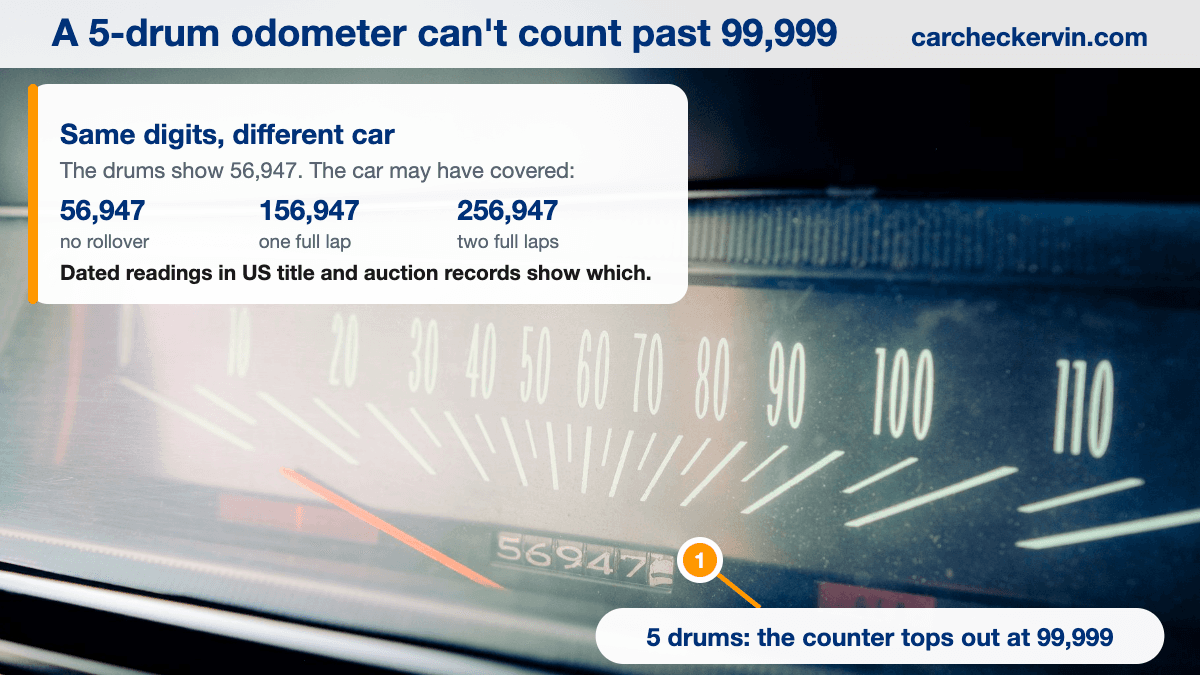
A classic Mustang or C10 showing a modest figure on a five-digit odometer may be telling the truth, or may be on its second or third lap. The drums cannot tell you which; dated readings from title transfers, inspections and auctions can. The same readings catch the modern problem too — a recorded mileage higher than the one on the dash. More on checking an odometer against its records.
Four checks that cost almost nothing
All of them can be done remotely, before shipping, while walking away still costs you nothing.
- 1Get the VINAll 17 characters, photographed at the windscreen, on the door pillar and on the title. They must match.
- 2Read the US recordTitle brands, odometer readings, auctions, insurance. A junk or non-repairable brand ends the conversation.
- 3Ask the damage questionIf the title is branded, find out from the issuing state whether the car counts as seriously damaged — before anything ships.
- 4Price the approvalMost American cars go through IVA. Find out what this one needs before you commit.
The 6 GOV.UK steps, in order
This is the order GOV.UK gives for a car shipped to the UK for you. If you bring it in yourself through the Channel Tunnel or by ferry, telling HMRC comes first and the import declaration only follows if HMRC says there is VAT or duty to pay. Until every step is done, you can be prosecuted for using the car on a public road — the one exception is driving to a pre-booked MOT or approval test.
1. Make an import declaration
A shipping company or customs agent makes it for you, before the car arrives or at the UK border.
2. Pay VAT and customs duty
At the border. The shipping company or agent usually arranges it; you must pay before you can register the car.
3. Tell HMRC within 14 days
Through a NOVA declaration. You cannot register the car until it is done, and you may be fined if you are late.
4. Get vehicle approval
Proof that the car meets safety and environmental standards — for an American car, normally Individual Vehicle Approval (IVA).
5. Register and tax with DVLA
A £55 registration fee plus tax. DVLA issues the registration number for your plates.
6. Insure it
Before you drive it on UK roads.
Telling HMRC: NOVA within 14 days
You have 14 days from bringing the car in permanently to tell HMRC, and you cannot register it until you have. For a private buyer having the car shipped, the Notification of Vehicle Arrivals can be made by the shipping company or customs agent — who may charge an extra fee — or by HMRC’s CARS team on your behalf. Whoever makes it will need:
- The C88 and E2 customs documents, or the Movement Reference Number (MRN).
- The invoice or bill of sale, if you bought the car in the last six months — otherwise a current valuation, carried out in person in the UK by a garage, dealership or other recognised business.
- A copy of an official document confirming the VIN or chassis number.
VAT, duty and vehicle approval
What VAT is charged on
The total cost of the vehicle, plus any accessories bought with it, delivery and extra charges, and the customs duty itself.
The duty rate
GOV.UK does not publish one figure: the rate depends on the type of vehicle and where it is imported from. Your shipping company, customs agent or the HMRC helpline can confirm it — a pickup and a saloon need not be treated the same.
Vehicle approval
For a car not registered in the EU, the route is Individual Vehicle Approval. Left-hand drive vehicles and personal imports can use Basic IVA: a visual inspection and other tests, normally without documentary evidence.
The 10-year exemption
Cars first registered or manufactured more than 10 years ago might not need approval. GOV.UK asks you to check the exemptions list, which matters for classic American cars.
Registering with DVLA
Before DVLA will register the car, NOVA must be processed, any VAT and duty paid, and approval proven. Registration costs £55, and you tax the car at the same time. DVLA might ask to inspect it, and it can take up to 6 weeks for the V5C to arrive — you need it to have number plates made up.
Among the originals DVLA wants is the foreign registration certificate, to show when the car was manufactured — and you will not get it back. Photograph it first: its VIN is the one you will use to read the car's American record later, and the one every document must match.
Buying an American car that is already in the UK
Most British buyers never import anything: they buy a Mustang, a Ram or a Corvette that someone else brought in. Its UK paperwork may be complete, and its V5C may be clean. The American part of its life is still only in the American record.
Two things are worth knowing. A Q registration number or a V5C marker is one of the ways DVLA flags a damaged, salvaged or rebuilt car — ask why, and read the US title history to find out. And a car registered years ago on an age-related plate can have a US past nobody mentions in the advert. The VIN on the V5C opens it.
“Carfax UK”: what you are actually looking for
Searching for Carfax from Britain almost always means wanting the American history of one particular car. Carfax and similar reports read US records — exactly right for an imported American car, and of little use for a car that has only ever been on British roads, where DVLA, MOT and UK finance and write-off checks do that job.
Our US report covers the American side by VIN: title brands, odometer readings, auctions, insurance, use and liens. The preview is free and the full report is £16.99 for UK buyers, one payment, no subscription. For how the leading US reports compare, see our report against Carfax.
Six mistakes that cost British importers money
- Paying the shipping, VAT and duty before reading the US title. If the car turns out to be seriously damaged, GOV.UK is explicit that none of it comes back.
- Missing the 14-day HMRC deadline. You cannot register the car until NOVA is done, and a late notification can be fined.
- Driving the car home from the port on its US plates. Until the steps are complete, the only road use GOV.UK allows is to a pre-booked MOT or approval test.
- Trusting a low reading on an older five-drum odometer. After 99,999 it starts again from zero; only dated readings in the US record show how many times it has.
- Handing over the original US registration document without a copy. DVLA keeps the original foreign registration certificate you send with the application.
- Assuming a clean-looking car has a clean title. A rebuilt salvage car can look immaculate; the brand is on paper, not on the paint.
Official sources
Every rule on this page comes from one of these GOV.UK guides, read on 24 September 2026.
GOV.UK — Importing vehicles into the UK
Updated 10 December 2024. The steps and their order, telling HMRC, VAT and duty, vehicle approval, registering, and damaged or salvaged vehicles.
GOV.UK — Vehicle approval
Individual Vehicle Approval, Basic IVA for left-hand drive and personal imports, and the exemptions for cars over 10 years old.
Keep checking
Frequently asked questions
How much does it cost to import an American car to the UK?
Add up the price of the car, shipping, VAT and customs duty, vehicle approval, the £55 DVLA registration fee plus vehicle tax, and insurance. GOV.UK says VAT is charged on the total cost of the vehicle plus accessories, delivery and extra charges, and the customs duty itself. It does not publish a single duty rate: the rate depends on the type of vehicle and where it comes from, and your shipping company, customs agent or the HMRC helpline can confirm it.
Does an American car need an IVA test?
For a vehicle not registered in the EU, GOV.UK's route to approval is Individual Vehicle Approval. Left-hand drive vehicles and personal imports can use Basic IVA, a visual inspection with other tests and normally no documentary evidence. Cars first registered or manufactured more than 10 years ago might not need approval at all — GOV.UK asks you to check the exemptions list.
What is NOVA and who files it?
NOVA — Notification of Vehicle Arrivals — is how you tell HMRC the car has arrived, within 14 days. For a private individual having the car shipped, it can be made by the shipping company or customs agent (who may charge for it) or by HMRC's CARS team. It needs the customs documents, the invoice or bill of sale if you bought the car in the last six months, and an official document confirming the VIN or chassis number.
Can I register a salvage-title American car in the UK?
It depends on the damage, not the word. GOV.UK says a seriously damaged vehicle — one that cannot be repaired, with wording like 'statutory write-off', 'scrapped' or 'non-repairable' on its registration certificate — cannot be registered or taxed. For anything else, it asks you to get evidence from the registration authority of the country the car comes from that it is not seriously damaged. DVLA may also give a damaged or salvaged car a Q registration number, a new VIN or a marker on the V5C, or ask for IVA.
Is there a Carfax for the UK?
Carfax and comparable reports read American records. For an American car in the UK that is exactly the history you are missing — title, mileage, auctions, insurance. For a car that has only ever been on British roads, you want DVLA, MOT and UK finance and write-off checks instead. Our US report covers the American side by VIN, for a single payment.
How long does registration take?
GOV.UK says it can take up to 6 weeks for the registration certificate (V5C) to arrive, and you need the V5C to get number plates made up. DVLA might also ask to inspect the vehicle.
The paperwork will be in order. What about the car?
The VIN is on the US title, at the base of the windscreen and on the door pillar. Enter it to read what the car went through in America. One payment, no subscription.
Preview first · One payment · Instant delivery
Vérifications VIN connexes
Plus d'outils pour vérifier l'historique de tout véhicule