Commercial Truck VIN Decoding: How to Read Class 7-8 Semi & Box Truck VINs
Class 7-8 truck VINs encode far more data than passenger cars. Here's a field guide to reading every character on a Freightliner, Peterbilt, or any heavy-duty commercial VIN.
On this page
- Where to Find the VIN on a Class 7-8 Truck
- How a Commercial Truck VIN Is Structured
- Decoding the VDS: What Positions 4-8 Tell You on a Semi Truck VIN
- Why GVWR Class Matters in the VIN
- How to Decode a Commercial Truck VIN Step by Step
- Common Pitfalls When Buying Used Class 7-8 Trucks
- Freightliner and Peterbilt VIN Specifics
You're standing in a Ritchie Bros. lot, a dealer's back row, or maybe a Copart salvage yard. You've got a clipboard and a phone. The truck in front of you is a 2019 Freightliner Cascadia with 400,000 miles, and the seller swears it's clean. Before you hand over $35,000, you need to know exactly what that 17-character commercial truck VIN is telling you (and what it's hiding). Heavy-duty VINs follow the same basic ISO 3779 structure as passenger cars, but they encode significantly more information about the drivetrain, braking system, GVWR class, and cab configuration. If you've only ever decoded car VINs, truck VINs will feel like a different dialect of the same language.
60-second answer
A commercial truck VIN uses positions 4-8 to encode GVWR class, engine family, brake type, and cab style. You can decode it free through NHTSA's VIN Decoder API, but for title history, accident records, and odometer checks on Class 7-8 trucks, run a full VIN check at our vin-check page.
Where to Find the VIN on a Class 7-8 Truck
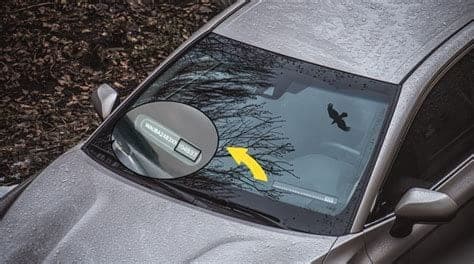
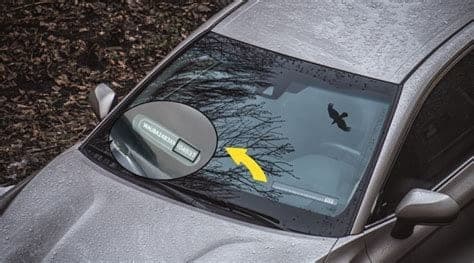
Passenger cars almost always stamp the VIN on the driver-side dashboard and the door jamb sticker. Commercial trucks follow the same federal requirement (49 CFR Part 565), but you'll find the plate in slightly different spots depending on the manufacturer. On most Freightliner models, look at the left side of the dash visible through the windshield and on a metal plate riveted to the driver-side door frame. Peterbilt trucks typically place the VIN plate on the left cab door pillar. Kenworth stamps it in a similar spot. International (Navistar) trucks often rivet it to the left side of the cowl. Always cross-reference the dash VIN, the door sticker, and the title. If any two don't match, walk away.
How a Commercial Truck VIN Is Structured
Every 17-character VIN breaks into three sections. The World Manufacturer Identifier (positions 1-3) tells you the country and maker. The Vehicle Descriptor Section (positions 4-8) is where commercial trucks diverge sharply from cars. The Vehicle Identifier Section (positions 10-17) covers model year, plant, and serial number. Position 9 is always the check digit. Here's how those middle positions work for heavy-duty rigs.
- Positions 1-3 (WMI): Country, manufacturer, and vehicle type. A Freightliner VIN built in the US starts with 1FU or 3AK. A Peterbilt VIN typically starts with 1XP or 2NP.
- Positions 4-8 (VDS): These encode GVWR class, model series, engine type, brake system (air vs. hydraulic), cab configuration, and sometimes axle setup. This is the section that matters most for fleet buyers.
- Position 9: Check digit calculated from all other positions. Useful for spotting cloned or altered VINs.
- Position 10: Model year code. J = 2018, K = 2019, L = 2020, and so on.
- Positions 11-17: Assembly plant and sequential production number.
Decoding the VDS: What Positions 4-8 Tell You on a Semi Truck VIN
This is where a semi truck VIN gets interesting. Each OEM assigns these five characters differently, so there's no universal chart. But the information they encode is consistent across brands: gross vehicle weight rating, engine displacement or family, brake type, and cab or body style. For a Freightliner VIN, position 4 typically identifies the model (P for Cascadia, S for Columbia, etc.), position 5 indicates the GVWR range, position 6 may specify the engine series (Cummins X15 vs. Detroit DD15), and positions 7-8 can indicate cab length and axle configuration. A Peterbilt VIN uses a similar but distinct mapping. NHTSA's free VIN Decoder tool (vpic.nhtsa.dot.gov) will parse most of these fields automatically for trucks made after 1981.
Why GVWR Class Matters in the VIN
The Federal Highway Administration defines Class 7 trucks as those with a GVWR of 26,001 to 33,000 pounds. Class 8 starts at 33,001 pounds and has no upper limit (your typical loaded 18-wheeler grosses around 80,000 pounds). That class designation sits inside positions 4-8 of the VIN and has direct consequences for you as a buyer. Class 8 vehicles require a CDL to operate. They fall under FMCSA inspection and maintenance rules. They have different insurance rate structures. And their title histories are tracked differently in NMVTIS, the National Motor Vehicle Title Information System. When you decode a class 8 VIN, you should verify that the GVWR in the VIN matches the door sticker and the registration. Mismatches can indicate an unauthorized uprating or downrating, both of which create liability problems.
Watch for VIN cloning on commercial trucks
NICB (the National Insurance Crime Bureau) reports that VIN cloning is increasingly common in the commercial truck market. Criminals copy a VIN from a clean truck onto a stolen or salvage unit. Always verify the VIN plate's rivets for tampering, check that the check digit (position 9) validates, and run a full history report. A truck with a suspiciously low price and a VIN that doesn't match any public title record is a red flag you should not ignore.
How to Decode a Commercial Truck VIN Step by Step
- Physically inspect the VIN plate on the truck. Photograph it. Check for signs of tampering (loose rivets, misaligned characters, sticker residue over the original plate).
- Enter the 17-character VIN into NHTSA's free VIN Decoder at vpic.nhtsa.dot.gov. This returns make, model, year, GVWR, engine specs, brake type, and body class.
- Cross-reference the decoded GVWR with the door sticker and registration paperwork. They should match exactly.
- Run a full VIN check to pull title history, accident records, odometer readings, and any salvage or flood brand from NMVTIS-connected sources. Our vin-check page handles Class 7-8 trucks.
- Check for open recalls through NHTSA's recall lookup. Commercial trucks have high recall rates for brake components, steering, and emissions systems.
- If the truck has a Cummins or Detroit Diesel engine, use the engine serial number (separate from the VIN) to verify the engine family matches what the VIN says. Swapped engines are common in the used semi market.
Common Pitfalls When Buying Used Class 7-8 Trucks
Odometer fraud is rampant in commercial trucking. FMCSA requires accurate odometer disclosure on trucks under 25 years old, but enforcement is inconsistent at the state level. A VIN history report from NMVTIS-connected databases will show you every odometer reading recorded at title transfers and inspections. If the mileage drops between entries or jumps suspiciously, that's a rollback. Another common trap: rebuilt salvage trucks sold across state lines. A truck totaled in Texas can be retitled as rebuilt in a more lenient state (sometimes called title washing). The VIN stays the same, but the brand disappears. A thorough VIN check catches this because NMVTIS aggregates brand records from all 50 states, not just the current title state.
Freightliner and Peterbilt VIN Specifics
Freightliner dominates the Class 8 market with roughly 40% share in recent years (per ACT Research registration data). If you're shopping used semis, you'll decode a lot of Freightliner VINs. Their WMI codes include 1FU (US-built conventional), 1FV (US-built cab-over), and 3AK (Mexico-built Cascadia). The VDS section on a Freightliner is particularly dense, encoding up to six distinct attributes in five characters. Peterbilt VINs (WMI starting with 1XP for US-built models) tend to be slightly easier to parse because Peterbilt offers fewer model variations. Position 4 on a Peterbilt VIN usually maps directly to the model number (579, 389, 567). For either brand, NHTSA's decoder handles the heavy lifting. But understanding what each field means helps you spot inconsistencies that a database alone won't flag.
What to do next
Grab the 17-character VIN from the truck you're evaluating. Decode it free through NHTSA's tool to confirm GVWR, engine, and brake type. Then run a full VIN check on our vin-check page to pull title history, salvage brands, and odometer records before you commit. Ten minutes of research now can save you five figures later.
CarCheckerVIN Editorial Team
In-house automotive research team
The CarCheckerVIN editorial team combines decades of automotive industry, dealer, and journalism experience to produce trustworthy buying, selling, and ownership guidance backed by NMVTIS, NICB, and manufacturer data.
Ready to check a VIN?
Run a free VIN check
Decode any vehicle in under 60 seconds.