WMI Codes Explained: How to Read the First 3 Characters of Any VIN
The first three characters of every VIN — the World Manufacturer Identifier — tell you exactly who built a vehicle and where. Here's how to read them like a pro.
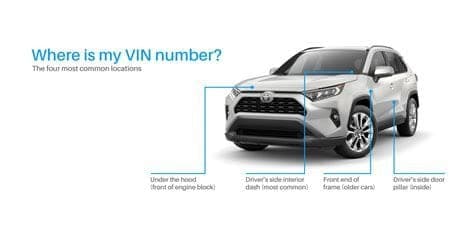
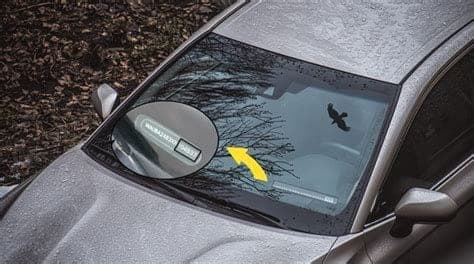
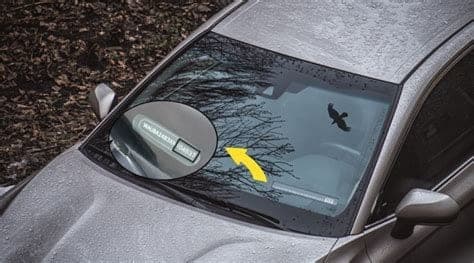
You're standing in a driveway, phone in hand, staring at the metal plate on a dashboard. The seller swears the SUV was built in Japan. The badge says Toyota. But something about the price, the trim, and the slightly different interior makes you wonder — is this actually a US-built Highlander or a Japanese-market import? The answer is hiding in plain sight, stamped into the first three characters of the vehicle identification number. Those three digits are called the World Manufacturer Identifier, and they're the fastest way to verify where a vehicle really came from and who actually assembled it.
60-second answer
WMI VIN codes are the first three characters of any 17-digit VIN. The first character identifies the country of manufacture, the second identifies the manufacturer, and the third narrows it down to the vehicle type or manufacturing division. Together, they tell you exactly who built the car and where — before you even run a full VIN check.
What Exactly Is a WMI Code?
Every vehicle sold in the United States since 1981 carries a standardized 17-character VIN. The structure is governed by federal regulation — specifically 49 CFR Part 565, administered by NHTSA. The VIN breaks into three sections: the WMI (positions 1–3), the Vehicle Descriptor Section (positions 4–8), and the Vehicle Identifier Section (positions 10–17), with position 9 reserved for a check digit. The WMI is the piece that anchors a vehicle to a specific manufacturer and country. It's assigned by the Society of Automotive Engineers International under ISO standard 3780 and registered with authorities in each country. No two active manufacturers share the same three-character code.
Think of it as a manufacturer's fingerprint. A WMI lookup can instantly tell you whether you're looking at a Ford built in Michigan, a BMW assembled in South Carolina, or a Hyundai that rolled off a line in Alabama. That matters — a lot — when you're evaluating a used car's history, its recall eligibility, and even its parts compatibility.
Breaking Down Each Character
Let's take a WMI like "1G1" — one of the most common you'll encounter on American roads. Each position carries distinct meaning.
- Position 1 — Country of manufacture. The digit "1" (or "4" or "5") means the vehicle was built in the United States. "2" is Canada. "3" is Mexico. Letters indicate other regions: "J" for Japan, "W" for Germany, "S" for the United Kingdom, "K" for South Korea.
- Position 2 — Manufacturer. "G" in the second spot identifies General Motors. "F" would be Ford. "B" would be BMW (when paired with a German country code like "W").
- Position 3 — Vehicle type or manufacturing division. In our "1G1" example, the "1" in the third position designates Chevrolet passenger cars specifically. A "1GC" code, by contrast, would indicate Chevrolet trucks.
So "1G1" decoded reads: United States, General Motors, Chevrolet passenger car. Three characters. That's all it takes.
Common VIN Country Codes You Should Know
VIN country codes follow a pattern established by ISO 3780. You don't need to memorize every one, but knowing the most common codes — especially the ones relevant to the US used-car market — gives you a real edge. If a seller claims a vehicle is a European import but the VIN starts with "3," you know instantly the car was assembled in Mexico. That's not necessarily bad, but it's information the seller either didn't know or didn't want to share.
- 1, 4, 5 — United States
- 2 — Canada
- 3 — Mexico
- J — Japan
- K — South Korea
- L — China
- S — United Kingdom
- W — Germany
- Z — Italy
- 9 — Brazil (among other South American countries, with a secondary character distinguishing them)
These VIN country codes are the fastest reality check available. A "JTD" opening tells you Toyota, built in Japan, likely an SUV or truck. A "5YJ" tells you Tesla, built in the US, at the Fremont plant. A "WBA" means BMW, built in Germany — while "WBS" historically indicated BMW M division vehicles. The details are granular, and they're reliable.
Why WMI Codes Matter When Buying Used
Understanding WMI VIN codes isn't just trivia — it's a practical fraud-detection tool. VIN cloning, where criminals stamp a stolen vehicle's body with a VIN from a clean, same-model car, remains a persistent problem. The National Insurance Crime Bureau — NICB — flags thousands of cloned VINs every year. One of the simplest ways to catch a clone is to check whether the WMI matches the vehicle sitting in front of you. A dashboard VIN that starts with "W" on a car that's clearly a US-spec model with American-market features deserves scrutiny.
Country of assembly also affects recall coverage. NHTSA recalls are issued by VIN range, and a vehicle built in one plant may be covered while the same model from another plant isn't. If you don't verify the WMI, you could miss an open safety recall — or waste time chasing one that doesn't apply.
Watch for WMI mismatches
If the WMI on the dashboard VIN doesn't match the one on the driver's door jamb sticker — or either conflicts with the vehicle's documented history — walk away. This is a classic sign of VIN cloning or title washing. Run a full VIN check before committing to any purchase.
How to Perform a WMI Lookup
You have several options, ranging from free to comprehensive.
- Use NHTSA's free VIN decoder at vpic.nhtsa.dot.gov. Enter the full 17-character VIN and the system returns the manufacturer, plant, and model year — all derived in part from the WMI.
- Cross-reference with SAE International's WMI database. SAE is the assigning body for all WMI codes worldwide. Their records are the authoritative source, though direct access is geared toward industry professionals.
- Run a full vehicle history report through a service like CarCheckerVIN's vin-check page. A WMI lookup confirms the manufacturer, but a full report pulls in title history, accident records from NMVTIS, odometer readings, and more. The WMI is your starting point — the full report is your safety net.
Small Manufacturers Get a Special Rule
Here's a detail most guides skip. Manufacturers that produce fewer than 1,000 vehicles per year receive a WMI where the third character is always "9." The actual manufacturer identity then shifts to positions 12–14 of the VIN. This applies to low-volume builders like Koenigsegg, Pagani, and various specialty coach builders. If you're shopping for an exotic or a kit car and the WMI's third digit is "9," that's normal — but it means you'll need the full VIN to identify the actual builder. Don't rely on the first three characters alone in those cases.
Putting It All Together
The World Manufacturer Identifier is the most information-dense portion of any VIN — three characters that encode country, company, and division. Learning to read WMI VIN codes takes about five minutes. Using that knowledge to catch a misrepresented listing, verify a recall, or confirm a vehicle's actual origin could save you thousands. Every time you look at a used car, read those first three characters before anything else. They don't lie — even when sellers do.
What to do next
Grab the VIN from your next prospective purchase and decode the first three characters using the guide above. Then head to our vin-check page and run the full 17-digit number to get title history, accident data, and recall status — the complete picture that starts with the WMI but doesn't end there.
CarCheckerVIN Editorial Team
In-house automotive research team
The CarCheckerVIN editorial team combines decades of automotive industry, dealer, and journalism experience to produce trustworthy buying, selling, and ownership guidance backed by NMVTIS, NICB, and manufacturer data.
Ready to check a VIN?
Run a free VIN check
Decode any vehicle in under 60 seconds.