How to Decode a VIN Character by Character Using ISO 3779
Every character in a 17-digit VIN tells you something specific — country, manufacturer, engine, model year, even the plant. Here's how to read all 17 positions yourself.
On this page
- Why 17 Characters? A Brief History of ISO 3779
- Positions 1–3: The World Manufacturer Identifier (WMI)
- Positions 4–8: The Vehicle Descriptor Section (VDS)
- Position 9: The Check Digit
- Position 10: Model Year
- Position 11: Assembly Plant
- Positions 12–17: The Production Sequence Number
- Putting It All Together Before You Buy
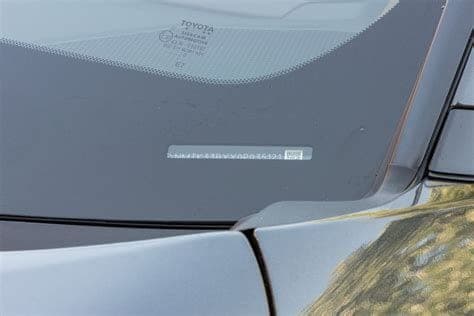
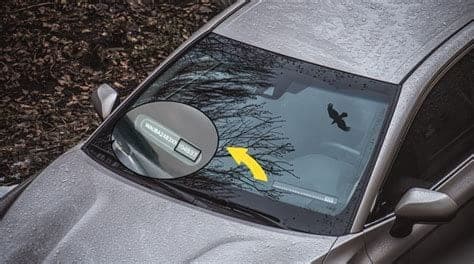
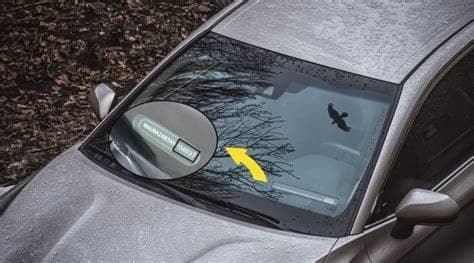
You're standing in a parking lot staring at a used car. The seller says it's a 2018. The listing says it's a V6. The title says it was built in Ohio. You want to verify all of that before you hand over a cashier's check — and the answer is stamped right on the dashboard. That string of 17 characters on the lower-left windshield isn't random. It's a structured code governed by an international standard, and once you know how to decode a VIN character by character, you can confirm make, model, engine type, model year, and assembly plant without relying on anyone else's word.
60-second answer
A 17-character VIN follows the ISO 3779 standard. Positions 1–3 identify the manufacturer, 4–8 describe the vehicle's attributes, position 9 is a mathematical check digit, position 10 is the model year, 11 is the assembly plant, and 12–17 form the sequential production number. Every single position means something — none are filler.
Why 17 Characters? A Brief History of ISO 3779
Before 1981, automakers used whatever VIN format they pleased — some were 11 digits, some were 13, and a few were outright cryptic. The International Organization for Standardization published ISO 3779 in 1977 to fix that mess, and the U.S. National Highway Traffic Safety Administration adopted the standard for all vehicles sold domestically starting with the 1981 model year. Since then, every car, truck, SUV, and motorcycle sold in the United States carries a standardized 17-character VIN. No letters I, O, or Q — they're excluded to avoid confusion with the numerals 1 and 0.
Positions 1–3: The World Manufacturer Identifier (WMI)
The first three characters are called the World Manufacturer Identifier. Together they tell you where the vehicle was made and who made it. The first character narrows down the country or region — 1, 4, or 5 means the United States, 2 means Canada, 3 means Mexico, J means Japan, K means South Korea, W means Germany. The second character usually represents the manufacturer or division — for instance, G often signals General Motors, B can indicate BMW. The third character further refines the vehicle type or manufacturing division. So a WMI of "1G1" tells you this is a General Motors passenger car built in the United States — almost certainly a Chevrolet.
- Position 1 — Country of origin (1 = USA, J = Japan, W = Germany, etc.)
- Position 2 — Manufacturer code (G = GM, F = Ford, T = Toyota, etc.)
- Position 3 — Vehicle type or manufacturing division
Positions 4–8: The Vehicle Descriptor Section (VDS)
Here's where things get manufacturer-specific. ISO 3779 reserves positions 4 through 8 for the Vehicle Descriptor Section, but it lets each automaker decide how to fill those slots. Most use them to encode body style, engine type, drivetrain, restraint system, and model line. A Ford might use position 8 for the engine code while Toyota might use position 4. That's why a raw VIN decoder is so valuable — it maps each manufacturer's proprietary coding scheme for you. NHTSA maintains a free VIN decoding tool at vpic.nhtsa.dot.gov that pulls from automaker submissions, making it the closest thing to an official government vin decoder.
When you're buying used, these five characters are critical. They'll confirm whether the car actually has the engine the seller claims, whether it left the factory with all-wheel drive or front-wheel drive, and whether the airbag configuration matches what you see inside. Discrepancies here are a red flag — they could indicate an engine swap, flood damage rebuild, or outright title fraud.
Position 9: The Check Digit
Position 9 is unique. It's a mathematically derived check digit — the only position in the VIN that exists purely for validation. NHTSA requires it on all vehicles sold in the U.S. and Canada. Here's how it works: each letter and number in the other 16 positions is assigned a numeric value, multiplied by a weight factor based on its position, and all those products are summed. The total is divided by 11, and the remainder becomes the check digit. If the remainder is 10, the letter X is used instead.
Why does this matter to a buyer? Because a VIN with an invalid check digit is either mistyped or forged. When you run a VIN through our vin check tool on the /vin-check page, check digit validation happens automatically. If it fails, something is wrong — full stop.
Watch for VIN cloning
Criminals steal VINs from legitimate vehicles and stamp them onto stolen or salvage cars. The check digit will still pass because the cloned VIN is technically valid. That's why a check digit alone isn't enough — you also need a full vehicle history report that cross-references NMVTIS, NICB theft records, and title databases. Run every VIN you're considering through a comprehensive report before buying.
Position 10: Model Year
Position 10 encodes the model year using a rotating alphanumeric system. Letters A through Y — skipping I, O, Q, U, and Z — covered 1980 through 2000. Digits 1 through 9 handled 2001 through 2009. Then the cycle restarted: A is 2010, B is 2011, and so on. J represents 2018, L is 2020, R is 2024. This is one of the fastest ways to verify a seller's year claim on the spot. A "2019" listing with a K in position 10 checks out. One with an H does not — that's a 2017.
Position 11: Assembly Plant
The eleventh character identifies the specific factory where the vehicle was assembled. Each manufacturer assigns its own plant codes, so the same letter might mean a plant in Kentucky for one brand and a plant in Nagoya for another. This character is especially useful if you're comparing two seemingly identical vehicles. A Camry built at Georgetown, Kentucky, may carry different options or quality control histories than one from Tsutsumi, Japan — and position 11 reveals the difference instantly.
Positions 12–17: The Production Sequence Number
The final six characters form a simple sequential serial number assigned during production. They don't encode vehicle features, but they do make the full 17-character VIN unique worldwide. No two vehicles should share the same complete VIN — ever. These digits occasionally help determine build date relative to other vehicles from the same plant and model year, which can matter when tracking mid-year engineering changes or recall applicability.
- Locate the VIN — lower-left dashboard, driver's door jamb, or the title document.
- Read positions 1–3 to confirm country of origin and manufacturer.
- Check positions 4–8 against NHTSA's VIN decoder to verify engine, body, and drivetrain.
- Validate position 9 — the check digit — to confirm the VIN hasn't been altered.
- Read position 10 to verify the model year matches the listing.
- Run the full 17-character VIN through a comprehensive vehicle history report to check for title brands, theft records, and odometer discrepancies.
Putting It All Together Before You Buy
Knowing how to decode a VIN character by character gives you a portable fraud-detection skill. You can stand in any driveway or dealership lot and verify basic claims without an internet connection. But manual decoding has limits — it won't tell you about flood damage in Louisiana, an odometer rollback in New Jersey, or a salvage title issued in a state the car never should have left. For that, you need a full history report that queries NMVTIS, insurance total-loss records, auction data from Copart and IAA, and state DMV title histories.
CarCheckerVIN's reports layer all of that onto the structural data encoded in the VIN itself. Head to our /vin-check page, enter the 17-character VIN, and you'll get a decoded breakdown alongside title history, accident records, and recall status — all in one place. If you're weighing report options, the /pricing page lays out exactly what each tier covers.
What to do next
Grab the VIN from the vehicle you're considering, decode it using the position-by-position guide above, and then run it through a full vehicle history check at /vin-check. Manual decoding confirms the basics; a comprehensive report catches everything the naked eye can't — salvage titles, hidden liens, odometer fraud, and open recalls.
CarCheckerVIN Editorial Team
In-house automotive research team
The CarCheckerVIN editorial team combines decades of automotive industry, dealer, and journalism experience to produce trustworthy buying, selling, and ownership guidance backed by NMVTIS, NICB, and manufacturer data.
Ready to check a VIN?
Run a free VIN check
Decode any vehicle in under 60 seconds.