The Monroney Label: How to Read a New Car Window Sticker by VIN
The Monroney label is federally mandated on every new car sold in America. Here's how to read one, retrieve it by VIN, and spot the details most buyers miss.
Check the car you're reading about
Free VIN decode and recall check
Factory specs and open NHTSA recalls in seconds. No sign-up.
On this page· 7
- What the Monroney Regulation Actually Requires
- How to Retrieve a Window Sticker by VIN
- Anatomy of the Sticker: Section by Section
- The Addendum Sticker: What the Monroney Does Not Cover
- Why the Monroney Label Matters for Used-Car Buyers Too
- Cross-Referencing the Monroney Label with a VIN History Report
- Common Misreadings and Negotiation Mistakes
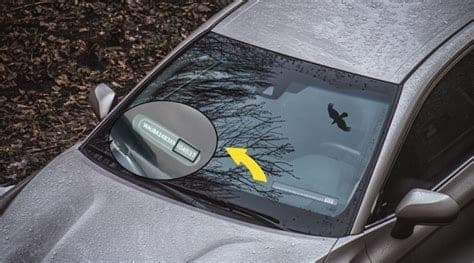
Walk onto any new-car lot in the United States and you will see a large sticker affixed to the side window of every unsold vehicle — a document most shoppers glance at for the price and ignore entirely after that. That sticker is the Monroney label, named after Senator Almer Stillwell "Mike" Monroney of Oklahoma, who authored the Automobile Information Disclosure Act of 1958. The law, codified at 15 U.S.C. § 1231–1233, makes it a federal offense for a dealer to remove or alter the label before the vehicle is delivered to the buyer, and it requires manufacturers to print a surprisingly dense set of data on it — data that, when read carefully, can save a buyer thousands of dollars and expose add-on markups that have no basis in factory cost. Because every Monroney label is generated for a specific Vehicle Identification Number, you can retrieve one online using the VIN alone, which makes it an essential verification tool even if you never set foot on a dealership lot.
60-second answer
A Monroney label is the federally required window sticker on every new car, tied to a unique VIN. You can look it up by VIN through the manufacturer's website or a VIN-check service to verify MSRP, standard and optional equipment, fuel economy ratings from the EPA, crash-test scores from NHTSA, and the destination charge — before you ever negotiate.
What the Monroney Regulation Actually Requires
The statute is short but remarkably specific. Under 15 U.S.C. § 1232, every new automobile delivered to a dealer must bear a label disclosing the manufacturer's suggested retail price of the vehicle, the MSRP of each optional accessory or package, the transportation (destination) charge, and the total MSRP. Over the decades, Congress and federal agencies have layered additional disclosure mandates onto that original framework. The Energy Policy and Conservation Act of 1975 required EPA fuel economy data, and the Safe, Accountable, Flexible, Efficient Transportation Equity Act: A Legacy for Users (SAFETEA-LU) of 2005 added NHTSA crash-test star ratings. The result is a single sheet of paper that functions as an intersection of pricing law, environmental regulation, and safety reporting — all keyed to one 17-character VIN.
How to Retrieve a Window Sticker by VIN
Most major manufacturers now host portals where you can pull the original Monroney label using only the VIN. Toyota, Ford, GM, Stellantis, Hyundai, and Honda all offer some form of window sticker lookup on their owner or media sites, though the exact URL structures change periodically. Third-party services can also retrieve the sticker from manufacturer databases — a feature available on platforms like CarCheckerVIN's vin-check page — which is especially useful when you are comparing two vehicles remotely and want to confirm that the options a dealer listed in an ad actually match the factory build sheet. Because the Monroney label is generated at the time of production, it reflects exactly what left the assembly plant, making it a reliable baseline that no amount of dealer-lot photography can replicate.
- Locate the 17-character VIN. On a new car it appears on the driver-side dashboard visible through the windshield, on the driver-side door jamb sticker, and on the Monroney label itself.
- Enter the VIN into the manufacturer's window sticker lookup tool or a trusted VIN-check service.
- Download or screenshot the PDF. Compare every line — MSRP, option codes, destination charge — against the dealer's asking price and any supplemental addendum sticker.
- Flag discrepancies. If the dealer's price sheet lists an option that does not appear on the Monroney label, that item was either added after production (dealer-installed accessory) or fabricated.
Anatomy of the Sticker: Section by Section
Reading the Monroney label from top to bottom reveals a deliberate hierarchy of information. The header identifies the manufacturer, model, trim level, body style, engine, transmission, and the VIN itself. Immediately below sits the base MSRP — the price for the stripped version of that trim. Then comes a list of factory-installed options, each with its own MSRP. A critical but often overlooked line is the destination and delivery charge, which in 2024 ranged from roughly $1,095 for some subcompacts to over $1,995 for full-size trucks and SUVs. This charge is non-negotiable at virtually every franchise dealer because it is printed on the federally mandated label, and manufacturers set it uniformly across the country.
- New car MPG label: The EPA fuel economy section shows city, highway, and combined MPG estimates, along with an annual fuel cost estimate based on 15,000 miles per year and a national average fuel price. Comparing this across trims can reveal that a seemingly small engine upgrade costs an extra $300–$500 per year in fuel.
- NHTSA Safety Ratings: Star ratings for frontal crash, side crash, and rollover resistance appear if the vehicle has been tested. A blank field means testing has not been completed — not that the car scored poorly.
- Parts Content: A small-print section lists the percentage of U.S. and Canadian parts content and the final assembly point, useful for buyers who prioritize domestic manufacturing.
- Greenhouse Gas and Smog Ratings: A 1-to-10 scale set by the EPA rates the vehicle's tailpipe CO₂ and smog-forming emissions relative to all other new vehicles.
The Addendum Sticker: What the Monroney Does Not Cover
Dealers are legally permitted to affix a second sticker — commonly called an addendum or supplemental sticker — next to the Monroney label. This is where markups, dealer-installed accessories like nitrogen-filled tires, paint protection film, VIN etching, and "market adjustment" premiums live. Unlike the Monroney label, this addendum is not governed by 15 U.S.C. § 1232; it is simply the dealer's asking price above MSRP. During the inventory shortages of 2021–2023, addendum markups of $5,000 to $15,000 above MSRP became commonplace on high-demand models like the Ford Bronco and Toyota RAV4 Prime. Having the actual Monroney label in hand — retrieved by the window sticker VIN lookup — gives a buyer the factual ammunition to separate factory cost from dealer profit, and to walk away when the premium is indefensible.
Watch for altered or missing Monroney labels
Under 15 U.S.C. § 1233, removing or altering the Monroney label before delivery to the final consumer is a federal violation carrying fines of up to $1,000 per vehicle. If you visit a dealer and the window sticker is missing, ask for a reprint tied to the VIN — or pull it yourself through a VIN-check service. A dealer who cannot produce the original sticker may be concealing a swap of option packages, a prior dealer trade, or a pre-delivery damage repair.
Why the Monroney Label Matters for Used-Car Buyers Too
The Monroney label is not just a new-car tool. Used-car shoppers benefit enormously from pulling the original window sticker by VIN because it establishes exactly how the vehicle was equipped at the factory. A seller who claims a used truck has the "Technology Package" or "Tow Package" can be verified — or exposed — in seconds. Pricing guides like Kelley Blue Book and Edmunds factor original equipment into their valuations, so knowing whether a vehicle left the plant with a $2,500 option package directly affects its fair market value. For vehicles that have been through Copart or IAA as salvage or insurance total-loss units, comparing the Monroney label to the current condition also helps quantify what was lost or stripped during the damage and resale cycle.
Cross-Referencing the Monroney Label with a VIN History Report
A Monroney label tells you what a vehicle was at birth. A VIN history report — sourced from NMVTIS, state DMV title records, insurance claims databases, and auction houses — tells you what happened to it afterward. The most effective due-diligence approach combines both. Pull the original window sticker to establish the factory build, then run a full vehicle history report to check for title brands (salvage, flood, rebuilt), odometer discrepancies flagged under 49 U.S.C. § 32703, open NHTSA recalls, and lien records. Together, these two documents create a before-and-after picture that neither one provides alone. CarCheckerVIN's pricing page outlines the cost of a comprehensive report, and for vehicles still within their first few years of life, the Monroney label remains easily retrievable through most manufacturer portals.
Common Misreadings and Negotiation Mistakes
Even sophisticated buyers misread the Monroney label in ways that cost real money. One frequent error is treating the destination charge as negotiable — it is a fixed manufacturer charge, not dealer profit, and arguing over it signals inexperience. Another mistake is confusing the EPA's estimated annual fuel cost with actual ownership cost; the EPA uses a standardized fuel price that may be significantly higher or lower than what you pay locally, so recalculate using your region's per-gallon average for a more accurate projection. A third pitfall involves NHTSA star ratings: a five-star overall rating does not mean the vehicle scored five stars in every sub-category, and buyers who skip the fine print may miss a three-star rollover rating hidden behind an impressive composite number. Reading the Monroney label VIN-matched original — rather than a generic trim-level summary from a car-shopping website — eliminates these ambiguities because it reflects the exact vehicle in question.
What to do next
Before you negotiate on any new or recent-model used car, pull the original Monroney label by entering the VIN into the manufacturer's sticker lookup tool or running it through the vin-check page here on CarCheckerVIN. Compare every option line and the total MSRP against the seller's asking price, then pair the sticker with a full VIN history report to catch title brands, recall notices, and odometer flags. Those two documents together give you more leverage than any amount of haggling.
About the author
CarCheckerVIN Editorial Team
In-house automotive research team
The CarCheckerVIN editorial team combines decades of automotive industry, dealer, and journalism experience to produce trustworthy buying, selling, and ownership guidance backed by NMVTIS, NICB, and manufacturer data.
Keep reading
How Many Owners by VIN: The Real Number Behind 'One-Owner Car'
"One-owner car" sounds great on a listing — but is it true? Here's how to check how many owners by VIN and what the number actually tells you about a used vehicle.
Aug 1, 2026 · 34 min read

JDM Import VIN Decoding: Navigating the 25-Year Rule and Japanese Chassis Numbers
Japanese-market vehicles use chassis numbers that don't follow US VIN standards. Here's how to decode them, verify legal import status, and avoid titling nightmares.
Jul 25, 2026 · 49 min read
Boat HIN vs Car VIN: What's Actually Different and Why Buyers Should Care
Hull identification numbers and vehicle identification numbers look alike on the surface, but the databases behind them — and the fraud risks they expose — diverge sharply.
Jul 8, 2026 · 45 min read