Boat HIN vs Car VIN: What's Actually Different and Why Buyers Should Care
Hull identification numbers and vehicle identification numbers look alike on the surface, but the databases behind them — and the fraud risks they expose — diverge sharply.
Anyone shopping for both a used car and a used boat in the same summer will eventually stumble into a confusing overlap: the car has a VIN, the boat has something called a HIN, and the two numbers look vaguely similar but don't play by the same rules. The confusion is understandable — both are federally mandated serial numbers stamped into the body of a vehicle or vessel — yet the agencies that govern them, the databases that store them, and the fraud patterns that exploit them are fundamentally different. Understanding the distinction between a boat HIN vs VIN is not an academic exercise; it is the difference between catching a salvaged hull before handing over $35,000 and discovering the problem six months later when an insurance claim gets denied.
60-second answer
A VIN is a 17-character code governed by NHTSA and 49 CFR Part 565, while a hull identification number (HIN) is a 12-character code governed by the U.S. Coast Guard under 33 CFR Part 181. Both identify individual units, but VINs feed into far richer databases — NMVTIS, insurance records, recall data — whereas HIN records are fragmented across state titling agencies with no single national repository as robust as what exists for cars.
How the Two Numbers Are Built
A car's VIN follows a rigid 17-character structure standardized internationally under ISO 3779 and enforced domestically by NHTSA through 49 CFR Part 565. Characters one through three identify the manufacturer (the World Manufacturer Identifier), characters four through eight encode attributes like engine type and body style, character nine is a computed check digit designed to catch transcription errors, character ten denotes the model year, and characters twelve through seventeen form a sequential production number. Every light vehicle manufactured for sale in the United States since 1981 must carry this exact format, and the check-digit algorithm means that a single transposed character will mathematically fail validation — a powerful anti-fraud feature.
A watercraft HIN, by contrast, is only 12 characters long. The U.S. Coast Guard mandates the format under 33 CFR Part 181, Subpart C. The first three characters are a Manufacturer Identification Code (MIC) assigned by the Coast Guard, the next five are a serial number chosen by the builder, and the final four encode the date of manufacture — either the month-and-year of production or, for model-year designations, a certification date. There is no check digit. That single missing feature means a cloned or altered HIN is harder to catch through math alone, a fact that investigators at the National Insurance Crime Bureau (NICB) have flagged repeatedly.
- VIN: 17 characters, NHTSA-regulated, includes a mathematical check digit (position 9), tied to NMVTIS.
- HIN: 12 characters, Coast Guard-regulated under 33 CFR Part 181, no check digit, tied to individual state boating registries.
- VINs encode vehicle attributes (engine, restraint system, GVWR); HINs encode only the manufacturer, serial, and date of build.
The Database Gap That Exposes Boat Buyers
When a buyer runs a car's VIN through a service backed by NMVTIS — the National Motor Vehicle Title Information System, administered by the American Association of Motor Vehicle Administrators on behalf of the Department of Justice — the query can surface title brands (salvage, flood, junk), odometer discrepancies flagged under 49 U.S.C. § 32703, theft records from NICB, and insurance total-loss data reported by carriers. Services like Carfax and AutoCheck pull from overlapping but not identical pools of this information. Running a VIN through a page like our vin-check tool taps into these same data streams, giving buyers a layered picture of a vehicle's past.
Boats enjoy no equivalent centralized system. State boating agencies — the Florida Fish and Wildlife Conservation Commission, the California Department of Motor Vehicles, the Texas Parks and Wildlife Department — each maintain their own title and registration databases, and cross-state sharing is inconsistent. The Coast Guard's Vessel Documentation database covers only federally documented vessels, which are typically those of five net tons or more used in commerce or on navigable waters — leaving the vast majority of recreational boats outside its scope. A boat VIN lookup, to use the colloquial term many buyers type into search engines, often hits dead ends that a car VIN check never would.
Where the Numbers Live Physically
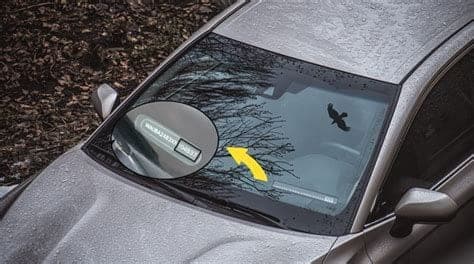
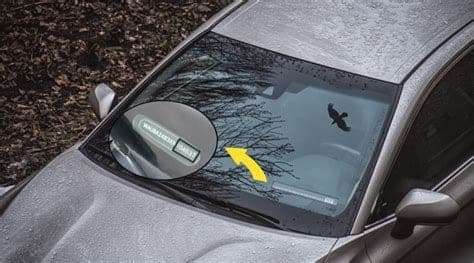
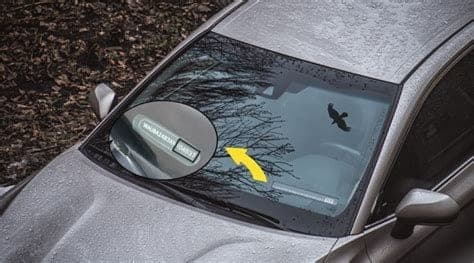
NHTSA requires that a car's VIN plate be visible through the windshield on the driver's side dash and also appear on a federal certification label affixed to the driver's door jamb. Additional stampings exist on the frame or unibody, and many manufacturers etch the VIN into windows as a theft deterrent. Multiple redundant locations make it harder for a thief to eliminate every trace.
A hull identification number must appear in two locations under 33 CFR § 181.29: a primary HIN on the starboard side of the transom (or, for vessels without a transom, on the starboard outboard side of the hull near the stern), and a secondary or duplicate HIN in a concealed location inside the hull or under a fitting. The concealed HIN exists specifically so that if the transom plate is ground off, investigators can still identify the vessel. Yet in practice, many older boats have degraded secondary HINs, and some pre-1972 boats — built before the Federal Boat Safety Act of 1971 took effect — carry no HIN at all.
Fraud Patterns Unique to Each System
Title washing — the practice of moving a salvage-branded vehicle to a state with looser branding laws to obtain a clean title — is a well-documented problem in the car world, one that NMVTIS was specifically created to address (though gaps remain). The boat world has an analog that is arguably worse: because no NMVTIS equivalent exists for watercraft, a storm-damaged boat totaled by an insurer in Florida can be purchased at a Copart or IAA salvage auction, towed to a state that does not track marine salvage brands, and retitled as clean with little friction. Hurricane seasons in the Gulf states routinely generate thousands of flood-damaged boats, and NICB has warned that these vessels resurface in inland markets within months.
Watch for missing or altered HINs
Under 33 CFR § 181.31, it is a federal offense to alter, remove, or falsify a hull identification number. If a seller claims the HIN plate 'fell off' or the transom was replaced without a re-stamped HIN, walk away and report the vessel to your state boating law enforcement agency. A missing HIN is the marine equivalent of a car with a drilled-off VIN plate — a bright red flag for theft or salvage fraud.
How Recalls Work Differently
NHTSA maintains a free, VIN-searchable recall database at nhtsa.gov, and manufacturers are required under the National Traffic and Motor Vehicle Safety Act to notify registered owners of safety defects. The recall infrastructure for boats falls under the Consumer Product Safety Commission (CPSC), not the Coast Guard or NHTSA, and the CPSC's recall database is searchable by product description — not by watercraft HIN. That means a boat buyer cannot simply punch in a 12-character code and see whether outstanding safety recalls apply to a specific hull. The buyer must know the manufacturer, model, and approximate year, then manually cross-reference CPSC recall notices — a process that demands far more effort and leaves more room for missed defects.
Practical Steps for Buyers Crossing Between Markets
Buyers accustomed to the relative transparency of the car market should not assume equivalent protections when shopping for a boat, and vice versa. A few concrete actions narrow the risk gap.
- For cars, run the VIN through NMVTIS-linked tools — our vin-check page is a good starting point — and cross-reference NHTSA's recall database before putting down a deposit.
- For boats, request the HIN and verify the MIC (first three characters) against the Coast Guard's online MIC lookup to confirm the stated manufacturer is legitimate.
- Contact the titling agency in the state where the boat was last registered and ask specifically whether the title carries any brand — salvage, flood, or reconstructed.
- For any vessel over five net tons, search the Coast Guard's National Vessel Documentation Center database to check for outstanding liens or irregular documentation.
- Hire a certified marine surveyor (accredited by SAMS or NAMS) for any boat purchase above $10,000; unlike a car pre-purchase inspection, a marine survey also examines hull integrity below the waterline, where hidden flood or collision damage lurks.
Why This Distinction Keeps Growing More Important
The used-boat market has expanded rapidly, with the National Marine Manufacturers Association reporting that new powerboat sales exceeded 300,000 units in 2021 for the first time in over a decade — and many of those pandemic-era purchases are now cycling into the secondary market. Meanwhile, increasingly severe hurricane seasons continue to generate flood-damaged inventory. The absence of a national watercraft title database means buyers face a higher baseline risk than in the car market, where NMVTIS — despite its known gaps — at least provides a searchable backbone. Legislative efforts to create an NMVTIS-equivalent for boats have surfaced periodically but have yet to gain traction in Congress, leaving state-by-state enforcement as the only safeguard.
For car buyers, the lesson is simpler but still critical: the VIN system, for all its strengths, only works if someone actually checks it. A surprising number of used-car transactions still close without a title-history report, and services that pull NMVTIS data, auction records, and insurance total-loss flags exist precisely to fill that gap. Visiting our pricing page shows how affordable a comprehensive VIN report has become relative to the cost of buying a branded vehicle unknowingly.
What to do next
Before buying any used car, run the VIN through a comprehensive report via our vin-check page. Before buying any used boat, verify the HIN's manufacturer code against the Coast Guard's MIC database and contact the last state of registration for title-brand history. The few minutes spent checking either number can save thousands in undisclosed damage, outstanding liens, or theft complications.
CarCheckerVIN Editorial Team
In-house automotive research team
The CarCheckerVIN editorial team combines decades of automotive industry, dealer, and journalism experience to produce trustworthy buying, selling, and ownership guidance backed by NMVTIS, NICB, and manufacturer data.
Ready to check a VIN?
Run a free VIN check
Decode any vehicle in under 60 seconds.