VIN Model Year Codes 2010–2030: Your Position 10 Cheat Sheet
The 10th character in any VIN tells you the model year — if you know the code. Here's every year code from 2010 through 2030, plus the quirks that trip people up.
You're staring at a 17-character VIN on a Craigslist listing, and the seller swears the truck is a 2018. Maybe it is. Maybe it isn't. The fastest way to settle the argument — before you drive across town — is to check the 10th VIN character yourself. That single letter or number is a direct code for the vehicle's model year, standardized by federal regulation since 1981. Understanding VIN model year codes takes about two minutes, and those two minutes can save you from buying a vehicle that's older (and worth less) than advertised.
60-second answer
The 10th character in a VIN is the model year code. For 2010–2030, the codes cycle through A (2010) to Y (2030), skipping I, O, Q, U, and Z. A '2018' should show 'J' in position 10. If it doesn't match, something is wrong.
The Complete 2010–2030 Model Year Code Table
Here's every 10th VIN character mapped to its model year for vehicles manufactured between 2010 and 2030. Clip this, screenshot it, tattoo it on your forearm — whatever works. This is the reference you'll actually use when doing a VIN year lookup on a vehicle you're considering.
- A = 2010
- B = 2011
- C = 2012
- D = 2013
- E = 2014
- F = 2015
- G = 2016
- H = 2017
- J = 2018 (I is skipped)
- K = 2019
- L = 2020
- M = 2021
- N = 2022
- P = 2023 (O is skipped)
- R = 2024 (Q is skipped)
- S = 2025
- T = 2026 (U is skipped)
- V = 2027
- W = 2028
- X = 2029
- Y = 2030 (Z is skipped)
After Y for 2030, the cycle starts over with 1 for 2031, 2 for 2032, and so on through 9 for 2039, then back to A for 2040. The system has been repeating this 30-year cycle since 1980. If that sounds like it could cause confusion — well, it can. More on that below.
Why Certain Letters Are Skipped
You probably noticed the gaps. The letters I, O, Q, U, and Z are permanently excluded from the VIN year code system. The reason is refreshingly practical: I looks too much like 1, O looks too much like 0, and Q looks too much like O (or 0, depending on the font). U was dropped to avoid confusion with V, and Z was excluded to keep the cycle to exactly 30 characters (A–Y minus the exclusions, plus 0–9). This isn't some automaker quirk — it's baked into the ISO 3779 standard and enforced by NHTSA's 49 CFR Part 565.
The 30-Year Cycle Problem
Here's where things get interesting. The code A was used for both 1980 and 2010. B covered 1981 and 2011. This means a VIN with 'A' in position 10 could theoretically be a 1980 model or a 2010 model. In practice, it's usually obvious — a 1980 Honda Accord and a 2010 Honda Accord share exactly nothing except a brand name. But when you're doing a model year VIN check on a vehicle that could plausibly fall in either cycle (say, a well-preserved classic or an unusually rough newer car), you need the 7th VIN character to disambiguate. For vehicles made in 2010 or later, the 7th position is always a letter; for 1980–2009, it's a number. That distinction was added specifically to prevent cycle confusion.
Watch for VIN cloning and title washing
A mismatched model year code doesn't always mean a typo. VIN cloning — where a stolen or salvage vehicle is given the VIN from a clean title car — is a real problem tracked by the NICB. If the 10th VIN character doesn't match the year on the title, walk away and report it. You can run the VIN through NMVTIS-approved sources or use our VIN check page to look for title brands, salvage records, and odometer inconsistencies.
Model Year vs. Manufacturing Year: A Common Trap
The 10th character tells you the model year, not the calendar year the vehicle rolled off the assembly line. A 2024 model year vehicle (code R) could have been physically built in mid-2023. Automakers routinely begin producing next year's models in the summer or fall of the prior calendar year. This is completely normal and not a red flag. It does mean that the "brand new 2025 model" a dealer is pushing in September 2024 may have been sitting on the lot — or at a port — for a few months already. That's not fraud; it's just how the industry works. But if someone's trying to charge you a premium for a "newer" vehicle, a quick VIN year lookup tells you exactly what year you're actually buying.
How to Use the 10th Character in Real Life
Knowing the year code is most useful in three specific scenarios: shopping for a used car, verifying a parts order, and spotting a listing that's too good to be true. Here's a practical workflow for used-car buyers.
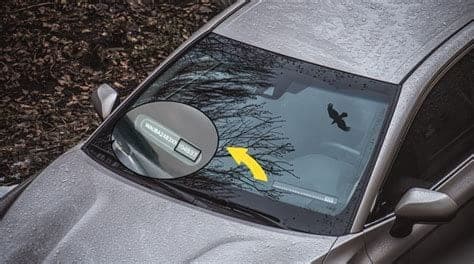
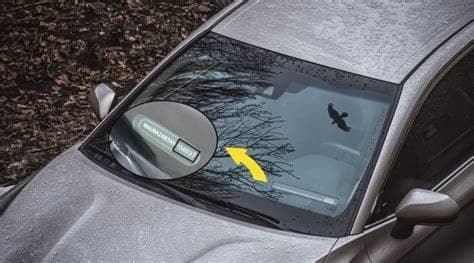
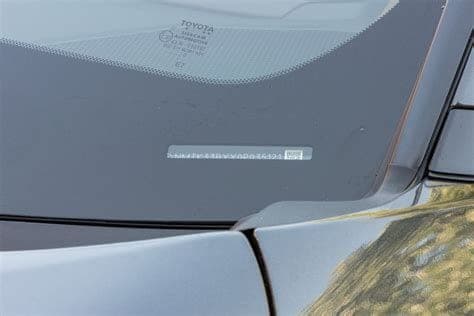
- Find the VIN. It's on the lower-left corner of the windshield, the driver's door jamb sticker, the title, and the registration. All four should match — character for character.
- Count to position 10. Starting from the left, the 10th character is your model year code. Use the table above to decode it.
- Compare the code to the listing. If a seller lists the car as a 2019 but the 10th character is H (2017), you've either found a mistake or a lie. Neither is a great sign.
- Run a full VIN check. The year code is just one data point. A complete VIN report from an NMVTIS-approved provider will show you title history, odometer readings, recall status, and whether the vehicle has a salvage, flood, or rebuilt brand. You can do that right on our VIN check page.
"But the Dealer Said It's a 2020..."
Year misrepresentation on used-car listings is surprisingly common, and it's not always malicious — sometimes it's just sloppy data entry. But here's the thing: a one-year difference in model year can easily mean a $1,500–$3,000 swing in value, depending on the make and model. That's real money. The 10th VIN character is the objective truth, and it takes five seconds to check. The FTC's Used Car Rule requires dealers to display a Buyers Guide on every used car, but it doesn't force them to get the year right in their online listings. You have to verify it yourself.
Beyond Position 10: What the Rest of the VIN Tells You
While you're counting characters, it's worth knowing what the rest of the VIN encodes. Positions 1–3 identify the manufacturer and country of origin (the World Manufacturer Identifier). Positions 4–8 describe the vehicle's attributes — body style, engine, restraint system. Position 9 is a mathematically computed check digit used to detect VIN fraud and transcription errors. And positions 11–17 are the plant code and sequential production number. Together, the full 17-character string is essentially a vehicle's DNA. If you want to go deeper, our blog has guides on reading each section, but for everyday shopping, mastering the 10th character gives you the single biggest bang for your two minutes of effort.
The model year VIN code system has been quietly doing its job since 1981, and it'll keep cycling through the same 30 characters for the foreseeable future. Whether you're cross-referencing a Kelley Blue Book value, ordering a replacement headlight, or just making sure a private seller isn't quietly shaving a year or two off their car's age, that 10th character is your first line of defense.
What to do next
Grab the VIN from any vehicle you're considering, count to the 10th character, and match it to the table above. If the year checks out, run the full VIN through our VIN check page to confirm the title is clean, the mileage is consistent, and no recalls are outstanding. It takes less time than reading the seller's description — and it's a lot more reliable.
CarCheckerVIN Editorial Team
In-house automotive research team
The CarCheckerVIN editorial team combines decades of automotive industry, dealer, and journalism experience to produce trustworthy buying, selling, and ownership guidance backed by NMVTIS, NICB, and manufacturer data.
Ready to check a VIN?
Run a free VIN check
Decode any vehicle in under 60 seconds.