Title Jumping: Why a 'Signed' Title Isn't Always Legal
A signed title in hand doesn't mean the sale is legal. Title jumping skips the official transfer process, and it can leave you holding a car you can't register.
On this page
- What Title Jumping Actually Looks Like
- Why This Is Illegal (Not Just Sketchy)
- How to Spot an Open Title Sale Before You Pay
- What Happens If You Already Bought a Title-Jumped Car
- Why Sellers Skip Titles (and Why You Shouldn't Feel Sorry for Them)
- How a VIN Check Helps You Avoid This Mess
- Protect Yourself on Every Private Sale
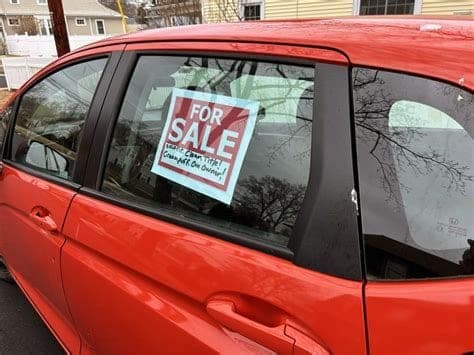
You found a great deal on a used car. The seller hands you a title with a signature on it. Everything looks legitimate. But then you take that title to your local DMV, and the clerk tells you the name on the title doesn't match the person who sold you the car. Suddenly your bargain becomes a bureaucratic nightmare. What happened? You just bought a title-jumped car.
60-second answer
A title jumping car sale happens when someone buys a vehicle and resells it without ever registering it in their name. This is illegal in all 50 states because it evades taxes, hides the ownership chain, and can mask odometer fraud or salvage history. If the seller's name isn't printed on the title as the current owner, walk away.
What Title Jumping Actually Looks Like
Title jumping (sometimes called a skip title) works like this. Person A sells a car to Person B. Person B never goes to the DMV to transfer the title into their name. Instead, Person B resells the car to you with Person A's signature still on the title. The buyer line may be blank, or Person B may have forged their way through it. Either way, there's no official record that Person B ever owned the vehicle. The state has no idea the car changed hands twice.
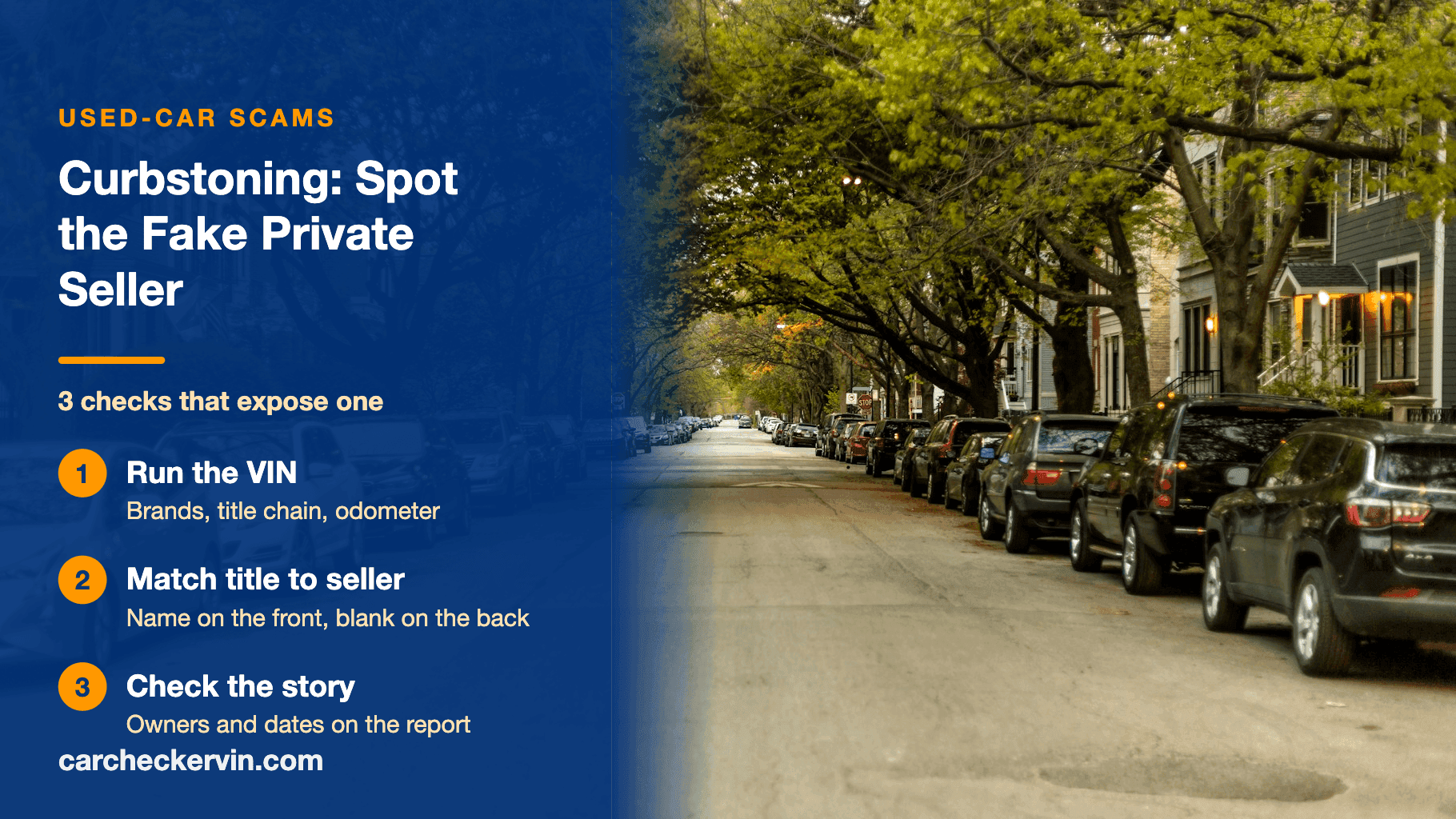
Sometimes the chain is even longer. A car might pass through three or four hands before someone finally tries to register it. Each skip makes the paper trail messier, and it makes your odds of getting a clean registration worse. Curbstoners (unlicensed dealers who flip cars from driveways and parking lots) are the most common offenders. They buy cheap cars at auction through places like Copart or IAA, skip the title to dodge sales tax and dealer licensing requirements, and flip them on Craigslist or Facebook Marketplace.
Why This Is Illegal (Not Just Sketchy)
Every state requires a title transfer when a vehicle changes ownership. The specifics vary (some states give you 10 days, others 30), but the obligation is universal. When someone performs a title transfer illegally by skipping registration, several laws get broken at once.
- Tax evasion. The skip seller avoids paying sales tax or use tax on their purchase, and the state loses revenue.
- Odometer fraud. Without a proper transfer, there is no odometer disclosure statement filed with the state. The National Highway Traffic Safety Administration (NHTSA) estimates odometer fraud costs American buyers over $1 billion a year.
- Unlicensed dealing. Most states define a 'dealer' as someone who sells a certain number of vehicles per year (often five or more). Curbstoners use title jumping to stay invisible to licensing boards.
- Consumer protection violations. The FTC's Used Car Rule requires dealers to display a Buyers Guide. Skip sellers bypass this entirely.
Penalties range from misdemeanor fines to felony charges depending on the state and the number of vehicles involved. In Texas, title jumping can carry fines up to $4,000 per occurrence. In California, unlicensed dealing is a misdemeanor with potential jail time. These aren't theoretical consequences. State DMV enforcement divisions actively pursue curbstoners, and buyers who unknowingly participate can get tangled up in the investigation.
How to Spot an Open Title Sale Before You Pay
An open title sale means the buyer line on the title is blank or filled in with someone other than the person selling you the car. This is your single biggest red flag. Here is how to check before you hand over cash.
- Ask for the title before you meet. Request a photo of the front and back. Compare the printed owner name to the seller's ID.
- Check the seller's ID in person. The name on their driver's license should match the name printed as the current registered owner on the title. No exceptions.
- Look at the title assignment section. If the buyer line is blank and the seller says 'just write your name there,' you are looking at an open title. Stop the transaction.
- Run the VIN through NMVTIS. The National Motor Vehicle Title Information System tracks title history across states. Services like those on our vin-check page pull from NMVTIS data and can show you whether the vehicle's title history has gaps or brand changes (like salvage or flood).
- Count the registered owners. If Carfax or AutoCheck shows a different number of owners than the title suggests, someone skipped a transfer in the chain.
What Happens If You Already Bought a Title-Jumped Car
If you are reading this because you already have a title with mismatched names, you have a few options (none of them are fun). First, try to contact the person who sold you the car and get them to go to the DMV to properly title it in their name, then execute a legal sale to you. Some sellers will cooperate, especially if you remind them that what they did is a crime.
If the seller disappears (they often do), contact your state's DMV or titling office. Some states have a bonded title process. You purchase a surety bond (usually for 1.5 times the vehicle's value from a bonding company, though the cost to you is a small percentage of that amount). The bond protects any prior owner who might come forward with a claim. After a waiting period (typically three to five years), the bond expires and you get a clean title. Vermont's registration process has historically been used as a workaround for out-of-state buyers, though that loophole has tightened in recent years.
Don't forge the title to fix it
It might be tempting to sign the previous owner's name or white-out information to make the title work. Do not do this. Title fraud is a felony in most states. Even if the DMV clerk doesn't catch it immediately, a later audit or sale can trigger a criminal investigation. Fix the problem through legal channels.
Why Sellers Skip Titles (and Why You Shouldn't Feel Sorry for Them)
The motivation almost always comes down to money. Registering a vehicle means paying sales tax, registration fees, and sometimes emissions inspection costs. A curbstoner flipping 20 cars a year could owe thousands in taxes and would need a dealer license, a bonded lot, and insurance. Title jumping lets them operate with zero overhead and zero accountability. If the car has a hidden problem (frame damage, odometer rollback, a lien from a bank), the skip seller is insulated. You carry the risk.
How a VIN Check Helps You Avoid This Mess
A VIN check won't literally tell you 'this title was jumped.' But it gives you the context to figure it out yourself. When you run a report, you see the number of registered owners, the states where the car was titled, any title brands (salvage, rebuilt, flood), accident history from insurance claims, and odometer readings at each registration event. If the seller says they have owned the car for three years but the VIN report shows it was last registered to someone else six months ago with no transfer since, the math does not work. That gap is your warning.
You can run a VIN check on our vin-check page before you meet any private seller. Pair it with the five-step inspection above and you will catch most skip title situations before you spend a dime. For details on report pricing, visit our pricing page.
Protect Yourself on Every Private Sale
Buying from a private seller can save you real money compared to dealership pricing. But the savings evaporate the moment you get stuck with a car you cannot register. Make title verification a non-negotiable part of your buying process. Confirm the seller's identity matches the title. Run the VIN. Check for liens. Meet at the DMV if possible (many buyers do this so both parties can handle the transfer on the spot). These small steps take an hour. Fixing a jumped title can take months.
What to do next
Before you buy any used car from a private seller, run the VIN through our vin-check page and compare the reported owner count and title history to the physical title in the seller's hand. If the seller's name is not on the title as the current owner, do not complete the sale. No deal is good enough to justify the legal and financial risk of a title jumping car sale.
CarCheckerVIN Editorial Team
In-house automotive research team
The CarCheckerVIN editorial team combines decades of automotive industry, dealer, and journalism experience to produce trustworthy buying, selling, and ownership guidance backed by NMVTIS, NICB, and manufacturer data.
Ready to check a VIN?
Run a free VIN check
Decode any vehicle in under 60 seconds.