Buying a Hail-Damaged Car: When the Discount Is Actually Worth It
Hail-damaged cars sell at steep discounts, but the savings only make sense under specific conditions. Here's how to tell when the deal is real and when it's a trap.
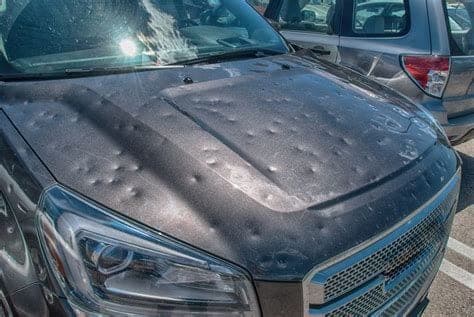
Every spring and summer, severe hailstorms sweep through Texas, Colorado, Oklahoma, and the broader Tornado Alley corridor, leaving behind thousands of vehicles pocked with dents that range from barely perceptible dimples to shattered windshields and crumpled hoods. Insurance companies, faced with repair estimates that exceed the vehicle's fair market value, declare an insurance hail total loss and send those cars to salvage auctions run by Copart and IAA, where they sell for 30 to 60 percent less than their pre-storm retail value. For budget-conscious buyers, the math looks irresistible — a three-year-old truck with cosmetic dings and a $12,000 price tag instead of $28,000. But whether a hail damaged car is worth buying depends on variables that most listing photos never reveal.
60-second answer
A hail-damaged car can be worth buying if the damage is purely cosmetic, the mechanical and structural systems are unaffected, and the hail damage discount is large enough to offset the car's reduced resale value and higher insurance costs. Run a VIN check through NMVTIS-linked databases before committing, and always get an independent inspection.
How a Car Gets a Hail Title — and What That Means for You
When an insurer totals a hail-damaged vehicle, the state DMV typically rebrands the title. The specific label varies by jurisdiction: Texas issues a "Salvage" title that can later be converted to a "Rebuilt" title after inspection, while Colorado uses a "Hail Damage" brand that stays on the title permanently. Not every state even has a dedicated hail title brand — some lump hail damage into a generic salvage designation, which makes it harder for the next buyer to distinguish cosmetic hail dents from flood or collision damage. This inconsistency across states is precisely why NMVTIS, the National Motor Vehicle Title Information System administered by the Department of Justice, exists: it aggregates title brand data from all 50 states and the District of Columbia so that a car totaled for hail in Oklahoma cannot be quietly re-titled as clean in Missouri.
A hail title is not inherently disqualifying, but it does carry permanent consequences. Kelley Blue Book and Edmunds both reduce trade-in valuations by roughly 20 to 40 percent for branded-title vehicles, regardless of the nature of the damage. Lenders may refuse to finance a salvage- or hail-titled car, and some insurers will only offer liability coverage, not comprehensive. These downstream costs eat into the upfront discount, which is why the real question is never simply "how cheap is this car" but "how cheap is it after I account for everything I can't do with it later."
When the Discount Actually Justifies the Risk
The sweet spot for a hail damaged car worth buying typically involves vehicles where the damage is limited to body panels and glass — not to the underlying structure, drivetrain, or electronic systems. A car with fifty small dents across the roof, hood, and trunk lid but no cracked paint, no broken sensors, and no water intrusion can be a genuinely good deal, especially if the buyer plans to keep the vehicle long-term rather than resell it. Paintless dent repair, or PDR, can address moderate hail damage for $1,500 to $4,000 on a midsize sedan, compared to a conventional body-shop repaint that might run $6,000 to $10,000.
- Vehicles you plan to drive for five or more years, where resale depreciation from the branded title has time to be amortized across your ownership period.
- Trucks and SUVs with flat, accessible body panels that are easier and cheaper to treat with PDR.
- Cars in states like Colorado or Montana that use a specific "Hail Damage" title brand rather than a generic salvage brand, since the more precise label is less alarming to future buyers and some lenders.
- High-demand models like the Toyota Tacoma, Honda Civic, or Ford F-150 that retain strong mechanical value even with cosmetic imperfections.
When the Deal Is Not What It Seems
The National Insurance Crime Bureau, known as NICB, has repeatedly warned that branded-title vehicles are a common vector for title washing — the illegal practice of re-registering a damaged car in a state with lax title-brand requirements to strip away the salvage or hail designation. A 2019 NICB investigation found that title-washed vehicles were disproportionately sold through private-party listings and small independent lots, where buyers rarely run a VIN history report. Under federal law, specifically 49 U.S.C. § 32710, anyone who tampers with or conceals odometer or title information can face civil penalties up to $100,000 per violation, but enforcement often depends on state attorneys general, and cases are hard to prosecute after the vehicle has changed hands two or three times.
Beyond title washing, some hail-damaged cars carry hidden problems that surface weeks or months after purchase. Large hailstones can crack windshield-mounted ADAS camera housings without visibly shattering the glass, which means the lane-departure warning or automatic emergency braking system may silently fail. Hail can also compromise roof-mounted antenna assemblies, sunroof seals, and the thin drainage channels around door frames, leading to slow water leaks that foster mold and corrode wiring harnesses. These are not theoretical risks — NHTSA's complaint database contains multiple entries for vehicles whose advanced safety systems malfunctioned after hail events that the owner or dealer believed were cosmetic-only.
Watch for hidden ADAS damage
If the car has a forward-facing camera behind the windshield, radar sensors in the bumper, or a LiDAR unit on the roof, insist on a full ADAS calibration check before purchase. A cracked sensor housing can disable automatic emergency braking without triggering a dashboard warning light, and recalibration can cost $800 to $1,500 at a dealership.
The Pre-Purchase Inspection Checklist
Treating a hail-damaged car with the same casual attitude as a clean-title purchase is how buyers end up spending more than they saved. A methodical inspection — ideally performed by someone other than the seller's recommended shop — should cover the following steps.
- Run the VIN through an NMVTIS-linked provider to confirm the title brand history, total-loss records, and any prior salvage auction listings. The /vin-check page can surface auction photos that reveal the car's condition at the time of the total-loss declaration.
- Hire an independent, ASE-certified mechanic or a mobile pre-purchase inspection service to examine the vehicle in person. Budget $150 to $300 for this — a fraction of the potential downside.
- Request a full OBD-II scan, including manufacturer-specific codes. Generic code readers miss the proprietary fault codes that ADAS modules and body-control modules store after impact events.
- Inspect every inch of the roof, including inside the headliner if possible, for signs of water staining, adhesive residue from prior PDR work, or bondo filler that suggests a previous undisclosed repair.
- Get a written quote from a PDR specialist for the remaining dents, and compare that cost against the hail damage discount to confirm you are still coming out ahead.
Financing and Insurance Realities
Major lenders — including Chase Auto, Capital One Auto Finance, and most credit unions — typically will not originate a loan on a vehicle with a salvage title. Some will finance a rebuilt title once the state inspection is complete, but interest rates tend to run two to four percentage points higher than comparable clean-title loans. On the insurance side, companies like Progressive and GEICO may offer comprehensive coverage on hail-titled vehicles, but the payout in a future total-loss scenario will be based on the car's diminished, branded-title value, not its clean-title equivalent. Buyers who plan to pay cash and carry only liability coverage sidestep both problems, which is another reason long-term, cash-paying owners are the ideal demographic for these vehicles.
Resale Value: Setting Realistic Expectations
According to Manheim auction data, branded-title vehicles consistently sell for 20 to 35 percent less than equivalent clean-title units at wholesale. That gap narrows slightly for hail-specific brands compared to generic salvage brands, but it never disappears. A buyer who purchases a hail-damaged 2021 Hyundai Tucson for $15,000 — a $9,000 discount off its clean-title retail value of $24,000 — should expect to sell or trade that car for no more than $10,000 to $12,000 in three years, assuming normal depreciation plus the branded-title penalty. If the math still works after factoring in PDR costs, higher insurance premiums, and limited financing options, then the purchase is rational. If the buyer is counting on selling the car for close to clean-title money, the deal will end in disappointment.
State-by-State Title Brand Quirks
Title branding is governed by state law, not federal statute, which creates a patchwork that savvy buyers must navigate. Colorado's dedicated "Hail Damage" brand is arguably the most transparent label in the country. Texas, by contrast, funnels hail-totaled cars into the same "Salvage" category as collision- or flood-damaged vehicles, then allows conversion to "Rebuilt" after a state-certified inspection — a process that costs about $100 but does not include a mechanical evaluation of ADAS systems. Indiana and Ohio have no specific hail brand at all. Buyers shopping across state lines should run every VIN through NMVTIS and cross-reference with AutoCheck or Carfax, both of which pull from insurance-claims databases that may capture the nature of the loss even when the title brand is generic. A quick search on the /blog page can help clarify title-brand rules for specific states.
What to do next
Before spending a dollar on a hail-damaged car, run its VIN through an NMVTIS-linked report on the /vin-check page to verify the title brand history, total-loss declaration, and auction records. That single step, which takes less than a minute, is the cheapest insurance against buying someone else's undisclosed problem.
CarCheckerVIN Editorial Team
In-house automotive research team
The CarCheckerVIN editorial team combines decades of automotive industry, dealer, and journalism experience to produce trustworthy buying, selling, and ownership guidance backed by NMVTIS, NICB, and manufacturer data.
Ready to check a VIN?
Run a free VIN check
Decode any vehicle in under 60 seconds.