Auction Car History: How to Read Copart & IAA Data by VIN Before You Buy
Thousands of wrecked and flood-damaged vehicles cycle through Copart and IAA auctions each week. Here's how to trace that history by VIN before a seller's silence costs you thousands.
Check the car you're reading about
Free VIN decode and recall check
Factory specs and open NHTSA recalls in seconds. No sign-up.
On this page· 7
- What Copart and IAA Actually Record — and Why It Matters
- How to Perform a Copart VIN Check or IAA Auction History Lookup
- Decoding the Damage and Loss Codes
- Title Washing: How Auction Cars Get Clean Papers
- Auction Photos: The Evidence That Doesn't Lie
- When Auction History Is Missing — and What That Could Mean
- Red Flags That Scream Former Auction Vehicle
Every week, roughly 150,000 vehicles pass through the two dominant salvage auction houses in the United States — Copart, Inc. and Insurance Auto Auctions (IAA, now a subsidiary of Ritchie Bros.) — and a significant percentage of those cars, trucks, and SUVs eventually resurface on used-car lots, Facebook Marketplace listings, and even certified pre-owned programs with histories that have been quietly scrubbed. The National Insurance Crime Bureau (NICB) has warned for years that title-washing schemes, in which a salvage-branded title is re-registered in a lenient state to obtain a clean title, remain one of the most persistent forms of consumer fraud in the automotive market, costing buyers an estimated $4 billion annually. Understanding how to pull and interpret Copart and IAA auction VIN history is no longer a niche skill reserved for body shops and insurance adjusters; it is a basic due-diligence step that every used-car shopper in the U.S. should perform before signing anything.
60-second answer
Both Copart and IAA photograph and catalog every vehicle that crosses their lots, recording the loss type, primary damage description, and sale price — all tied to the 17-digit VIN. A VIN check that queries salvage auction databases can reveal whether a car you're considering was once declared a total loss, even if the current title looks clean.
What Copart and IAA Actually Record — and Why It Matters
Copart and IAA operate as intermediaries between insurance companies that have totaled a vehicle and buyers — typically licensed rebuilders, dismantlers, and in some states, the general public — who bid on the wreckage. When a vehicle enters either platform, the auction house creates a lot listing that includes the VIN, the selling insurance carrier (State Farm, GEICO, Progressive, etc.), the primary and secondary damage types (front end, flood, vandalism, mechanical), the title state and brand (salvage, non-repairable, certificate of destruction), estimated retail value, and the actual sale price. Copart, which is publicly traded and handled over 4 million vehicles in its fiscal year 2024, stores high-resolution photographs — sometimes 30 or more per lot — that show the vehicle from every angle. IAA follows a nearly identical cataloging process. These records persist in the companies' internal databases long after the physical car has left the yard, and third-party data aggregators — including NMVTIS-reporting services, AutoCheck, and Carfax — license or scrape portions of this information to populate consumer-facing vehicle history reports.
How to Perform a Copart VIN Check or IAA Auction History Lookup
Searching directly on Copart.com or IAA's IAAI.com is possible but limited for non-members. Copart's public search lets anyone type in a VIN and see whether an active or recently sold lot exists, but detailed sale data — including final bid price and buyer identity — often requires a registered account or a broker membership. IAA's site works similarly, with past listings sometimes accessible through cached lot pages. The real investigative value, however, comes from combining those direct searches with a broader VIN check that aggregates NMVTIS title data, auction records, and junkyard intake logs into a single timeline. Running a report through a service like our own VIN check on the /vin-check page can surface Copart and IAA records that have been cross-referenced against NMVTIS, which is the federal system mandated by the Anti Car Theft Act of 1992 and administered by the American Association of Motor Vehicle Administrators (AAMVA) on behalf of the Department of Justice.
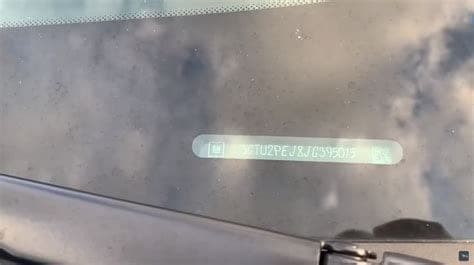
- Start with the raw VIN. Verify the 17-character string against the vehicle's dash plate, driver's-side door jamb sticker, and the title document — mismatches are an immediate red flag for VIN cloning.
- Search Copart.com and IAAI.com directly. Look for any current or past lot listing. Note the listed primary damage, loss type (e.g., collision, flood, theft recovery), and title brand.
- Run a comprehensive VIN history report that pulls NMVTIS data, auction sale records, and odometer filings. Compare the auction photos with the car's current condition — fresh paint over a quarter panel that was visibly crushed in auction photos is a tell-tale sign of a cosmetic flip.
- Cross-check the timeline. If the car was sold at Copart in March with a salvage title and somehow appears at a dealership in June with a clean title from a different state, you may be looking at a title-wash.
Decoding the Damage and Loss Codes
Copart and IAA use standardized but slightly different taxonomies for damage descriptions, and reading them correctly is essential to understanding what a vehicle actually endured. Copart's primary damage field might say 'Front End,' 'Rear End,' 'All Over,' 'Flood,' 'Burn,' or 'Mechanical,' while the secondary damage field adds context — 'Minor Dents/Scratches' is very different from 'Undercarriage.' The loss type field is equally critical: 'Collision' suggests an accident, 'Flood' speaks for itself, and 'Theft' or 'Recovered Theft' can mean anything from a joyride with minor damage to a stripped shell. IAA auction history records use similar categories, including 'Water/Flood,' 'Fire,' 'Hail,' and 'Vandalism.' Pay particular attention to any vehicle listed with a 'Certificate of Destruction' title — under most state laws, these vehicles are legally prohibited from ever being registered or driven on public roads again, and anyone selling one with a clean title is committing fraud.
- Flood damage is among the hardest to detect after a cosmetic restoration; NICB's free VinCheck tool at nicb.org can flag flood-branded titles, but it won't catch every title-washed vehicle.
- Vehicles listed with 'Biohazard' or 'Vandalism' loss types may have interior contamination that no amount of detailing can fully resolve.
- An 'Enhanced' or 'Run and Drive' designation at auction does not mean the car is roadworthy — it means the engine started at the time of cataloging.
Title Washing: How Auction Cars Get Clean Papers
The federal odometer fraud statute, 49 U.S.C. § 32703, makes it illegal to tamper with an odometer or misrepresent mileage, but the patchwork of state titling laws creates gaps that enable title washing for salvage brands. A car totaled in Pennsylvania, where the state stamps the title with a clear 'SALVAGE' brand, can be transported to a state with weaker branding enforcement, re-titled there, and then moved again to a third state where the salvage history no longer appears on the face of the new title. NMVTIS was designed to close this loophole, and the system has improved since all 50 states and the District of Columbia began reporting to it, but reporting lag and inconsistent data entry still allow some washed titles to slip through. The FTC has pursued cases against dealers who knowingly sell title-washed vehicles, including a 2018 enforcement action against a Virginia-based operation that flipped over 1,000 salvage cars with laundered titles, but the agency's resources are finite and the practice persists.
Beware of multi-state title transfers
If a vehicle's history report shows rapid title transfers across two or more states — especially if one of those states is known for lenient salvage-title branding, such as certain jurisdictions that don't brand rebuilt titles on the face of the document — treat the listing with extreme skepticism. Request the prior-state title, not just the current one, and run a salvage auction VIN search to see if Copart or IAA ever processed the car.
Auction Photos: The Evidence That Doesn't Lie
Perhaps the single most valuable artifact in any Copart or IAA auction record is the photographic evidence. While titles can be washed and odometers can be rolled, the images captured at the salvage yard — showing deployed airbags, buckled frames, waterlines on the headrests, or engine compartments caked in mud — are remarkably difficult to dispute. Some third-party VIN report services now embed these auction images directly into their reports, giving buyers a visual before-and-after comparison. When evaluating a used car that seems priced suspiciously below Kelley Blue Book or Edmunds estimates, pulling up auction photos through a VIN lookup can instantly explain the discount. A 2021 Toyota RAV4 listed at $6,000 below market might look like a deal until the Copart photos reveal a crumpled passenger side and a deployed curtain airbag. These photos also serve as legal evidence in the event a buyer needs to pursue a fraud claim under state consumer protection statutes or the Magnuson-Moss Warranty Act.
When Auction History Is Missing — and What That Could Mean
Not every damaged vehicle passes through Copart or IAA. Smaller regional auctions, direct insurance-to-rebuilder sales, and owner-retained total losses can bypass the two major platforms entirely, which means the absence of a salvage auction VIN record does not guarantee a clean history. Some insurance companies allow policyholders to keep their totaled vehicles in exchange for a reduced payout, and in certain states these owner-retained salvage vehicles can be repaired and re-titled without ever appearing in a major auction database. This is precisely why a comprehensive VIN check — one that queries NMVTIS, state DMV title records, insurance loss databases, and repair-shop reporting networks — is more reliable than searching Copart or IAA alone. The /vin-check tool on this site aggregates multiple data sources for exactly this reason: no single database tells the full story.
Red Flags That Scream Former Auction Vehicle
- Mismatched paint texture, overspray on rubber trim, or fresh undercoating applied to only one section of the undercarriage.
- A title issued in a state far from where the car is being sold, with no logical explanation (military relocation, for example, is a legitimate one).
- Replaced airbag modules that do not match the OEM part number, or an airbag warning light that has been disabled rather than repaired.
- A purchase price 15–25% below comparable listings on Autotrader or Cars.com — legitimate sellers don't leave that much money on the table without a reason.
What to do next
Before you hand over a deposit or sign a bill of sale, run the vehicle's 17-digit VIN through a full history check at /vin-check to surface any Copart, IAA, or other salvage auction records, NMVTIS title brands, and odometer discrepancies. A $30 report now can save you $5,000 or more in hidden structural damage, liability exposure, or resale loss down the road.
About the author
CarCheckerVIN Editorial Team
In-house automotive research team
The CarCheckerVIN editorial team combines decades of automotive industry, dealer, and journalism experience to produce trustworthy buying, selling, and ownership guidance backed by NMVTIS, NICB, and manufacturer data.
See more of our guides on Google
Add CarCheckerVIN as a preferred source and Google will show our guides more often in your results.

Keep reading
Hybrid SUVs With Best Gas Mileage: The Buyer's Field Guide
Shopping for a fuel-sipping SUV? This field guide ranks the top hybrid SUVs by real-world MPG, flags hidden costs, and tells you exactly what to verify before you buy.
Oct 25, 2026 · 10 min read

Consumers Auto Loan: How to Finance Your Next Car Without Getting Burned
A consumers auto loan is the single biggest variable in your car deal — bigger than the sticker price. Here's how to lock in the best rate before you ever step on a lot.
Oct 16, 2026 · 10 min read
What Nissan Cars Have CVT Transmission Problems — And What to Do Before You Buy
CVT trouble is real across multiple Nissan models. Before you buy a used Altima, Sentra, or Rogue, know which years are risky, what repairs cost, and whether a Nissan CVT transmission recall covers it.
Oct 16, 2026 · 12 min read