Tesla Battery Degradation by VIN: How Much Range Loss Should You Actually Expect?
Used Tesla buyers face a hidden variable: battery degradation. Here's how to use VIN history data and real-world fleet studies to estimate true range loss before you sign.
Check the car you're reading about
Free VIN decode and recall check
Factory specs and open NHTSA recalls in seconds. No sign-up.
On this page· 7
- What the Fleet Data Actually Shows
- How a VIN Check Helps (and Where It Falls Short)
- Key Factors That Accelerate Tesla Range Loss
- Tesla's Warranty: What It Covers and What It Doesn't
- How to Check Battery Health Before You Buy
- Pricing Implications: What Degradation Costs You in Dollars
- The Bigger Picture: Why Transparency Lags Behind the Market
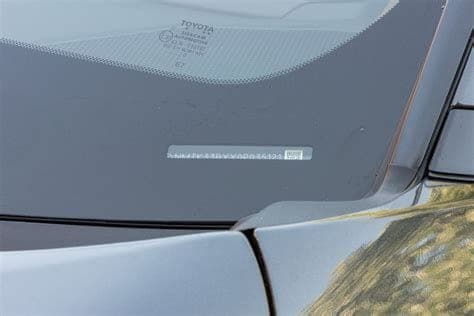
A shopper eyeing a 2019 Model 3 Long Range on the used lot sees 310 miles of EPA-rated range on the window sticker, but the actual battery — after five years and 72,000 miles of supercharging, Houston summers, and firmware updates — may deliver closer to 270 miles on a full charge. That 13% gap is battery degradation, and it is arguably the single most consequential variable in used Tesla pricing that almost no listing discloses. Unlike odometer fraud, which is addressed explicitly under 49 U.S.C. § 32703, there is no federal statute requiring sellers to report how much capacity an EV battery has lost. The burden falls entirely on the buyer to investigate tesla battery degradation vin data, charging records, and third-party diagnostics before writing a check.
60-second answer
Most Tesla batteries lose 5-10% of their original range in the first 50,000 miles, then degrade more slowly — averaging roughly 10-15% total loss over 200,000 miles according to large-scale fleet data. A VIN check and an OBD-II diagnostic scan before purchase can reveal the actual state of health (SoH) and flag vehicles with abnormal degradation patterns.
What the Fleet Data Actually Shows
The most cited real-world dataset comes from Recurrent Auto, which tracks battery health across more than 20,000 Tesla vehicles in the United States. Their 2024 analysis found that the average Model 3 retains approximately 90% of its original range after 100,000 miles and roughly 85% after 200,000 miles. Model S vehicles from 2012-2015, which used older 18650-cell packs, showed steeper curves — some dipping below 80% before 150,000 miles. Meanwhile, 2021-and-later Model Y vehicles with 4680 or updated 2170 cells are trending toward even flatter degradation curves, though the sample sizes are still small. Tesla's own 2022 Impact Report claimed its vehicles retain about 88% of range at 200,000 miles on average, a figure that broadly aligns with independent tracking but has not been audited by any federal agency.
It is worth noting that these are averages. Individual vehicles can deviate significantly based on charging habits, climate exposure, and whether the pack has been replaced under warranty. A car that spent its life DC fast-charging in Phoenix will almost certainly show worse numbers than one that was Level 2 charged in Portland. This is precisely why checking tesla vin history — including geographic registration data, service records, and any salvage or accident titles that might indicate pack damage — matters so much.
How a VIN Check Helps (and Where It Falls Short)
Running a VIN through the National Motor Vehicle Title Information System (NMVTIS) or a consumer reporting tool will surface title brands such as salvage, rebuilt, flood, or lemon law buyback — all of which can indicate conditions that accelerate battery degradation. Flood damage is particularly insidious: salt water intrusion into a high-voltage battery enclosure can cause corrosion that manifests as capacity loss months after a car looks cosmetically repaired. Vehicles that pass through Copart or IAA salvage auctions after a flood event sometimes re-enter the retail market in states with lax title-washing laws, and a used tesla battery in one of those cars can fail catastrophically. The NICB's VINCheck tool, which is free, can flag theft and total-loss records that might not appear in every commercial report.
What a standard VIN check will not tell you is the battery's precise state of health percentage. That number lives in Tesla's internal service system and in the car's onboard diagnostics. Services like Carfax and AutoCheck will show you mileage progression and title history, but neither reports SoH. To get that figure, you need either an OBD-II dongle paired with a diagnostic app (Scan My Tesla or TeslaFi are the most widely used) or access to Tesla's service records, which some sellers can pull from their Tesla account. Running a VIN check on our vin-check page before arranging a physical inspection gives you the title and accident baseline; the OBD diagnostic gives you the battery-specific data.
Key Factors That Accelerate Tesla Range Loss
- Frequent DC fast charging (Supercharging): Repeated high-rate charging generates heat and accelerates lithium plating on the anode. Vehicles that show a pattern of mostly Supercharger use in their energy logs may degrade 20-30% faster than those primarily charged on Level 2.
- Extreme heat exposure: Lithium-ion cells degrade faster above 95°F. Registration history showing years in Arizona, Nevada, or the Gulf Coast warrants closer SoH scrutiny.
- Charging to 100% daily: Tesla's own guidance recommends a daily charge limit of 80-90% for non-LFP packs. Cars routinely charged to maximum accelerate calendar aging.
- Software-limited packs: Some Model 3 Standard Range vehicles were sold with software-locked 60 kWh packs (hardware capacity was higher). These age differently and can sometimes be unlocked, complicating used-market valuations.
- Collision or undercarriage damage: Even minor impacts to the battery enclosure can puncture cooling lines or deform cells, and the resulting degradation may not appear until months later.
Tesla's Warranty: What It Covers and What It Doesn't
Tesla warrants its battery packs for 8 years or a mileage cap that varies by model — 100,000 miles for the Standard Range Model 3, 120,000 miles for the Long Range and Performance variants, and 150,000 miles for the Model S and Model X. The warranty guarantees a minimum of 70% retention of original capacity (the threshold drops slightly for some older contracts). If SoH falls below that threshold within the warranty window, Tesla will repair or replace the pack at no cost. But here is the catch that many buyers miss: the warranty follows the VIN, not the owner, meaning it transfers to second and third owners, but Tesla's definition of 'original capacity' refers to the EPA-rated usable capacity at time of manufacture, not what the car displayed after a later firmware update that may have adjusted the range estimate. Disputes about this distinction have fueled consumer complaints to the FTC and generated a handful of class-action filings, though none have produced a final judgment as of mid-2025.
Watch for warranty-voiding modifications
Aftermarket battery management modules, unauthorized cell replacements, and certain third-party charging equipment can void Tesla's battery warranty. Ask the seller directly whether any non-Tesla service work has been performed on the high-voltage system, and confirm via Tesla's service history portal.
How to Check Battery Health Before You Buy
- Run the VIN through a comprehensive vehicle history report — look for title brands, total-loss records, state registration history (especially flood-prone or extreme-heat states), and mileage consistency. Our vin-check tool pulls NMVTIS-sourced data that covers these bases.
- Request a full charge screenshot or video from the seller showing the displayed range at 100% charge compared to the car's EPA rating. A 2021 Model 3 Long Range rated at 353 miles that now shows 305 miles at 100% is at roughly 86% SoH — within normal range but worth factoring into your offer.
- Use an OBD-II adapter (the OBDLink MX+ is widely recommended for Teslas) with Scan My Tesla or a similar app to read the battery management system's reported SoH, cell voltage delta, and maximum pack energy in kWh. A cell voltage delta above 30 mV across the pack is a yellow flag.
- Check Tesla's service records through the seller's Tesla account or by contacting a Tesla Service Center with the VIN. Look for any battery-related service bulletins, coolant system repairs, or pack replacements.
- If the car is at or near 70% SoH and still within the warranty mileage and age window, understand that a warranty claim could yield a replacement pack — which effectively resets degradation and adds significant value.
Pricing Implications: What Degradation Costs You in Dollars
Kelley Blue Book and Edmunds both factor battery condition into their EV valuation models, but the adjustments are coarse — typically a few hundred dollars per percentage point below the expected SoH curve. In practice, the market is harsher. A 2020 Model 3 Long Range with 88% SoH and clean title might list for $27,000 on a dealer lot, while an identical car at 78% SoH — still above Tesla's 70% warranty threshold — may struggle to fetch $22,000 privately. That $5,000 gap reflects not just range anxiety but the looming cost of an out-of-warranty pack replacement, which Tesla prices between $12,000 and $22,000 depending on model and pack size. Third-party remanufacturers like Gruber Motor Company can do the work for less, but availability is limited and turnaround times are measured in weeks.
For buyers, this creates an opportunity: a car with slightly-below-average SoH but remaining warranty coverage is arguably undervalued, because Tesla may end up replacing the pack for free. Conversely, a car that just exited its warranty window at 72% SoH represents a ticking financial liability. Understanding where a specific vehicle sits on the degradation curve — which requires combining tesla battery degradation vin research with an actual diagnostic reading — is the difference between a smart buy and an expensive mistake.
The Bigger Picture: Why Transparency Lags Behind the Market
The used EV market is growing faster than the regulatory framework designed to protect buyers. NHTSA tracks battery-related safety complaints — fires, sudden capacity drops, thermal events — but does not require standardized SoH reporting at the point of sale. No state currently mandates that a dealer disclose battery health data the way they must disclose odometer readings under federal law. Proposed legislation in California (SB 710, introduced in 2024) would have required SoH disclosure for used EV sales, but it stalled in committee. Until something changes at the legislative level, buyers are operating in an information vacuum that only diligent research — VIN checks, diagnostic scans, and a healthy skepticism toward range claims — can fill.
What to do next
Before committing to any used Tesla, run the VIN through a full vehicle history report at our vin-check page to screen for title brands, flood history, and registration patterns, then schedule an in-person inspection with an OBD-II diagnostic scan to get the battery's actual state of health. Those two steps together take less than an hour and can save you thousands.
About the author
CarCheckerVIN Editorial Team
In-house automotive research team
The CarCheckerVIN editorial team combines decades of automotive industry, dealer, and journalism experience to produce trustworthy buying, selling, and ownership guidance backed by NMVTIS, NICB, and manufacturer data.
Keep reading
Most Reliable Used Cars: How to Pick One Without Getting Burned
Reliability isn't a sticker on the window — it's a track record you have to dig for. Here's how to find the most reliable used cars at every budget, backed by real data.
Sep 30, 2026 · 82 min read

Cheapest Classic Cars To Insure: An Investigative Look at Premiums, Models, and Hidden Costs
Classic car insurance can cost far less than standard auto coverage—but only if you pick the right vehicle and the right carrier. Here's what the numbers actually show.
Sep 27, 2026 · 72 min read

Cheapest Cars To Insure: An Investigative Look at What Actually Lowers Your Premium
Which vehicles actually cost the least to insure in 2025? We dug into insurer loss data, IIHS crash ratings, and NHTSA theft stats to separate marketing fluff from real savings.
Sep 27, 2026 · 67 min read