VIN Cloning: How Car Thieves Pull It Off and How You Spot It Before Buying
Thieves copy a legitimate VIN onto a stolen car and sell it to unsuspecting buyers. Here's exactly how VIN cloning works, what red flags to watch for, and how to protect yourself before you hand over cash.
You found a great deal on a late-model SUV. The seller has a title, the dashboard VIN plate looks fine, and the price is just low enough to make you feel lucky. Three weeks later, a police officer pulls you over, runs your plate, and tells you the vehicle was stolen six months ago in another state. You now own nothing, and you're out every dollar you paid. This is what vin cloning fraud looks like from the buyer's side. It happens thousands of times a year in the U.S., and the victims are almost always private buyers who didn't know what to check.
60-second answer
VIN cloning means a thief copies a legitimate vehicle identification number from a legal car onto a stolen one, creating a fake identity that passes casual inspection. You beat it by checking VINs in multiple physical locations on the car, running a VIN history report before you buy, and comparing the VIN against the title, registration, and insurance documents.
What VIN Cloning Actually Is
Every car sold in the U.S. since 1981 carries a unique 17-character VIN assigned by the manufacturer. That number appears on the dashboard plate (visible through the windshield), on a federal certification label on the driver's door jamb, and in several hidden locations stamped into the body. A cloned vin is a counterfeit copy of a real, clean number taken from a legally owned vehicle (often the same year, make, model, and color) and physically attached to a stolen car. The thief fabricates a new dashboard plate, prints a fake door-jamb sticker, and sometimes even forges a title to match. To a buyer who only glances at the dash plate, everything looks normal.
How Thieves Choose and Clone a VIN
The process is disturbingly simple. Thieves typically start by walking a dealership lot or a public parking garage, photographing the dashboard VIN plates of cars that match the stolen vehicle's specs. They need a donor VIN from a car that is the same year, make, model, trim, and ideally the same exterior color. With that number in hand, they move to fabrication.
- The thief steals a target vehicle (often via relay attack on keyless-entry systems or old-fashioned tow-truck theft).
- They source a matching VIN from a legal vehicle by photographing its dash plate or pulling the number from a public listing.
- Using a laser printer, engraver, or metal stamping kit, they produce a replica dashboard VIN plate and a fake federal certification label.
- They attach the cloned plates to the stolen car, removing or covering original stampings where possible.
- A forged or washed title is created (sometimes through a fraudulent duplicate-title request in a lenient state), and the car is listed for sale, usually on private-party platforms.
The NICB (National Insurance Crime Bureau) has flagged stolen car vin swap operations as an ongoing problem in metro areas like Houston, Miami, Los Angeles, and Chicago. Organized rings can clone and flip dozens of vehicles a month. Because the donor VIN belongs to a legitimately titled car somewhere else, a basic title check may come back clean unless you dig deeper.
Why Standard Title Checks Sometimes Miss It
The NMVTIS (National Motor Vehicle Title Information System), operated under the U.S. Department of Justice, aggregates title, brand, and theft data from all 50 states. It's the backbone behind most commercial VIN reports, including those from Carfax and AutoCheck. The system is good, but it has a timing gap. If a vehicle was stolen yesterday and the theft report hasn't propagated yet, the cloned VIN will return the clean history of the donor car. That's exactly what thieves count on. They move fast, list the car quickly, and pressure buyers to close the deal before anyone catches up.
Running a VIN check through our tool at /vin-check pulls from NMVTIS data along with other sources, giving you title brands, theft flags, odometer discrepancies, and salvage history. It's a critical first step, but it works best when you combine it with the physical inspection steps below.
How to Spot a Cloned VIN: The Physical Inspection
This is where you protect yourself. VIN cloning depends on buyers who never look past the dashboard plate. If you check three or four VIN locations on the car and compare them, you'll catch most clones.
- Read the dashboard VIN plate through the windshield. Look for signs of tampering: misaligned rivets, adhesive residue, uneven font spacing, or a plate that wiggles when you press it.
- Open the driver's door and check the federal certification label on the door jamb. Compare the VIN character by character to the dash plate. A mismatch is an immediate deal-breaker.
- Check the VIN stamped into the engine block or firewall (location varies by manufacturer; your owner's manual or a quick search will tell you where). This stamp is much harder to forge because it's engraved into metal.
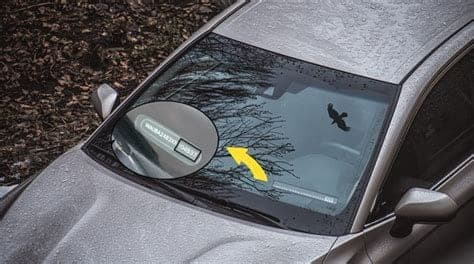
- Look for a VIN etched into the windshield glass (some manufacturers do this from the factory; aftermarket etching is also common). If the windshield VIN differs from the dash plate, walk away.
- Compare every VIN you find on the car to the VIN printed on the title, registration, and insurance card the seller provides. All must match exactly.
Red flags that scream vin theft
The seller insists on meeting in a parking lot instead of their home address. The price is 15-25% below KBB or Edmunds fair market value with no clear reason. The seller can't produce a registration in their own name. The title is from a different state than where the car was supposedly driven. The VIN plate looks newer or shinier than the surrounding dash trim. Any one of these on its own deserves skepticism. Two or more together mean you should stop and investigate further.
What Happens If You Accidentally Buy a Cloned Car
The legal reality is harsh. A stolen vehicle belongs to its rightful owner (or their insurance company). If law enforcement identifies your car as stolen, they will seize it. You won't get it back. Your recourse is a civil claim against the person who sold it to you (good luck finding them) or a claim against your own insurance policy if you carry comprehensive coverage. Some states have victim-compensation funds, but payouts are limited and slow. The FTC recommends filing a report with your local police, the NICB (1-800-TEL-NICB), and the FBI's Internet Crime Complaint Center if the sale happened online.
Extra Steps for High-Risk Purchases
Certain buying situations carry more vin cloning fraud risk than others. Private-party sales, out-of-state purchases, and any deal where the price seems unusually aggressive deserve extra diligence.
- Ask the seller to meet you at a local police station for the transaction. Many departments have designated safe-exchange zones. A legitimate seller won't object.
- Request a pre-purchase inspection at an independent mechanic who can put the car on a lift and verify hidden VIN stampings underneath.
- Run the VIN through NHTSA's free recall lookup (nhtsa.gov/recalls) and compare the results to the car sitting in front of you. If NHTSA says it's a four-cylinder and you're looking at a V6, the VIN doesn't belong to that car.
- Call the manufacturer's customer service line with the VIN and ask them to confirm the build specs (color, engine, transmission, options). Factory records are the hardest thing for a thief to fake.
Protecting Your Own VIN From Being Cloned
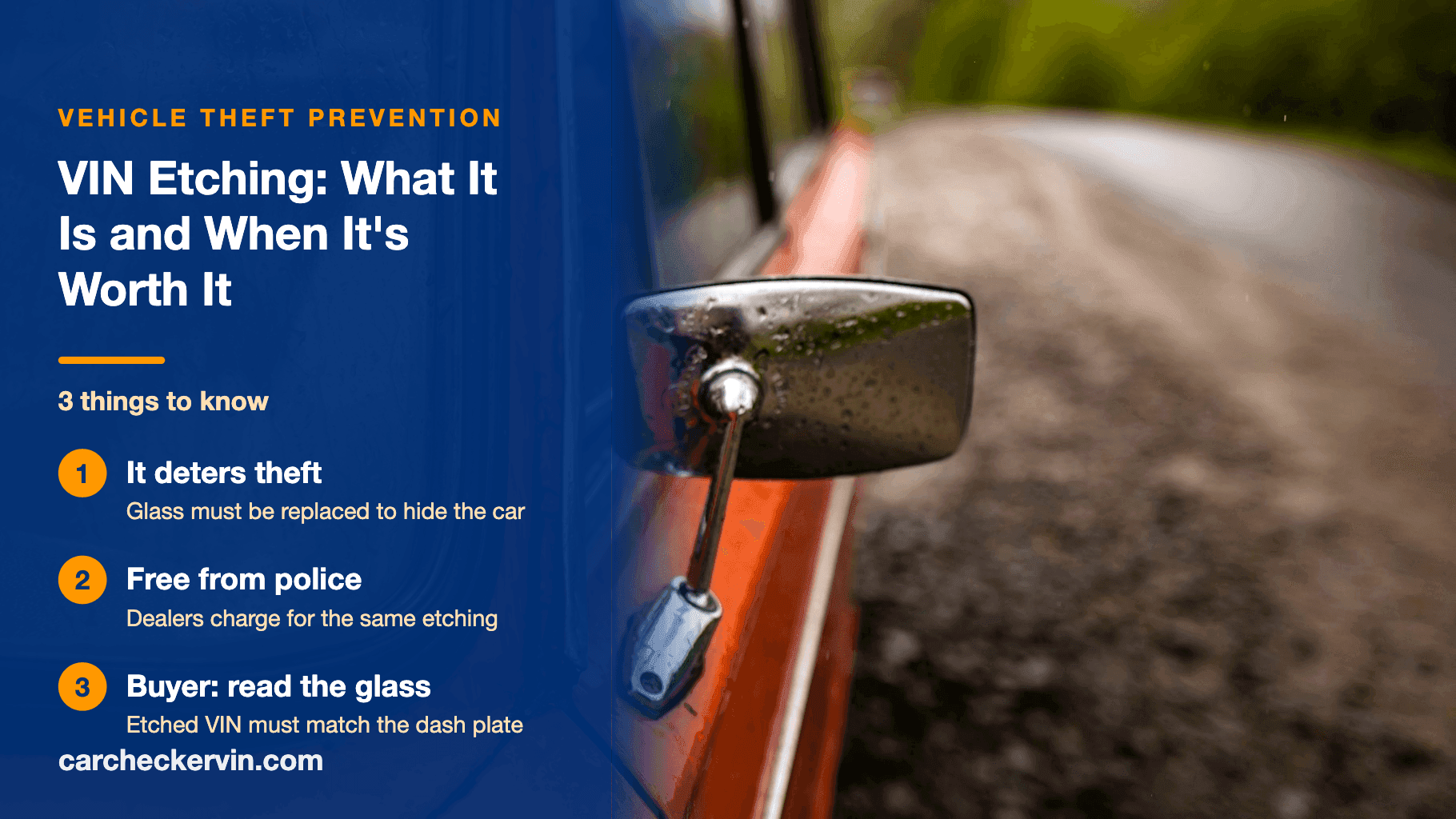
You can't stop someone from photographing your dashboard, but you can make your car a less attractive donor. VIN-etching services etch your number into every window (costing roughly $100-$300 at most glass shops). Some insurers offer a small premium discount for etched vehicles. You can also place your registration and insurance documents out of sight so a thief peering through your window can't easily read the full number. When you sell your car, avoid posting the full VIN in online listings. Provide it only to serious, verified buyers.
What to do next
Before you hand over a deposit on any used car, run the VIN at /vin-check and then physically verify the number in at least three locations on the vehicle (dashboard plate, door-jamb label, and engine-block stamp). If any two don't match, do not buy the car. That single habit stops most VIN cloning scams cold.
CarCheckerVIN Editorial Team
In-house automotive research team
The CarCheckerVIN editorial team combines decades of automotive industry, dealer, and journalism experience to produce trustworthy buying, selling, and ownership guidance backed by NMVTIS, NICB, and manufacturer data.
Ready to check a VIN?
Run a free VIN check
Decode any vehicle in under 60 seconds.