2008 Mazda 3 Reliability: What Every Buyer Needs to Know Before Handing Over Cash
The 2008 Mazda 3 has a strong reliability record, but a handful of recurring problems can turn a bargain into a money pit. Here's exactly what to check before you buy.
Check the car you're reading about
Free VIN decode and recall check
Factory specs and open NHTSA recalls in seconds. No sign-up.
On this page· 9
- How the 2008 Mazda 3 Stacks Up in the Used-Car Market
- 2008 Mazda 3 Reliability: The Data Behind the Reputation
- Common 2008 Mazda 3 Problems You Cannot Afford to Miss
- Mazda 3 Clutch Replacement Cost: Budget for It on Manual Cars
- The Decision Matrix: Is the Risk Worth the Price?
- How Many Miles Should You Expect from a 2008 Mazda 3?
- Title Brands and Auction History: What to Screen Before You Buy
- Extended Warranties and Service Contracts: Worth It on This Car?
- Maintenance Costs and What to Budget Going Forward
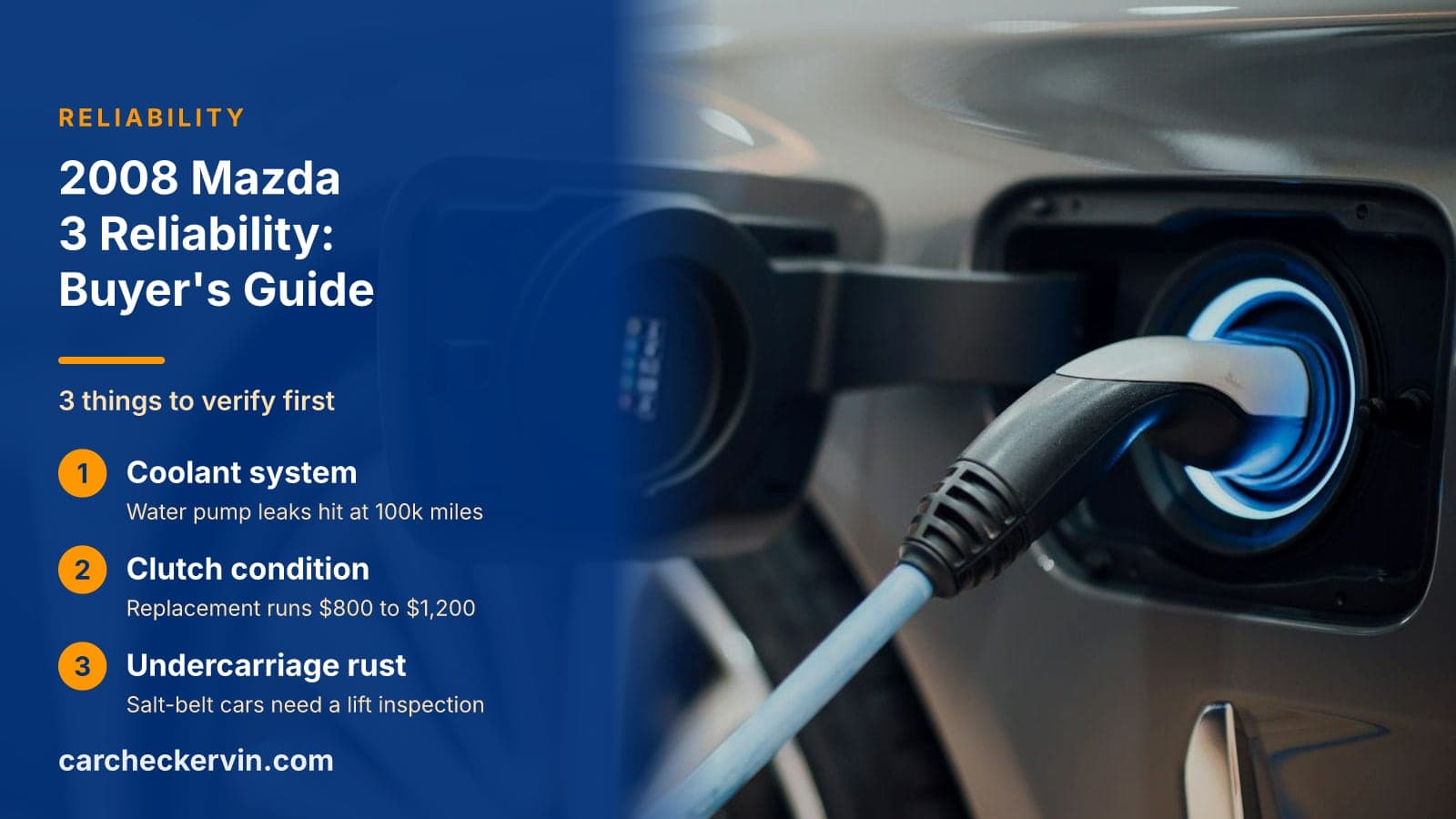
If you're cross-shopping cheap, fun-to-drive compacts and a 2008 Mazda 3 keeps popping up on Facebook Marketplace or a BHPH lot, you're right to pause and ask about 2008 Mazda 3 reliability before you commit. The short version is encouraging — this generation earned genuine praise — but a car pushing nearly two decades old has had time to develop some very specific, very expensive habits. Knowing which ones to look for separates the $5,000 score from the $5,000 lesson.
The short answer
The 2008 Mazda 3 is a solid used buy when properly maintained — Consumer Reports gave the BK-generation Mazda3 above-average reliability scores — but coolant system failures, rust underneath, and a worn clutch on manual cars are your three non-negotiable inspection points before you sign anything.
How the 2008 Mazda 3 Stacks Up in the Used-Car Market
The 2008 Mazda 3 belongs to the first-generation BK platform, which ran from 2004 through 2009. By the time this car left the factory, Mazda had already ironed out the teething issues from the 2004 launch year — software gremlins, minor interior rattles, a few suspension geometry revisions. What you're buying in the 2008 model is a mature version of that platform: the 2.0-liter or 2.3-liter four-cylinder, a reasonably tight chassis, and a reputation for driver engagement that no amount of marketing copy can manufacture.
On the used market, private-party prices for a 2008 Mazda 3 in good condition typically range from roughly $4,000 to $7,500 depending on trim, mileage, and region, according to Kelley Blue Book's valuation tool. That price band puts it squarely in impulse-buy territory for budget shoppers — which is exactly why you need to slow down, pull a vehicle history report, and use this guide before you get excited about the stick shift and forget to look under the car.
Why the BK Platform Has Aged Better Than Many Competitors
The BK Mazda 3 shares its basic architecture with the Ford Focus of the same era, which means parts availability has stayed strong at mainstream retailers like AutoZone and RockAuto. Independent mechanics are familiar with it, labor rates are predictable, and the engine is not an interference design that self-destructs the moment a timing belt skips a tooth. That last point alone makes it a more forgiving daily driver than several rivals from the same period.
2008 Mazda 3 Reliability: The Data Behind the Reputation
Consumer Reports' subscriber data for the first-generation Mazda3 consistently rated it above average in reliability, with the 2008 model year receiving particularly strong marks in the powertrain and body integrity categories. J.D. Power's 2010 Vehicle Dependability Study — which surveys three-year-old vehicles, making 2008 models squarely in scope — placed Mazda above the industry average for dependability. That's a meaningful data point, not a press release.
RepairPal, which aggregates repair cost and frequency data from shops across the United States, rates the Mazda 3 (covering the full nameplate) at 4.0 out of 5.0 for reliability and estimates average annual repair costs at approximately $433, compared to the compact car segment average of roughly $526 per year. That $93-per-year gap compounds nicely over a five-year ownership window. RepairPal also notes that the Mazda 3 visits a shop for unscheduled repairs about 0.3 times per year, below the segment average of 0.4.
What 'Above Average' Actually Means for a 16-Year-Old Car
Above-average reliability on a new-car scale does not mean you're buying a maintenance-free vehicle. At this age, you're dealing with rubber that has hardened, seals that have shrunk, and coolant that may not have been changed since the Obama administration. The baseline reliability rating tells you the bones are good; your pre-purchase inspection tells you what the previous owner did to those bones.
Common 2008 Mazda 3 Problems You Cannot Afford to Miss
Every used car has a highlight reel of recurring complaints, and 2008 Mazda 3 problems are documented in enough owner forums, NHTSA complaint filings, and independent shop data to paint a pretty clear picture. None of these problems are automatically deal-breakers, but every one of them needs to be either verified as resolved or priced into your offer.
The National Highway Traffic Safety Administration's complaint database lists multiple owner submissions for the 2008 Mazda 3 related to coolant leaks at the water pump and thermostat housing, as well as steering noise complaints linked to the intermediate shaft. Mazda issued Technical Service Bulletin 02-014/08 addressing a power steering hum under certain conditions — ask any prospective seller whether that repair has been performed.
- Coolant system leaks: The water pump and thermostat housing gaskets on the 2.0L and 2.3L four-cylinders are known weak points after about 100,000 miles. A slow coolant leak can quietly cook your engine before the temperature gauge moves.
- Rust on the rear subframe and undercarriage: Especially on cars from salt-belt states (the Northeast, Midwest, and Mid-Atlantic). This is a structural concern, not a cosmetic one, and repair costs can exceed the car's market value.
- Transmission issues on high-mileage automatics: The four-speed automatic in some 2008 trims can develop rough shifts and delayed engagement past 130,000 miles. A fluid service history — or lack thereof — tells you a lot.
- Power steering pump noise: The hydraulic power steering system can develop a low-pitched moan, especially when cold. The fix is often a pump replacement or a flush, but factor it in.
- Minor electrical gremlins: Window regulators and the ignition key cylinder have generated moderate complaint volumes on NHTSA's database, though neither represents a safety-critical failure in most cases.
Rust is the silent killer on these cars
A 2008 Mazda 3 from New England or the upper Midwest with no undercarriage inspection is a gamble, full stop. Get the car on a lift. If the rear subframe looks like a potato chip or the brake lines are pitting, walk away regardless of how clean the interior looks. Rust repair on a subframe can run $1,500 to $3,500 at a body shop, according to estimates collected by RepairPal — on a car worth $5,000, that math does not work.
Mazda 3 Clutch Replacement Cost: Budget for It on Manual Cars
If the car you're looking at has a five-speed manual — and a surprising number of surviving 2008 Mazda 3s do, because enthusiasts tend to maintain what they love — the clutch is your first mechanical budget line. Mazda 3 clutch replacement cost typically runs between $800 and $1,200 at an independent shop, parts and labor included, according to RepairPal's national labor and parts data. Dealer quotes can push that figure closer to $1,400.
A clutch on a 2008 Mazda 3 that has seen 100,000 or more miles is living on borrowed time. Sit in a parking lot and do a simple test: engage first gear slowly from a stop and feel for slipping, shuddering, or a biting point that's at the very top of the pedal travel. Any of those symptoms means the clutch is on its way out. That doesn't make the car a bad buy — it just means you negotiate $900 off the asking price or get confirmation the seller will handle it.
Flywheel: The Hidden Add-On Cost
When a clutch wears out on a high-mileage car, the flywheel surface often needs resurfacing or replacement as well. A resurfaced flywheel adds roughly $100 to $200 to the job; a new dual-mass flywheel replacement (if equipped) can add $300 to $500. Ask your mechanic to inspect it when the transmission is already out — skipping this step to save $150 upfront has ruined more than a few budget clutch jobs.
The Decision Matrix: Is the Risk Worth the Price?
Let's put actual numbers on the two scenarios a buyer faces. Scenario A: You find a 2008 Mazda 3 with 95,000 miles, one owner per a vehicle history report, service records, and no rust — asking $6,200. Scenario B: You find one at 140,000 miles, no service records, from a private party in Ohio who 'just drove it to work,' asking $3,800. The gap looks like a $2,400 win for Scenario B.
Run the numbers honestly. In Scenario B, budget conservatively for a clutch ($900), a coolant system inspection and possible water pump ($350 to $650), a full brake fluid and power steering flush ($150), and an undercarriage assessment. You're now at $4,800 to $5,500 all-in before any surprises. Scenario A, with known maintenance, is likely to need only routine work for the next 30,000 miles. The 'cheap' car is rarely cheap — it's just cheaper upfront.
- Get the VIN and run a vehicle history report before you visit — title brands (salvage, flood, lemon law buyback) are documented through NMVTIS-approved providers and can eliminate a car in two minutes.
- Order a pre-purchase inspection from an independent shop, not a dealer affiliated with the seller. A thorough PPI typically costs $100 to $150 and has saved buyers thousands.
- Request all service records. A 2008 Mazda 3 with documented oil changes every 5,000 miles is a fundamentally different machine than one whose history is a shrug.
- Test the clutch engagement point and listen for power steering noise on cold start — both are cheap to simulate and expensive to ignore.
- Check the undercarriage yourself before committing to a PPI appointment — if you can see daylight through the subframe in a parking lot, save the $125 inspection fee and move on.
How Many Miles Should You Expect from a 2008 Mazda 3?
Realistically, a well-maintained 2008 Mazda 3 can reach 200,000 miles without a major powertrain overhaul. That's not marketing — there are documented examples across Mazda3Revolution and similar forums of BK-generation cars hitting 180,000 to 220,000 miles on the original engine with consistent oil changes and timely coolant system maintenance. The 2.0L DOHC four-cylinder is mechanically straightforward and responds well to being treated like an adult.
The caveat is transmission longevity. Manual gearbox cars tend to outlast the automatics at high mileage, largely because clutch replacement is a known, budgetable event whereas automatic transmission rebuilds — which can run $2,500 to $4,000 at an independent shop — are often surprises. If maximum mileage potential is your goal, a well-maintained five-speed manual is the spec to target.
Mileage Sweet Spot for Buyers Today
Given where prices sit and what you're likely to need, the practical sweet spot for a 2008 Mazda 3 purchase is somewhere between 80,000 and 120,000 miles with a full service history. Below 80,000 miles on a car this age usually means it was garaged and barely driven — which comes with its own set of dry-seal and moisture issues. Above 130,000 miles without records is a leap of faith dressed up as a bargain.
Title Brands and Auction History: What to Screen Before You Buy
Cars this age have had time to cycle through Copart and IAA insurance auctions, get cosmetically repaired, and reappear on Craigslist looking suspiciously clean. NMVTIS — the National Motor Vehicle Title Information System, operated under the authority of the U.S. Department of Justice — requires licensed dealers and insurers to report title brands, but private resellers who buy at auction often don't disclose what a vehicle history report will show. Flood brands from Gulf Coast hurricanes and Midwest river flooding are a particular risk on cars this old.
The FTC's Used Car Rule requires dealers to display a Buyers Guide disclosing warranty terms — 'As Is' or implied warranty coverage — at the point of sale. If you're buying from a BHPH lot, read that Buyers Guide carefully. 'As Is' on a 16-year-old Mazda 3 from a BHPH dealer means exactly what it says. Also run a VIN check to screen for any open recalls — Mazda issued a recall (NHTSA Campaign 08V-569) on certain 2008 Mazda 3 vehicles related to the fuel pump, which should be resolved on any surviving example by now, but confirming costs nothing.
Extended Warranties and Service Contracts: Worth It on This Car?
Third-party extended warranties — technically 'vehicle service contracts' under FTC definitions — are a mixed bag on any used car, and on a 2008 Mazda 3 they require extra scrutiny. Most VSC providers exclude pre-existing conditions, which on a nearly two-decade-old car is a clause wide enough to drive a truck through. If the coolant leak was already developing when you bought it, good luck getting a VSC to cover the water pump.
That said, if you are buying from a dealer who offers a powertrain-only warranty with clear written terms, it can provide genuine peace of mind on the transmission — specifically the automatic, which is the most expensive single component likely to fail. Get any warranty terms in writing, verify the VSC company's financial standing through your state's insurance department, and confirm that your repair shop of choice is in the provider's network before you sign. A VSC you can't actually use at your mechanic is just an expensive piece of paper.
Maintenance Costs and What to Budget Going Forward
Once you own the car and have addressed the big-ticket inspection items, day-to-day maintenance on a 2008 Mazda 3 is genuinely affordable. Spark plugs, air filters, and brake pads are commodity parts with wide availability. A full synthetic oil change runs $50 to $75 at most independents. Timing chain (not belt) on the 2.0L means you don't have a $600 timing belt service hanging over your head every 60,000 miles the way you would on some competitors.
The items to pre-fund in your ownership budget: coolant system refresh if not documented ($150 to $350), front struts if the car bounces more than twice over a bump (a pair runs $300 to $500 installed at an independent shop), and rear brake hardware, which tends to seize on cars from salt states. Budget $800 to $1,200 in the first year for catch-up maintenance on any car with incomplete records, and you'll rarely be surprised.
DIY-Friendliness: A Real Ownership Advantage
The BK Mazda 3 scores well with DIY mechanics. The engine bay is not cramped, oil changes are accessible without a lift on most driveways, and Haynes and Chilton manuals exist in print for this generation. If you're comfortable with basic tools, you can handle brake pads, air filters, and battery replacement yourself — which compounds savings over time. The Mazda3Revolution forum has model-specific guides written by owners who have logged six-figure mileage on these cars.
What to do next
Before you finalize any offer on a 2008 Mazda 3, pull a full vehicle history report on the VIN to screen for title brands, flood history, and open recalls — then spend $100 to $150 on a pre-purchase inspection at an independent shop that will put the car on a lift and check the undercarriage. Those two steps together cost less than one unexpected repair and give you real negotiating leverage.
About the author
CarCheckerVIN Editorial Team
In-house automotive research team
The CarCheckerVIN editorial team combines decades of automotive industry, dealer, and journalism experience to produce trustworthy buying, selling, and ownership guidance backed by NMVTIS, NICB, and manufacturer data.
See more of our guides on Google
Add CarCheckerVIN as a preferred source and Google will show our guides more often in your results.

Frequently asked questions
- How many miles does a 2008 Mazda 3 last?
- A well-maintained 2008 Mazda 3 can realistically reach 200,000 miles on the original engine. Consistent oil changes and timely coolant system service are the two biggest factors. Manual transmission cars tend to outlast their automatic counterparts at high mileage. Documented examples on owner forums regularly report 180,000 to 220,000 miles without a major powertrain rebuild, which puts this car well above average for the segment.
- What year to stay away from Mazda3?
- The 2004 Mazda3 is the launch year most buyers should approach cautiously — early BK-generation cars had more software and minor mechanical teething issues than later model years. Consumer Reports data also flags the 2010 second-generation model as a below-average reliability year. The 2008 model sits in a sweet spot: the first-generation platform was fully mature, and Mazda hadn't yet introduced the second-gen transition-year complications.
- What were the common problems with the 2008 Mazda 3?
- The most documented 2008 Mazda 3 problems include coolant leaks at the water pump and thermostat housing, undercarriage rust on salt-belt cars, power steering pump noise (addressed in TSB 02-014/08), and worn clutches on high-mileage manual cars. Automatic transmission rough shifting past 130,000 miles and window regulator failures also appear in NHTSA complaint filings, though neither is as costly as the coolant or rust issues.
- What is the most reliable year for a Mazda3?
- Among all generations, the 2008 through 2009 first-generation cars and the 2012 through 2013 second-generation models consistently earn strong marks from Consumer Reports and RepairPal. For buyers on a tight budget seeking the most proven platform, a 2008 or 2009 BK-generation car with full service records represents one of the better reliability-per-dollar propositions in the used compact segment.
Keep reading
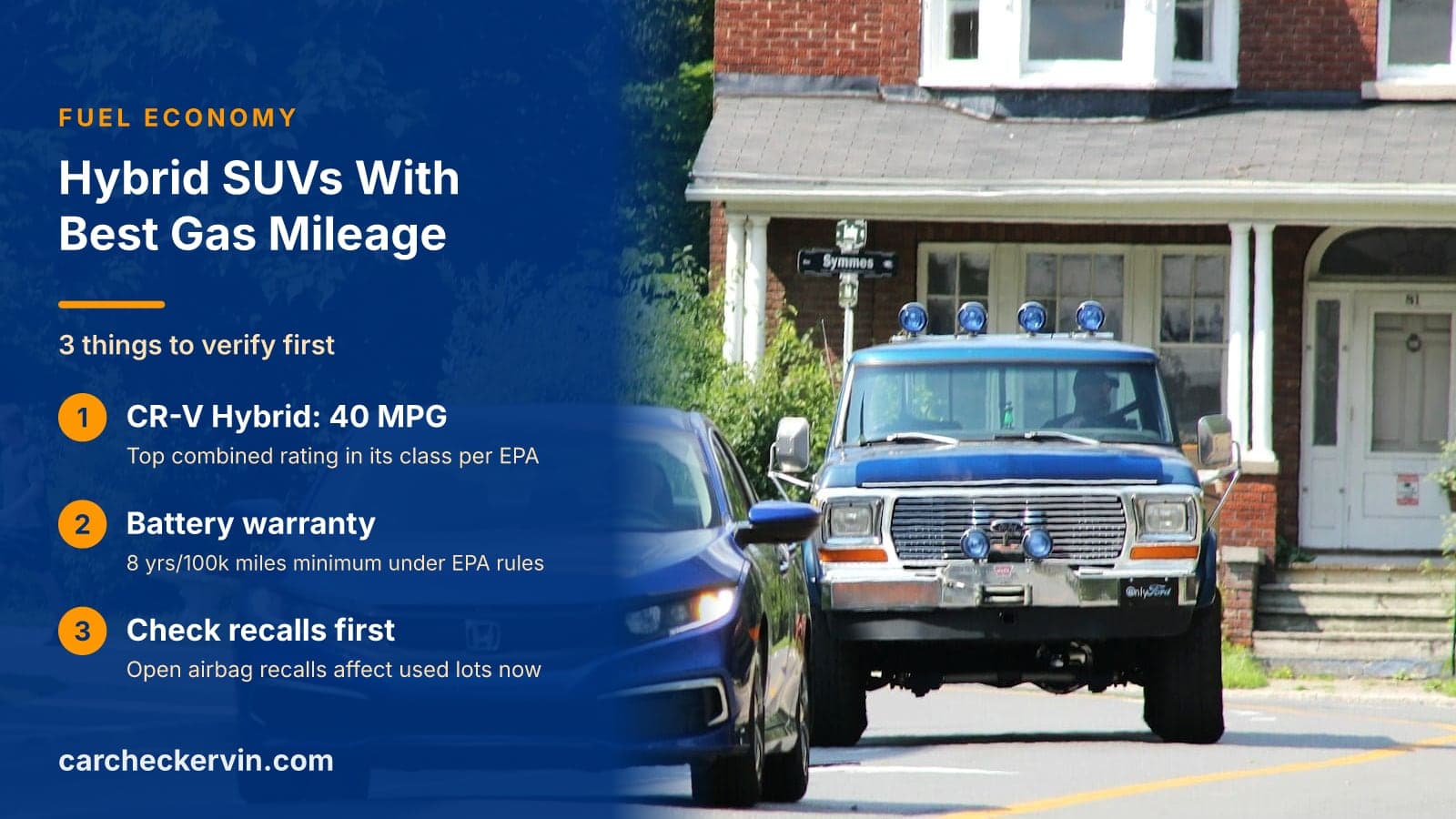
Hybrid SUVs With Best Gas Mileage: The Buyer's Field Guide
Shopping for a fuel-sipping SUV? This field guide ranks the top hybrid SUVs by real-world MPG, flags hidden costs, and tells you exactly what to verify before you buy.
Oct 25, 2026 · 10 min read

Consumers Auto Loan: How to Finance Your Next Car Without Getting Burned
A consumers auto loan is the single biggest variable in your car deal — bigger than the sticker price. Here's how to lock in the best rate before you ever step on a lot.
Oct 16, 2026 · 10 min read
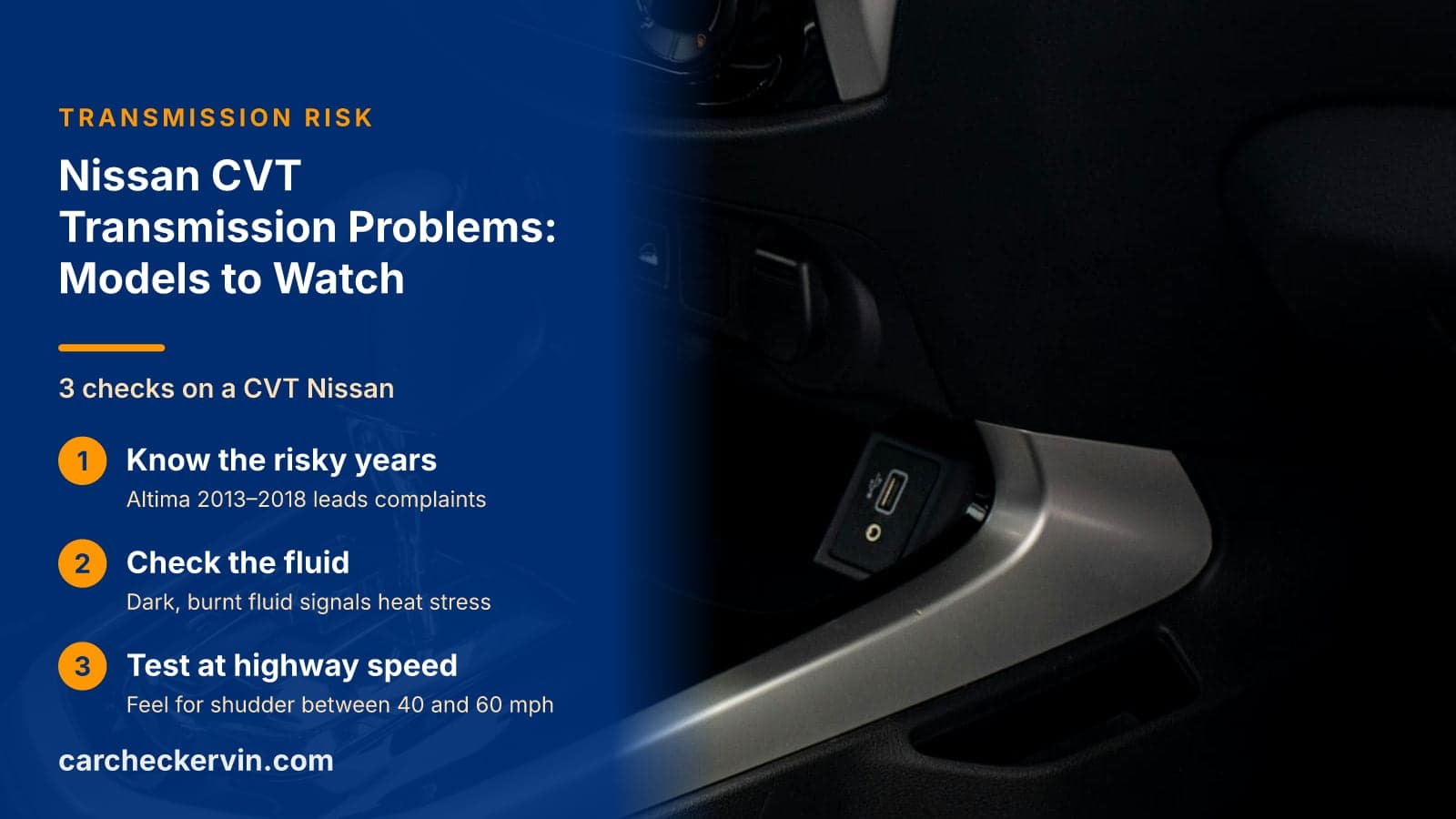
What Nissan Cars Have CVT Transmission Problems — And What to Do Before You Buy
CVT trouble is real across multiple Nissan models. Before you buy a used Altima, Sentra, or Rogue, know which years are risky, what repairs cost, and whether a Nissan CVT transmission recall covers it.
Oct 16, 2026 · 12 min read