Buying a Used Car Pros and Cons: The Honest Trade-Off Guide for US Buyers
Used cars save real money upfront, but depreciation, financing rates, and NMVTIS title brands can turn a deal into a disaster. Here's what the numbers actually say.
On this page
- The Depreciation Argument: Where the Real Money Is
- Financing Realities: Car Loan Options Are Not Created Equal
- Title Brands and NMVTIS: The Risk That Voids the Savings
- Auctions, Copart, and IAA: High Risk, Potential Reward
- Buying a Used Car Pros and Cons: The Side-by-Side Cost vs. Risk Breakdown
- Extended Warranties: Protection or Profit Center?
- Private Party vs. Dealer: Who Owes You What
- Mileage, Maintenance Records, and the 100,000-Mile Threshold
- What to Inspect Before You Sign the Car Purchase Order
Every buyer sitting across from a dealer — or scrolling through a private-party listing at midnight — eventually confronts the same core question embedded in the phrase buying a used car pros and cons: does the savings justify the uncertainty? The answer depends less on gut feeling and more on understanding the specific financial mechanics, legal disclosures, and market realities that govern used-car transactions in the United States. The Federal Trade Commission's Used Car Rule, enforced since 1985 and last updated in 2023, requires dealers to display a Buyers Guide on every used vehicle, disclosing warranty coverage and prompting buyers to get any promises in writing — a protection private-party sellers are not required to extend. That single regulatory asymmetry shapes every trade-off that follows.
The short answer
For most buyers, a certified pre-owned or clean-title used vehicle aged three to five years delivers the best combination of depreciation savings and remaining reliability — but only if you verify the title status, pull a vehicle history report, and negotiate the car purchase order before you sign.
The Depreciation Argument: Where the Real Money Is
Depreciation is the most cited advantage in any buying a used car pros and cons analysis, and the data makes the case forcefully. According to Edmunds research, new vehicles lose an average of roughly 23 percent of their value in the first year of ownership alone, and approximately 49 percent over five years. That means a $40,000 new crossover is worth closer to $20,400 at the five-year mark — a loss that the original buyer absorbed entirely. The buyer who purchases that same vehicle as a used unit at year two sidesteps the steepest portion of that curve while still benefiting from the remaining useful life of the powertrain, which on most modern vehicles extends well past 150,000 miles with routine maintenance.
The depreciation advantage is not uniform across segments. Luxury vehicles and trucks tend to retain value better than economy sedans, which means the percentage savings on a used compact can be smaller in absolute dollar terms than the savings on a used full-size pickup. Buyers shopping for cheap good mileage cars — say, a used Toyota Corolla or Honda Civic in the 40,000-to-70,000-mile range — will find that demand for these segments is high, which compresses the discount below what raw depreciation math would suggest. Understanding the specific make and model's residual value trajectory matters more than applying a universal rule.
Certified Pre-Owned vs. Straight Used: Splitting the Depreciation Benefit
Manufacturer-backed CPO programs restore some new-car protections — multi-point inspections, powertrain warranties extending to 100,000 miles in many cases, and roadside assistance — but they add a price premium that typically runs $1,500 to $3,500 above comparable non-CPO units, based on pricing data aggregated by iSeeCars. That premium buys real value if the vehicle is approaching the end of its factory warranty, but it can be redundant on a car that still carries significant factory coverage from its original sale date.
Financing Realities: Car Loan Options Are Not Created Equal
The savings from buying used can be partially erased by less favorable car loan options. The Federal Reserve's consumer credit data consistently shows that interest rates on used-vehicle loans run higher than new-vehicle rates — a spread that, as of mid-2025 Federal Reserve G.19 release figures, averaged roughly 2.5 to 3.5 percentage points. On a $20,000 used-car loan over 60 months, that spread can cost the buyer more than $1,800 in additional interest compared with a new-car rate, narrowing the headline savings considerably.
Credit unions and community banks tend to offer more competitive used-car rates than franchise dealerships that route financing through captive lenders. Buy-here-pay-here lots, which serve buyers with subprime credit, can charge annual percentage rates exceeding 20 percent under state usury laws that vary widely — Texas, for instance, does not cap consumer auto loan rates the way Arkansas does. Buyers with scores below 620 should obtain pre-approval from their own institution before walking onto any lot, because the car purchase order that gets signed at the dealer will reference a specific APR that is very difficult to renegotiate after the fact.
- Pull your credit report from AnnualCreditReport.com before shopping — errors affect roughly 1 in 5 reports according to a 2021 FTC study.
- Get pre-approved at a credit union or bank; the approval letter gives you negotiating leverage at any dealership.
- Compare the dealer's final APR on the car purchase order against your pre-approval before signing — if it's higher, ask why.
- Avoid extending the loan term past 60 months on a used vehicle; you risk being underwater if the vehicle depreciates faster than you pay down principal.
- Confirm gap coverage options if you finance more than 80 percent of the vehicle's value — NADA Guides or Kelley Blue Book can help establish that baseline.
Title Brands and NMVTIS: The Risk That Voids the Savings
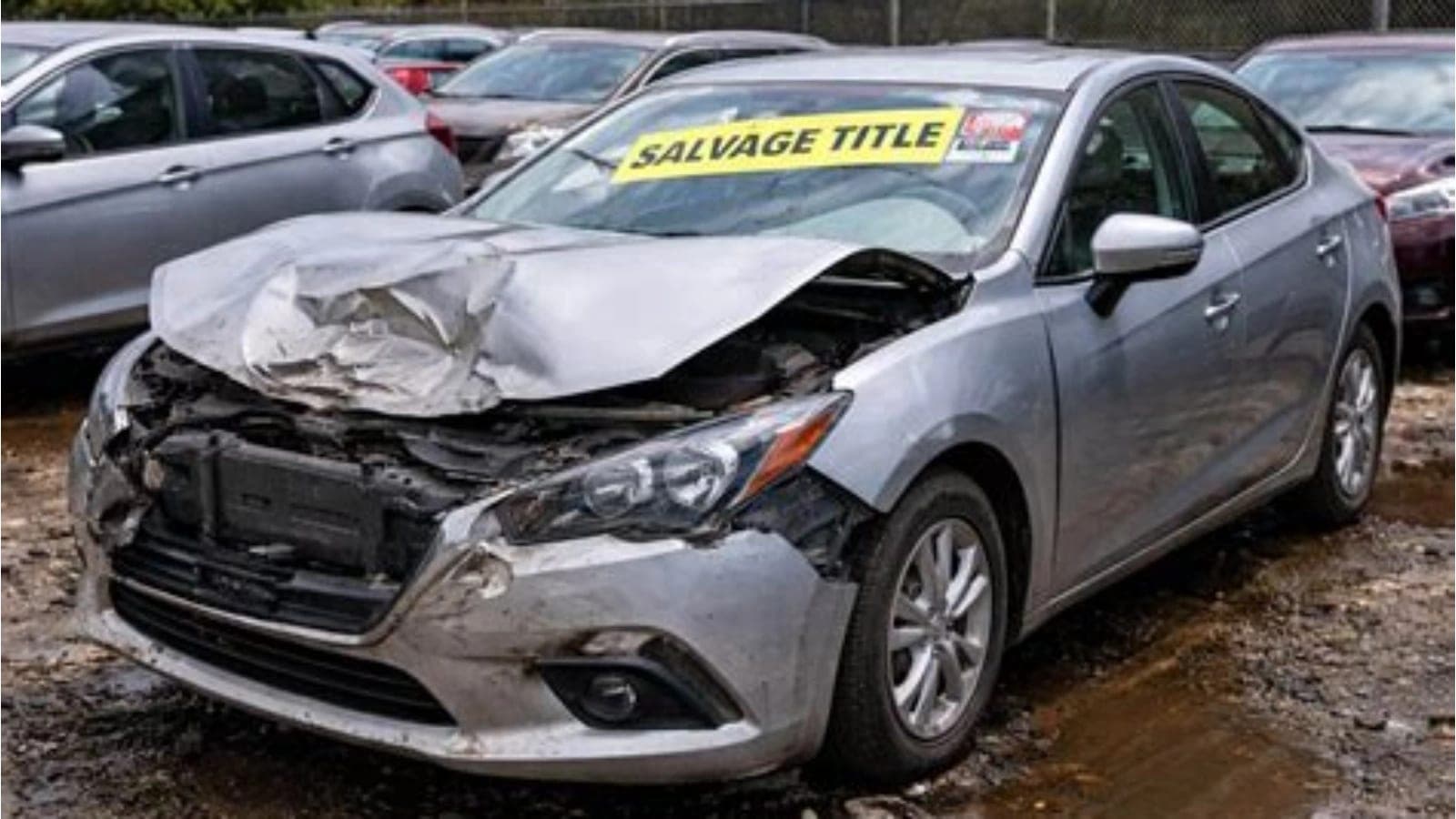
The single greatest structural risk in a used-car purchase is acquiring a vehicle with a compromised title without knowing it. The National Motor Vehicle Title Information System (NMVTIS), administered by the Department of Justice under 49 U.S.C. § 30502, consolidates title brand data from all 50 states and is the statutory backbone behind the clean title vs salvage distinction that every buyer must understand. A salvage brand is assigned when an insurer declares a vehicle a total loss — typically when repair costs exceed 75 to 80 percent of the vehicle's actual cash value, though the exact threshold varies by state. A rebuilt or reconstructed brand means the vehicle was repaired and passed a state inspection, but it has already been totaled once.
The financial consequences of buying a salvage or rebuilt title vehicle without knowing it are severe. Resale values on salvage-branded vehicles run 20 to 40 percent below comparable clean-title units, according to analysis published by the Insurance Institute for Highway Safety. More practically, most standard lenders will not finance salvage-title vehicles, and many insurers refuse comprehensive or collision coverage on them, or charge significantly elevated premiums. Running a vehicle history report before making any offer is the minimum due diligence — and it should be treated as a non-negotiable step, not a courtesy.
Title Washing Is Real and NMVTIS Doesn't Catch Everything
Some sellers move a totaled vehicle across state lines to obtain a clean title in a state with less stringent branding requirements — a practice known as title washing. NMVTIS has reduced but not eliminated this loophole. Always cross-reference the VIN check results against the physical vehicle condition and get an independent pre-purchase inspection from a mechanic who has no financial interest in the sale.
Auctions, Copart, and IAA: High Risk, Potential Reward
Copart and IAA (Insurance Auto Auctions) sell hundreds of thousands of vehicles annually — including salvage, clean title, and donation units — primarily to licensed dealers, but both platforms now offer direct public access through membership programs. Copart reported selling approximately 4.7 million vehicles in fiscal year 2024. These auctions can yield genuine deals on lightly damaged or low-mileage fleet vehicles, but buyers almost universally cannot conduct a pre-purchase inspection prior to bidding, and auction sales are final. The Buyers Guide disclosures required by the FTC Used Car Rule do not apply to auction sales, so the regulatory floor that exists at a licensed dealership is absent.
A buyer who wins an auction vehicle and discovers undisclosed structural damage has limited legal recourse. Many units at Copart and IAA carry salvage titles by definition — they are insurance-industry disposals. The strategy of buying from these platforms and then flipping into the retail market as a rebuilt title vehicle is well-documented and legal when properly disclosed, but it creates an information asymmetry that downstream buyers need to guard against by pulling a vehicle history report before purchase.
Buying a Used Car Pros and Cons: The Side-by-Side Cost vs. Risk Breakdown
A direct comparison of a three-year-old used vehicle against its new equivalent reveals the following pattern using Bureau of Labor Statistics and Edmunds data: the average transaction price for a new vehicle in the United States exceeded $48,000 in early 2025, while the average used-vehicle transaction sat near $27,000 — a nominal gap of roughly $21,000. However, once a buyer accounts for a higher interest rate (adding approximately $1,800 over 60 months as noted above), reduced warranty coverage, and a realistic $800-to-$1,200 first-year maintenance budget on a vehicle with 40,000 miles, the effective savings compresses to somewhere between $15,000 and $18,000 over the ownership period.
That is still a significant number — but it comes paired with specific risks: unknown prior-owner behavior, possible undisclosed accidents not yet reflected in NMVTIS, odometer fraud (which the National Highway Traffic Safety Administration estimates affects hundreds of thousands of vehicles annually), and in some cases, an expired or absent manufacturer warranty. A clean-title used vehicle with documented service history, a clean vehicle history report, and a passed pre-purchase inspection reduces those risks substantially — but cannot eliminate them.
- Pros: Roughly $15,000–$18,000 in effective savings vs. new after financing and maintenance costs (Edmunds/BLS data).
- Pros: Lower insurance premiums — actual cash value is lower, reducing comprehensive/collision exposure.
- Pros: Registration fees in most states are calculated on vehicle value, so a cheaper car costs less to register annually.
- Cons: Higher loan APR on car loan options — typically 2.5–3.5 percentage points above new-car rates (Federal Reserve G.19).
- Cons: Title brand risk; salvage/rebuilt units can trade 20–40 percent below clean-title equivalents (IIHS).
- Cons: No FTC Buyers Guide protections in private-party or auction sales; warranty terms must be verified independently.
- Cons: Extended warranties sold by dealers or third parties are not regulated federally the way manufacturer warranties are — read every exclusion.
Extended Warranties: Protection or Profit Center?
After the clean title vs salvage question, extended warranties — also called vehicle service contracts — are where used-car buyers most frequently leave money on the table or get burned. These products are not warranties in the legal sense under the Magnuson-Moss Warranty Act (15 U.S.C. § 2301 et seq.); they are service contracts, and the distinction matters because the Act's full protections apply differently. A service contract sold by a dealer generates, according to industry analysts at J.D. Power, average dealer gross profit margins of 40 to 60 percent — meaning a $2,500 product may cost the administrator $1,000 to $1,500 to underwrite.
Buyers who want coverage should investigate whether the manufacturer's CPO warranty can be transferred or whether the vehicle is still within its original factory powertrain coverage — the best car battery warranty, for instance, is often the one that came with the vehicle and is still active, not a third-party add-on. When evaluating any service contract, read the exclusions list, not the coverage list. Most disputes arise from components the contract explicitly excludes in fine print that the dealer's finance office doesn't volunteer. Request the full contract — not a summary brochure — before signing the car purchase order.
Private Party vs. Dealer: Who Owes You What
The legal landscape differs sharply depending on whether you buy from a licensed dealer or a private party. Dealers in all 50 states must comply with the FTC Used Car Rule, post the Buyers Guide, and are subject to state consumer protection statutes and lemon-law provisions that vary by jurisdiction — California's Song-Beverly Consumer Warranty Act is among the strongest, while other states offer minimal post-sale recourse. Private sellers, by contrast, sell 'as-is' by default in virtually every state, with no Buyers Guide requirement and no implied warranty of merchantability unless the buyer can prove fraudulent misrepresentation — a high legal bar.
Private-party prices are typically lower — often 10 to 15 percent below dealer asking prices for comparable vehicles — but that discount is partly compensation for assuming more legal and mechanical risk. The buyer cannot negotiate warranty terms, cannot require a Buyers Guide, and has no dealer financing infrastructure. Cash or external financing must be arranged in advance, and the bill of sale — not a car purchase order — is the only binding transaction document.
Mileage, Maintenance Records, and the 100,000-Mile Threshold
Mileage remains a primary proxy for wear, but it is an imperfect one without maintenance documentation. A vehicle with 85,000 miles and a complete dealer service history is categorically different from one with 65,000 miles and no records. Buyers hunting for cheap good mileage cars should understand that modern vehicles engineered with timing chains (rather than belts), full synthetic oil recommendations, and multi-port or direct fuel injection commonly reach 200,000 miles when serviced correctly — data from Consumer Reports' annual reliability surveys consistently validates this for brands including Toyota, Honda, and Mazda.
The psychological resistance to crossing the 100,000-mile mark suppresses prices on otherwise sound vehicles, which creates opportunity. A 2020 Toyota Camry with 105,000 documented miles may be structurally sounder than a 2022 unit with 45,000 unknown-history miles, yet the former often lists several thousand dollars lower. The VIN check and physical inspection, not the odometer reading alone, should drive the purchase decision.
What to Inspect Before You Sign the Car Purchase Order
The car purchase order is the binding contract that specifies price, financing terms, trade-in allowance, and any add-on products. Once signed, unwinding it is difficult and sometimes impossible. Before that moment, a structured due-diligence sequence should include: pulling a vehicle history report, confirming the title brand through NMVTIS-connected sources, and conducting an independent pre-purchase inspection by a licensed mechanic — not one affiliated with the selling dealer. The American Automobile Association (AAA) operates inspection programs in many markets; independent shops not aligned with any dealership group are equally valid.
The inspection should specifically evaluate rust on frame rails and suspension components, compression on all cylinders if accessible, transmission fluid condition, evidence of previous airbag deployment (which may not appear in a vehicle history report if the repair was done outside insurance channels), and tire condition. Replacing four tires on a mid-size SUV costs $600 to $1,000 at current retail, a figure that should be factored into any price negotiation if the tires are worn. Ask the dealer or seller for a line-by-line breakdown of every fee appearing on the car purchase order — documentation fees, dealer prep charges, and market-adjustment markups are negotiable or removable in most states.
What to do next
Before you contact a single seller, pull the VIN on any vehicle you're seriously considering through a vehicle history report — then take the printed results to an independent mechanic for a pre-purchase inspection. That one-two sequence, completed before you ever see a car purchase order, will catch most of the title, odometer, and structural problems that turn used-car deals into expensive mistakes.
CarCheckerVIN Editorial Team
In-house automotive research team
The CarCheckerVIN editorial team combines decades of automotive industry, dealer, and journalism experience to produce trustworthy buying, selling, and ownership guidance backed by NMVTIS, NICB, and manufacturer data.
Frequently asked questions
- Is buying a used car worth it?
- For most buyers, yes — the effective savings versus buying new typically runs $15,000 to $18,000 over a five-year ownership period after accounting for higher loan rates and first-year maintenance, based on Edmunds and Federal Reserve data. The calculation tips negative only when a buyer unknowingly acquires a salvage or rebuilt-title vehicle, skips a pre-purchase inspection, or finances at a BHPH lot rate exceeding 20 percent APR.
- How much should I spend on a car if I make $70,000?
- A commonly cited guideline from financial planners suggests keeping total vehicle costs — loan payment, insurance, fuel, and maintenance — at or below 15 to 20 percent of gross monthly income. On a $70,000 salary, that's roughly $875 to $1,166 per month total, which after insurance and fuel typically leaves room for a loan payment in the $400-to-$550 range — supporting a used-vehicle purchase price of approximately $18,000 to $24,000 at current rates.
- What age is best to buy a car?
- Vehicles aged two to four years old represent the strongest value position for most buyers: the original owner absorbed the steepest depreciation curve — roughly 23 percent in year one alone, per Edmunds — while the factory powertrain warranty may still carry residual coverage. Models from reliability-rated brands can remain cost-effective at five to seven years old if service records are clean and no major branded title events appear in NMVTIS.
- What is the 20% rule when buying a car?
- The 20% rule is a financing guideline recommending a down payment of at least 20 percent of the vehicle's purchase price. This threshold matters because it typically keeps the buyer above water on the loan — meaning the remaining balance doesn't exceed the vehicle's depreciated market value — reducing the risk of being upside-down if the vehicle is totaled or needs to be sold. It also reduces total interest paid over the loan term and can improve APR offers from lenders.
Ready to check a VIN?
Run a free VIN check
Decode any vehicle in under 60 seconds.