Carfax vs AutoCheck vs NMVTIS: Which Vehicle History Report Actually Catches More?
Three major vehicle history sources. Different data feeds. Different blind spots. Here's a practical breakdown of what each one catches and misses so you know exactly which reports to pull.
On this page
- What Each Report Actually Is
- Where Carfax Wins (and Where It Falls Short)
- Where AutoCheck Wins (and Where It Falls Short)
- Where NMVTIS Wins (and Why It's Different)
- Head-to-Head: What Each Report Catches
- How to Use All Three Without Overspending
- When Reports Disagree
- The Bottom Line on Carfax vs AutoCheck vs NMVTIS
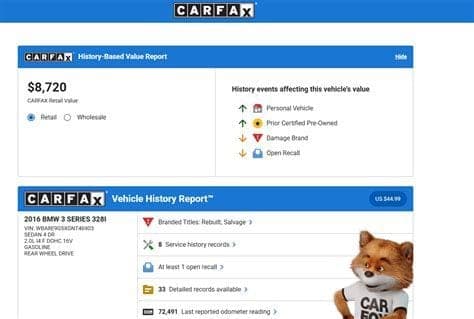
You found a used car that looks clean. The price is right. The seller says it has never been in an accident. Now you need to verify that claim, and you're staring at three options: Carfax, AutoCheck, and an NMVTIS-based report. Each one pulls from different data sources. Each one has blind spots the others might cover. The carfax vs autocheck vs nmvtis debate matters because choosing only one report can leave you exposed to risks the other two would have flagged.
60-second answer
No single report catches everything. Carfax has the deepest service-history data. AutoCheck has the broadest insurance-loss records. NMVTIS is the only federally mandated system for title brands and total-loss flags. For maximum protection, pull at least two: one commercial report (Carfax or AutoCheck) plus one NMVTIS-sourced report.
What Each Report Actually Is
Before you compare features, you need to understand what these three things are at a structural level. They are not interchangeable products. They gather data differently, serve different audiences, and operate under different rules.
- Carfax is a private company (owned by IHS Markit, now part of S&P Global). It aggregates data from over 130,000 sources including DMVs, repair shops, dealerships, and auction houses. Its biggest advantage is service-record depth.
- AutoCheck is also private, owned by Experian (the credit bureau). It pulls heavily from the Manheim and ADESA auction networks and has strong insurance-total-loss data. It assigns a proprietary AutoCheck Score to simplify comparison shopping.
- NMVTIS (National Motor Vehicle Title Information System) is a federal database administered by the U.S. Department of Justice. Federal law (the Anti Car Theft Act of 1992) requires states, insurers, and junk/salvage yards to report title brands, total-loss records, and salvage information to NMVTIS. It is not a consumer product itself but licenses data to approved providers.
Where Carfax Wins (and Where It Falls Short)
Carfax built its brand on service-history records. If the car was maintained at a dealership or a participating chain shop (think Jiffy Lube, Pep Boys, Meineke), those oil changes and brake jobs often show up. That data is genuinely useful for gauging how an owner treated the car. Carfax also has strong recall-status integration, pulling directly from NHTSA recall data and showing whether repairs were completed.
The weak spots? Carfax sometimes misses accident records that come through smaller insurance carriers or independent body shops that don't report. It also relies heavily on police-reported accidents, so a fender bender settled privately may never appear. And the price is steep: a single Carfax report runs about $44.99 (or $99.99 for six reports). If you're shopping seriously and checking ten or more cars, the cost adds up fast. That's why many buyers look for a carfax alternative that covers the same ground for less.
Where AutoCheck Wins (and Where It Falls Short)
AutoCheck's strongest card is its auction data pipeline. Experian owns a massive share of dealer-to-dealer auction reporting, so if a car passed through Manheim (the largest wholesale auto auction in the U.S.) or went through Copart or IAA as a salvage-auction vehicle, AutoCheck typically flags it. The AutoCheck Score (ranging from 1 to 100) also gives you a quick way to compare one VIN against similar vehicles in the same class and model year.
On the downside, AutoCheck's service-history coverage is thinner than Carfax's. Independent mechanic records rarely show up. And while the AutoCheck Score is convenient, it can mask important details. A car with a moderate score might have one serious red flag buried in the full report that the score alone doesn't communicate. Any autocheck comparison should include a line-by-line read, not just a glance at the number.
Where NMVTIS Wins (and Why It's Different)
NMVTIS is not trying to compete with Carfax or AutoCheck. It serves a narrower but critical purpose: catching title fraud. Federal law requires all 50 states, plus insurance carriers and junk/salvage yards, to report to NMVTIS. That means if a vehicle was branded as salvage, rebuilt, flood, or junk in any state, NMVTIS should have that record. This matters enormously for title washing (the practice of re-registering a salvage-titled car in a lenient state to get a clean title).
NMVTIS report quality is strong for what it covers: title brands, odometer readings at the time of title transfers, and total-loss history from insurers. But it won't tell you about service history, accident damage that didn't trigger a title brand, or open recalls. You can access NMVTIS data through approved providers (our own vin-check page pulls from NMVTIS among other sources) for a fraction of what Carfax charges.
Watch for title washing
Title washing is still common. A car totaled in Pennsylvania can be re-titled in a state with looser branding rules and emerge looking clean. NMVTIS is your best defense here because it consolidates records across all states. Neither Carfax nor AutoCheck is federally mandated to receive every state's title data in real time, though both try.
Head-to-Head: What Each Report Catches
Here's a practical breakdown of which data points each source is most likely to surface. Think of this as a coverage map, not a guarantee. No database is 100 percent complete.
- Salvage/junk/flood title brands: NMVTIS is the strongest source. Carfax and AutoCheck also report them but may lag behind on multi-state transfers.
- Accident history (police-reported): Carfax and AutoCheck both cover this. NMVTIS does not.
- Accident history (insurance claims): AutoCheck tends to catch more here due to Experian's insurer relationships. Carfax catches many but not all.
- Service and maintenance records: Carfax leads by a wide margin. AutoCheck has limited coverage. NMVTIS has none.
- Odometer rollback: All three flag odometer discrepancies based on title-transfer readings. NMVTIS is the federal backstop.
- Open recalls: Carfax integrates NHTSA recall data well. AutoCheck does too. NMVTIS does not cover recalls.
- Auction history (wholesale/salvage): AutoCheck has the deepest data here. Carfax covers some. NMVTIS records salvage-yard intake but not auction details.
How to Use All Three Without Overspending
You don't need to buy all three for every car you consider. Use a tiered approach based on how serious you are about a particular vehicle.
- Start with an NMVTIS-based report. It's cheap (often under $10) and catches the deal-breakers: salvage brands, title washing, odometer flags. You can run one through our pricing page to see current rates.
- If the NMVTIS report comes back clean and you're still interested, pull either a Carfax or AutoCheck report. Choose Carfax if maintenance history matters most to you (older cars, high-mileage cars). Choose AutoCheck if you're buying from a dealer or auction and want stronger loss-history data.
- If you're spending $15,000 or more on a used car, consider pulling both commercial reports. The extra $25 to $45 is a tiny insurance policy against a $5,000 mistake.
- Always cross-reference report findings with a live pre-purchase inspection by an independent mechanic. Reports catch paperwork problems. Mechanics catch physical problems.
When Reports Disagree
It happens more often than you'd expect. Carfax might show an accident that AutoCheck doesn't, or vice versa. When you see a discrepancy, treat the worse finding as the one that matters. A clean AutoCheck does not override a Carfax accident record. The data came from somewhere, and the absence of that same data in another report just means the second provider didn't receive it through their pipeline.
Pay special attention to odometer readings across reports. If one shows 62,000 miles at a title transfer and another shows 58,000 miles at the same transfer date, something went wrong in recording. That's worth investigating before you buy.
The Bottom Line on Carfax vs AutoCheck vs NMVTIS
Each report fills a different gap. NMVTIS is your federal safety net for title fraud. Carfax gives you the richest ownership and maintenance narrative. AutoCheck gives you the strongest auction and insurance-loss coverage. Relying on just one is like locking your front door but leaving the back door wide open. The smartest used-car buyers layer their research: start with NMVTIS data, add a commercial report, and finish with a hands-on inspection.
What to do next
Run a VIN check on our vin-check page to pull NMVTIS-sourced data first. If that report is clean, decide between Carfax and AutoCheck based on what matters most for your purchase (maintenance records vs. auction and loss history). Budget $20 to $60 total for reports and save yourself thousands in hidden damage.
CarCheckerVIN Editorial Team
In-house automotive research team
The CarCheckerVIN editorial team combines decades of automotive industry, dealer, and journalism experience to produce trustworthy buying, selling, and ownership guidance backed by NMVTIS, NICB, and manufacturer data.
Ready to check a VIN?
Run a free VIN check
Decode any vehicle in under 60 seconds.