How Much Is Tax, Title, and License in Illinois — A Used-Car Buyer's Complete Cost Guide
Illinois stacks sales tax, a title fee, and plate costs on top of the sticker price. Here's every number — including private car sale taxes — so you know your real out-of-pocket before you sign.
On this page
- Illinois Sales Tax on Vehicle Purchases: The Baseline Rate
- How Much Is Tax, Title, and License in IL for Private Car Sales
- The Title Fee: Flat, Predictable, Non-Negotiable
- Registration and Plate Fees: Where Costs Vary
- Dealer Purchase vs. Private Sale: A True Cost Comparison
- Trade-In Credit: How It Reduces Your Taxable Basis
- Out-of-State Purchases Titled in Illinois
- What Dealers Can and Cannot Charge You
- How to Budget Your Total Out-of-Pocket Before You Negotiate
You've found the car, agreed on a price, and then the seller — or the F&I office — starts listing add-ons you hadn't budgeted. If you're trying to figure out how much is tax, title, and license in Illinois, you're asking exactly the right question before money changes hands. Illinois charges a state sales tax on vehicle purchases, a flat title fee, and registration fees that vary by plate type and vehicle weight — and if you're buying from a private party rather than a licensed dealer, the rules around private car sale taxes are different in ways that can trip up even experienced buyers. This guide walks through every mandatory cost so you can build a real number before you show up with a cashier's check.
The short answer
Illinois charges 6.25% state sales tax on the purchase price (or fair market value — whichever is higher), a $165 title fee, and standard passenger-plate registration starting at $151 per year, per the Illinois Secretary of State. Budget an additional $300–$500 in local taxes and fees depending on the county and whether you're buying from a dealer.
Illinois Sales Tax on Vehicle Purchases: The Baseline Rate
Illinois imposes a 6.25% state Retailers' Occupation Tax on motor vehicle sales, as set by 35 ILCS 105 (the Use Tax Act) and administered by the Illinois Department of Revenue. That rate applies to the purchase price you report when you title the vehicle. If the Illinois Department of Revenue determines that the price you paid is below fair market value — a common trigger on private sales between relatives or when a car sells suspiciously cheap — the state can assess tax on the book value instead of the actual transaction amount.
On a $20,000 used car, the state portion alone is $1,250. That's real money, and it doesn't include what your county or municipality layers on top. Chicago, for example, stacks a city home-rule tax on top of the state rate, pushing the effective rate higher for buyers who register in Cook County. Understanding the state rate is the floor, not the ceiling.
Local Tax Add-Ons That Catch Buyers Off Guard
Home-rule municipalities in Illinois can impose additional sales taxes, and many do. The Illinois Department of Revenue publishes a rate finder tool, but broadly, Chicago buyers can face combined rates well above the state baseline — meaning the local slice can add hundreds of dollars to a mid-range purchase. Always check the specific rate for your county of registration before finalizing your budget.
How Much Is Tax, Title, and License in IL for Private Car Sales
Private car sale taxes in Illinois work differently than dealer transactions, and this distinction matters. When you buy from a private seller, there's no dealer to collect and remit sales tax on your behalf. You pay the tax directly to the Illinois Secretary of State at the time of titling — typically within 30 days of the purchase date, per Secretary of State guidelines. Miss that window and you risk late fees and complications with your registration.
The sales tax private car sale rate is the same 6.25% state rate that applies to dealer sales, plus any applicable local taxes based on where you register the car — not where the seller lived. Many buyers assume a handshake deal in a parking lot means they dodge tax. They don't. The Illinois Department of Revenue cross-references private-party title transfers and can pursue unpaid tax, plus a penalty of up to 25% of the tax due under 35 ILCS 105/13.
The Bill of Sale Is Not Optional on a Private Sale
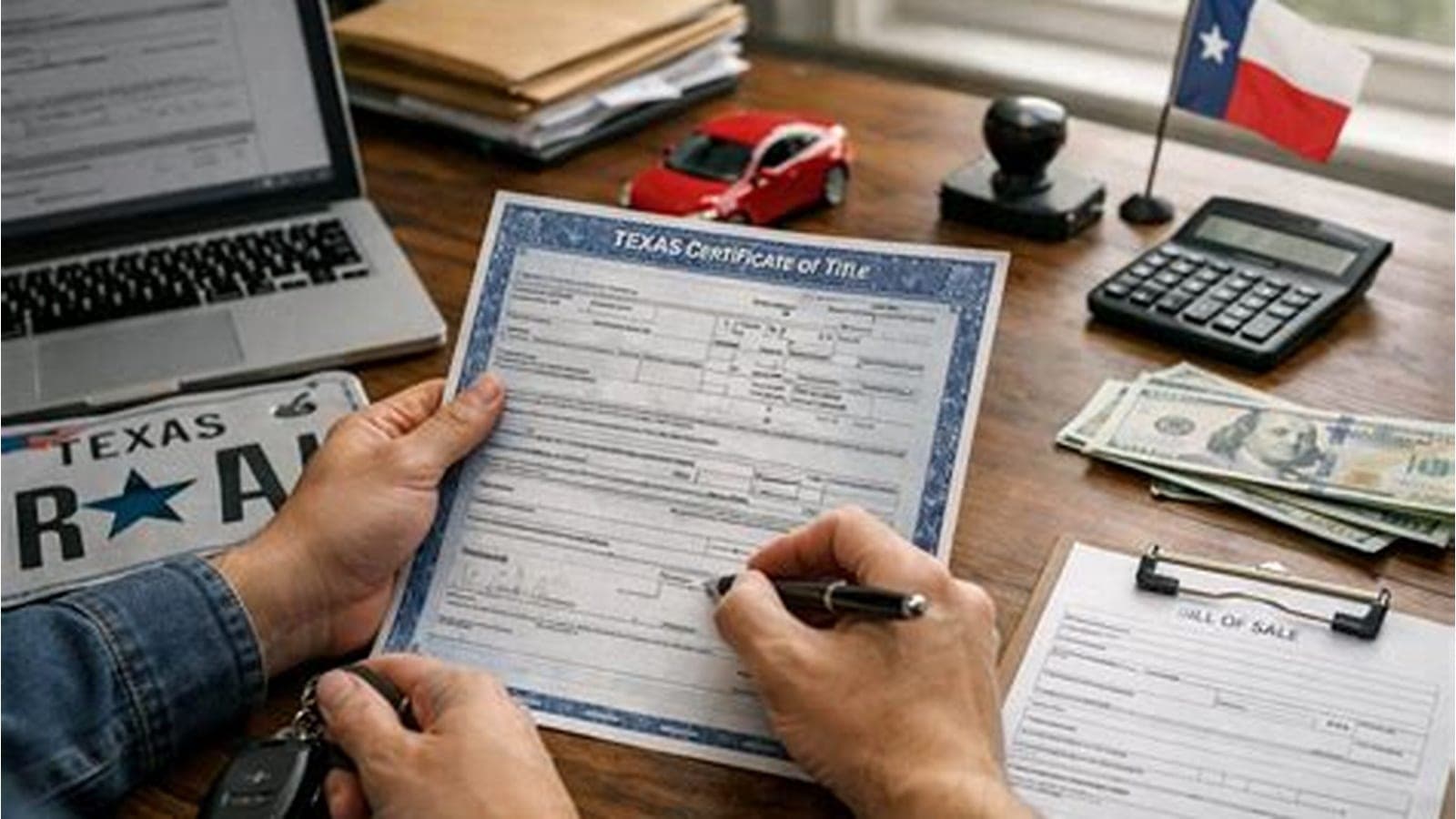
The Secretary of State's office requires a signed bill of sale documenting the purchase price when you submit Form RUT-50 (Private Party Vehicle Use Tax Transaction Return). If you can't produce one, the state will use the vehicle's fair market value — often the NADA or Black Book figure — which may be higher than what you actually paid. Keep a dated, signed bill of sale with a realistic price that reflects the car's actual condition.
The Title Fee: Flat, Predictable, Non-Negotiable
Illinois charges a $165 title fee for a standard passenger vehicle, as listed on the Illinois Secretary of State's official fee schedule. This fee covers the issuance of a new certificate of title in your name and does not vary by vehicle value — a $5,000 beater and a $50,000 pickup both pay the same $165. There's also an optional $5 fee if you want a corrected title, and expedited title service is available for an extra $30 through select Secretary of State facilities.
If you're buying a vehicle with a lien on it — meaning the seller still owes money to a bank or credit union — the lienholder's name must be cleared from the title before you can get a clean certificate in your name. That process can take additional weeks and adds complexity. Always run a vehicle history report before handing over any money so you can see whether an open lien is recorded. A VIN check can surface this information before it becomes your problem.
Registration and Plate Fees: Where Costs Vary
Illinois registration fees are set by vehicle weight class and plate type. The Illinois Secretary of State publishes the full schedule, but for a standard passenger vehicle, the annual registration fee is $151. For trucks and vans with a gross vehicle weight rating over 8,000 lbs, fees step up significantly — a truck rated at 8,001–10,000 lbs pays $317 annually, per the Secretary of State's current schedule.
If you're transferring plates from another vehicle you own, you'll pay a $25 transfer fee rather than the full new-plate cost. Specialty or vanity plates carry additional fees on top of registration. Electric vehicles registered in Illinois pay a $251 annual fee, per Public Act 101-0032, a premium the state introduced to offset reduced fuel-tax contributions from EV owners.
Standard Fee Breakdown at a Glance
- State sales tax: 6.25% of the purchase price or fair market value, per 35 ILCS 105 (Illinois Department of Revenue)
- Title fee: $165 flat for a passenger vehicle, per the Illinois Secretary of State fee schedule
- Standard passenger-car registration: $151/year, per the Illinois Secretary of State
- Truck registration (8,001–10,000 lbs GVW): $317/year, per the Illinois Secretary of State
- Electric vehicle registration surcharge: $251/year, per Illinois Public Act 101-0032
- Plate transfer (if moving plates from another vehicle you own): $25, per the Illinois Secretary of State
- Private-party tax form (RUT-50): filed at titling; late-payment penalty up to 25% of tax due under 35 ILCS 105/13
Dealer Purchase vs. Private Sale: A True Cost Comparison
This is the decision that deserves the most scrutiny, because buyers routinely assume that buying private saves money across the board. Sometimes it does — and sometimes the government costs are identical and the risk exposure is vastly different. Let's put a real number on it for a $15,000 used sedan registered in a standard Illinois county (not Chicago).
Dealer purchase: $15,000 × 6.25% = $937.50 in state tax, plus $165 title fee, plus $151 registration, plus the dealer's documentary service fee (capped at $324.24 per the Illinois Attorney General's interpretation of the Motor Vehicle Retail Installment Sales Act, effective through recent enforcement periods). Total mandatory government costs: approximately $1,253.50, with the doc fee adding up to $324.24 on top. Private sale: same $937.50 in state tax, same $165 title, same $151 registration — but no doc fee. You save up to $324.24 on paper. What you don't get is the FTC's Used Car Buyers Guide, any implied dealer warranty protections, or a dealer who's obligated to disclose known defects under Illinois consumer protection law.
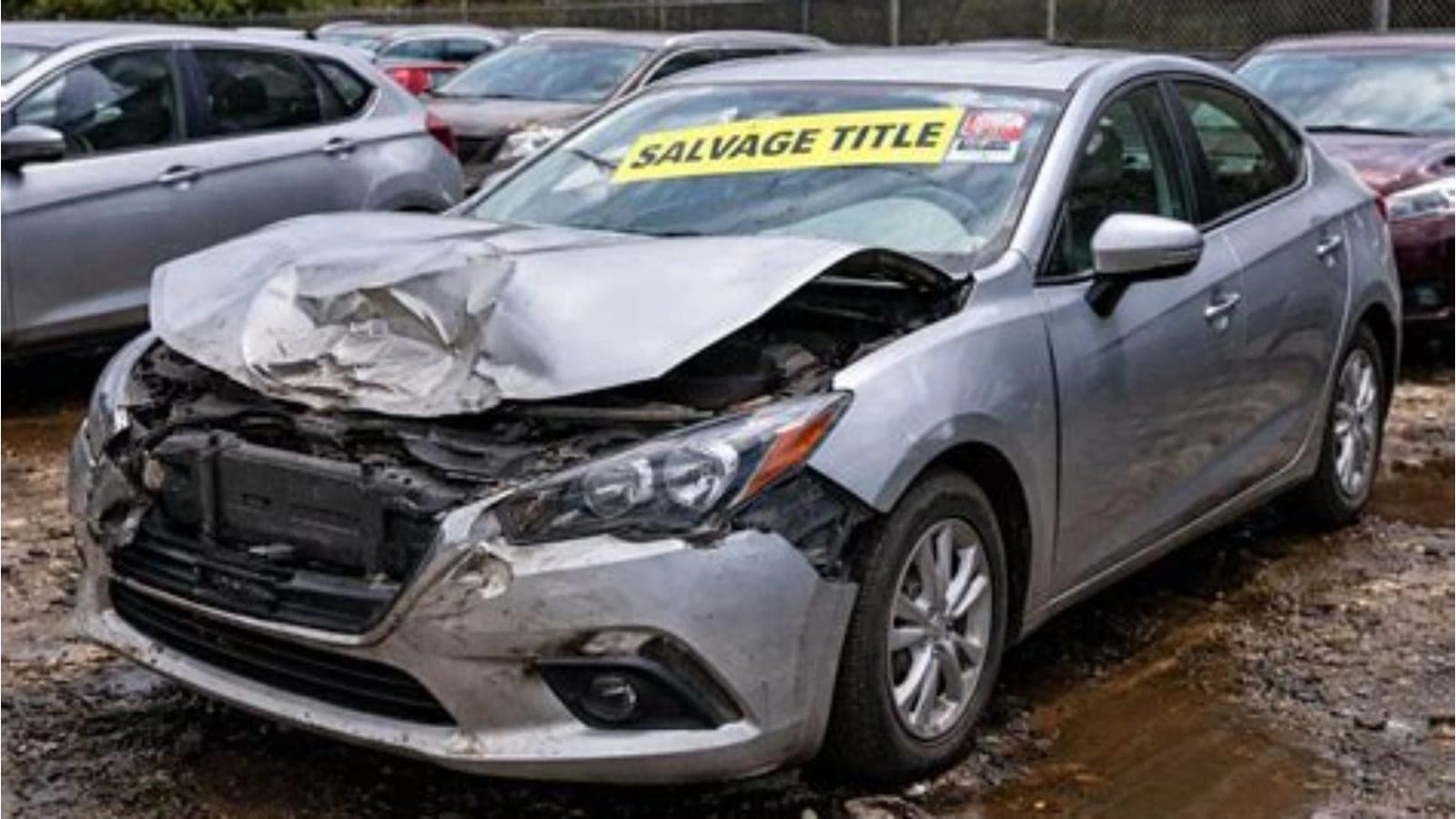
The private-sale savings are real but modest — roughly $300 on a $15,000 car. The risk differential is not modest. A private seller has no statutory duty to disclose salvage history, flood damage, or odometer fraud in the same structured way a dealer does under the FTC Used Car Rule. Pulling a vehicle history report before any private-party transaction is the minimum you should do.
Trade-In Credit: How It Reduces Your Taxable Basis
Illinois is one of the states that allows a trade-in tax credit, meaning you pay sales tax only on the difference between the new vehicle's price and the trade-in allowance — not on the full purchase price. Under 35 ILCS 120/1 (the Retailers' Occupation Tax Act), if you trade in a vehicle worth $8,000 toward a $22,000 purchase, you pay 6.25% on $14,000 ($875) rather than on $22,000 ($1,375). That's a $500 tax saving on this example.
This credit only applies at licensed dealerships — not on private-party transactions. If you sell your old car privately and then buy from a private seller, you don't get any offset. That's one concrete financial advantage of the dealer route that buyers often overlook when comparing total costs. If your trade-in has strong value, a dealer purchase may be cheaper on a total-out-of-pocket basis even accounting for the doc fee.
Out-of-State Purchases Titled in Illinois
Buying a car from a seller in another state and bringing it to Illinois is increasingly common — particularly for buyers hunting inventory on platforms like Facebook Marketplace that span state lines. When you title an out-of-state vehicle in Illinois, you still owe the full Illinois use tax (6.25%) on the purchase price, minus any sales tax you already paid to the selling state. Illinois will not refund you if you overpaid in a high-tax state, but it will credit what you paid up to the Illinois rate.
You'll file Form RUT-25 (Vehicle Use Tax Transaction Return) for out-of-state purchases rather than the RUT-50 used for in-state private sales. The title fee and registration fees are the same. One practical issue: if the out-of-state title has any brand — salvage, rebuilt, flood — that brand will carry over to the Illinois title under the National Motor Vehicle Title Information System (NMVTIS), a federal database administered by the U.S. Department of Justice. Attempting to re-title a branded vehicle as clean is federal fraud.
What Dealers Can and Cannot Charge You
Illinois dealers are permitted to charge a documentary service fee — the paperwork cost for processing title and registration on your behalf. That fee is not regulated by a hard statutory cap in the same way some states handle it, but the Illinois Attorney General's office has historically scrutinized excessive doc fees, and the $300–$325 range has become the de facto market ceiling. Any fee above that range is worth pushing back on explicitly.
Dealers cannot legally charge you for items you did not agree to in writing. Under the FTC Used Car Rule, every used vehicle a dealer sells must display a Buyers Guide disclosing warranty coverage — or lack thereof. 'As-is' means the dealer owes you nothing mechanically after you drive off the lot. Extended service contracts (often called extended warranties) are separate products, not government fees, and they're negotiable. Don't let a dealer bury one in the finance paperwork without your explicit consent.
Watch for 'Dealer Add-On' Lines That Inflate Your Tax Basis
Some dealers add optional products — paint protection, nitrogen fills, window tinting — to the contract before presenting it, which increases the taxable sale price and therefore your sales tax. Scrutinize the purchase agreement line by line before signing. Any add-on you didn't agree to can be removed, and removing a $500 add-on saves you $31.25 in tax at the 6.25% state rate on top of the product cost itself.
How to Budget Your Total Out-of-Pocket Before You Negotiate
Buyers who walk in knowing their total cost target negotiate better than buyers who focus only on the sticker. Here's how to build that number before you set foot on a lot or meet a private seller.
- Start with the agreed purchase price — this is your negotiation target, and everything else flows from it.
- Multiply by 6.25% for state sales tax. If you're in Chicago or a high-rate municipality, check the Illinois Department of Revenue's rate finder and use the correct combined rate.
- Add $165 for the title fee — non-negotiable, same for every buyer.
- Add $151 for standard passenger-plate registration, or the appropriate weight-class fee if you're buying a truck or van.
- If buying from a dealer, add the doc fee — ask what it is before you negotiate price, not after. Anything over $325 is a red flag.
- If you have a trade-in, subtract 6.25% of the trade-in allowance from your tax calculation to reflect the credit under 35 ILCS 120/1.
- Add a buffer of $50–$100 for any county or municipal fees that vary by registration address.
- Pull a vehicle history report and run a VIN check early — finding a salvage brand or open lien before the transaction saves you far more than any fee line on the contract.
What to do next
Before you finalize any deal — dealer or private — run the VIN through a vehicle history report to confirm the title is clean, check for open liens, and verify the odometer reading. Then use the fee breakdown in this guide to calculate your exact out-of-pocket. Walk into that negotiation knowing your number.
CarCheckerVIN Editorial Team
In-house automotive research team
The CarCheckerVIN editorial team combines decades of automotive industry, dealer, and journalism experience to produce trustworthy buying, selling, and ownership guidance backed by NMVTIS, NICB, and manufacturer data.
Frequently asked questions
- What is the documentary service fee in Illinois for 2026?
- Illinois doesn't set a hard statutory cap on documentary service fees, but the Illinois Attorney General's office has scrutinized fees above the market norm, and most dealers charge between $300 and $325. The Illinois Department of Revenue does not administer this fee — it's a dealer charge for processing title and registration paperwork. Always ask for the doc fee amount before you begin negotiating the vehicle price, so you're comparing true apples-to-apples figures across dealerships.
- How do I get a duplicate title in Illinois?
- Apply directly through the Illinois Secretary of State using Form VSD 193 (Application for Vehicle Transaction). You'll pay a $95 duplicate title fee, per the Secretary of State's current fee schedule. The application can be submitted by mail or in person at any Secretary of State facility. If there's a lienholder on the title, the duplicate goes to the lienholder, not you. Processing typically takes four to six weeks by mail; same-day service is available at select facilities for an additional expedite fee.
- What is the rate of car lease tax in Chicago?
- Chicago imposes its own Lease Tax on top of state obligations. The City of Chicago's lease tax rate on personal property — including vehicles — has been set at 9% of the lease payment, per the Chicago Municipal Code (Section 3-32). State use tax also applies. Combined, Chicago lessees face one of the higher effective lease-tax burdens of any major U.S. city. Always confirm the current rate with the Chicago Department of Finance before signing a lease contract, as municipal rates can change.
- Who is eligible for reduced license plate fees in Illinois?
- Illinois offers reduced plate fees for specific groups. Persons with disabilities who qualify under the Illinois Vehicle Code may receive disability plates or placards at reduced or no charge through the Secretary of State. Veterans may qualify for free or discounted specialty plates depending on their service classification, per Illinois Secretary of State programs. Income-based fee waivers are not broadly available for standard registration, but recipients of certain public assistance programs should contact the Secretary of State's office directly to confirm current eligibility criteria.
Ready to check a VIN?
Run a free VIN check
Decode any vehicle in under 60 seconds.