What Car Should I Buy? A No-Nonsense Guide for Used-Car Buyers in the US
Budget, reliability, title brands, and hidden fees all shape the right answer to 'what car should I buy.' Here's the decision framework careful US buyers use before signing anything.
On this page
- Step One: Lock Down Your Real Budget Before Browsing a Single Listing
- New vs. Used: Where the Real Cost Difference Lives
- What Are Good Cars to Buy Used? Reliability Data Actually Says
- Body Style vs. Real Life: Matching the Vehicle to How You Actually Drive
- Vehicle with Good Gas Mileage: How Fuel Economy Affects the Total-Cost Equation
- Title History and Hidden Red Flags: What NMVTIS Won't Tell You Alone
- New vs. Used vs. Lease Return: Weighing Cost Against Risk With Real Numbers
- How to Use Dealer Negotiations to Your Advantage
- The Final Checklist Before You Sign
The question 'what car should I buy' sounds simple, but for anyone spending between $12,000 and $35,000 of after-tax money on a used vehicle — the actual range where most American families shop, according to Kelley Blue Book's market analysis — it is anything but. The used-car market in the United States is layered with title brands recorded by NMVTIS (the National Motor Vehicle Title Information System), undisclosed auction histories from Copart and IAA, dealer markups on certified pre-owned inventory, and financing traps common at buy-here-pay-here lots. Making the right call requires matching your household's actual needs against a realistic budget, a sober look at ownership costs, and an honest assessment of how much mechanical risk you can absorb — before a single test drive happens.
The short answer
Identify the body style and monthly cost your life genuinely requires, then filter for models with strong reliability records and clean title histories — a vehicle history report will surface NMVTIS title brands and odometer discrepancies that dealers are not always required to disclose verbally.
Step One: Lock Down Your Real Budget Before Browsing a Single Listing
The Consumer Financial Protection Bureau warns repeatedly that buyers who enter a dealership without a pre-approved loan consistently pay higher interest rates than those who arrive with outside financing in hand. On a $25,000 used vehicle financed over 60 months, the difference between a 7% dealer-arranged rate and a 5% credit-union rate amounts to roughly $1,500 in additional interest over the loan's life — a figure large enough to change which trim level or model year is actually affordable. Before searching any listing site, pull three numbers: the maximum monthly payment that leaves your emergency fund intact, the total vehicle price that payment supports at your best available rate, and the all-in cost including registration fees, which the California DMV, for example, charges on a sliding scale tied to the vehicle's purchase price.
Down payment strategy matters as much as the sticker price. Lenders who specialize in used-car loans typically require 10% to 20% down to avoid being 'upside down' — owing more than the car is worth — from day one. A $3,000 down payment on a $30,000 vehicle leaves the buyer immediately underwater by several thousand dollars the moment they drive off the lot, because used vehicles can lose 15% to 25% of their sale value within the first year of resale, per Edmunds depreciation tracking data. Setting a hard ceiling on total vehicle price, not just monthly payment, is the single most protective financial move a buyer can make before asking 'what car should I buy.'
New vs. Used: Where the Real Cost Difference Lives
New cars carry a manufacturer's warranty — typically 3 years or 36,000 miles bumper-to-bumper and 5 years or 60,000 miles powertrain for most mainstream brands — and the FTC's Used Car Rule (16 C.F.R. Part 455) does not apply to them. That distinction matters because the Rule requires dealers to post a Buyers Guide disclosing whether a used vehicle is sold 'As Is' or with a dealer warranty, and non-compliance carries civil penalties. Buyers who ignore that sticker and assume coverage exists have limited legal recourse.
Used vehicles, particularly those between two and four years old, often represent the strongest financial value: the steepest depreciation has already been absorbed by the first owner, yet many still carry the original powertrain warranty or are eligible for a certified pre-owned program. The trade-off is that buyers inherit any deferred maintenance, undisclosed accidents, or title brands the previous owner accumulated. A thorough vehicle history report is the minimum due-diligence step before any used-vehicle purchase, regardless of how clean the lot or how persuasive the salesperson.
What 'Certified Pre-Owned' Actually Guarantees — and What It Doesn't
Manufacturer CPO programs extend warranty coverage but vary widely in what inspections actually cover. Toyota's CPO program, for instance, requires a 160-point inspection and adds up to 7 years or 100,000 miles of powertrain coverage from the original sale date, making it one of the more comprehensive offerings. However, CPO status does not erase a prior NMVTIS title brand — a rebuilt or salvage designation persists in the federal database regardless of any dealer certification sticker.
What Are Good Cars to Buy Used? Reliability Data Actually Says
Consumer Reports' annual reliability surveys consistently place the Toyota Camry, Honda Accord, Mazda3, and Toyota RAV4 at or near the top of their respective segments for owner-reported reliability. J.D. Power's 2024 U.S. Vehicle Dependability Study — which measures problems per 100 vehicles among three-year-old models — ranked Lexus, Porsche, and Buick as the top three brands overall, with Lexus recording approximately 139 problems per 100 vehicles, well below the industry average of 190. For buyers on a tighter budget asking what are good cars to buy used, those data points suggest filtering first for Japanese and Korean models from the past five years in the compact and mid-size segments, where total cost of ownership, insurance premiums, and parts availability tend to be most favorable in the US market.
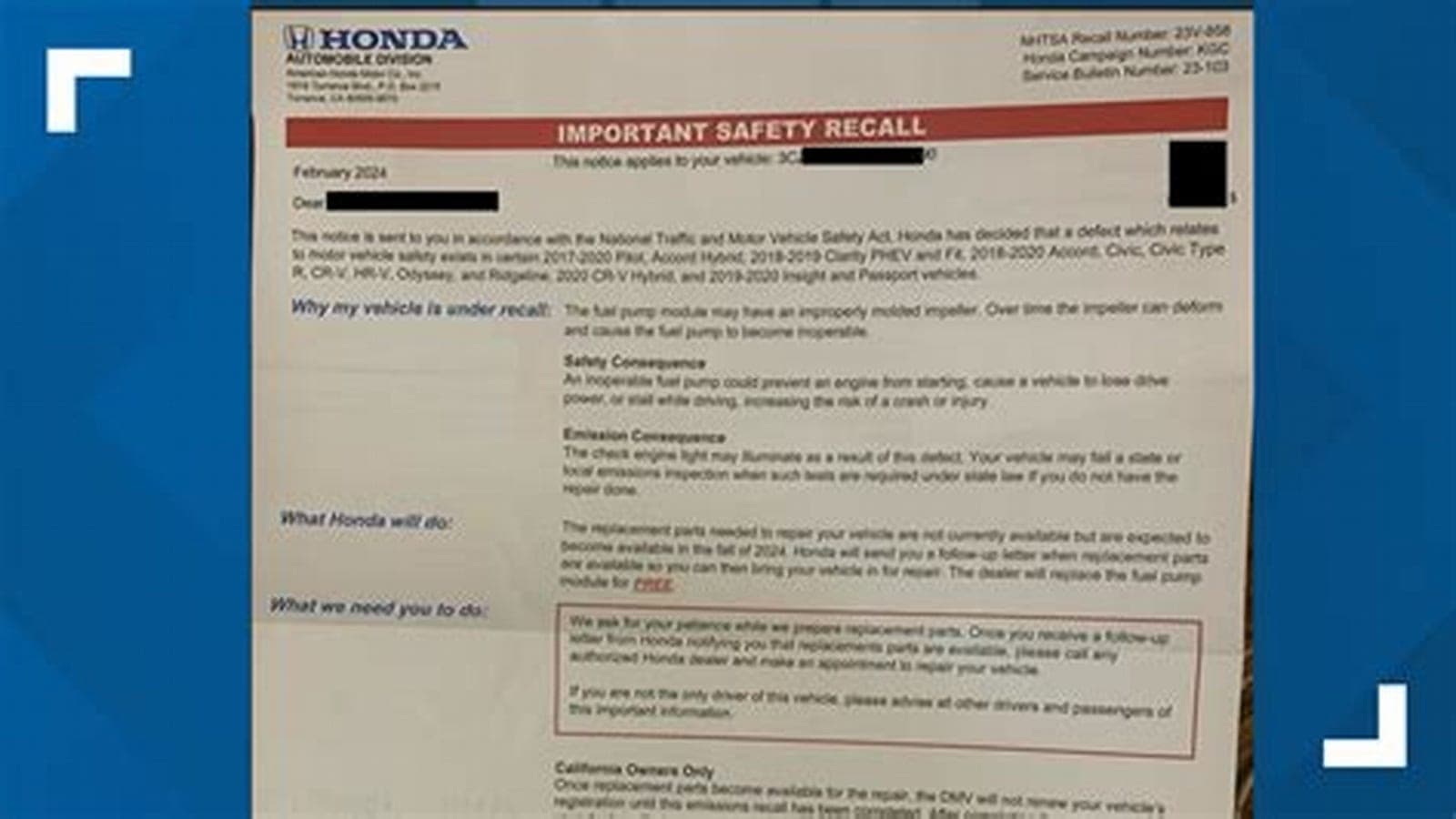
Reliability rankings alone, however, do not account for active safety recalls. The National Highway Traffic Safety Administration (NHTSA) database currently lists thousands of open recalls across all makes and model years — some unrepaired for years because owners were never notified or simply ignored the mailer. A well-known recent example is the Toyota rearview camera recall (NHTSA Campaign Number 22V-067), which affected more than 1.8 million Toyota vehicles whose backup camera displays could go blank, a direct violation of Federal Motor Vehicle Safety Standard No. 111 requiring a functional rear visibility system. Buyers considering any used Toyota model within that recall's scope should run a VIN check against the NHTSA database before purchase and confirm with a dealer that the remedy has been applied — Toyota's fix, covered at no cost, involves a software update, but only if the recall is open and unaddressed.
Body Style vs. Real Life: Matching the Vehicle to How You Actually Drive
One of the most expensive mistakes used-car buyers make is purchasing a vehicle for aspirational rather than actual use. A three-row SUV purchased for one annual camping trip costs its owner roughly $2,000 to $4,000 more per year in fuel, insurance, and depreciation than a comparable compact sedan, according to AAA's annual 'Your Driving Costs' study, which calculates total ownership cost per mile across vehicle categories. That differential, compounded over a five-year ownership period, can exceed $15,000 — enough to meaningfully affect retirement contributions or college savings.
Families with young children face an additional layer of this calculation: child safety seat compatibility. Some manufacturers and retailers have run trade-in programs — the Target car seat trade-in program, for instance, periodically allows customers to exchange expired or damaged car seats for a discount coupon on a new seat — but the vehicle itself must have compatible LATCH anchors and seat geometry to ensure proper installation. NHTSA's car seat inspection resources can identify whether a specific vehicle's rear seating positions meet current best practices, which should factor into any family's body-style decision.
Crossover vs. Sedan: The Numbers Side by Side
- AAA estimates compact sedan ownership costs at approximately $0.45 per mile versus $0.62 per mile for a small SUV, based on average US driving of 15,000 miles annually.
- Insurance Institute for Highway Safety (IIHS) data shows that mid-size sedans and small SUVs now earn comparable Top Safety Pick+ ratings, so safety alone no longer justifies the SUV premium for most buyers.
- Resale value for compact crossovers remains stronger in most US markets than for comparable sedans, per Kelley Blue Book residual value projections — a factor that reduces the effective ownership cost gap somewhat.
- Cargo volume in a Honda Civic hatchback (25.7 cubic feet behind the rear seat, per Honda's published specs) rivals or exceeds several 'compact SUVs,' making body-style assumptions about practicality worth questioning before committing.
Vehicle with Good Gas Mileage: How Fuel Economy Affects the Total-Cost Equation
The US Department of Energy's fueleconomy.gov database provides EPA-tested combined mpg figures for every model year since 1984, and the difference between a 28-mpg vehicle and a 38-mpg vehicle can be substantial over time. At a sustained national average gasoline price near $3.30 per gallon — the approximate AAA national average through much of the recent period — a driver covering 15,000 miles per year pays roughly $1,775 annually in fuel costs in the more efficient vehicle versus approximately $2,411 in the less efficient one, a difference of over $630 per year. Over five years, that gap approaches $3,200 before accounting for any price volatility.
A vehicle with good gas mileage is not automatically the right choice, however. Hybrid systems add purchase-price premiums — a used Toyota Camry Hybrid typically commands $2,000 to $4,000 more than a comparable non-hybrid Camry of the same age and mileage on the open market — and hybrid battery replacement costs, which can range from $2,000 to $8,000 depending on the model, represent a tail risk that pure-ICE buyers do not face. Buyers should calculate their personal break-even point on the hybrid premium using their actual annual mileage and local gas prices before assuming the efficient choice is also the economical one.
Title History and Hidden Red Flags: What NMVTIS Won't Tell You Alone
NMVTIS, administered by the Bureau of Justice Assistance under 49 U.S.C. § 30502, compiles title brand information from participating state DMVs, insurance carriers, and junk and salvage yards. The system is more comprehensive than it was a decade ago, but gaps remain: not every state reports auction-level damage disclosures in real time, and a vehicle damaged in a state with inconsistent reporting can carry a clean NMVTIS title while having significant structural damage in its history. That is why running a full vehicle history report — which aggregates NMVTIS data alongside insurance total-loss records, odometer readings, and registration histories — remains the standard baseline for any serious buyer.
Salvage and rebuilt-title vehicles sold at Copart and IAA auctions routinely re-enter the retail market after repair, sometimes with cosmetically clean appearances that mask frame damage or airbag non-deployment. A pre-purchase inspection by an independent ASE-certified mechanic — typically costing between $100 and $200 — can identify structural concerns that no database captures. That inspection is particularly important for vehicles sourced from flood-affected states, where titles may not be branded for months after the event due to processing delays at state DMVs.
New vs. Used vs. Lease Return: Weighing Cost Against Risk With Real Numbers
This is the decision most buyers delay until they are already emotionally committed to a specific vehicle, which is exactly the wrong time to run the numbers. Consider three options on a representative compact SUV — a new base model at $32,000, a two-year-old off-lease example at $24,000, and a five-year-old private-party unit at $16,500. The new vehicle carries zero title risk and full factory warranty but depreciates roughly 20% in the first year alone, per Edmunds data. The lease return typically has controlled mileage and documented maintenance history but may carry dealer financing incentives that inflate its effective cost. The private-party unit offers the lowest entry price but the highest financial risk: no Buyers Guide protections under 16 C.F.R. Part 455, no dealer warranty, and no CPO backstop.
For buyers who can absorb moderate mechanical risk and have $2,000 to $3,000 available for contingency repairs, the two-to-four-year-old lease return or off-lease CPO vehicle generally offers the best risk-adjusted value in the current US market. It combines reduced depreciation exposure with documented service records and, in many cases, remaining powertrain coverage. Buyers with no repair contingency fund should lean toward the newest vehicle they can finance responsibly, even if that means accepting a slightly older model year with a lower sticker price.
Extended Warranties: Read the Exclusions Before You Sign
Third-party extended service contracts — often called 'extended warranties' though they are not warranties under the Magnuson-Moss Warranty Act — are regulated at the state level, and coverage exclusions vary dramatically. The FTC has taken enforcement action against companies that denied legitimate claims on technicalities buried in fine print. If a finance manager presents one at the closing table, ask for the full contract in writing, request 48 hours to review it, and verify the administrator's financial rating through your state's insurance department before signing.
How to Use Dealer Negotiations to Your Advantage
Most US car buyers negotiate on monthly payment rather than total price, which is exactly what financially benefits the dealer: stretching a term from 60 to 72 months on a $22,000 loan at 7% adds approximately $1,800 in interest while making the monthly payment appear affordable. The more effective approach is to negotiate the out-the-door price first — the total including taxes, documentation fees (which some states cap; Florida, for example, caps dealer documentary stamp fees at $85 under Florida Statutes § 319.32), title, and registration — and only then discuss financing terms separately.
Timing also matters. End-of-month and end-of-quarter windows tend to produce better pricing because dealership sales staff are working toward volume-based manufacturer incentives. Arriving on a Tuesday or Wednesday afternoon, when floor traffic is lighter and salespeople have more time, reduces the psychological pressure that busy weekend floor environments deliberately create. Bringing a pre-approval letter from a bank or credit union signals that the buyer is serious and financially prepared, which tends to shift negotiating leverage meaningfully.
Key Items to Negotiate Separately
- Out-the-door price: Confirm the exact total before discussing trade-in value or financing; dealers routinely bundle these to obscure where profit is made.
- Trade-in value: Get an independent offer from CarMax or a competing dealer before accepting the selling dealer's appraisal — having a competing written offer typically improves the trade-in figure by several hundred to over a thousand dollars.
- Documentation fee: Some states cap it, some do not; know your state's rule before arriving so you can challenge excessive fees on the spot.
- Dealer-installed add-ons: Paint protection, nitrogen tire fill, and VIN etching are nearly pure margin for the dealer and rarely provide equivalent value to the buyer.
- Financing rate: Compare the dealer's best rate against your pre-approval; if the dealer beats it, take their financing — but get the rate and term in writing before finalizing anything.
The Final Checklist Before You Sign
Even buyers who have done everything right — researched reliability data, obtained financing pre-approval, run a vehicle history report, and negotiated the out-the-door price — can lose ground in the final minutes at a dealership if they skip the closing document review. The Buyers Guide required by 16 C.F.R. Part 455 must be present on any used vehicle offered for sale by a dealer; its absence is itself a regulatory violation reportable to the FTC. Verify that the vehicle identification number on every document matches the VIN on the dashboard and the door jamb — a mismatch, however innocent it appears, can create title problems that follow the buyer for years.
Confirm that any promised repairs, reconditioning, or accessories are listed as a 'We Owe' document attached to the contract — verbal promises made by a salesperson are unenforceable once the sale closes. If the finance manager introduces products not previously discussed, ask for time to review them outside the office environment; legitimate dealers routinely allow this. The closing process is the final checkpoint, and it deserves the same deliberate attention as every earlier step in the buying process.
What to do next
Before visiting a single dealership or responding to any private-party listing, run a vehicle history report on every VIN you are seriously considering — it surfaces NMVTIS title brands, open recalls including the Toyota rearview camera recall, and odometer red flags that can immediately eliminate a candidate vehicle and save you thousands of dollars in downstream repair costs.
CarCheckerVIN Editorial Team
In-house automotive research team
The CarCheckerVIN editorial team combines decades of automotive industry, dealer, and journalism experience to produce trustworthy buying, selling, and ownership guidance backed by NMVTIS, NICB, and manufacturer data.
Frequently asked questions
- What's the best car to purchase?
- No single model is best for every buyer. Consumer Reports and J.D. Power data consistently place the Toyota Camry, Honda CR-V, and Mazda3 near the top for reliability and total ownership cost. The practical answer is: the best car is the most reliable model that fits your actual use case, passes a pre-purchase inspection, carries a clean NMVTIS title, and sits comfortably within a budget that preserves your financial stability after the sale closes.
- What is the $3000 rule for cars?
- The '$3,000 rule' is an informal guideline suggesting that if a used vehicle needs repairs exceeding $3,000, the buyer is better off walking away regardless of the purchase price. It is not a legal standard but rather a rough threshold that accounts for the typical contingency reserve a private-party buyer should carry. Its usefulness is as a gut-check: when a pre-purchase inspection uncovers deferred maintenance or structural issues approaching that figure, the vehicle's real cost has already exceeded what the asking price implies.
- What is a good down payment for a car?
- Most financial advisors and the Consumer Financial Protection Bureau recommend at least 10% down on a used vehicle and 20% on a new one to avoid being immediately underwater. On a $20,000 used car, that means $2,000 to $4,000 at signing. A larger down payment also reduces the loan-to-value ratio, which typically qualifies buyers for lower interest rates from credit unions and banks, reducing total interest paid over the life of the loan by several hundred to over a thousand dollars.
- Which is the no. 1 safest car?
- The Insurance Institute for Highway Safety awards its Top Safety Pick+ designation — the highest rating — to dozens of models annually, so 'number one' shifts each model year. Recent honorees in the small SUV category have included the Subaru Forester and Mazda CX-5. NHTSA's 5-Star Safety Ratings program provides a parallel federal benchmark. Buyers should check both the IIHS and NHTSA databases for the specific model year and trim they are considering, since ratings can vary within the same nameplate.
Ready to check a VIN?
Run a free VIN check
Decode any vehicle in under 60 seconds.