Carfax Recall Check — Why You Should Never Pay for This
Recall data is federal and free. Manufacturers must report safety campaigns to NHTSA, which publishes every open recall by VIN at no charge — so paying for a report to read a recall list is buying something already free. Here is what Carfax does with recalls, and the one job a paid report does better.
Free VIN Check — Recalls Included
Enter the 17-character VIN for open NHTSA recalls, NMVTIS title-brand status and the record counts on that car
Free check · No sign-up · Instant result
Quick Answer
- Does a Carfax report show recalls?
- It can, but you should not pay for it. Safety recalls are federal, published data: NHTSA lists every open recall by VIN for free at nhtsa.gov/recalls, and CarCheckerVIN’s free VIN check returns them too.
- Is there a free Carfax recall check?
- Yes — just not from Carfax. Enter the 17-character VIN at nhtsa.gov/recalls and you get the same campaigns, direct from the agency manufacturers report to. Our free recall check runs the same lookup.
- So when is a paid report worth it?
- When you need what NHTSA cannot see: title brands, salvage and total-loss records, odometer readings over time, and auction or damage history. That is the half worth paying for — $14.99 here.
Does Carfax Show Recalls?
Yes — a Carfax report can include recall information, and that is still not a reason to buy one. Carfax is not the origin of the data. Safety campaigns are filed by manufacturers with the National Highway Traffic Safety Administration, which publishes them for anyone to search. A report showing you a recall is showing a copy of a public federal record.
That matters because of the price. A single Carfax report currently runs about $44.99. If a recall question is what sent you looking for one, you are about to pay it for a lookup that costs nothing at the source and takes about thirty seconds.
The fair summary: Carfax is a legitimate service and its report is a real product. Recalls are simply the worst reason to buy it. Pay for title and odometer history; check recalls for free.
| Recall question | NHTSA (free) | Paid history report |
|---|---|---|
| Where the data originates | The manufacturer's filing | A copy of that federal record |
| Search by exact VIN | Yes | Yes |
| Cost | $0 | Report price |
| Campaign number and remedy | Shown in full | Often summarised |
| Says whether it is still open | Yes — unrepaired campaigns | Depends on the report |
| Title, salvage, odometer records | No — not held by NHTSA | Yes — the real reason to buy |
One line to remember: nobody sells recall data, because nobody owns it. It is published so that dangerous cars get fixed.
Where Recall Data Actually Comes From
There are three links in the chain, and the last one is you.
The manufacturer files it
When a safety defect or a failure to meet a federal safety standard is identified, the maker must report it to NHTSA and describe the affected vehicles, usually as VIN ranges across model years.
NHTSA publishes the campaign
The agency assigns a campaign number, publishes the defect and the remedy, and adds the vehicles to a database anyone can search by VIN. Owners are notified by mail as well.
You look it up by VIN
Enter the 17-character VIN at nhtsa.gov/recalls and the lookup returns the campaigns still outstanding on that exact car — whether or not you ever buy a report.
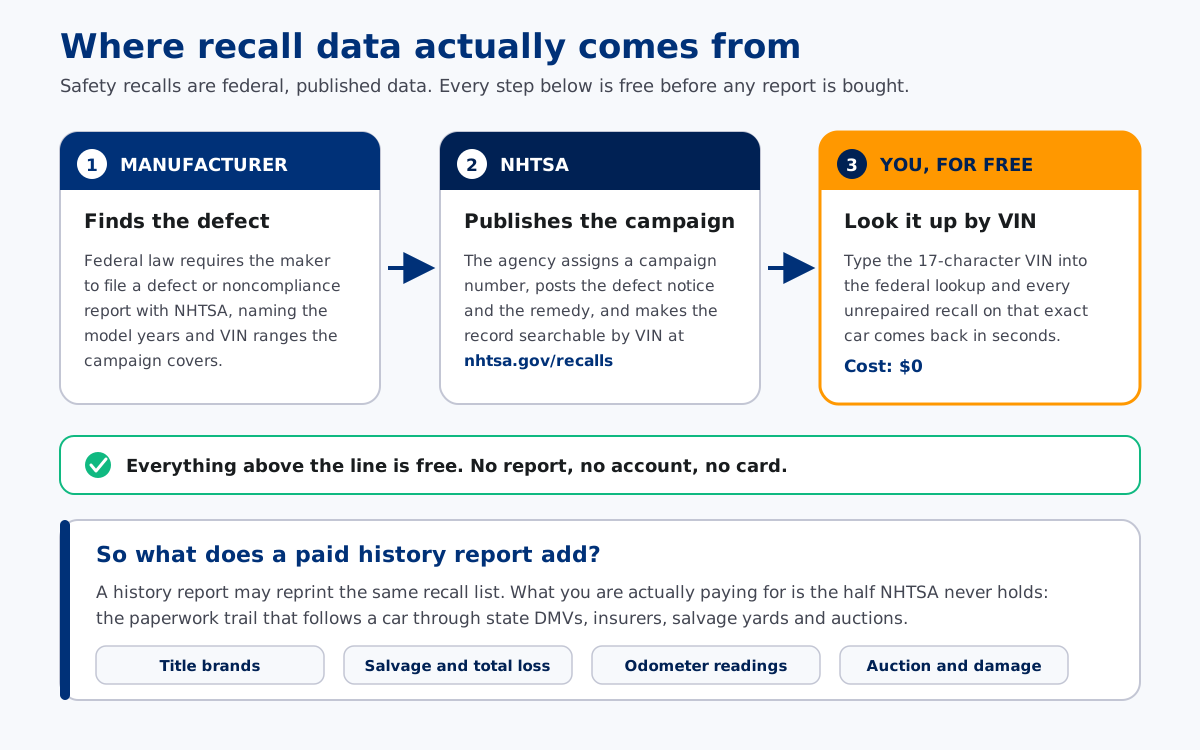
Because commercial reports sit at the end of this chain rather than the start, a recall in one is confirmation, not discovery. For the lookup itself, use our free recall check or NHTSA directly — both read the same federal source.
How to Check Recalls Free by VIN
Four steps, no account, no card.
Find the 17-character VIN
Read it through the windshield at the driver-side corner of the dashboard, or off the door-jamb sticker. Since the 1981 model year every VIN is 17 characters and never contains I, O or Q.
Run it at nhtsa.gov/recalls
The free federal lookup returns safety recalls not yet repaired on that vehicle. A campaign announced very recently, or one with no remedy yet, can take a while to appear against individual VINs.
Read the campaign, not the count
Each entry names the component, the defect, the risk and the remedy. Some recalls are a software update; others carry a park-outside warning. That decides whether you drive the car home tonight.
Book the free repair
Call any franchised dealer for the brand with the VIN and campaign number. You need not be the original owner or have bought the car there. Recall work is done at no charge.
If you would rather do it in one place, our recall check page runs the same NHTSA lookup and explains each campaign it returns.
Open vs. Completed Recalls
A recall is open when the free repair has not been done on that specific vehicle, and completed once a dealer performs the remedy and closes the campaign against that VIN. The federal lookup reports what is still outstanding, so a clean result means the work was done — not that the car was never recalled.
Used cars carry open recalls more often than you would expect, usually for dull reasons. Notices go to the address on the registration, so a car that has changed hands twice may have had its letters delivered to people who no longer own it. Others read the letter and never booked. Nothing obliges a seller to mention it.
Which is why a recall check belongs in a pre-purchase routine even when the seller waves a clean history report at you. The report says what happened to the car. The lookup says what is still outstanding today.
Recalls, Service Bulletins and Investigations Are Not the Same Thing
Three different things get called a recall in conversation. Only one of them gets you a free repair.
Safety recall
A formal campaign for a defect creating an unreasonable safety risk, or a vehicle that fails a federal safety standard. The maker must notify owners and provide a remedy, free at a franchised dealer. This is what a VIN lookup returns.
Technical service bulletin
Guidance from the manufacturer to its dealers about a known fault and the approved fix. Not a recall: it carries no duty to notify you, and the work is chargeable unless the car is in warranty.
Investigation or goodwill campaign
NHTSA can investigate a suspected defect long before anything is recalled, and makers run goodwill campaigns that never become recalls. Neither guarantees a free repair, and neither shows as an open recall on your VIN.
If a seller mentions a bulletin for a fault you care about, treat it as a question for your mechanic, not a recall you can claim.
Check a VIN Free — Recalls and Title Brands
Open NHTSA recalls, NMVTIS title-brand status, and the number of damage, salvage and odometer records on that car — before you decide whether a full report is worth $14.99.
What a Recall Check Will Not Tell You
A recall lookup answers one question well and every other question not at all. NHTSA holds safety campaigns, not vehicle paperwork. These are the gaps, whoever you check with.
Title brands
Salvage, junk, flood, rebuilt or lemon-law buyback. These live with state DMVs and reach NMVTIS, the federal title system run by the U.S. Department of Justice — not NHTSA.
Odometer history
Mileage recorded at title transfers and inspections. A rollback shows up as a reading that stalls or drops, and a recall lookup sees none of it.
Total-loss and salvage records
Whether an insurer wrote the car off, or it passed through a salvage auction. This is where hidden flood cars are caught, and none of it is safety data.
Accident and damage reports
Collision events reported by insurers, police and inspections. Coverage varies by state, so a quiet record is not proof of a clean past — but a logged event is confirmed.
Owners and title transfers
How many owners the car has had and which states issued the titles. Pure paperwork, and worth reading before you negotiate.
Theft status and market value
Whether the VIN is reported stolen, and what the car is actually worth. Neither sits anywhere near a recall database.
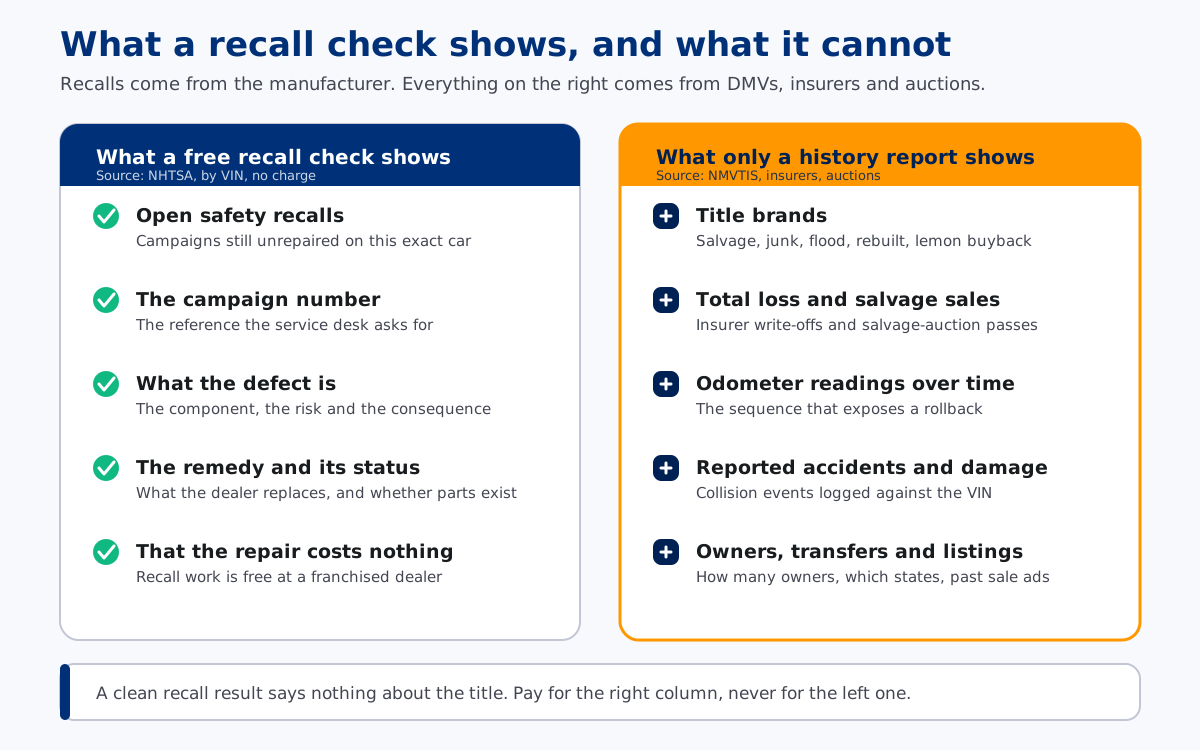
If any of that second column matters to you, it is a history-report question, not a recall question. Start with the free VIN check — it shows how many records of each type exist before you spend anything.
Manufacturer Portals and Dealer VIN Lookups
NHTSA is authoritative, but it is not the only free route worth knowing.
The manufacturer's owners site — nearly every brand runs a VIN recall page, often listing brand-specific service actions that are not formal federal recalls.
A franchised dealer's service desk — read them the VIN and they will list the open campaigns from the maker's own system, including whether parts are in stock.
NHTSA's free vPIC decoder at vpic.nhtsa.dot.gov/decoder confirms the year, make and model behind a VIN — useful when the seller's description and the VIN disagree.
The NICB's free VINCheck at nicb.org flags a VIN reported stolen or written off by a participating insurer. Not a recall tool, but free and worth two minutes.
Where a manufacturer's portal and NHTSA disagree, ring the dealer — they read from the system that actually authorises the repair.
Why an Open Recall Matters When You Are Buying
An open recall is not automatically a reason to walk away. The repair is free at a franchised dealer, you need not be the original owner, and for most campaigns it costs an afternoon of someone else's time.
It matters for two other reasons. Safety: some campaigns cover airbag inflators, fuel leaks, steering or braking faults, and a few carry park-outside warnings while the remedy is pending. Timing: if the remedy is unreleased or parts are back-ordered, the car can sit unfixed for weeks — worth knowing before you agree a price.
So run the VIN before you view the car and raise anything outstanding at the viewing. A seller who already knew will say so. One who is surprised has just told you how closely the car has been watched.
A recall is a free repair waiting to be claimed. A branded title is a permanent mark on the car's value. Never let the first distract you from checking the second. Check the title brand in the same sitting.
Recalls on a Car You Already Own
If you own the car, the risk is not finding a recall — it is never being told about one. Owners are notified by post using the registration record, so a stale address or a private sale quietly breaks the chain. Checking the VIN yourself twice a year closes that gap for free.
We also watch it for you. Buy a report from us and that VIN goes on a recall watch: we check NHTSA on a rolling schedule and email you when a new campaign covering the vehicle is published. NHTSA's free data answers by make, model and year rather than by VIN, so the email says exactly that and points you at the free lookup to confirm your car is in the affected range.
Our free iPhone app does the same without any purchase: scan the VIN barcode and recall monitoring stays on permanently, whether or not you ever buy a report.
Staying notified, three ways
- Official notice
By post - Check yourself
Free, any time - iOS app watch
Free forever - Report buyers
Email alerts
Alerts tell you a campaign covers your model and year. Confirming your individual VIN is always a free lookup away.
When You Actually Need a Full History Report
Recalls are free. The paperwork behind a used car is not, because it has to be pulled from state DMVs, insurers, salvage yards and auctions. These are the moments where paying is right.
Before you buy from a stranger
A private seller has no duty to disclose what they never mention. Title brand, odometer sequence and any total-loss record decide whether the price is fair. No recall check shows them.
When the price looks too good
A cheap car with suspiciously clean bodywork is the classic rebuilt or flood profile. NMVTIS-backed title and salvage records separate a bargain from a repaired write-off.
When the mileage looks wrong
Worn pedals on a low-mileage car is a rollback tell. Reported readings across title transfers turn the suspicion into something you can negotiate with, or walk away on.
When you are buying several
Packs cost less per report: $35.99 for 3, $54.99 for 5 and $89.99 for 10, against $14.99 for a single. The free preview shows the record counts first, so you only pay on the VINs worth pursuing.
Start free either way: the preview shows how many damage, salvage, title and odometer records exist before you pay. For the other side of the price picture, here is what a Carfax report costs.
Tools That Pair With a Recall Check
The recall lookup is one part of vetting a car. These cover the parts NHTSA does not.
Always check the VIN before you buy
The free preview shows title brands, theft status and open recalls in seconds, and flags whether accident and odometer records exist. The full history is $14.99 — one-time, no subscription.
Carfax Recall Check — Frequently Asked Questions
The questions people ask when a recall sends them looking for a report.
Does Carfax show recalls?+
A Carfax report can include recall information, but Carfax is not the source of it. Manufacturers must report safety campaigns to NHTSA, which publishes every open recall by VIN for free at nhtsa.gov/recalls. Any commercial report showing a recall is showing a copy of that public record, so buying one purely to see recalls means paying for something already free.
Is there a free Carfax recall check?+
Not from Carfax, but the same data is free elsewhere. Enter the 17-character VIN at nhtsa.gov/recalls and you get the campaigns still outstanding on that exact vehicle, direct from the agency manufacturers file with. The CarCheckerVIN free check returns open NHTSA recalls too, alongside NMVTIS title-brand status and the record counts.
Why would a used car still have an open recall?+
Usually because the notice never reached the right person. Recall letters go to the address on the registration record, so a car that has changed hands a few times may have had its notices delivered to previous owners. Others got the letter and never booked. It rarely means the seller is hiding anything, but nothing obliges them to raise it.
Is a recall repair really free?+
Yes. Recall work is carried out at no charge at a franchised dealer for that brand. You do not need to be the original owner or to have bought the car there. Call the service desk with the VIN and campaign number to schedule it. Technical service bulletins are different — dealer guidance rather than recalls, and that work is usually chargeable.
If recalls are free, what should I pay a report for?+
For everything NHTSA does not hold: title brands such as salvage, junk, flood and rebuilt; total-loss and salvage-auction records; reported odometer readings over time; accident and damage reports; and the ownership chain. That data comes from state DMVs, insurers and auctions through NMVTIS, not from safety campaigns. A full CarCheckerVIN report is $14.99, and the free preview shows how many records of each type exist before you pay.
Check the VIN Before You Pay for Anything
Open NHTSA recalls, title-brand status and the record counts on that car — free, no account. The $14.99 full report is there if the counts say it is worth it.
Related VIN Checks
More tools to verify any vehicle's history