Cheapest Classic Cars To Insure: An Investigative Look at Premiums, Models, and Hidden Costs
Classic car insurance can cost far less than standard auto coverage—but only if you pick the right vehicle and the right carrier. Here's what the numbers actually show.
On this page
- Why Classic Car Insurance Costs Less Than You Expect
- The Cheapest Classic Cars To Insure: Model-by-Model Breakdown
- Carrier Comparison: Who Charges What
- Cost vs. Risk: When a Cheap Premium Hides Expensive Gaps
- How Purchase Price Affects Your Insurance Options
- State-Level Factors That Shift Premiums
- Modifications and Their Impact on Premiums
- Practical Steps To Lock In the Lowest Premium
- What Auction Buyers Need To Know
- The Bottom Line on Buying Smart

Buyers shopping for the cheapest classic cars to insure often assume that any old car automatically qualifies for a bargain-rate policy, but the reality is more complicated—and more rewarding—than that assumption suggests. Specialty insurers price classic-car coverage based on an agreed-upon value, annual mileage restrictions (typically 2,500 to 5,000 miles per year, according to Hagerty's standard policy terms), and the vehicle's theft and parts-replacement profile, which means two cars from the same decade can carry wildly different premiums. The difference between a 1965 Ford Mustang coupe and a 1965 Shelby GT350 in insurance cost can exceed $1,000 annually, even though they share a platform, because the agreed value of the Shelby may be ten times higher. This guide identifies the models, carriers, and policy structures that consistently deliver the lowest premiums for U.S. buyers—and flags the pitfalls that can turn a supposedly cheap classic into an expensive liability.
The short answer
Domestically built, high-production classics from the 1960s through the early 1980s—think Chevrolet C10 pickups, Ford Mustang inline-six coupes, and Volkswagen Beetles—tend to carry annual premiums between $100 and $350 through specialty insurers like Hagerty, Grundy, or American Collectors, largely because their agreed values are modest and replacement parts are abundant.
Why Classic Car Insurance Costs Less Than You Expect
Standard auto insurance prices risk by factoring in daily commuting miles, the statistical likelihood of an at-fault collision during rush-hour traffic, and the cost of medical claims—none of which apply to a garaged weekend driver. Hagerty's 2023 annual report noted that loss frequency on collector-vehicle policies ran roughly 75% lower than on standard personal-auto policies, a gap the company attributed to limited-use restrictions and the care that enthusiast owners take with their vehicles. That suppressed claim frequency is the structural reason classic-car premiums can be so low: insurers are simply paying out far less per policy year.
Agreed Value vs. Actual Cash Value
The single most important concept in classic-car insurance is agreed value. Unlike a standard policy that pays actual cash value—meaning a depreciated amount calculated after a loss—an agreed-value policy locks in a stated dollar figure at policy inception. If the car is totaled, the carrier pays that figure, period. Grundy Insurance, one of the oldest specialty carriers in the U.S., pioneered the agreed-value concept for collector cars in 1947, and virtually every specialty carrier now offers it. The implication for buyers looking at cheap classics is straightforward: a car with a low agreed value—say $8,000 for a well-maintained 1972 Chevrolet Nova—generates a correspondingly low premium, often under $200 per year according to rate quotes published by American Collectors Insurance.
The Cheapest Classic Cars To Insure: Model-by-Model Breakdown
Not every old car qualifies as a classic under insurer definitions. Most specialty carriers require the vehicle to be at least 25 years old (Hagerty's threshold) or designated as a vehicle of special interest. Within that universe, certain models consistently land at the bottom of the premium scale because they combine low agreed values, cheap parts, and minimal theft risk.
Sub-$200 Annual Premium Tier
- Volkswagen Beetle (1960–1979): Production exceeded 21 million units worldwide according to Volkswagen AG records, making parts almost commodity-priced. Agreed values for driver-quality examples typically sit between $6,000 and $12,000, yielding premiums Hagerty has quoted as low as $97 per year for a clean-record owner.
- Chevrolet C10/K10 Pickup (1967–1987): GM built these trucks in enormous volume, and unrestored-but-solid examples still trade for $8,000–$15,000 on Bring a Trailer. Low agreed values and cheap body panels keep premiums near $150 annually.
- Ford Mustang Inline-Six Coupe (1965–1973): The six-cylinder models are far cheaper to insure than GT or Mach 1 variants because their agreed values are often half as much, and theft rates are lower since thieves target the high-performance versions.
- Dodge Dart / Plymouth Valiant (1963–1976): Slant-six-powered A-body Mopars are mechanically bulletproof and inexpensive, with agreed values rarely exceeding $10,000 for a driver.
Sub-$350 Annual Premium Tier
- Chevrolet Camaro Base V8 (1970–1981): More desirable than the six-cylinder versions but still far cheaper to insure than an SS or Z/28; agreed values for driver-quality cars run $15,000–$22,000.
- Ford F-100 / F-150 (1965–1979): The truck market has appreciated, but these remain relatively affordable to insure because body and mechanical parts are broadly available through aftermarket suppliers like LMC Truck.
- Pontiac Firebird / Trans Am Formula (1970–1981): Non–Trans Am Firebirds with the base 350 engine carry agreed values low enough to keep premiums under $300 in most states.
- Jeep CJ-5 / CJ-7 (1972–1986): Valued more as recreational vehicles than show pieces; low agreed values translate into modest premiums despite their cult following.
Carrier Comparison: Who Charges What
Three specialty carriers dominate the U.S. classic-car insurance market—Hagerty, Grundy, and American Collectors Insurance—and their pricing models differ enough to warrant shopping all three. Hagerty, the largest by policy count with over 2 million vehicles insured according to its 2023 investor filings, tends to offer competitive rates for higher-value cars but may not always be the cheapest option for sub-$10,000 classics. Grundy's flat-rate structure—historically based on a percentage of agreed value with a low minimum premium—can beat Hagerty on cheap cars. American Collectors Insurance, underwritten by American Modern Insurance Group (a Munich Re subsidiary), frequently wins on price for cars valued under $15,000 and has fewer mileage restrictions than some competitors.
What About State Farm and Progressive?
Mainstream carriers like State Farm and Progressive do write policies on older vehicles, but they almost always use actual-cash-value rather than agreed-value coverage, which means in a total loss the payout may be far less than the owner's investment. Progressive's Classic Car by Hagerty program is an exception—it offers agreed-value coverage but is effectively a Hagerty policy sold through Progressive's platform. Buyers should verify whether a quote from a mainstream carrier is truly agreed-value before signing, because a $100 premium that pays out only $3,500 on a car worth $9,000 is no bargain.
Cost vs. Risk: When a Cheap Premium Hides Expensive Gaps
The cheapest premium is not always the smartest buy, and an investigative comparison between two hypothetical policies illustrates why. Consider a 1970 Chevrolet C10 with an agreed value of $12,000. Carrier A offers an annual premium of $135 but limits roadside-assistance coverage to $50 per incident and excludes spare-parts coverage entirely. Carrier B charges $215 per year but includes $300 in roadside towing per incident, spare-parts coverage up to $2,000, and an inflation-guard endorsement that increases the agreed value by 4% annually without requiring a new appraisal. Over a five-year ownership period, Carrier A costs $675 in total premiums while Carrier B costs $1,075—a difference of $400. But a single flatbed tow from a rural show to a home shop can run $350–$500 according to AAA's 2023 towing cost data, and an uninsured parts stash destroyed in a garage fire could represent thousands in losses. The $400 savings evaporates with one incident.
Buyers should also scrutinize mileage caps. A policy capped at 1,500 annual miles may be cheaper than one allowing 5,000, but exceeding the cap can void coverage entirely. Hagerty's standard collector policy allows up to 7,500 miles per year on some plans, while Grundy historically has imposed no stated mileage limit—an advantage for owners who drive their classics to distant shows. The cheapest policy on paper may be the most expensive one in practice if it constrains how you actually use the car.
How Purchase Price Affects Your Insurance Options
Agreed value is usually established through a combination of the purchase price, comparable sales data, and sometimes a professional appraisal. If a buyer purchases a classic at a Copart or IAA auction for well below market value—say $2,500 for a running but cosmetically rough 1975 Ford F-100—the carrier may still insure it for a higher agreed value if the owner can document the vehicle's condition and comparable private-party sales. Conversely, overpaying at a dealer lot does not automatically justify a higher agreed value; insurers will reference valuation guides such as Hagerty's own valuation tool or NADA Classic Car values to keep agreed amounts realistic.
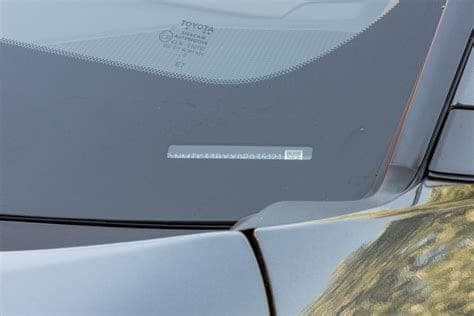
Before committing to a purchase, running a vehicle history report is a critical step, because a salvage or rebuilt title brand recorded through NMVTIS can reduce the insurable agreed value by 20% to 40% according to guidance published by the National Association of Insurance Commissioners (NAIC). Some specialty carriers decline to write agreed-value coverage on salvage-titled vehicles altogether, pushing the buyer into a standard-market policy at a higher rate with inferior payout terms.
Title brands kill your insurance options
A salvage or rebuilt title recorded in NMVTIS can disqualify a classic from agreed-value coverage with specialty carriers. Always run a VIN check before purchase to identify title brands, flood damage, or odometer discrepancies that could limit your coverage or reduce the insured value by up to 40%.
State-Level Factors That Shift Premiums
Classic-car insurance premiums vary meaningfully by state, driven by differences in minimum liability requirements, litigation environments, and theft rates. Michigan, for example, mandates unlimited personal injury protection (PIP) under MCL § 500.3107, which historically inflated all auto insurance premiums—including classic-car policies—by 30% to 50% compared to states with lower PIP thresholds, according to the Insurance Institute of Michigan. Florida, which requires only $10,000 in personal injury protection and $10,000 in property damage liability under Florida Statute § 324.021, tends to produce lower base premiums for collector vehicles, although comprehensive coverage costs rise in hurricane-prone ZIP codes.
Theft rates matter too. The National Insurance Crime Bureau's 2023 Hot Wheels report ranked California, Texas, and Florida as the top three states for vehicle theft, and while classic cars are stolen far less frequently than modern vehicles, garaging requirements and anti-theft device discounts become more valuable in those states. Buyers in high-theft areas should confirm that their specialty policy includes an agreed-value payout even when the car is stolen from a locked garage, as some budget policies exclude theft coverage to keep premiums low.
Modifications and Their Impact on Premiums
A bone-stock 1968 Mustang inline-six with factory drum brakes will insure for less than the same car fitted with a crate 302, disc brakes, and a Tremec five-speed—not because the modified car is less safe, but because its agreed value is higher and the replacement cost of aftermarket parts inflates repair estimates. Hagerty's underwriting guidelines allow for modified vehicles but require that modifications be disclosed and reflected in the agreed value. Undisclosed modifications can void a claim, leaving the owner with no payout after a loss.
The Restomod Dilemma
Restomods—classic bodies with modern drivetrains and electronics—occupy an awkward space in the insurance market. Their agreed values can be $40,000 to $100,000 or more, according to listings tracked by Bring a Trailer, which pushes premiums well above what a stock classic would cost. Buyers who want the cheapest insurance should consider keeping their classic largely original or budgeting separately for the premium increase that a restomod build will bring.
Practical Steps To Lock In the Lowest Premium
- Get quotes from at least three specialty carriers—Hagerty, Grundy, and American Collectors—plus one mainstream carrier offering agreed-value coverage, before committing to a purchase.
- Choose a high-production, domestically built model with an agreed value under $15,000; this is the sweet spot for sub-$250 annual premiums.
- Maintain a clean personal driving record: most specialty carriers require a clean record for the past three to five years and will surcharge or decline coverage after a DUI or at-fault accident, per standard underwriting guidelines referenced by the NAIC.
- Store the vehicle in a locked, enclosed garage—carriers often require photographic proof, and garaging can reduce premiums by 5% to 15% depending on the insurer.
- Install a hidden kill switch or GPS tracker; Hagerty and Grundy both offer anti-theft discounts that can shave an additional 5% off the annual premium.
- Bundle your classic-car policy with your daily-driver auto insurance when the specialty carrier offers a multi-policy discount.
- Review and update the agreed value every two to three years to avoid being overinsured (paying too much premium) or underinsured (getting too little in a loss).
What Auction Buyers Need To Know
Buyers who source classics through Copart, IAA, or local estate auctions face a unique insurance challenge: the purchase price at auction is often well below private-party market value, and the vehicle may arrive with an unknown title history. Specialty carriers typically require a clean title—no salvage, flood, or junk brands—to issue an agreed-value policy. A vehicle history report run before bidding can reveal whether the VIN carries a title brand recorded in the National Motor Vehicle Title Information System (NMVTIS), which is the federal database mandated by 49 U.S.C. § 30502.
Even with a clean title, auction-purchased classics may need a professional appraisal before a carrier will set an agreed value. The cost of an appraisal—typically $75 to $200 according to the American Society of Appraisers—is a minor expense that can prevent a major coverage gap. Buyers should factor this into their total acquisition cost alongside transport, registration, and any state safety or emissions inspection fees.
The Bottom Line on Buying Smart
The cheapest classics to insure share three traits: high original production volume, modest market values, and widely available parts. Volkswagen Beetles, Chevrolet C10 pickups, base-model Mustangs, and Mopar slant-six sedans hit all three marks. When paired with a specialty carrier's agreed-value policy, these vehicles can be insured for as little as $100 to $250 per year—a fraction of what a daily driver costs. But cheap insurance means nothing if the policy has coverage gaps or the car carries a hidden title brand that voids agreed-value eligibility. Diligent buyers shop multiple carriers, verify the VIN's history before purchase, and read the policy's exclusions as carefully as they inspect the car's undercarriage.
What to do next
Before you bid on or buy any classic, request insurance quotes from Hagerty, Grundy, and American Collectors with your target vehicle's VIN and a realistic agreed value—then compare the premiums, mileage limits, and coverage exclusions side by side to find the policy that fits both your budget and your driving plans.
CarCheckerVIN Editorial Team
In-house automotive research team
The CarCheckerVIN editorial team combines decades of automotive industry, dealer, and journalism experience to produce trustworthy buying, selling, and ownership guidance backed by NMVTIS, NICB, and manufacturer data.
Frequently asked questions
- Who has the cheapest insurance for classic cars?
- For vehicles valued under $15,000, American Collectors Insurance (underwritten by American Modern Insurance Group) and Grundy frequently produce the lowest annual premiums, sometimes under $150 per year. Hagerty, the largest specialty carrier with over 2 million vehicles insured, is competitive but may charge slightly more on low-value cars. Always obtain quotes from at least three specialty carriers and compare not just premiums but mileage caps, roadside assistance limits, and spare-parts coverage before choosing.
- What are the cheapest old cars to insure?
- High-production, domestically built models with modest agreed values consistently carry the lowest premiums. Volkswagen Beetles, Chevrolet C10 pickups, Ford Mustang inline-six coupes, and Dodge Dart or Plymouth Valiant slant-six sedans typically insure for $100 to $250 annually through specialty carriers. Their cheap, widely available parts and low theft appeal keep insurer risk—and therefore premiums—minimal compared to rare or high-performance classics.
- What is the $3000 rule for buying cars?
- The so-called $3,000 rule is an informal buyer guideline, not a statute. It suggests that when shopping for a used car under $3,000, the buyer should budget an additional $1,000 to $1,500 for immediate repairs and inspections, effectively treating the true cost as $4,000 to $4,500. Some dealership guides also reference this threshold because many BHPH (Buy Here Pay Here) lots and private sellers offering sub-$3,000 cars sell them as-is with no warranty under the FTC's Buyers Guide rule.
- Are classic cars cheaper for insurance?
- Yes, in most cases. Hagerty's 2023 annual report indicated that claim frequency on collector-vehicle policies runs approximately 75% lower than on standard personal-auto policies, which allows specialty carriers to charge dramatically less—often $100 to $350 per year for a classic versus $1,500 or more for a modern daily driver. The key qualifiers are limited annual mileage, enclosed garage storage, and ownership of a separate daily-use vehicle, which most specialty carriers require.
Ready to check a VIN?
Run a free VIN check
Decode any vehicle in under 60 seconds.