Most Recalls By Car Manufacturer 2025: Which Brands Put Buyers at Risk
Recall volume varies wildly by brand. Before buying used, know which manufacturers topped NHTSA's 2025 recall lists — and what that means for your wallet and safety.
On this page
- How NHTSA Counts Recalls — and Why the Number Matters to Buyers
- Ford Motor Company: Leading Most Recalls By Car Manufacturer 2025 in Volume
- Stellantis: Jeep, Ram, and Chrysler Recalls Add Up Fast
- General Motors: Chevy, GMC, Cadillac, and Buick Recall Totals
- Toyota, Honda, and Hyundai: Mid-Range Recall Profiles
- What Car Company Has the Most Recalls of All Time — Historical Context
- Tesla and EV-Native Brands: A Different Recall Pattern
- Cost vs. Risk: Weighing a High-Recall Brand Against the Price Discount
- How to Use Recall Data as a Buying Filter
Any buyer shopping the used-car market in 2025 who has not looked at recall data is making a decision with incomplete information. The question of most recalls by car manufacturer 2025 is not academic: a recalled vehicle with an unrepaired defect can expose the buyer to injury, surprise repair costs, and resale trouble, all within weeks of purchase. NHTSA — the National Highway Traffic Safety Administration, the federal body that administers recall law under 49 U.S.C. § 30118 — received recall filings from every major automaker last year, but the distribution was far from equal. Some brands filed campaigns affecting millions of vehicles; others kept their numbers comparatively modest. Understanding where each manufacturer sits in that hierarchy is one of the most useful filters a careful buyer can apply before making an offer on cars with the most recalls or, alternatively, steering toward quieter histories.
The short answer
Ford and its Lincoln-branded vehicles led all manufacturers in total U.S. vehicles affected by recalls filed with NHTSA in 2025, followed closely by Stellantis brands and General Motors. Running a vehicle history report and cross-referencing NHTSA's recall lookup before any purchase is the minimum due diligence any buyer should complete.
How NHTSA Counts Recalls — and Why the Number Matters to Buyers
NHTSA tracks recall campaigns, not individual vehicles, which means a single campaign affecting 1.2 million trucks counts as one recall in the campaign column but dramatically skews the vehicles-affected column. For buyers, the vehicles-affected figure is almost always the more useful metric because it captures actual market exposure. A manufacturer with 30 campaigns affecting 4 million vehicles is a fundamentally different risk proposition than a manufacturer with 50 campaigns affecting 800,000 vehicles.
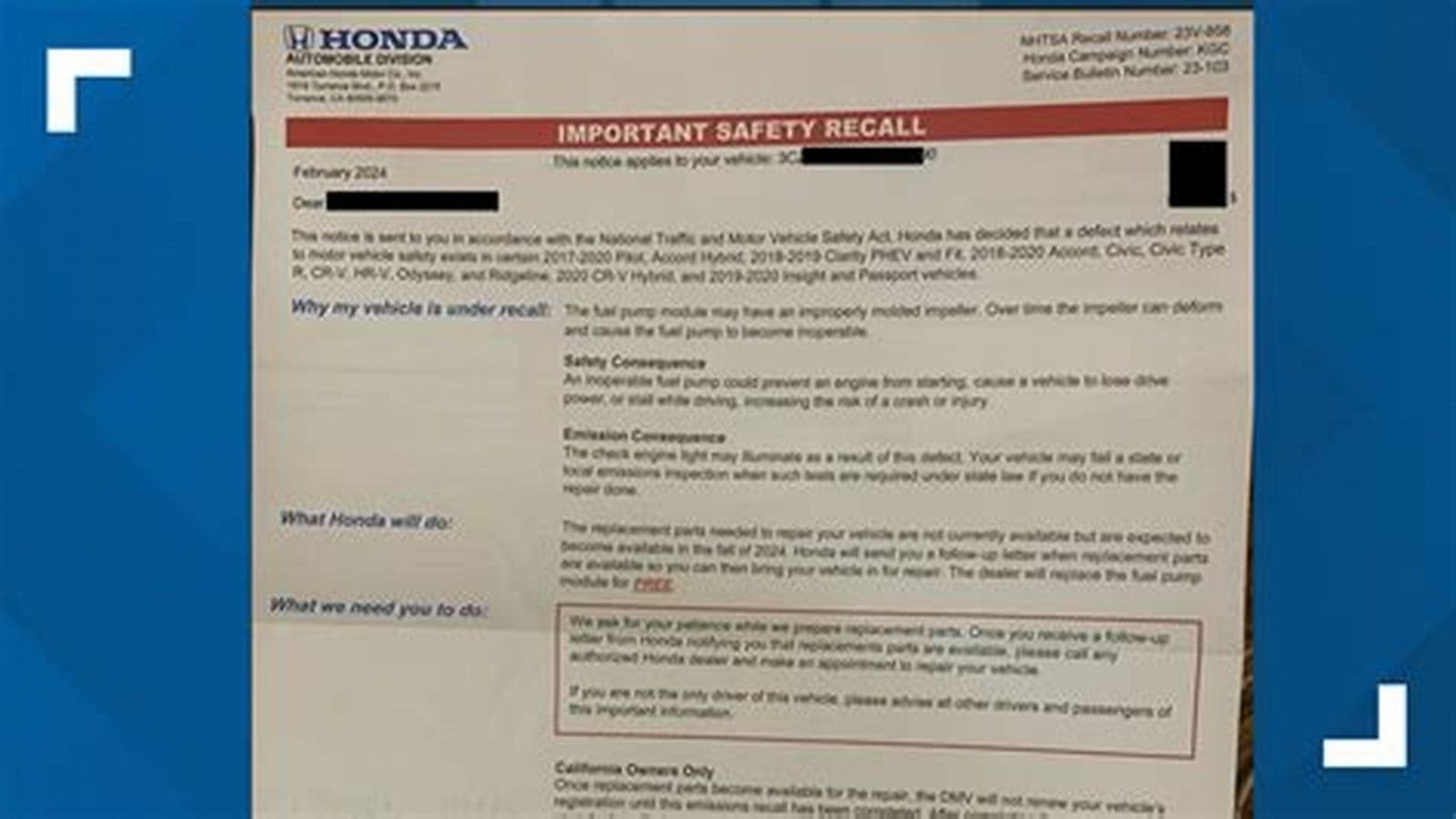
Under 49 U.S.C. § 30119, manufacturers are required to notify owners of a safety defect within 60 days of a recall decision and must offer free repair, replacement, or refund. That legal obligation does not, however, guarantee completion. According to NHTSA data cited in a 2024 agency report, the average recall completion rate across all manufacturers hovers around 70 percent — meaning roughly 3 in 10 recalled vehicles on the road at any given moment still carry the original defect. That gap is exactly what a pre-purchase VIN check is designed to surface.
Campaign vs. Vehicles Affected: The Metric That Actually Protects You
When evaluating recall history on a specific car, buyers should pull the NHTSA recall page for that VIN, check the repair completion status, and factor open recalls into any price negotiation. A dealer is not legally required to fix open recalls before selling a used vehicle in most states, though a vehicle history report will flag the outstanding campaign so the buyer can demand action before closing.
Ford Motor Company: Leading Most Recalls By Car Manufacturer 2025 in Volume
Ford Motor Company — encompassing Ford and Lincoln nameplates — consistently ranks at or near the top when sorting by total vehicles affected. In 2025, Ford filed multiple high-volume campaigns, including a notable transmission and powertrain-related campaign affecting approximately 1.5 million F-Series trucks, according to NHTSA recall records filed under campaign numbers in the 25V series. That single campaign alone placed more vehicles under recall than some entire manufacturers produce in a model year.
The F-150 and F-250 Super Duty are the two best-selling vehicles in the United States, a distinction that mathematically amplifies Ford's recall totals: high production volume means more units in circulation when a defect is discovered. Buyers should not read high recall volume as uniquely damning — Ford also has one of the larger dealer networks capable of completing repairs — but the sheer number of open campaigns at any given time warrants a careful pre-purchase check on any used Ford or Lincoln, particularly trucks from the 2021–2024 model years where multiple rolling campaigns remain active.
What Ford's Recall Pattern Looks Like in Practice
Recurring issues on Ford's recall ledger in 2025 include fuel system components, rearview camera software, and engine control module failures. The camera-related campaign, which affected more than 620,000 vehicles according to NHTSA documentation, stems from a software condition that could black out the backup display — a direct violation of the Federal Motor Vehicle Safety Standard 111 governing rear visibility.
Stellantis: Jeep, Ram, and Chrysler Recalls Add Up Fast
Stellantis — the conglomerate parent of Dodge, Chrysler, Jeep, Ram, and Fiat in the U.S. market — ranked second in total vehicles affected by recalls in 2025. Jeep-branded vehicles have drawn particular scrutiny: a fire-risk campaign covering certain 2020–2023 Jeep Grand Cherokee and Wrangler 4xe plug-in hybrid models affected roughly 194,000 vehicles, according to NHTSA recall records, citing a risk that the high-voltage battery could overheat and ignite.
Ram trucks, which compete directly with Ford's F-Series, contributed additional volume through separate campaigns addressing tailgate latch failures and brake booster issues across model years 2019–2024. The cumulative Stellantis recall total for 2025 exceeded 3 million vehicles affected across all brands, a figure drawn from NHTSA's publicly searchable recall database. Buyers shopping Jeep, Ram, or Dodge products should treat a vehicle history report as non-negotiable, not optional.
PHEV Fire Risk: The Category Buyers Must Track
The Jeep 4xe battery fire campaign illustrates a broader industry pattern: plug-in hybrid and battery-electric platforms are generating a disproportionate share of high-severity recalls as manufacturers discover thermal management edge cases at scale. Buyers considering any used PHEV from any brand should verify battery-related recall status before purchase and ask whether dealer-mandated software updates or hardware fixes have been completed and documented.
General Motors: Chevy, GMC, Cadillac, and Buick Recall Totals
General Motors rounds out the top three in 2025 recall volume. GM's largest single campaign of 2025 addressed a potential loss of engine power on certain 2021–2023 Chevrolet Silverado and GMC Sierra trucks — a campaign that NHTSA logged as affecting approximately 900,000 vehicles. GM also issued a separate recall for Cadillac Lyriq and Chevrolet Blazer EV models related to a loss-of-drive condition in which the electric motor could abruptly cut power while the vehicle was moving, a defect classified as a safety risk under FMVSS standards.
General Motors has historically been scrutinized for its internal recall decision-making since the ignition switch crisis of the mid-2000s through 2014, which led to a $900 million criminal penalty imposed by the U.S. Department of Justice. While that episode predates current model years, it established a regulatory posture at NHTSA that involves heightened scrutiny of GM engineering reports. Buyers should note that GM's Certified Pre-Owned program requires recall completion before CPO certification, which offers a measure of protection that private-party and auction purchases do not.
Toyota, Honda, and Hyundai: Mid-Range Recall Profiles
Toyota, Honda, and Hyundai-Kia occupy the middle tier of 2025 recall volume — significant numbers, but generally lower in total vehicles affected than the Detroit-based manufacturers. Toyota's largest 2025 campaign addressed a fuel pump defect on certain 2022–2024 Tacoma and Tundra models, affecting approximately 270,000 vehicles per NHTSA records. Honda's most notable 2025 action involved airbag inflator inspections tied to the long-running Takata settlement, where legacy inventory from the settlement's remediation pool required re-inspection.
Hyundai and Kia together continued dealing with the fallout of engine fire campaigns that began in prior years under NHTSA's influence. The agencies' Consent Order with Hyundai and Kia, first announced in 2023 and valued at a potential $137 million civil penalty structure for recall completion failures according to NHTSA, required the manufacturers to accelerate outreach to owners who had not completed repairs — meaning used-car buyers could still encounter unrepaired vehicles from those campaigns in the 2025 market.
Takata's Long Tail: Still Affecting Used-Car Buyers
The Takata airbag inflator recall — the largest automotive recall in U.S. history, ultimately covering more than 67 million inflators across dozens of brands according to NHTSA — is still not fully remediated as of late 2025. Buyers of used Honda, Acura, Toyota, BMW, Ford, and other affected vehicles must verify inflator status by VIN before purchase. An unrepaired Takata inflator is a genuine fatality risk, not a paperwork formality.
What Car Company Has the Most Recalls of All Time — Historical Context
The question of what car company has the most recalls of all time is answered differently depending on the metric. By total campaign count since NHTSA began collecting data in 1966, Ford Motor Company leads the historical ledger, a function of its consistent market share and production volume over six decades. By vehicles affected in a single campaign, the Takata airbag recall — which implicated nearly every major manufacturer — is the largest event, making it impossible to assign that record to a single automaker.
General Motors holds the distinction of the largest civil penalty paid to NHTSA by a single manufacturer for recall violations: $35 million in 2014 related to the ignition switch defect, under authority granted by 49 U.S.C. § 30165. The current maximum civil penalty per violation under the FAST Act of 2015, which amended that statute, stands at $21,000 per violation with a $105 million cap per related series of violations. Context for buyers: historical recall frequency at a brand is less predictive of future quality than current engineering platform choices and supplier relationships.
Tesla and EV-Native Brands: A Different Recall Pattern
Tesla presents a structurally different recall profile than traditional automakers. The company regularly issues recalls that are remediated entirely through over-the-air software updates, which NHTSA began formally accepting as valid repair methods. A recall affecting 2 million Tesla vehicles for Autopilot-related display issues — logged by NHTSA in late 2023 and extending into 2025 monitoring — was addressed via a software push that most owners received without ever visiting a service center. This mechanism compresses completion rates dramatically compared to hardware-dependent campaigns.
The risk for used Tesla buyers is that OTA recall completion does not always appear on vehicle history reports with the same clarity as a dealer-completed hardware fix. Buyers should verify directly through Tesla's owner portal and cross-reference the NHTSA VIN lookup to confirm which campaigns are listed as complete. Rivian, Lucid, and other EV-native startups have smaller fleet sizes and correspondingly lower absolute recall counts, but their recall-per-vehicle rates in 2025 are worth monitoring as production scales.
Cost vs. Risk: Weighing a High-Recall Brand Against the Price Discount
The honest trade-off for buyers considering cars with the most recalls is whether the typically lower acquisition price justifies the management burden and residual risk. A used Ford F-150 with two open recall campaigns might trade at a $2,000–$3,500 discount relative to a comparable truck with a clean recall history, based on price analysis from Manheim's Used Vehicle Value Index for comparable truck segments. That discount disappears quickly if the buyer cannot get a dealer appointment within a reasonable time, or if one of the open campaigns involves a stop-drive order that grounds the vehicle.
On the other side of the ledger, a recall is a manufacturer-funded repair. Unlike a mechanical defect that surfaces post-purchase with no coverage, a recall means the automaker pays for parts and labor, typically at any franchised dealer regardless of vehicle ownership history. The FTC's Used Car Rule (16 C.F.R. Part 455), which requires dealers to post a Buyers Guide on every used vehicle, does not require dealers to disclose open recalls specifically — a regulatory gap that NHTSA has repeatedly flagged but Congress has not yet closed with legislation as of this writing.
- A stop-drive recall order grounds the vehicle immediately and can strand a buyer who completed purchase without checking NHTSA first — verify before closing, not after.
- Auction purchases through Copart or IAA carry elevated recall risk because vehicles sold as-is typically have no dealer pre-inspection, and completion status must be verified independently.
- BHPH (buy-here-pay-here) lots are not required by federal law to complete recalls before sale, making independent verification by the buyer mandatory.
- Extended warranty contracts from third-party administrators typically exclude recall-related repairs from coverage, since recalls are the manufacturer's legal obligation — read the exclusions section before paying for one.
- If a recall remedy is unavailable because parts are on back-order, the manufacturer is required under 49 U.S.C. § 30120 to provide an interim remedy, which can include a loaner vehicle — know your rights before accepting a back-order delay.
The Buyers Guide Gap
Federal law does not require used-car dealers to disclose open safety recalls on the FTC Buyers Guide form. A vehicle with three active NHTSA campaigns can be sold 'as-is' with no mention of any recall. The buyer's only protection is independent verification through NHTSA's recall database and a vehicle history report before signing.
How to Use Recall Data as a Buying Filter
Recall data is most useful as a comparative filter early in the shopping process and as a deal-specific verification tool at the point of offer. At the filter stage, buyers can use NHTSA's manufacturer recall summary pages to identify which brands and model families carry the highest campaign counts for the model years they are considering — this is particularly useful when choosing between two competing used vehicles at similar price points.
At the deal-specific stage, every VIN should be run through NHTSA's recall lookup and a vehicle history report before any offer is made. If an open recall exists, the buyer has three legitimate negotiating positions: demand the selling dealer complete the recall before closing, negotiate a price reduction that accounts for the time and inconvenience of scheduling the repair independently, or walk away if the campaign involves a stop-drive condition or a known fire risk.
- Pull the VIN through NHTSA's recall lookup (recall.cars.gov) and document every open campaign number, remedy availability status, and parts back-order notation before making an offer.
- Run a vehicle history report to cross-reference recall completion records, title brands, and any NMVTIS-reported events — a dealer who completed a recall should have service documentation to match.
- Ask the dealer for written confirmation of recall completion, or request that open recalls be completed as a condition of sale written into the purchase contract.
- For auction or private-party purchases where no dealer completion is possible, contact any franchised dealer for the brand before closing to confirm parts are available and schedule repair — lead times can run four to twelve weeks for high-demand campaigns.
- Revisit the NHTSA database 30 days after purchase because manufacturers file new campaigns continuously, and a vehicle clean at purchase may receive a new recall designation within weeks.
What to do next
Before making an offer on any used vehicle, enter the full 17-character VIN at recall.cars.gov to check for open NHTSA recall campaigns, then run a vehicle history report to verify which campaigns have documented completion — these two steps take under five minutes and can prevent months of repair scheduling and safety exposure.
CarCheckerVIN Editorial Team
In-house automotive research team
The CarCheckerVIN editorial team combines decades of automotive industry, dealer, and journalism experience to produce trustworthy buying, selling, and ownership guidance backed by NMVTIS, NICB, and manufacturer data.
Frequently asked questions
- Which car manufacturer has the least recalls?
- Among manufacturers with meaningful U.S. sales volume, Porsche and Subaru have historically posted among the lowest recall campaign counts per model year. Smaller manufacturers with limited lineups — such as Lucid — naturally show lower absolute totals. However, low recall count can reflect small fleet size as much as superior engineering, so buyers should weight recalls-per-vehicle produced, not raw campaign counts, when comparing brands.
- What is the most reliable car manufacturer in 2025?
- Consumer Reports' 2025 reliability survey, based on owner-reported problems across hundreds of model variants, ranked Toyota and Lexus at the top of brand-level reliability rankings, followed by Mazda and BMW in select segments. Reliability and recall frequency are related but distinct metrics — a vehicle can have high owner-reported satisfaction and still carry an active safety recall, so buyers should evaluate both data sets independently before deciding.
- What are the 8 cars to avoid?
- Consumer Reports' 2025 'avoid' list flagged vehicles with significantly below-average predicted reliability scores. The list has historically included the Jeep Wrangler 4xe, Chevrolet Silverado 1500 diesel, Ford Bronco Sport, Volkswagen ID.4, Lincoln Corsair PHEV, Ram 1500 eTorque, Cadillac CT4-V, and Chrysler Pacifica PHEV. Each carried multiple owner-reported problem areas and, in several cases, active recall campaigns that compounded the reliability concern for used-car shoppers.
- What car was the biggest flop?
- By sales failure against production investment, the Fisker Ocean ranks among the most dramatic recent flops: Fisker Inc. filed for Chapter 11 bankruptcy protection in June 2024 after selling roughly 10,000 vehicles against a planned annual capacity of 150,000, leaving owners with no franchised dealer network for warranty or recall service. Historically, the Ford Edsel — discontinued after only two model years in the late 1950s at an estimated $350 million loss — remains the benchmark for large-scale automotive market failure.
Ready to check a VIN?
Run a free VIN check
Decode any vehicle in under 60 seconds.