Car Frame Damage Repair Cost: What Buyers and Owners Actually Pay
Frame damage can turn a promising used-car deal into a money pit. Here is what repairs actually cost, which damage types are fixable, and when the math says walk away.
On this page
- What Is Considered Frame Damage on a Car
- Car Frame Damage Repair Cost: The Real Price Ranges
- When Frame Damage Triggers a Total-Loss Determination
- Dealer Disclosure Rules and the FTC Buyers Guide
- Cost vs. Risk: The Decision Framework Every Buyer Needs
- BHPH Lots and the Frame Damage Risk Specific to That Segment
- Extended Warranties and Frame Damage: What Is Actually Covered
- Getting a Reliable Repair Estimate Before You Negotiate
- Step-by-Step: How to Handle a Frame-Damaged Vehicle Purchase
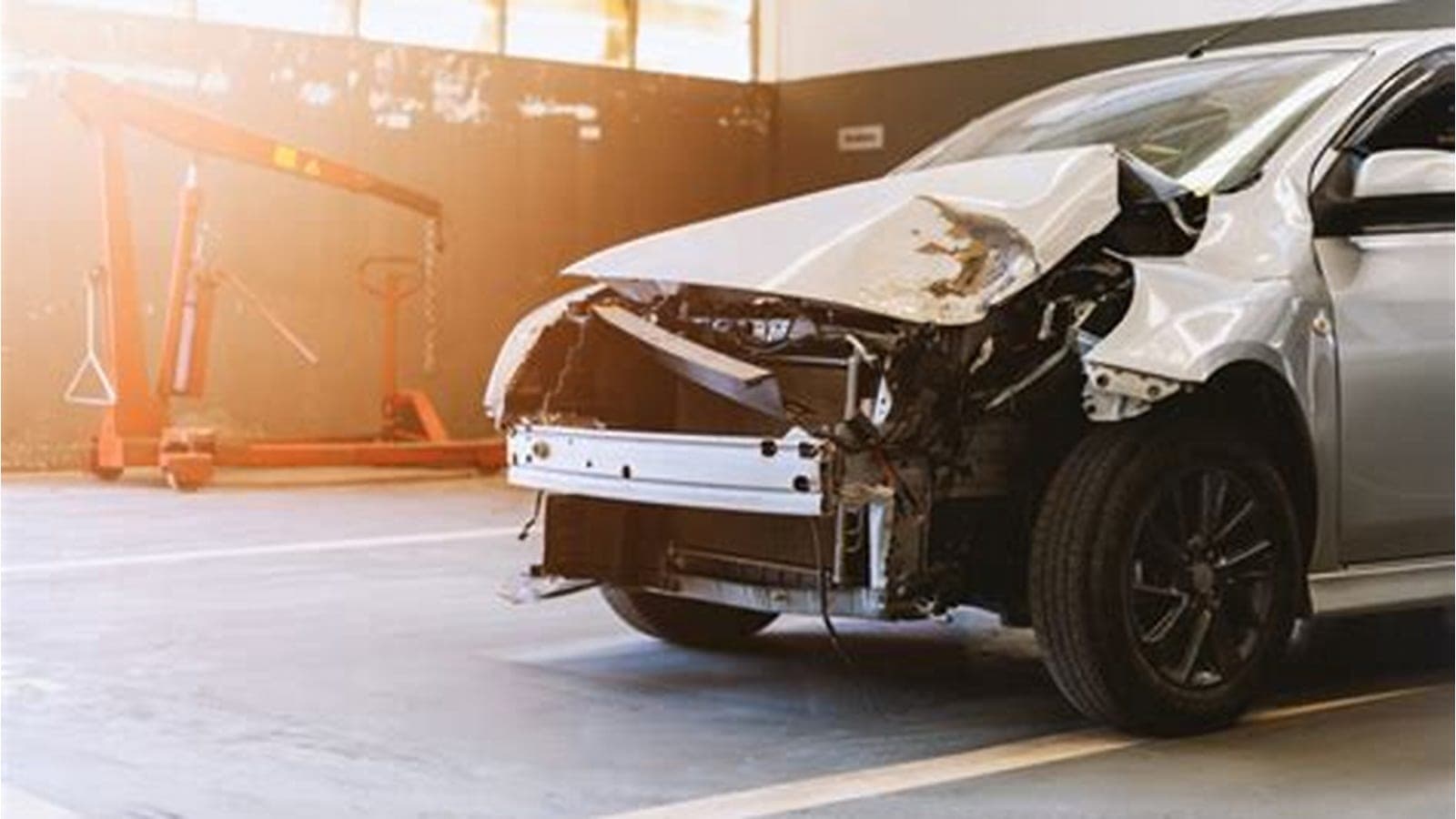
Car frame damage repair cost is the question that separates a cautious buyer from one who hands over a check and regrets it six months later. Whether a vehicle history report flags a prior collision or a pre-purchase inspection reveals bent metal, the dollar exposure ranges from a few hundred dollars for minor cosmetic misalignment to well north of $10,000 for structural straightening on a unibody crossover — and in the worst cases, the repair is not worth attempting at all. Understanding what is considered frame damage on a car, how shops price the work, and which of the 5 types of frame damage signal a total loss versus a recoverable vehicle gives buyers the leverage they need before negotiating or walking away.
The short answer
Minor frame damage — think a bent rail with no crumple-zone compromise — typically costs $600–$2,000 at a certified body shop. Severe structural damage involving twisted unibody sections, buckled floor pans, or damaged firewall routinely exceeds $4,000 and often pushes repair costs past the vehicle's actual cash value, triggering a total-loss determination.
What Is Considered Frame Damage on a Car
The term 'frame damage' is used loosely in listings and insurance paperwork, which is precisely why buyers need a precise definition. On a body-on-frame truck or SUV, the frame is the separate steel ladder structure that carries the powertrain and body; damage here is discrete and sometimes easier to isolate. On the vast majority of modern passenger cars and crossovers sold in the United States, however, the structure is a unibody — the body panels and structural members are stamped and welded into a single assembly, meaning a significant impact to any corner can propagate stress cracks and dimensional changes throughout the entire vehicle.
The National Highway Traffic Safety Administration (NHTSA) treats structural integrity as a core element of Federal Motor Vehicle Safety Standards, and insurers have adopted a parallel framework: damage is 'structural' when it affects any load-bearing section of the vehicle's occupant cell, including the firewall, the A- or B-pillars, the rocker panels, the floor pan, or the engine cradle. Cosmetic creasing of a non-structural rail section, by contrast, is often coded differently on insurance estimates — a distinction that matters enormously when a dealer claims 'minor frame damage' in a listing.
The 5 Types of Frame Damage
Collision repair professionals and insurance adjusters organize structural compromise into five categories that directly affect repairability and cost: (1) mashed or collapsed sections, where metal has crumpled as designed in a frontal or rear impact; (2) sway damage, a lateral bend usually caused by a side impact; (3) twisted frame, the most severe category, where one corner has moved in a different plane from the rest of the structure; (4) sagging, typically from cumulative stress or a severe underbody strike, where the middle of the frame has deflected downward; and (5) diamond damage, where the entire chassis has been pushed into an asymmetrical quadrilateral shape. Types three through five are the categories that most commonly exceed repair cost thresholds.
Car Frame Damage Repair Cost: The Real Price Ranges
Labor is the dominant cost driver. According to data compiled by CCC Intelligent Solutions in their annual Crash Course industry report, the average collision repair invoice in the United States crossed $5,200 in a recent reporting period, but frame-specific work can be either far cheaper or far more expensive depending on the category of damage. A shop pulling a single bent rail section using a frame-straightening machine typically charges $800–$1,500 in parts and labor for a body-on-frame pickup, where rails are accessible and replaceable as individual components.
Unibody work is a different calculation. Straightening a strut tower or correcting a misaligned front subframe on a Honda CR-V or Toyota Camry using a dedicated measuring and pulling system — brands like Chief Automotive and Car-O-Liner anchor the market — runs $1,200–$3,500 when the damage is limited to the front crush zone. If the center section or rear tub is involved, repair costs climb steeply: $4,000–$8,000 is a common range cited by I-CAR (the Inter-Industry Conference on Auto Collision Repair), the nonprofit that certifies technicians and training programs in the United States. Twisted-frame and diamond-damage scenarios, particularly on aluminum-intensive vehicles like a Ford F-150 EcoBoost or certain Audi models that require specialized riveting equipment, can exceed $10,000 in structural labor alone before paint and refinishing are added.
Hidden Costs That Inflate the Final Invoice
Wheel alignment is mandatory after any frame straightening: a standard four-wheel alignment runs $120–$200 at most independent shops, but a vehicle with compromised geometry may require multiple alignment iterations. Suspension components — tie-rod ends, control arms, and wheel bearings stressed by the original impact — often need replacement and can add $400–$1,800 depending on the platform. On vehicles where the airbag system has deployed, Federal Motor Vehicle Safety Standard No. 208 requires replacement with OEM or equivalent-certified modules; a set of front and side curtain airbags and the control module can cost $1,500–$3,500 in parts alone, according to Mitchell International's labor and parts database.
When Frame Damage Triggers a Total-Loss Determination
Every US state has a statutory total-loss threshold, typically expressed as a percentage of the vehicle's actual cash value (ACV). Texas, under Texas Insurance Code § 501.091, sets the threshold at 100 percent — meaning insurers must declare a total loss only when repair cost equals or exceeds ACV. Florida, under Florida Statute § 319.30, uses an 80 percent threshold, one of the stricter standards in the country. California's Department of Insurance guidelines similarly use 100 percent of ACV but require insurers to account for salvage value in the calculation, effectively creating a functional threshold closer to 75–80 percent in practice.
What this means for a buyer evaluating a used vehicle with prior frame damage: if the repair was performed after a total-loss determination, the vehicle should carry a salvage or rebuilt title, which is a mandatory NMVTIS-reportable brand under 49 U.S.C. § 30504. A VIN check or vehicle history report will surface this brand if the declaring insurer reported it correctly — though not all private-party sales or auction dispositions are reported promptly, which is why a physical pre-purchase inspection by an I-CAR Gold Class certified shop remains essential.
Dealer Disclosure Rules and the FTC Buyers Guide
The FTC Used Car Rule, codified at 16 C.F.R. Part 455, requires licensed dealers in the United States to display a Buyers Guide on every used vehicle offered for sale. The Buyers Guide must identify whether the vehicle comes with a warranty or is sold 'as is,' but it does not affirmatively require dealers to disclose known frame damage in the Buyers Guide form itself. However, under common-law fraud doctrines recognized in every US jurisdiction and under specific state consumer-protection statutes — such as California's Consumer Legal Remedies Act (Civil Code § 1750 et seq.) and New York's General Business Law § 349 — a dealer who has actual knowledge of prior structural damage and conceals it from a buyer may face rescission liability and statutory damages.
Auction sales present an amplified risk. At Copart and IAA (Insurance Auto Auctions), vehicles are typically sold under a 'seller description only' or 'as is' disclaimer, and buyer premiums — which range from roughly 5 percent to 12 percent of sale price depending on the buyer tier and vehicle ACV — do not include any representation about structural condition. Dealers who source inventory at these lanes and resell without independent inspection are common; the absence of a pre-auction inspection does not discharge their disclosure obligations under applicable state law, but proving knowledge of damage after the fact is a buyer's legal burden.
What to Ask the Dealer Before Writing a Check
- Request the repair estimate or insurance supplement from the original collision — reputable shops keep these records for at least seven years in most states.
- Ask whether the vehicle was declared a total loss and, if so, obtain the title history to confirm the salvage or rebuilt brand is present.
- Confirm the repair facility's I-CAR or ASE certification and whether OEM repair procedures were followed — a detail that matters for structural aluminum vehicles.
- Verify that the Buyers Guide is posted as required by 16 C.F.R. Part 455 and note whether the 'as is' box is checked.
- Run an independent pre-purchase inspection at a frame shop with computerized measuring equipment, not a quick-lube bay.
Salvage and Rebuilt Titles Affect Financing and Insureability
Most major US lenders — including bank and credit-union auto loan programs — will not finance a vehicle carrying a salvage title, and many will not finance rebuilt titles either. Comprehensive and collision coverage is frequently unavailable or heavily restricted on rebuilt-title vehicles, leaving owners exposed to out-of-pocket replacement costs if a secondary incident occurs.
Cost vs. Risk: The Decision Framework Every Buyer Needs
The arithmetic is straightforward, but buyers routinely skip it. Start with the vehicle's current ACV using Kelley Blue Book or the NADA Guides clean-retail value, then subtract the estimated frame repair cost, then subtract the residual value penalty. Vehicles with disclosed and documented frame repairs typically sell for 30–50 percent less than comparable clean-title units, according to data from automotive analytics firm Black Book, which tracks auction-lane depreciation by title status. A mid-size crossover with a clean-title retail value of $18,000 might command only $9,000–$11,000 with a repaired frame and documented rebuild.
On the risk side of the ledger, a properly straightened frame restored to OEM dimensional tolerances by a certified shop carries documented evidence of repair — a verifiable paper trail. An improperly repaired frame, or one that was straightened but never returned to specification, presents ongoing crash-test geometry concerns: crumple zones engineered to absorb energy in specific sequences may not perform as designed in a secondary collision. NHTSA has published guidance noting that structural repairs outside OEM procedures can compromise passive restraint system timing, meaning airbag deployment thresholds calibrated to factory geometry may not trigger correctly.
Scenarios Where Repair Makes Financial Sense
Minor, isolated mash damage to a front rail section of a body-on-frame pickup with a replacement cost of $45,000 or more is a scenario where a $1,500 repair is rational — assuming OEM documentation supports the repair and the title remains clean. Classic or collectible vehicles where no factory-equivalent replacement exists also present a case for structural repair regardless of cost-to-value ratio. Outside those two scenarios, buyers purchasing used vehicles in the $8,000–$22,000 range — the heart of the US used-car market — rarely find frame damage repairs that pencil out once the title penalty and ongoing insurance complications are factored in.
BHPH Lots and the Frame Damage Risk Specific to That Segment
Buy-here-pay-here (BHPH) dealers represent a disproportionate concentration of frame-damaged vehicles in the US used-car market. Because BHPH operators frequently purchase inventory at salvage auctions and carry no manufacturer franchise obligations, their sourcing pipeline intersects heavily with insurance write-offs. A 2021 investigation by the Consumer Financial Protection Bureau (CFPB) into auto lending practices noted that BHPH customers — who are disproportionately subprime borrowers — are often less able to conduct independent inspections and more likely to accept vehicles in 'as is' condition under time pressure.
State-level protections vary widely. In Illinois, the Vehicle Sales Finance Act and the Illinois Consumer Fraud and Deceptive Business Practices Act (815 ILCS 505) together give BHPH customers a statutory private right of action against dealers who misrepresent structural condition. In states with weaker consumer protection frameworks, a buyer's primary recourse after purchasing a frame-damaged vehicle from a BHPH lot is to pursue a civil fraud claim — an expensive and uncertain process. The practical takeaway: VIN check a vehicle before visiting any BHPH lot, and conduct a frame inspection before signing any retail installment contract, which under 15 U.S.C. § 1638 (Truth in Lending Act) must disclose the full financed amount and APR but carries no affirmative structural disclosure requirement.
Extended Warranties and Frame Damage: What Is Actually Covered
Extended service contracts — marketed as 'extended warranties' but legally classified as service contracts under most state insurance codes — routinely exclude pre-existing structural damage and any subsequent mechanical failures attributable to prior collision. A buyer who purchases a third-party vehicle service contract from a BHPH lot without disclosing prior frame damage, or without the dealer disclosing it, may find claims denied on the grounds that the underlying structural compromise voided coverage. Read exclusions carefully: most VSC agreements — including products from major providers like Endurance, CARCHEX, and dealer-administered programs — contain explicit 'pre-existing condition' carve-outs.
Manufacturer certified pre-owned (CPO) programs are categorically different. Ford, Toyota, Honda, and General Motors CPO programs all require multi-point inspections that explicitly disqualify vehicles with prior structural or frame damage from certification — meaning a CPO designation is itself an implicit representation that no significant frame damage exists. Buyers who suspect misrepresentation of CPO status have recourse under state lemon-law analogues and under the FTC Act's prohibition on unfair or deceptive acts and practices, 15 U.S.C. § 45.
Getting a Reliable Repair Estimate Before You Negotiate
A legitimate frame-damage repair estimate requires the vehicle to be on a measuring system — either a universal jig system or a laser/ultrasonic measuring platform — before any pulling begins. Shops that quote frame repairs based solely on a visual inspection are quoting blind; dimensional deviation may be substantially larger or smaller than what is visible to the naked eye. Budget for two independent estimates from shops with I-CAR Gold Class or ASE Blue Seal certification, since their technicians are trained to OEM repair procedures and their estimates reflect actual measured displacement rather than guesswork.
Negotiate repair cost into the purchase price before agreeing to buy. A seller who refuses to allow a pre-purchase inspection — which should include measuring — is a significant red flag. Under most state consumer-protection frameworks, misrepresentation of vehicle condition by a licensed dealer is an actionable deceptive trade practice; a private-party seller has no equivalent statutory obligation to disclose, though common-law fraud still applies to intentional concealment. Price the vehicle as if it needs the repair even if the seller claims it has already been done — then verify the claim with a physical inspection and the shop's documentation before closing.
Step-by-Step: How to Handle a Frame-Damaged Vehicle Purchase
- Run a VIN check and pull a vehicle history report before visiting the seller — look for collision events, total-loss brands, and multiple-owner patterns that suggest auction cycling.
- Confirm the title status with your state DMV or through NMVTIS-authorized providers; a salvage or rebuilt brand must appear on the title document itself under federal law (49 U.S.C. § 30504).
- Commission a pre-purchase inspection at an I-CAR Gold Class certified frame shop — not a dealership service bay — and request computerized dimensional measurements in writing.
- Obtain two independent repair estimates; use the higher figure as your negotiating baseline, since repairs consistently run over initial estimates when hidden damage is uncovered during disassembly.
- Calculate the post-repair value using Black Book or Manheim Market Report data for rebuilt-title comparables in your region, and confirm that your target purchase price reflects the title penalty.
- Verify financing availability before committing — contact your bank or credit union with the VIN and title status, since many lenders decline rebuilt-title collateral outright.
- If proceeding, confirm in writing that the seller will provide all prior repair documentation and that the Buyers Guide (16 C.F.R. Part 455) reflects any known damage disclosures.
What to do next
Order a vehicle history report on any used car where frame damage is suspected or disclosed — it is the fastest way to surface total-loss brands, insurance claims, and title anomalies before you spend money on a physical inspection. Then take the report to an I-CAR Gold Class frame shop and ask them to confirm the disclosed damage against what they find on the measuring system.
CarCheckerVIN Editorial Team
In-house automotive research team
The CarCheckerVIN editorial team combines decades of automotive industry, dealer, and journalism experience to produce trustworthy buying, selling, and ownership guidance backed by NMVTIS, NICB, and manufacturer data.
Frequently asked questions
- Is it worth fixing frame damage?
- It depends heavily on the vehicle's value relative to repair cost. For trucks or SUVs with retail values above $35,000, a documented $1,500–$2,500 repair on an isolated rail section can be rational. For vehicles in the $8,000–$18,000 range — the core of the US used-car market — the 30–50 percent title penalty documented by Black Book auction data typically means the math does not work. Always get computerized dimensional measurements before deciding.
- Can you still drive a car with frame damage?
- Legally, a vehicle with repaired and inspected frame damage can be registered and driven in all 50 states, provided it passes any required safety inspection. However, driving a vehicle with unrepaired or improperly repaired structural damage is a genuine safety risk: NHTSA has noted that compromised unibody geometry can affect crumple-zone sequencing and airbag deployment timing in a secondary crash. Never assume a vehicle is safe to drive based solely on cosmetic appearance.
- Is it expensive to fix a car frame?
- The range is wide. A single bent rail on a body-on-frame truck might cost $800–$1,500. Unibody straightening on a modern crossover with moderate front-end damage runs $1,200–$3,500 according to I-CAR repair cost guidance. Severe twisted-frame or diamond-damage scenarios — especially on aluminum-intensive platforms — routinely exceed $6,000–$10,000 in structural labor alone, before alignment, suspension parts, and refinishing are added to the invoice.
- Does frame damage mean the car is totaled?
- Not automatically, but it depends on your state's total-loss threshold. Florida Statute § 319.30 sets the threshold at 80 percent of ACV; Texas Insurance Code § 501.091 uses 100 percent. When repair cost crosses that statutory line, the insurer must declare a total loss and issue a salvage title. Frame damage alone does not trigger totaling — cost relative to value does. A vehicle with documented, sub-threshold frame repairs can legally carry a clean title.
Ready to check a VIN?
Run a free VIN check
Decode any vehicle in under 60 seconds.