Selling a Car on Carfax — What It Costs and What to Check
Carfax is best known as something buyers pay for. If you are the one selling, the same record is a different tool — it is the document a serious buyer reads before they decide what your car is worth. Run your own VIN below to see what that report will say, then list with nothing left in it to surprise you.
Free VIN Preview — Read Your Own Car First
Enter your 17-character VIN to see how many title, brand, odometer and salvage records exist on it before a buyer does
Free preview · No card required · Instant result
Quick Answer
- Can you sell a car on Carfax?
- Carfax runs a used-car listing marketplace, and most of the inventory on it comes from dealers. Whether private-party listing is open to you, and on what terms, is a decision Carfax makes and revises — check carfax.com for what applies today. What does not change: wherever you list, your car is sold alongside its history.
- Do I need to buy a report to sell my car?
- You do not have to hand a buyer a paid report, but you should know what one says about your car before they do. A free VIN preview here shows how many title, brand, odometer and salvage records exist for your vehicle, with no card and no account. The full NMVTIS-backed report is $14.99 if you want the detail.
- Does a clean history actually raise my price?
- It removes the discount. Buyers price uncertainty into every offer they make, whether or not anything is wrong with your car. A seller who produces the record first is negotiating over the vehicle; a seller who does not is negotiating over the risk.
Can You Sell a Car on Carfax?
Carfax operates a used-car listing marketplace alongside its report business — the pages where you browse vehicles for sale with a history report shown beside each one. The overwhelming majority of that inventory comes from franchised and independent dealers who subscribe to Carfax's dealer products, which is why nearly every listing you scroll past carries a dealership name underneath it.
What the platform offers a private individual — whether you can list at all, in which markets, and at what price — is a commercial decision Carfax makes and revises. Any figure printed on a page like this one goes stale the month they change it, so the only reliable answer is the one on carfax.com the day you go to list. Read it there and plan around what you find, not around what a third party told you last year.
The part that does not change is worth more of your attention anyway. Wherever you list — a history marketplace, a classifieds site, a local group, or a sign in the rear window — a buyer holding your VIN can pull the same records. Platforms come and go. The record follows the car. That is the asset you actually control, and it is what the rest of this page is about.
How Listing on a History-Report Marketplace Works
The mechanics are broadly similar across every marketplace built around vehicle history, and knowing the shape of it tells you what to prepare before you start filling in boxes.
The VIN comes before anything else
You enter the 17-character VIN at the start, not the year and model. The platform decodes it into make, model, trim, engine and factory equipment, so most of the specification fields fill themselves. It is also the moment the site pulls the vehicle's history file — which is why there is no version of this where you list first and think about the report afterwards.
The report rides with the listing
On a marketplace built around vehicle history the report is not an optional attachment. It is part of the listing furniture, displayed next to your photographs, and shoppers are on that site precisely because they want to read it. That is the entire reason a marketplace of this kind exists.
Buyers filter on what the record says
Shoppers narrow inventory by no reported accidents, one owner, no branded title, service records on file. Those filters read the report, not your description. A car that fails a filter is not rejected by a buyer — it is never shown to one.
You supply what the record cannot
Photographs, an honest condition description, your asking price, and the context behind anything the history flags. This half of the listing is entirely yours, and it is where a prepared seller separates from a lazy one. The report says what happened; only you can say what was done about it.
What It Costs to List Your Car
Two costs sit behind a listing and they are worth keeping apart. The first is the listing itself. Marketplaces built on vehicle history generally earn from dealers through subscriptions rather than from private sellers one car at a time, so private-party listing on any given platform may be free, may carry a flat fee, or may not be offered in your market at all. Carfax publishes its own current terms, and that is where to read them — which is why you will not find a number for it here.
The second cost is a report, if you decide to put one in a buyer's hands. A single Carfax currently runs around $44.99. Ours is $14.99 for one, and $35.99 for three, $54.99 for five or $89.99 for ten if you are working through more than one vehicle. Before you buy anything at all, the free VIN preview here shows how many title, brand, odometer and salvage records exist for your car, with no card and no account.
For most sellers that free preview is the only step that matters. If it comes back with nothing unusual, you know your car reads clean and you can say so in the listing without bluffing. If it does not, you have found out on your own terms, at your own kitchen table, which is worth considerably more than the price of any report. We broke down what a Carfax actually costs here.
Selling costs, honestly
- Listing fee
platform terms - A Carfax report
see carfax.com - Our VIN preview
$0 - Our full report
$14.99
Listing terms are set by the platform and change. The preview costs nothing either way, so run it before you decide what to spend.
Why Buyers Ask for a Report, and What That Does to Your Price
Stand on the other side of the transaction for a moment. A stranger is being asked for several thousand dollars in exchange for a machine whose entire past is invisible from the driver's seat. They cannot see whether it sat in floodwater three summers ago, whether the odometer was wound back between owners, or whether an insurer once wrote it off and someone put it back on the road. So they do the only rational thing available to them: they assume some risk exists, and they discount for it.
That discount is real money and you pay it whether or not anything is wrong with your car. It arrives as the lowball offer, as the buyer who wants to think about it, as the one who books an inspection and never calls back. None of those people are accusing you of anything. They are pricing what they do not know, and an honest seller with a spotless car pays exactly the same tax as everyone else.
A record collapses that uncertainty. Once the history is on the table the conversation shifts from what might be wrong with this thing to what this specific car is worth — and the second conversation is one you can win. It protects the asking price in a blunter way too: a buyer who has already read the history has nothing left to discover halfway through the test drive.
Bringing the record is a seller's move, not a courtesy to the buyer. Whether it is worth paying Carfax prices for it is a separate question, and the answer depends on what your own record turns out to say.
Run Your Own VIN Before You List — What to Look For
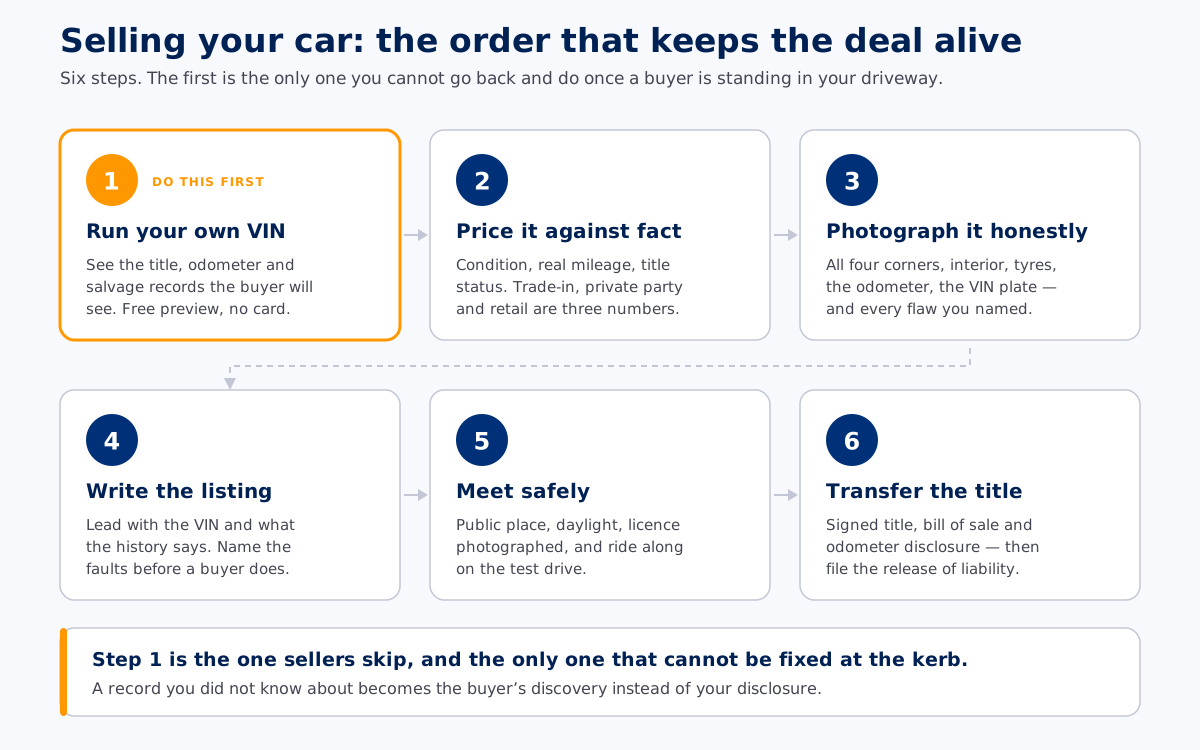
Sellers are routinely surprised by their own vehicles, almost always because something happened before they owned the car. Checking first costs nothing and changes what you write in the listing. Here is what to read, in the order it matters.
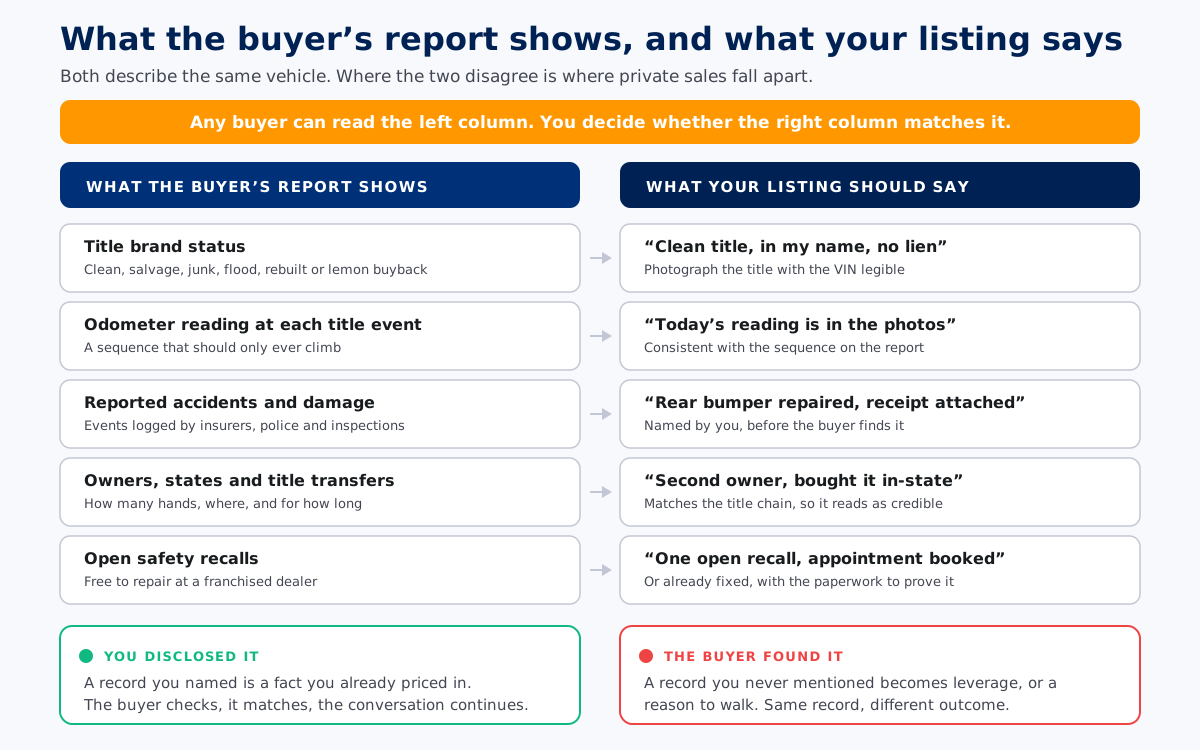
Title brand status
The heaviest field on the page. Salvage, junk, flood, water damage, lemon-law buyback and rebuilt are permanent marks a state applies to a title, and they follow the vehicle through every future sale in every state. If yours carries one, that belongs in the listing text rather than in a difficult conversation on the driveway.
The odometer sequence
Readings recorded at each title event should only ever climb. One that stalls, or drops between owners, is exactly what the buyer's report will show them. If there is an innocent explanation — a replaced instrument cluster, a transcription slip at a title office — you want the paperwork in a folder, not the news arriving mid-negotiation.
Total-loss and salvage records
An insurer's decision to write a vehicle off is reported and stays attached to the VIN, as does a pass through a salvage auction. Cars carrying those records are bought and sold every day. They are sold badly when the seller did not know.
Reported accidents and damage
Collision and damage events logged by insurers, police and inspections. Coverage varies from state to state, so an empty field is not proof of a spotless past — but anything listed there is what a buyer will read, and it lands differently coming from you first.
Owners, states and transfers
How many hands the car has passed through, which states titled it, and how long each owner kept it. One owner since new is a genuine selling point when the record supports it, and a credibility problem the moment it does not.
Open safety recalls
Outstanding manufacturer recalls are repaired free of charge at a franchised dealer. Booking the work before you list removes an objection at no cost but an appointment.
None of this requires you to buy anything. Run the number, read the counts, and decide from there. See what a free VIN check covers, and check open recalls at no cost through NHTSA before you list.
What to Do If Your Report Shows Something You Did Not Expect
Finding something is not a disaster. Finding it at the kerb, with a buyer holding a phone, is. Here is how the common surprises are handled.
An accident you knew nothing about
It nearly always predates you. Read what the entry actually says first — a reported event is not the same thing as structural damage — then gather anything describing the repair. A body-shop invoice from a previous owner, if you can obtain one, turns an alarming line item into a documented fix.
An odometer reading that looks wrong
Check it against your own service invoices and inspection slips before you assume the worst, because keying errors at a title office are not rare. If your paperwork disagrees with the record, keep it together and be ready to produce it. If your paperwork agrees with the record, you have learned something important about the car you are about to sell.
A brand applied in another state
Brand rules differ by state, and a vehicle retitled across a state line can pick up or lose wording along the way. The brand on your current title governs what you are obliged to disclose, but a historical brand from elsewhere will still surface on the buyer's report, and you need to be able to speak to it without hesitating.
Something you believe is simply wrong
History reports are assembled from records supplied by state motor vehicle agencies, insurers, junk yards and salvage auctions. A correction has to be made at that source rather than at the report, so start with the agency or insurer that reported it, with a copy of your title in hand. No report vendor can edit a state's record on request.
In every one of these situations the seller who found it first is in a stronger position than the seller who was told about it.
Read Your Own Record Before a Buyer Does
Enter your 17-character VIN for a free preview of the title, brand, odometer and salvage records on file. No card, no account — just the counts, so you know what you are selling before you write a word of the listing.
Pricing Your Car: Condition, Mileage and Title Status
There is no single value for a used car; there are at least three, and confusing them is how sellers end up insulted by a fair offer. Trade-in sits lowest, because a dealer has to recondition and resell whatever they take from you. Private-party sits above it, and that is the number you are aiming at. Dealer retail is higher again, and it buys a reconditioned car from a lot with a warranty attached — none of which you are offering.
Inside the private-party range, three inputs move the figure more than anything else. Condition is the one sellers overstate most; grade the car the way a stranger with cash would grade it, not the way you feel about it after six years together. Mileage is straightforward, but it has to be the mileage the record supports. And title status can move the price by a larger proportion than the other two put together.
That last one deserves spelling out. A branded title does not shave a modest percentage off a clean-title price. It moves the car into a different market, with different buyers and different comparables. Pricing a rebuilt vehicle against clean-title listings produces a number nobody will pay, and every week it sits unsold quietly reinforces the impression that something is wrong with it. Value the exact car from its VIN before you settle on an asking price.
Branded Titles — How to Disclose and Still Sell
A branded title narrows your buyer pool. It does not empty it. Cars with salvage, rebuilt and flood brands change hands constantly, at prices that reflect what they are. What kills those sales is concealment, not the brand.
Disclose it in writing, and early. Most states carry the brand on the title itself and require it to be disclosed at sale, and a bill of sale that records it protects you as much as the buyer. Put it in the listing text too — filtering out people who were never going to buy a branded car is a favour to your own calendar.
Lead with the repair, not the damage. "Rebuilt title, structural repair completed and re-inspected, receipts included" tells a buyer far more than a euphemism does, and it is the sentence that keeps them reading.
Price against branded comparables. Look at what other branded examples of your model actually sold for, not what clean ones are listed at. The gap is real, and pretending otherwise costs you months rather than dollars.
Expect cash, and fewer buyers. Some lenders decline to finance branded vehicles and some insurers will not write full coverage on them, which removes a slice of the market before anyone has even seen your car. Plan for a cash sale and a longer wait.
Stack the paperwork. Inspection certificates, repair invoices, photographs of the work in progress. A branded car with a documented rebuild sells. A branded car with a shrug does not.
The same principle runs through all five: the brand is a fact you price in, and concealment is a fact the buyer prices in for you. Confirm exactly which brand your title carries before you write the listing.
Photos, Description and the Documents Buyers Ask For
Photograph the car the way a suspicious buyer would want it photographed. All four corners in daylight, both rows of the interior, the boot, the tyres including tread, the engine bay, the odometer reading and the VIN plate on the dashboard. Then photograph the flaws — the scuffed bumper, the kerbed wheel, the tear in the seat. A buyer who finds a defect you photographed concludes you are honest. A buyer who finds one you hid starts wondering what else is missing.
The description has one job: answer the questions that would otherwise arrive as messages. Ownership history, service history, what has been replaced recently, why you are selling, what still needs doing. State the mileage, state the title status, and state anything the history report will show. Write it in plain sentences — a listing that reads as though a person wrote it consistently outperforms one that reads like a form.
Then have the paperwork ready before the first buyer arrives, because a sale stalls exactly where the documents are missing. If there is still a loan on the car, the payoff sequence needs sorting before you agree a price — our guide to selling privately walks through that, along with the release of liability and the bill of sale.
What buyers ask to see
- The title, in your name, unaltered
- Lien release or payoff letter, if financed
- Bill of sale, signed by both parties
- Odometer disclosure at transfer
- Service and maintenance records
- Current registration
- Recall repair confirmation, if applicable
Marketplace, Private Sale or Dealer Trade-In
Three ways to move a car, and they trade money against effort in fairly predictable proportions. There is no universally right answer — there is the one that matches how much of your own time you are willing to spend.
| Route | What you get | What it costs you |
|---|---|---|
| History marketplace | Buyers who arrived already wanting to read a report, and a listing where the record does part of the selling for you | Whatever the platform charges, plus all the ordinary private-sale legwork — messages, test drives, paperwork |
| Private classifieds | Usually the highest of the three prices, because no middleman is taking a margin out of the middle of the deal | The most work and the most exposure: your time, your driveway, and full responsibility for payment and paperwork |
| Dealer trade-in | Speed and certainty — one appraisal, one signature, and in many states the trade-in value reduces the sales tax on the car you buy next | The lowest of the three prices, because the dealer has to recondition the car and resell it at a profit |
A history marketplace sits between the other two: more reach than a classified ad among buyers who care about records, less money than a private sale but more than a trade-in, and the same personal legwork as any private sale. The step-by-step private-sale guide covers the process itself, whichever of the three you choose.
Staying Safe in a Private Sale
The sale itself is where a private seller carries risk a dealer never sees. Three areas account for nearly all of it.
Payment
Complete payment before the car leaves. Cash counted inside a bank lobby is the simplest arrangement; a cashier's cheque should be verified with the issuing bank in person, not by ringing the number printed on the cheque itself. Be sceptical of any buyer who wants to overpay and have you refund the difference, who introduces a shipping agent you did not ask for, or who will not meet you in person. That is the shape of nearly every remote-buyer scam.
Test drives
Photograph the buyer's driving licence before the keys change hands, confirm where you stand on insurance, and ride along. Meet in a public place in daylight — many police departments now designate a parking bay for private vehicle sales — and never hand keys to somebody whose name you do not have.
Paperwork
Sign the title over exactly as your state requires, complete the odometer disclosure, and write a bill of sale so both of you hold a copy. Then file the release of liability with your motor vehicle agency and remove the plates if your state keeps them with the seller. Skipping that last step is how sellers end up receiving somebody else's parking tickets months later.
Tools That Pair With Selling a Car
Selling well is mostly about knowing what the buyer will find before they find it. These cover the rest of the preparation.
Siempre verifica el VIN antes de comprar
La vista previa gratis muestra marcas de título, estado de robo y recalls abiertos en segundos, e indica si existen registros de accidentes y odómetro. El historial completo cuesta $14.99 — pago único, sin suscripción.
Selling a Car on Carfax — Frequently Asked Questions
The questions sellers ask most when they are getting a car ready to list.
Can you sell a car on Carfax?+
Carfax operates a used-car listing marketplace alongside its report business, and the great majority of the inventory on it comes from franchised and independent dealers who subscribe to Carfax's dealer products. Whether private-party listing is available to you, in which markets, and at what price is a commercial decision Carfax makes and revises, so check carfax.com for the terms that apply on the day you go to list rather than relying on a figure published elsewhere. What is true on any platform is that a buyer holding your VIN can pull the same history records, so the preparation described on this page applies wherever you end up listing.
Do I need to buy a Carfax report to sell my car?+
No. You are not obliged to hand a buyer a paid report, and many private sales close without one. What matters far more is that you know what the record says about your car before the buyer does. A free VIN preview at CarCheckerVIN shows how many title, brand, odometer, salvage and total-loss records exist for your vehicle, with no card and no account. If you want the underlying detail — the dates, the states, the readings, the specific brand applied — the full NMVTIS-backed report is $14.99.
How much does it cost to list a car for sale?+
It depends entirely on the platform, and platforms change their terms. Marketplaces built around vehicle history generally earn from dealer subscriptions rather than from private sellers one car at a time, so private-party listing may be free, may carry a flat fee, or may not be offered in your area at all. Read the current terms on the platform's own site before you plan around a number. The only cost this page can state with confidence is ours: the VIN preview is free, and the full report is $14.99 for one, $35.99 for three, $54.99 for five and $89.99 for ten.
Should I check my own VIN before I sell my car?+
Yes, and it is the single most useful thing on this list. Sellers are regularly surprised by their own vehicles, usually by something that happened under a previous owner — a reported accident, a brand applied in another state, an odometer reading that does not line up. A buyer will find those entries whether or not you did. Reading the record first lets you gather the repair invoices, book the free recall work, decide how to word the disclosure, and price the car against the right comparables. Finding it in your own kitchen costs nothing. Finding it on a stranger's phone in your driveway usually costs the sale.
Can I sell a car with a salvage or rebuilt title?+
Yes. Branded vehicles are bought and sold constantly, by buyers who know exactly what they are getting and price accordingly. Most states carry the brand on the title itself and require disclosure at sale, so put it in writing in the listing and again on the bill of sale. Price against other branded examples rather than clean-title listings, expect a cash sale because some lenders will not finance a branded vehicle and some insurers will not write full coverage on one, and assemble the inspection certificates and repair invoices before you list. A documented rebuild sells. An undocumented one sits.
What documents do I need to sell a car privately?+
The title in your name, a bill of sale signed by both parties, and an odometer disclosure at transfer are the core three. If there is still a loan on the vehicle you will also need a payoff letter and, once the loan clears, the lien release from the lender. Bring the current registration, whatever service and maintenance records you have kept, and confirmation of any recall repairs. After the sale, file the release of liability with your state motor vehicle agency and remove the plates if your state keeps them with the seller — that filing is what stops the car's future tickets arriving in your name.
How do I avoid getting scammed when selling a car?+
Complete the payment before the car leaves your possession. Cash counted inside a bank lobby is the simplest option; a cashier's cheque should be verified with the issuing bank in person rather than by calling the number printed on it. Treat as a warning sign any buyer who offers to overpay and asks you to refund the difference, who introduces a shipping agent or escrow service you did not choose, or who refuses to meet in person. For test drives, photograph the licence, meet in a public place in daylight, and ride along — many police departments now provide a designated bay for private vehicle sales.
Check Your Own VIN Before You List
Your buyer will read this record. Read it first — free preview of the title, brand, odometer and salvage counts, with the full NMVTIS-backed report at $14.99 only if you want the detail.
Title, brand, odometer and salvage records are sourced from NMVTIS via a licensed provider; recall data from NHTSA, theft and total-loss flags from NICB VINCheck, and specifications from NHTSA vPIC. Listing terms, fees and availability are set by each marketplace and change; confirm them on that platform's own site. Title transfer, disclosure and release-of-liability requirements vary by state — check your own motor vehicle agency. CarCheckerVIN is not affiliated with Carfax; Carfax is a trademark of its owner.
Verificaciones VIN relacionadas
Más herramientas para verificar el historial de cualquier vehículo