Consumers Auto Loan: How to Finance Your Next Car Without Getting Burned
A consumers auto loan is the single biggest variable in your car deal — bigger than the sticker price. Here's how to lock in the best rate before you ever step on a lot.
On this page
- What the Auto Loan Market Actually Looks Like Right Now
- Credit Unions vs. Banks vs. Dealer Financing: The Honest Comparison
- How to Get Pre-Approved Before You Touch a Purchase Order Car
- Leasing a Vehicle vs. Buying: Running the Real Numbers
- What Is an Auto Advantage Loan and Is It Worth It?
- The Credit Score Problem (And How to Fix It Before You Apply)
- What Dealers Won't Volunteer About Extended Warranties and Add-Ons
- Trade-In Versus Selling Private: Where the Money Actually Goes
- Closing the Deal: The Final Checklist Before You Sign

A consumers auto loan is probably the least glamorous part of buying a car, which is exactly why dealers love to handle it for you. The minute you let a finance manager 'take care of the paperwork,' you've handed over the one lever that can swing your total cost by $3,000 or more over the life of a typical loan. Whether you're weighing a purchase order car from a dealership, wondering whether you should trade in your car for a lease, or just trying to figure out which lender won't charge you like a hedge fund, this guide gives you the numbers and the sequence you need to make a confident decision.
The short answer
Get pre-approved by at least one outside lender — a credit union is usually your cheapest option — before you negotiate a single dollar of purchase price at the dealership. Dealer financing is a tool, not a favor.
What the Auto Loan Market Actually Looks Like Right Now
The Federal Reserve's Consumer Credit statistical release (G.19) shows that outstanding auto loan balances in the U.S. have exceeded $1.6 trillion, making vehicle financing one of the largest consumer debt categories in the country. That's a lot of monthly payments riding on decisions made in a windowless F&I office under mild time pressure. The average new-car loan term has stretched to 69.7 months according to Experian's State of the Automotive Finance Market report, which means most buyers are financing longer than their bumper-to-bumper warranty lasts. That alone should raise an eyebrow.
Interest rates vary dramatically by credit tier. According to Experian's Q2 2025 data, buyers with deep-subprime credit (scores below 500) faced average new-car APRs above 14.08%, while super-prime borrowers (scores 781 and above) averaged around 5.25%. That gap translates to roughly $80–$120 extra per month on a $30,000 loan — money that disappears into interest rather than equity. Knowing where you sit before you walk in is not optional; it's the entire game.
Why Term Length Is the Trick Nobody Talks About
A dealer quoting you a monthly payment on a 84-month loan at 8% APR is not doing you a favor — they're stretching the pain thin enough that you don't feel it. On a $35,000 vehicle at 8% over 84 months, you'll pay approximately $13,700 in total interest per a standard amortization calculation. Cut that to 60 months and the interest drops to about $9,400. The monthly payment is higher, yes, but you keep the difference and you're not underwater on a depreciating asset for seven years.
Credit Unions vs. Banks vs. Dealer Financing: The Honest Comparison
Credit unions are member-owned nonprofits, which is why a consumers credit union car loan typically beats what a big bank or captive lender will offer you. The National Credit Union Administration (NCUA) reports that credit unions consistently charge lower average auto loan rates than commercial banks — the spread has historically ranged from 0.5 to 1.5 percentage points depending on the rate environment. On a $30,000 loan, 1 percentage point saves you roughly $800–$900 over a 60-month term. That's real money for choosing to fill out one more application.
Dealer financing through a captive lender — think Ford Motor Credit or Toyota Financial Services — can occasionally beat a credit union, especially on manufacturer-subsidized rates like 0.9% APR promotional offers. But those deals are reserved for top-tier credit and specific models with excess inventory. The rest of the time, the dealer's finance department marks up the 'buy rate' they get from the bank by 1–2.5 percentage points and pockets the spread, a practice known as dealer reserve. The FTC has examined this practice in enforcement actions against deceptive financing disclosures.
Where Buy-Here-Pay-Here (BHPH) Fits In
BHPH lots are the financing option of last resort for buyers who cannot qualify anywhere else. They underwrite in-house and often don't report to major credit bureaus, meaning you build no credit history even when you pay on time. Rates can exceed 20% APR in states without specific caps. Use them only if you have no other path, and pull a vehicle history report on anything you buy there — BHPH inventory frequently includes vehicles with rebuilt or salvage titles that require extra scrutiny.
How to Get Pre-Approved Before You Touch a Purchase Order Car
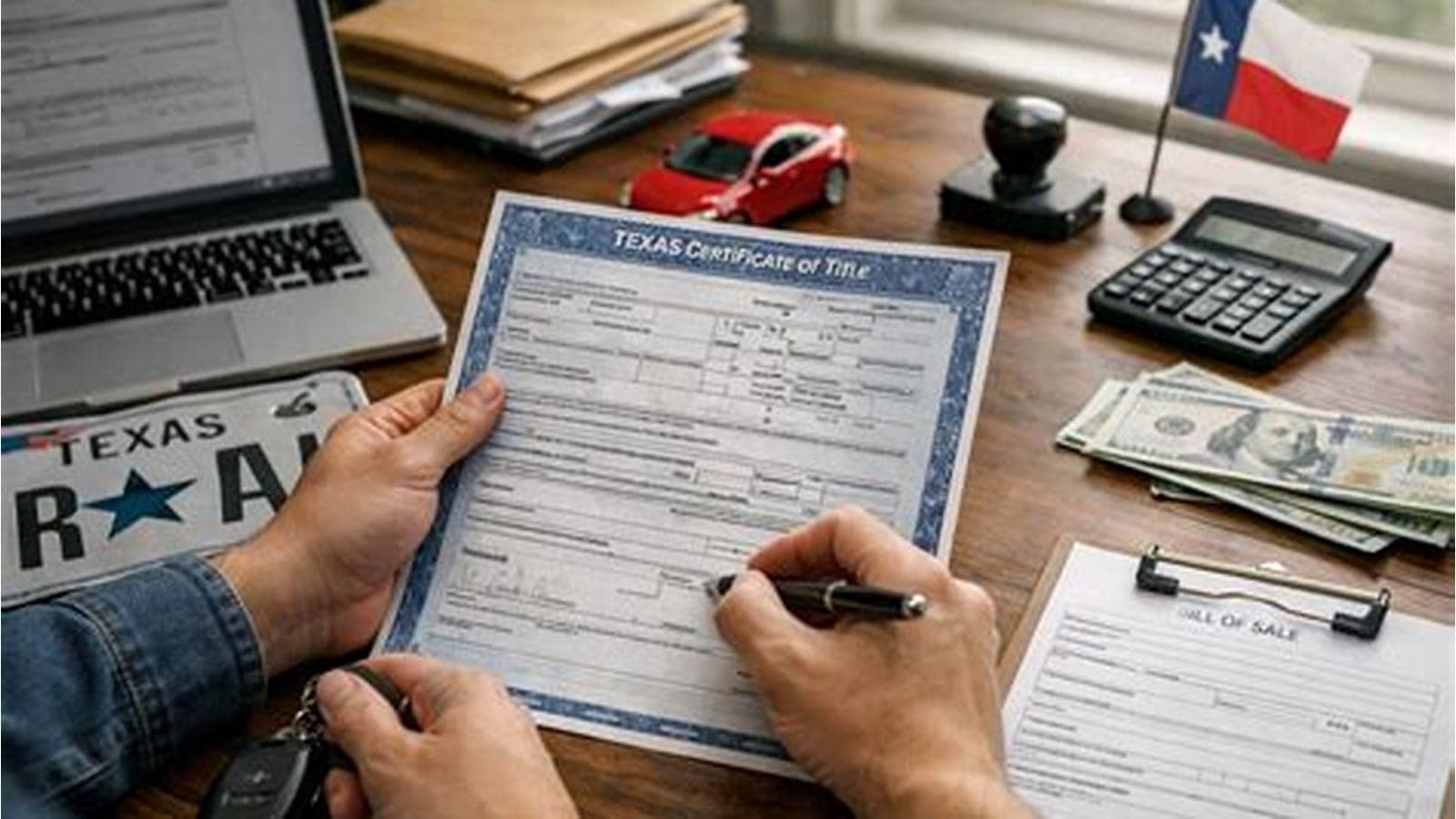
A purchase order car — the document that locks in price, trim, options, and VIN before money changes hands — is the moment your financing must be ready. If you walk in without a pre-approval, the F&I manager controls the entire conversation. Get pre-approvals from at least two sources: your primary bank or credit union, and one online lender such as LightStream or PenFed Credit Union. This takes about 20 minutes per application and typically generates a soft pull or a rate-shopping hard-inquiry window.
Under FICO's auto-loan rate-shopping logic, multiple hard inquiries for an auto loan within a 45-day window are treated as a single inquiry, per FICO's published scoring methodology. That means applying to four lenders in week one costs you no more credit-score damage than applying to one. Use that window aggressively. Once you have a written pre-approval rate in hand, you can use it as leverage — tell the dealer's F&I manager to beat it or you'll use your own financing. Sometimes they will. Sometimes they won't. Either way, you win.
- Apply to your credit union or bank first — members often get a loyalty rate discount of 0.25–0.50% APR.
- Check PenFed Credit Union, Consumers Credit Union, or USAA if you qualify — all have consistently competitive auto rates.
- Use the dealer's financing offer only if it genuinely beats your outside rate, not because the F&I manager says it will 'simplify things.'
- Confirm whether your pre-approval is a hard or soft pull before submitting — most credit unions disclose this on their application page.
- Lock in your pre-approval before visiting the lot; approvals typically remain valid for 30–45 days depending on the lender.
Leasing a Vehicle vs. Buying: Running the Real Numbers
The question of whether you should trade in your car for a lease comes up constantly, and the honest answer depends entirely on how many miles you drive and how long you keep cars. Leasing a vehicle vs. buying is not a values question — it's a math problem. A lease payment is lower because you're only financing the depreciation portion of the vehicle, not the full purchase price. On a $45,000 crossover with a residual value of 55% at 36 months, you're financing roughly $20,250 plus fees and interest (the money factor). That makes the monthly payment look attractive.
But leases carry mileage penalties — typically $0.15–$0.25 per mile over contract limits per most major captive lender agreements — and you hand the car back with zero equity. If you drive more than 12,000–15,000 miles per year, leasing often costs more over a three-year cycle than financing and selling privately. The Consumer Financial Protection Bureau (CFPB) notes that lease disclosures under the Consumer Leasing Act require the lessor to state the total amount due at signing and the total of scheduled payments, so read those figures, not just the monthly.
When a Lease Actually Makes Sense
Leasing wins when you drive under the mileage cap, you want a new car every two to three years, and you're buying a vehicle that depreciates slowly (making the residual favorable). It also works if you're self-employed and can deduct the lease payment as a business expense under IRS Publication 463 guidelines. If none of those apply to you, buying with a consumers auto loan and selling privately in five to six years almost always builds more net value — especially if you're not attached to always having the newest model-year trim.
What Is an Auto Advantage Loan and Is It Worth It?
Several credit unions and regional banks market products under names like 'Auto Advantage Loan' or 'Car Advantage' — the branding varies, but the core feature set is usually similar. These products typically bundle a competitive APR with one or more added perks: a rate discount for using the lender's car-buying service, GAP coverage included at no extra charge, or a payment-skip option once per year. Consumers Credit Union, for example, has offered an Auto Advantage product that includes a rate reduction when you use their partnered auto-buying service to locate the vehicle.
The value proposition depends on whether the bundled features are things you'd buy anyway. GAP coverage from a dealership typically costs $400–$900 added to your loan, according to industry pricing surveys cited by the CFPB. If your Auto Advantage loan includes it for free, that's genuine savings. If you weren't going to buy GAP at all — perhaps because your down payment already covers the depreciation gap — the feature is irrelevant. Read the term sheet, not the marketing name. The loan is only an advantage if the math says so.
The Credit Score Problem (And How to Fix It Before You Apply)
Your FICO Auto Score — yes, there's a version of FICO specifically calibrated for auto lending, distinct from your base FICO 8 — weighs your history with installment loans more heavily than general-purpose scores. Lenders almost universally pull this specialized score, so the number your credit card app shows you may be several points different from what the dealer's terminal sees. You can purchase your FICO Auto Score directly through myFICO.com for around $19.95 per score or as part of a monthly monitoring bundle.
Before applying for any auto loan, pull your credit reports from all three bureaus via AnnualCreditReport.com — the only site authorized under the Fair Credit Reporting Act (FCRA) to provide free reports. Dispute any inaccurate derogatory marks, because even a single mistaken late payment can drop you a full credit tier and cost you a percentage point of APR. Give yourself 60–90 days to resolve disputes before financing if your file looks messy.
What Dealers Won't Volunteer About Extended Warranties and Add-Ons
The F&I office exists to sell you financing and products, in that order. Extended warranties (correctly called Vehicle Service Contracts, or VSCs), tire-and-wheel protection, paint sealant, and the occasional 'dealership battery replacement program' are all profit centers. Adding a $2,500 VSC to your loan at 7% APR over 60 months costs you closer to $3,200 in real dollars after interest — a figure the finance manager is not required to state separately under current FTC Used Car Rule disclosures, though the FTC's updated Buyers Guide rule has expanded some disclosure requirements around fees.
The 'dealership battery' upsell — a battery replacement offered at signing as a 'protection package' — is perhaps the most naked example of F&I creativity. A quality AGM battery at retail costs $150–$250. The dealer version can run $400–$600 rolled into your loan. Decline everything in the F&I office on the first pass, then consider only the items you'd buy at retail price from an independent vendor. VSCs from third-party providers like Endurance or CARCHEX can often be purchased after closing, so you're never truly locked out of coverage.
Watch the Four-Square Worksheet
Some dealers still use the four-square method — a negotiation tactic that mixes purchase price, trade-in value, monthly payment, and down payment on one sheet to obscure the total cost of the deal. Negotiate each variable separately, in writing, and always confirm the out-the-door price before discussing financing terms. A purchase order car with an itemized breakdown is your protection.
Trade-In Versus Selling Private: Where the Money Actually Goes
Trading in your current vehicle at the dealership is convenient and tax-advantaged in most states — many states apply sales tax only to the net purchase price after the trade-in value is deducted, which can save $500–$1,500 on a mid-range trade depending on your state's sales tax rate and the trade-in value. That's a real, documented benefit. But dealers typically offer wholesale book value or below for trades, which per Black Book and Manheim auction data tends to run $1,500–$3,500 below private-party retail on a well-maintained used vehicle.
If your current vehicle is paid off and in good condition, selling it privately via Marketplace or CarGurus before purchasing frequently nets more money than the tax savings the trade-in provides. If you're underwater on your current loan — owing more than the car is worth — trading it in rolls negative equity into your new loan and inflates what you're financing. The CFPB has flagged negative equity roll-overs as a significant contributor to consumers being perpetually over-leveraged on auto debt. Run the VIN check on your own car's market value at least 30 days before negotiating.
Closing the Deal: The Final Checklist Before You Sign
Once you have your pre-approval rate, a negotiated out-the-door price on the purchase order car, and a clean vehicle history report in hand, the closing process should be the least stressful part of your day. Confirm that the APR, loan term, and monthly payment on the retail installment contract exactly match what was verbally agreed. Any discrepancy — even rounding — should stop the process. Under the Truth in Lending Act (TILA), the lender must disclose the APR, finance charge, amount financed, and total of payments in writing before you sign.
- Verify the APR, loan term, and monthly payment match your pre-approval or the rate the dealer agreed to beat.
- Confirm the out-the-door price matches the purchase order car you negotiated — check for any added fees not previously disclosed.
- Review every F&I add-on line by line and decline anything you didn't agree to before entering the finance office.
- Check that the vehicle's title status and NMVTIS history are clear — a vehicle history report before signing protects you from branded-title surprises.
- Confirm your first payment due date and set up autopay if your lender offers a rate discount (many credit unions reduce APR by 0.25% for automatic payment enrollment).
- Keep a copy of the signed retail installment contract; it is your legal record of every agreed term.
What to do next
Pull your credit report at AnnualCreditReport.com today, then apply for pre-approval at your credit union or a competitive online lender before you visit a single dealership. Walk in with a number in your pocket — everything else follows from that.
CarCheckerVIN Editorial Team
In-house automotive research team
The CarCheckerVIN editorial team combines decades of automotive industry, dealer, and journalism experience to produce trustworthy buying, selling, and ownership guidance backed by NMVTIS, NICB, and manufacturer data.
Frequently asked questions
- What is consumer credit union auto buying service?
- Many credit unions — including Consumers Credit Union — partner with auto-buying platforms like TrueCar or their own dealer networks to help members purchase vehicles at pre-negotiated prices. The service typically connects you to participating dealers willing to sell at a set discount off MSRP and may bundle a lower loan rate when you finance through the credit union. It's a legitimate shortcut that removes haggling, though you should still verify the out-the-door price independently.
- How to find credit score for auto loan?
- The score lenders use for auto loans is the FICO Auto Score, which is different from your standard FICO 8. You can purchase it directly at myFICO.com for around $19.95, or access it through some credit union member dashboards. For your underlying credit report — the data behind the score — visit AnnualCreditReport.com, the only site authorized under the Fair Credit Reporting Act to provide free reports from all three major bureaus.
- Is credit union a bank or what?
- A credit union is a member-owned financial cooperative, not a bank. Instead of returning profits to shareholders, it returns them to members through lower loan rates and fewer fees. Credit unions are chartered and regulated by either the National Credit Union Administration (NCUA) at the federal level or a state equivalent, and member deposits are insured up to $250,000 by the NCUA's Share Insurance Fund — the credit-union equivalent of FDIC coverage at banks.
- What is an auto advantage loan?
- An Auto Advantage Loan is a marketing name used by several credit unions and regional lenders — most notably Consumers Credit Union — for an auto loan product that bundles a competitive APR with perks like GAP coverage, a rate discount for using a partnered car-buying service, or payment flexibility options. The actual value depends on whether the bundled features offset any rate difference versus a plain loan. Always compare the effective APR and total cost, not just the label.
Ready to check a VIN?
Run a free VIN check
Decode any vehicle in under 60 seconds.