Used Car: Dealer vs Private Seller — Which One Actually Saves You More Money?
Buying from a dealer feels safe. Buying private feels cheap. The truth about which route actually saves you money is more nuanced than either side wants to admit.
On this page
- The Price Gap Is Real — But It's Not the Whole Story
- What Dealers Actually Give You for the Extra Money
- What Private Sellers Give You (Besides a Lower Price)
- The Tax Angle Most Buyers Forget
- The Risk Factor: Where Private Sales Get Expensive
- A Practical Framework: When to Choose Which
- Used Car Negotiation: Different Playbooks for Each
- The Bottom Line on Dollars Saved

You've found two identical 2019 Honda Civics. One is sitting on a dealer lot with a window sticker of $19,400. The other is on Facebook Marketplace for $16,200, photographed in someone's driveway with a toddler's car seat still visible. Your gut says private is the obvious win. Your spouse says the dealer is safer. And both of you are partly wrong. The dealer vs private seller used car debate has real financial stakes — we're talking thousands of dollars in price gaps, tax implications, and hidden costs that neither Craigslist sellers nor smiling salespeople are eager to explain.
60-second answer
Private party car sales typically save you 10–20% on the purchase price compared to dealers, but dealers may offer financing, warranties, and title handling that offset some of that gap. Your net savings depend on the specific deal, your state's tax rules, and how much homework you're willing to do yourself.
The Price Gap Is Real — But It's Not the Whole Story
Let's start with the number everyone cares about: sticker price. Data from Kelley Blue Book consistently shows that private party values run roughly 10–20% below dealer retail for the same vehicle in the same condition. On a $20,000 car, that's $2,000 to $4,000 in your pocket before you've negotiated a dime. The reason is simple economics. Dealers have overhead — rent, staff, reconditioning costs, advertising budgets, and that inexplicable popcorn machine in the waiting room. They need margin. A private seller just needs rent money or wants their driveway back.
But price is only one line on the receipt. Dealers bundle services into that higher sticker: vehicle reconditioning, a limited warranty (sometimes required by state law), title processing, and the ability to finance through their lender network. A private seller hands you a title and a handshake. Everything else — mechanical inspection, DMV paperwork, financing — is on you.
What Dealers Actually Give You for the Extra Money
Dealer vs private comparisons often gloss over the real benefits a franchise or independent dealer provides. Not all of these matter to every buyer, but they have genuine value when they do.
- Financing access: Dealers work with multiple lenders and can often get you approved in-house. Buying private usually means arranging your own loan through a bank or credit union — doable, but it adds a step and sometimes limits your options.
- State-mandated protections: Many states require dealers to provide a limited warranty or at least a clear disclosure of known defects. Private sellers in most states sell as-is, full stop.
- Title and registration handling: A dealer manages the title transfer, plates, and tax remittance. In a private party car sale, you and the seller are responsible for doing this correctly, and mistakes can be expensive.
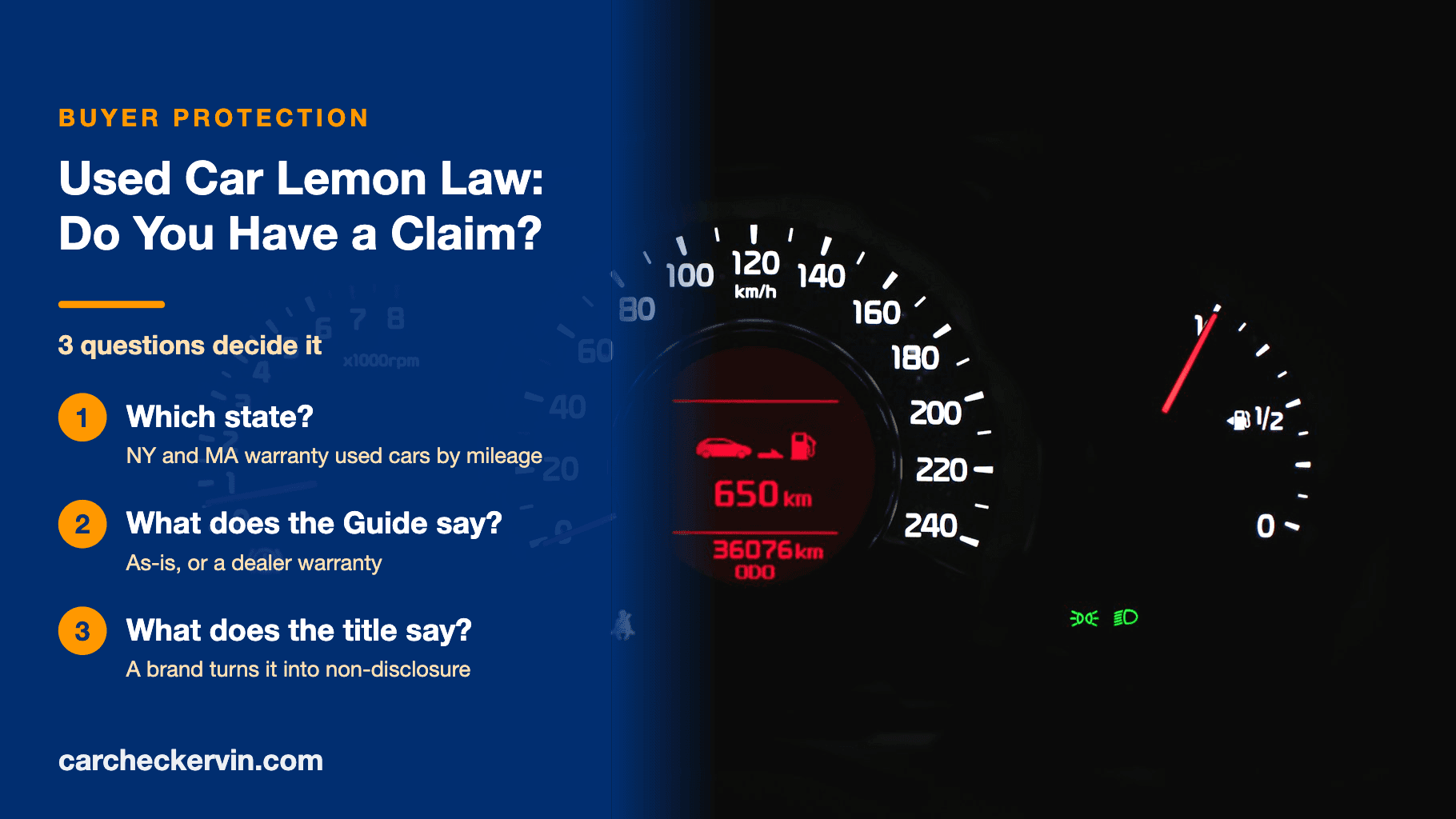
- Lemon law coverage: Where applicable, state lemon laws typically cover dealer sales but not private transactions. The FTC's Used Car Rule requires dealers to display a Buyers Guide — private sellers have no such obligation.
- Trade-in convenience: If you're dumping your current car, a dealer takes it off your hands in the same transaction. Selling privately to fund a private purchase means juggling two deals at once.
What Private Sellers Give You (Besides a Lower Price)
The advantages of buying from a private party go beyond that smaller number on the listing. You're often negotiating with someone who has actual emotional motivation to sell — they've already bought their next car, or they're moving, or they simply don't want to keep paying insurance on a vehicle collecting dust. That motivation translates into real leverage during used car negotiation. Dealers are trained to hold margin. A private seller who needs the car gone by Saturday is not.
You also get something dealers rarely offer: the unvarnished truth about the car's history. Ask a private owner why they're selling, and you'll often hear refreshingly honest answers — "the transmission shudders at 40 mph" or "my kid spilled a milkshake in the back seat and I've given up." A dealer's job is to make every trade-in look like a cream puff. The private seller's only job is to not get sued.
The Tax Angle Most Buyers Forget
Here's a sleeper factor: sales tax. In most states, you pay sales tax on a vehicle purchase regardless of whether you buy from a dealer or a private party. But the amount is based on the sale price (or fair market value, whichever your state uses). A lower private party price means lower tax. On a $4,000 price difference in a state with 7% sales tax, that's an extra $280 saved — not life-changing, but not nothing.
A handful of states handle it differently. Some tax based on book value regardless of what you actually paid, which erases this advantage. And if you're trading in at a dealer, many states let you deduct the trade-in value from the new purchase price before calculating tax — a perk you don't get in a private party car sale. Check your state's DMV guidelines before assuming one route is automatically cheaper.
The Risk Factor: Where Private Sales Get Expensive
Savings evaporate fast when a private purchase goes sideways. The "low-mileage" claim is the oldest trick in the book — odometer fraud still affects over 450,000 vehicles sold annually in the US, according to NHTSA estimates. Title washing, where a salvage or flood title is laundered through lenient state systems, remains a real problem tracked by NMVTIS and the NICB. A dealer purchase isn't immune to these issues, but dealers face regulatory scrutiny and reputational risk that a random Marketplace seller does not.
Don't skip the VIN check — ever
Whether you buy from a dealer or a private seller, run a VIN check before you commit. A vehicle history report from a provider connected to NMVTIS data will flag salvage titles, odometer discrepancies, open recalls, and lien records. This is especially critical in private sales where there's no dealer reputation on the line. Head to our vin-check page before you hand over a deposit.
A Practical Framework: When to Choose Which
Rather than declaring one channel universally better, match your situation to the right buying path.
- You have cash, mechanical knowledge, and time: Go private. You'll save the most money and can evaluate the car yourself. Arrange a pre-purchase inspection with an independent mechanic for $100–$200 as insurance.
- You need financing or a warranty: Go dealer. Securing a private-party auto loan is possible through banks and credit unions, but it adds friction. If you want a powertrain warranty or gap coverage, a dealer makes it simpler.
- You're buying a vehicle under $10,000: Private almost always wins here. Dealer fees and reconditioning costs eat a disproportionate share of the price on cheaper cars. A $7,000 car on a dealer lot might be a $5,200 car in someone's driveway.
- You're buying a late-model certified pre-owned vehicle: Dealer wins. CPO programs from manufacturers like Toyota, Honda, and Hyundai include extended factory warranties and multi-point inspections. You can't replicate that in a Walmart parking lot transaction.
- You have a trade-in: Dealer is more convenient, and the tax savings on a trade-in can close the price gap. But check what Carfax, KBB, and Edmunds say your trade is worth privately — sometimes selling it yourself and buying privately nets the biggest total savings.
Used Car Negotiation: Different Playbooks for Each
Negotiating with a dealer and negotiating with a private seller require different approaches. At a dealer, your leverage comes from competing offers, pre-approved financing from your own bank, and a willingness to walk. Dealers expect negotiation — their first offer is almost never their best. Ask for an out-the-door price that includes all fees, and compare it to what you'd pay privately after arranging your own tax, title, and registration.
With a private seller, your leverage is speed and simplicity. Sellers want a fast, clean transaction. Show up with cash or a pre-approved cashier's check, bring a printed VIN report showing any issues, and make a fair offer based on KBB or Edmunds private party value. Don't lowball aggressively — private sellers take it personally, and you'll lose the deal to someone who doesn't. A respectful offer 5–10% below asking, backed by data, closes more deals than hardball ever will.
The Bottom Line on Dollars Saved
On pure purchase price, private sellers win almost every time. But "cheapest sticker" and "best value" aren't always the same thing. A dealer purchase that includes a 90-day warranty, proper title handling, and peace of mind can be worth the premium — especially if you're not the type to crawl under a car with a flashlight or enjoy DMV visits. The smartest buyers in the dealer vs private debate don't pick a side religiously. They pick the deal. Sometimes that's a meticulously maintained private-seller Camry. Sometimes it's a CPO Mazda3 from a reputable franchise dealer. What separates a good buy from a regret is the homework you do before signing anything — starting with a vehicle history report and ending with a mechanic's thumbs-up.
What to do next
Before you commit to any used car — dealer lot or driveway — run the VIN through our vin-check tool. It pulls NMVTIS-sourced data on title brands, accident history, odometer records, and open recalls. A ten-dollar report now can save you thousands later. Check our pricing page for current plan options.
CarCheckerVIN Editorial Team
In-house automotive research team
The CarCheckerVIN editorial team combines decades of automotive industry, dealer, and journalism experience to produce trustworthy buying, selling, and ownership guidance backed by NMVTIS, NICB, and manufacturer data.
Ready to check a VIN?
Run a free VIN check
Decode any vehicle in under 60 seconds.