Buying a Repossessed Car: The VIN Check That Saves You Thousands
Bank repo cars can be genuine bargains — or expensive mistakes. A thorough VIN check is the single step that separates the two. Here's your field guide.
Check the car you're reading about
Free VIN decode and recall check
Factory specs and open NHTSA recalls in seconds. No sign-up.
On this page· 7
- Why Repo Cars Exist (and Why Banks Want Them Gone)
- What a VIN Check Actually Pulls on a Repo
- The 'Low-Mileage' Lie and Other Repo Auction Traps
- How to Run a VIN Check Before a Repo Auction
- What a Clean VIN Report Looks Like on a Good Repo Deal
- Beyond the VIN: Other Due Diligence for Repo Buyers
- Financing and Insurance Quirks on Repos
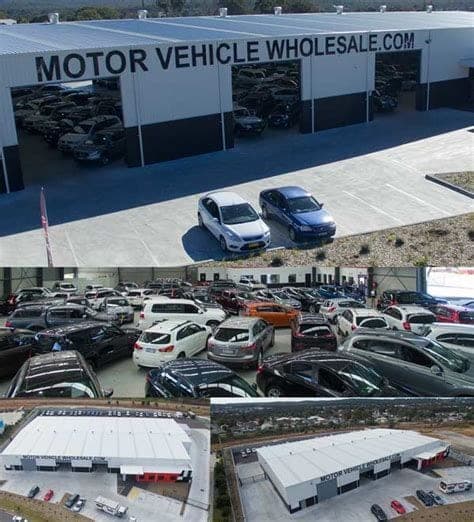
You've spotted a three-year-old sedan at a bank repo auction for forty percent below KBB retail. The paint looks decent, the tires still have tread, and the auctioneer is talking fast. Your pulse quickens. This is the part where most buyers reach for their bidder paddle — and where the smart ones reach for a VIN instead. A repossessed vehicle might be the best deal on the used-car market, or it might be a rolling collection of deferred maintenance, hidden liens, and odometer tricks. The difference between those outcomes almost always comes down to one thing: whether you ran the numbers before you raised your hand.
60-second answer
Always run a repo car VIN check before bidding. It pulls title history, lien records, accident reports, and odometer readings from sources like NMVTIS — the kind of information a repo auction will almost never volunteer. Five minutes of research can prevent thousands of dollars in regret.
Why Repo Cars Exist (and Why Banks Want Them Gone)
When a borrower defaults on an auto loan, the lender repossesses the vehicle. The bank has zero interest in storing, maintaining, or insuring that car a day longer than necessary. That urgency is your leverage — and your risk. Banks typically offload inventory through wholesale auctions like Manheim and ADESA, through public auction houses, or increasingly through online platforms. The pricing is aggressive because the lender just wants to recover as much of the outstanding loan balance as possible. They are not in the car business, and they act like it.
Here's the wrinkle: the bank knows almost nothing about what happened to that car between the day they funded the loan and the day the tow truck hauled it away. Did the previous owner skip every oil change? Crash it and pocket the insurance payout? Roll back the odometer before a trade-in attempt? The bank doesn't know, the auction doesn't know, and they have little legal obligation to find out. That information gap is exactly what a repo car VIN check fills.
What a VIN Check Actually Pulls on a Repo
A proper vehicle history report queries NMVTIS — the National Motor Vehicle Title Information System, administered by the U.S. Department of Justice — along with insurance-loss databases, state DMV records, and auction data from Copart and IAA. When you run a VIN for a bank repo car, you're looking for several specific red flags that are disproportionately common in the repo channel.
- Title brands: Salvage, rebuilt, flood, or junk designations that may have been washed through a title transfer to another state.
- Outstanding liens: Just because a bank repossessed the car doesn't mean every lien is cleared. Secondary liens from mechanics, storage facilities, or other lenders can follow the vehicle to the new owner.
- Odometer discrepancy: NHTSA estimates over 450,000 vehicles are sold each year with rolled-back odometers. Repos are prime candidates because the previous owner had every incentive to inflate the car's apparent value.
- Accident and insurance claims: Even minor collision history affects structural integrity and resale value. Reports pull data from insurance carriers and police records.
- Recall status: NHTSA's recall database ties directly to the VIN. An open recall on a repossessed vehicle means nobody completed the free repair — and you inherit the safety risk.
The 'Low-Mileage' Lie and Other Repo Auction Traps
The 'low-mileage repo' is one of the oldest tricks in the book. A car gets repossessed, and the listing shows 38,000 miles on a five-year-old vehicle. Sounds too good to be true? Sometimes it is. The previous owner — who was already defaulting on payments — may have tampered with the odometer or swapped a digital cluster from a lower-mileage donor car. A VIN check cross-references mileage readings from every inspection, emissions test, and service record on file. If the car showed 67,000 miles at its last state inspection and now reads 38,000, you'll see the discrepancy in black and white.
Another common trap: title washing. A vehicle gets a salvage brand in one state, the owner transfers the title to a state with laxer branding laws, and the salvage history vanishes from the face of the paper title. NMVTIS was created specifically to combat this. When you run a repo car VIN check through a service that queries NMVTIS, that original salvage brand shows up regardless of how many state lines the title has crossed.
Buyer beware: auction terms are not your friend
Most repo auctions sell vehicles 'as-is, where-is' with no warranty and no return policy. Some don't even let you start the engine before bidding. A VIN report is often the only objective evidence you'll have. Treat it like the pre-purchase inspection you can't get.
How to Run a VIN Check Before a Repo Auction
The process is straightforward, but timing matters. Many auction houses publish their inventory lists — including VINs — one to seven days before the sale. That window is your research phase. Here's how to use it.
- Get the VIN from the auction listing, the dashboard plaque (visible through the windshield), or the driver-side door jamb sticker. If the auction won't provide a VIN before sale day, that alone should give you pause.
- Run the VIN through a vehicle history service. Our VIN check page pulls NMVTIS data, title records, and lien information into a single report. Carfax and AutoCheck are other options, though coverage varies by provider.
- Cross-reference the odometer reading on the auction sheet with the mileage history in the report. Any gap, rollback, or 'not actual mileage' notation is a deal-breaker unless you're buying the car for parts.
- Check for open recalls on NHTSA's free lookup tool at nhtsa.gov/recalls. If the car has an unrepaired Takata airbag recall, for instance, you're looking at a genuine safety hazard.
- Verify lien status. If the report shows a lien that wasn't released by the selling bank, contact the lienholder before bidding. Buying a car with an unresolved lien is buying someone else's debt.
What a Clean VIN Report Looks Like on a Good Repo Deal
Not every repossessed vehicle is a minefield. Plenty of repos are simply late-model cars whose owners hit financial trouble — job loss, medical bills, divorce. The car itself is mechanically sound. A clean VIN report on a bank repo car will show a consistent chain of title with no brands, odometer readings that climb logically at each recorded event, no insurance total-loss claims, and a single lien from the repossessing bank that will be released at sale. When you see that profile on a car priced well below Edmunds or KBB private-party value, you've found the real deal. They do exist — you just need the data to confirm it.
Beyond the VIN: Other Due Diligence for Repo Buyers
A VIN check is essential, but it's not the only homework worth doing. If the auction allows a preview period, bring an OBD-II scanner and check for stored diagnostic codes. Look under the car for rust, fluid leaks, and mismatched undercoating that might hide collision damage. Check every body panel gap — uneven gaps suggest prior bodywork that may not appear in insurance records if the owner paid out of pocket. And always set a maximum bid before you walk in. Auction fever is real, and it has separated many a buyer from their budget.
If you're shopping online through platforms that sell auction repo inventory directly to consumers, the same rules apply. The VIN is listed on the page. Copy it, run it, read the report. The five minutes you spend now replaces the five months you'd spend arguing with a mechanic later.
Financing and Insurance Quirks on Repos
One more thing worth mentioning: some lenders are skittish about financing vehicles with salvage or rebuilt titles, and some insurers won't write comprehensive coverage on them. If your auction repo VIN check reveals a title brand, factor that into your total cost of ownership. A car you can't insure properly or finance at a reasonable rate isn't actually a bargain — it's a headache with wheels.
What to do next
Before you bid on any repossessed vehicle, grab the VIN and run it through our VIN check page. You'll see title brands, lien records, odometer history, and accident data in one report — the same information dealers use to decide what's worth buying. It takes less time than the auctioneer spends on his opening patter, and it's worth infinitely more.
About the author
CarCheckerVIN Editorial Team
In-house automotive research team
The CarCheckerVIN editorial team combines decades of automotive industry, dealer, and journalism experience to produce trustworthy buying, selling, and ownership guidance backed by NMVTIS, NICB, and manufacturer data.
See more of our guides on Google
Add CarCheckerVIN as a preferred source and Google will show our guides more often in your results.

Keep reading
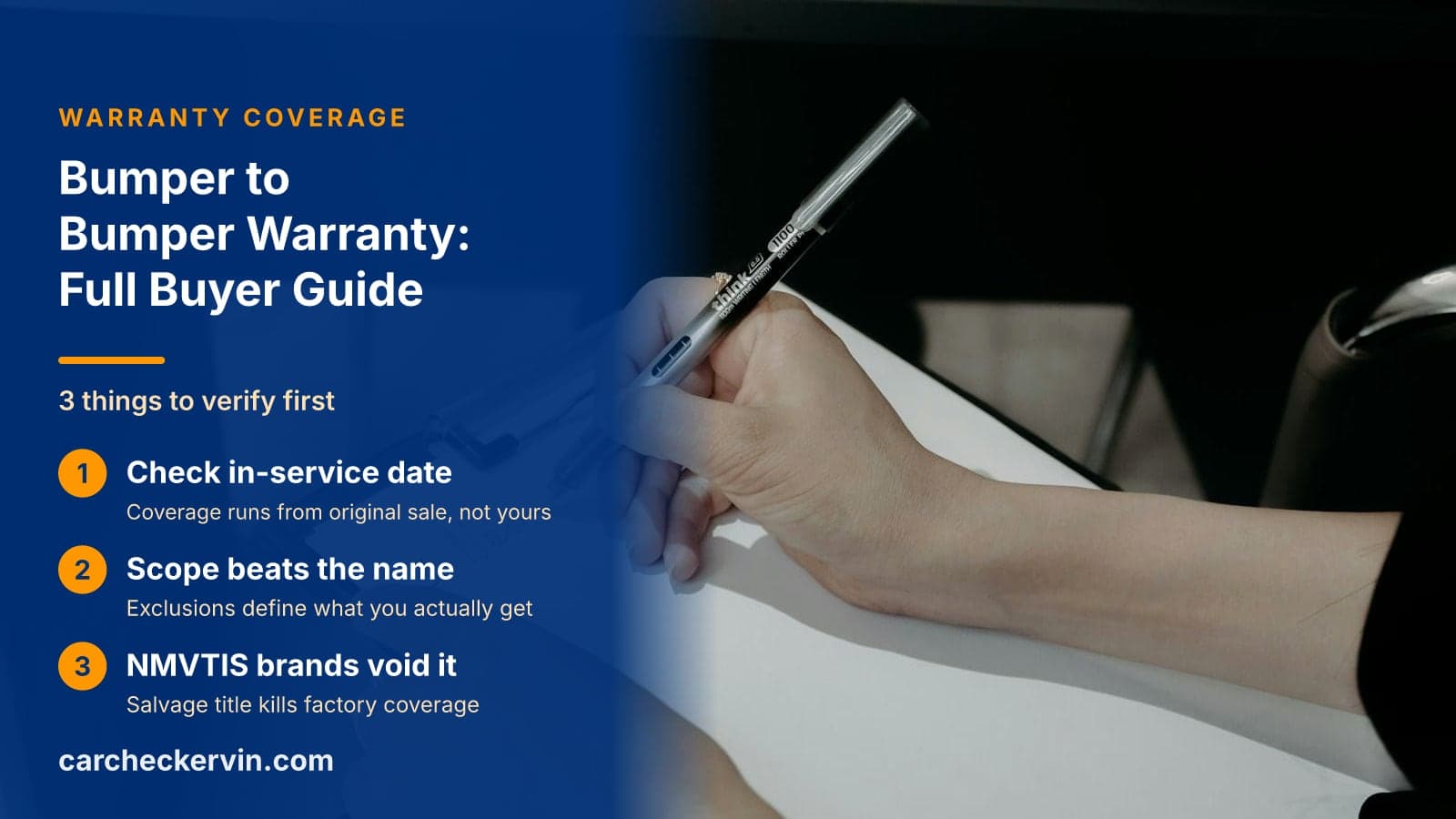
Bumper to Bumper Warranty: What It Covers, What It Doesn't, and Whether to Buy Extra
A bumper to bumper warranty sounds complete, but the exclusions can cost you thousands. Here's exactly what's covered, what isn't, and how to decide if extended coverage is worth the price.
Oct 26, 2026 · 8 min read
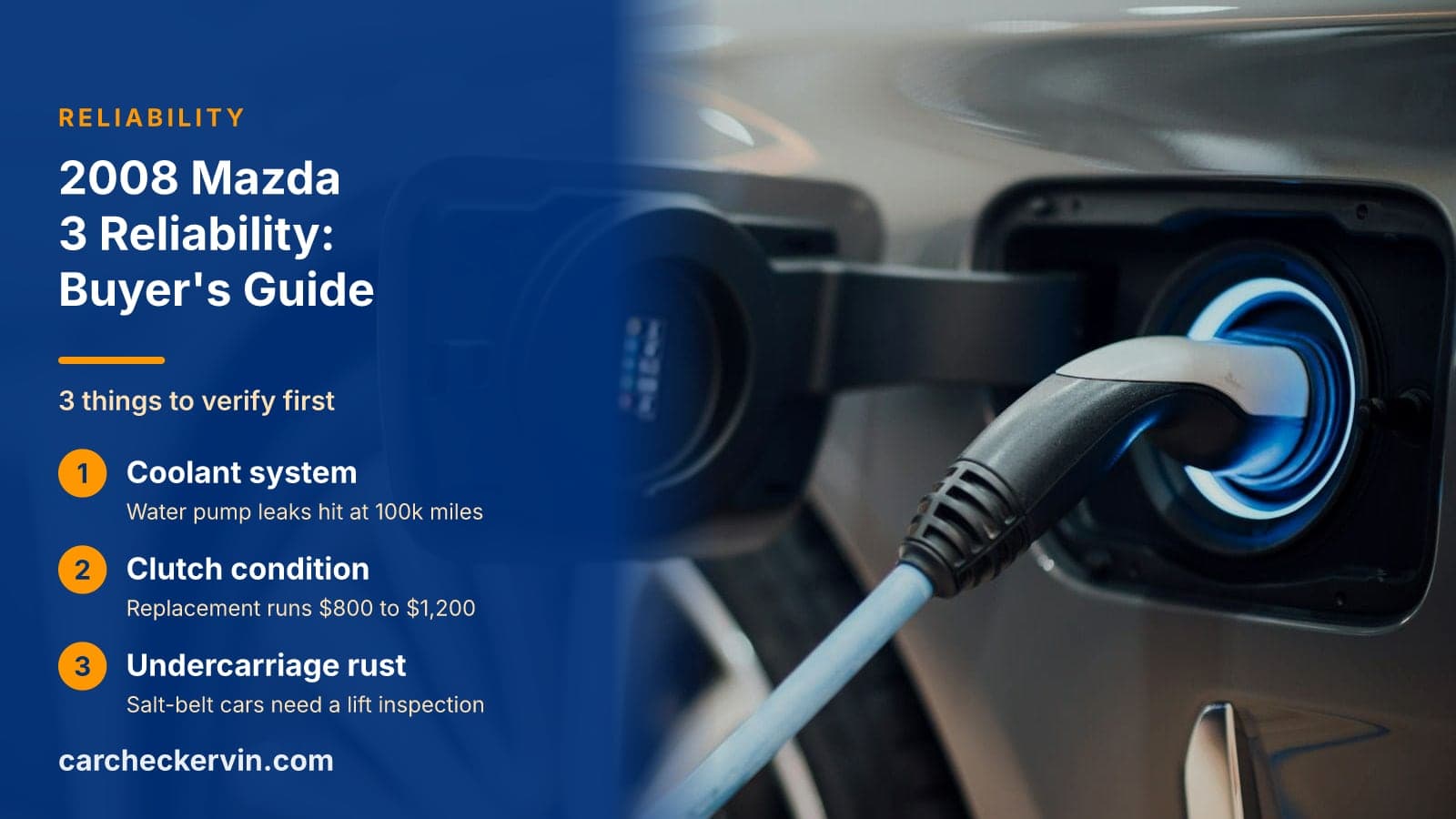
2008 Mazda 3 Reliability: What Every Buyer Needs to Know Before Handing Over Cash
The 2008 Mazda 3 has a strong reliability record, but a handful of recurring problems can turn a bargain into a money pit. Here's exactly what to check before you buy.
Oct 26, 2026 · 10 min read
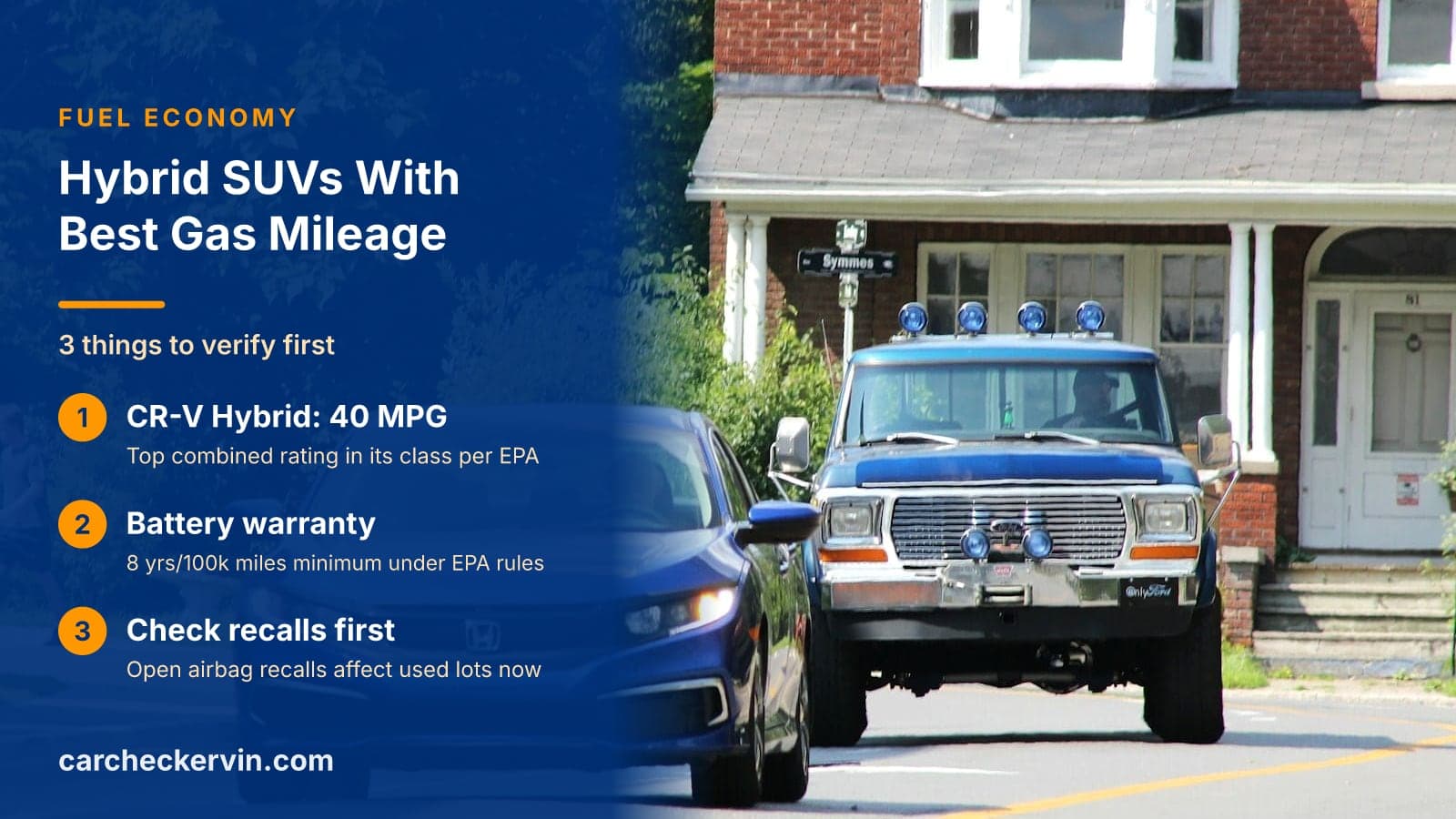
Hybrid SUVs With Best Gas Mileage: The Buyer's Field Guide
Shopping for a fuel-sipping SUV? This field guide ranks the top hybrid SUVs by real-world MPG, flags hidden costs, and tells you exactly what to verify before you buy.
Oct 25, 2026 · 10 min read