EV Battery Health: What Your VIN Report Can (and Can't) Tell You
VIN reports catch recalls, salvage titles, and crash records on used EVs—but battery state-of-health data remains a blind spot. Here's how to fill the gap before you buy.
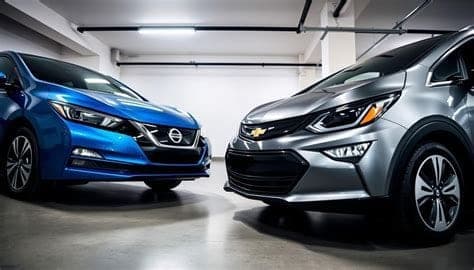
The used EV market is expanding at a pace that would have seemed implausible five years ago: Cox Automotive data shows that used electric vehicle sales in the U.S. topped 330,000 units in 2023, roughly double the figure from 2021, and average transaction prices have dropped enough—about $28,700 on Edmunds' index—to pull in first-time EV shoppers who are understandably nervous about the one component that dominates resale value: the battery pack. A replacement pack for a Tesla Model 3 can run $13,000 to $20,000 at a Tesla service center, and a Chevrolet Bolt EV pack replacement has been quoted in the $16,000–$26,000 range depending on labor and parts availability. That single line item makes ev battery vin history the most consequential search a buyer can run, yet few people understand what a VIN-based report actually surfaces—and, more importantly, what it leaves out.
60-second answer
A VIN report can tell you whether a used EV has been in a major collision, carries a salvage or flood title, or is subject to an open battery-related recall—all of which directly affect battery longevity. What it cannot tell you is the pack's current state of health (SoH), its exact cycle count, or the percentage of original capacity remaining. You need diagnostic tools or a manufacturer portal for that data.
What a VIN Report Actually Covers on an EV
VIN-based vehicle history reports—whether sourced through CarCheckerVIN's own vin-check tool, Carfax, or AutoCheck—pull from a web of data that includes the National Motor Vehicle Title Information System (NMVTIS), state DMV title records, insurance company total-loss filings reported through entities like the National Insurance Crime Bureau (NICB), and auction records from salvage yards such as Copart and IAA. For any vehicle, electric or otherwise, these databases are remarkably thorough at capturing the paper trail that follows a car from factory to junkyard. On a used EV, that paper trail can expose several battery-critical red flags.
- Title brands: A flood-damage or salvage title is especially damaging for an EV because lithium-ion packs are vulnerable to submersion—water intrusion can cause internal short circuits, thermal runaway risk, and irreversible capacity loss that may not manifest immediately.
- Accident history: A side- or undercarriage-impact recorded through insurance claims or police reports may indicate the battery enclosure was compromised, even if the car was repaired and returned to service.
- Open recalls: NHTSA's recall database, searchable by VIN, tracks every safety recall, and EV-specific campaigns have surged—NHTSA issued recalls affecting millions of EVs between 2020 and 2024, including the massive Bolt EV recall (NHTSA Campaign 21V-560) covering roughly 141,000 vehicles over battery fire risk, and multiple Tesla recalls addressing thermal management software.
- Odometer readings: Under 49 U.S.C. § 32703, sellers must disclose accurate mileage. High mileage on an EV doesn't necessarily signal a worn pack—highway miles are gentler on lithium-ion cells than repeated DC fast charges—but it provides a baseline for estimating cycle count.
The Battery Health Blind Spot
Here is the uncomfortable truth that no VIN report vendor will volunteer: no commercially available vehicle history report currently includes battery state-of-health data. The reason is structural. State-of-health percentage, maximum charge capacity in kilowatt-hours, and lifetime fast-charge count are stored in the battery management system (BMS) onboard the vehicle, not in any government or insurance database that feeds NMVTIS or similar aggregators. Manufacturers like Tesla, Rivian, and Hyundai collect telematics from connected vehicles, but they do not share pack-level degradation metrics with third-party report providers. Tesla's internal service tools can display lifetime energy throughput and cell-group voltage balance, but that information stays behind Tesla's firewall unless a service advisor chooses to share it—and for used ev buying through a private party, that rarely happens.
This gap matters because battery degradation is nonlinear and highly dependent on usage patterns. A 2021 Model Y with 40,000 miles driven mostly on Level 2 home charging in a temperate climate could retain 95% of its original capacity, while an identical car used as a rideshare vehicle in Phoenix—charged repeatedly on Superchargers in 110°F heat—might sit at 85% or lower. The VIN report for both cars could look identical: clean title, no accidents, no recalls. The $4,000-to-$8,000 difference in real-world battery value between them is simply invisible in the report.
How to Fill the Gap: Diagnostic Tools and OBD Readers
Because the VIN paper trail falls short on battery health, serious buyers need to layer in a direct diagnostic check. Several aftermarket tools have emerged specifically for this purpose, and they range from free to moderately priced.
- Run a full VIN report first. Check the pricing page on CarCheckerVIN to pull title history, accident records, and open ev recall vin data before spending time on a physical inspection. If the report shows flood damage, a salvage title, or an unresolved battery recall, you can walk away before touching a diagnostic plug.
- Use an OBD-II scanner with EV-specific software. Apps such as Recurrent (which tracks battery range over time using telematics) or A Better Route Planner's battery health estimator provide crowd-sourced degradation data. For Tesans specifically, the Scan My Tesla app paired with an OBD-II adapter can read individual cell voltages, lifetime energy, and state-of-health percentage directly from the BMS.
- Request a manufacturer battery health report. Some OEMs are beginning to offer formal battery condition certificates. Hyundai and Kia, for instance, have rolled out battery health certificate programs through select dealers. Tesla does not yet offer a consumer-facing equivalent, though a tesla vin check through Tesla's online service portal can confirm warranty status and recall completion.
- Commission a pre-purchase inspection from an EV-certified mechanic. Shops that specialize in EVs can perform a full pack diagnostic, including checking for cell imbalance—where individual cell groups diverge in voltage, a leading indicator of near-term capacity loss.
Recalls, Warranty, and What the VIN Does Confirm
While battery degradation data remains elusive, the VIN report's ability to surface recall history should not be underestimated. NHTSA's recall lookup—free at nhtsa.gov/recalls and also integrated into CarCheckerVIN's reports—is the single fastest way to determine whether a specific EV has an unresolved safety campaign. The aforementioned Chevrolet Bolt recall is a case study: General Motors ultimately expanded the campaign to cover every Bolt EV and EUV ever produced—approximately 142,000 vehicles—and offered battery replacements that actually increased usable capacity. A buyer who runs the VIN and finds the recall completed is, paradoxically, getting a better battery than the car shipped with originally. A buyer who finds the recall still open has leverage to negotiate the price down or demand completion before closing.
Federal law under the Magnuson-Moss Warranty Act (15 U.S.C. §§ 2301–2312) requires that manufacturer warranties transfer to subsequent owners, and most EV makers provide battery-specific coverage—Tesla offers 8 years or 120,000 miles on Model 3 and Y packs with a 70% retention guarantee, while Hyundai covers the Ioniq 5 pack for 10 years or 100,000 miles. A VIN report can confirm the vehicle's model year and mileage, letting buyers calculate how much warranty runway remains. That calculation alone can be worth thousands of dollars in risk reduction.
Watch for 'title washing' on flood-damaged EVs
After major hurricanes, flood-damaged EVs sometimes resurface in states with weaker title-branding requirements—a practice known as title washing. Because water damage to a lithium-ion pack can create fire risk months after the event, always run a VIN check through a provider that queries NMVTIS and NICB theft/loss records. A clean title in one state does not guarantee the car was never branded in another.
The Market Is Moving—Slowly—Toward Transparency
The European Union's forthcoming Battery Passport regulation, expected to take effect in 2027, will require every EV battery sold in the EU to carry a digital record of its chemistry, manufacturing origin, and state-of-health history. No equivalent federal mandate exists in the United States yet, though California's Advanced Clean Cars II regulation and the EPA's emissions-related data requirements are inching toward standardized battery reporting. Until U.S. regulators catch up, the burden falls on buyers to assemble a composite picture: VIN report for the paper trail, diagnostic scan for the electrochemistry, and warranty verification for the financial backstop.
Putting It All Together Before You Buy
The smartest approach to used ev buying treats the VIN report and the battery diagnostic as complementary, not interchangeable. The VIN report answers the questions that databases can answer—has this car been wrecked, flooded, stolen, or recalled?—and those answers directly affect battery risk even if they don't quantify degradation in kilowatt-hours. The diagnostic scan answers the question that only the car's own electronics can answer: how much capacity is left right now? Skipping either step is a gamble, and on a vehicle where the battery represents 30% to 50% of total value, that gamble can cost five figures.
What to do next
Start by running a VIN check on any used EV you are considering—this catches title brands, accidents, and open recalls that directly threaten battery integrity. Then pair those results with an OBD-II diagnostic or a manufacturer battery health certificate before you negotiate a price. The VIN report is the foundation; the diagnostic scan is the second story. You need both.
CarCheckerVIN Editorial Team
In-house automotive research team
The CarCheckerVIN editorial team combines decades of automotive industry, dealer, and journalism experience to produce trustworthy buying, selling, and ownership guidance backed by NMVTIS, NICB, and manufacturer data.
Ready to check a VIN?
Run a free VIN check
Decode any vehicle in under 60 seconds.