Buying a Used Car on Facebook Marketplace: 7 VIN Red Flags
Facebook Marketplace has overtaken Craigslist for private car sales — and so have the scams. These are the seven VIN-related red flags every buyer should check.
Check the car you're reading about
Free VIN decode and recall check
Factory specs and open NHTSA recalls in seconds. No sign-up.
On this page· 9
- Red flag 1: No VIN visible in the listing
- Red flag 2: Stock photos instead of the actual car
- Red flag 3: Title issues mentioned only in private messages
- Red flag 4: Seller's profile is brand new or sparsely populated
- Red flag 5: VIN history shows recent state changes
- Red flag 6: Seller insists on cash and refuses any other payment method
- Red flag 7: Pressure to skip the pre-purchase inspection
- The Marketplace-specific verification stack
- If you've already been scammed
Facebook Marketplace has quietly overtaken Craigslist as the dominant US platform for private-party used car sales — and the scam ecosystem has followed. Marketplace's tight integration with personal Facebook profiles gives some buyers a false sense of security: 'This guy has 400 friends and family photos, he can't be a scammer.' That's exactly what makes Marketplace scams effective.
Here are the seven VIN-related red flags that come up over and over in Marketplace listings. Any one of them is enough reason to ask harder questions before you drive to see the car.
60-second answer
The VIN should be in the listing photos (a clear shot of the dashboard plate). The seller's name should match the title. The car should be currently registered. The price should be within 15% of comparable listings. The seller should accept a pre-purchase inspection. If any of those four are off, ask why before you drive to see the car.
Red flag 1: No VIN visible in the listing
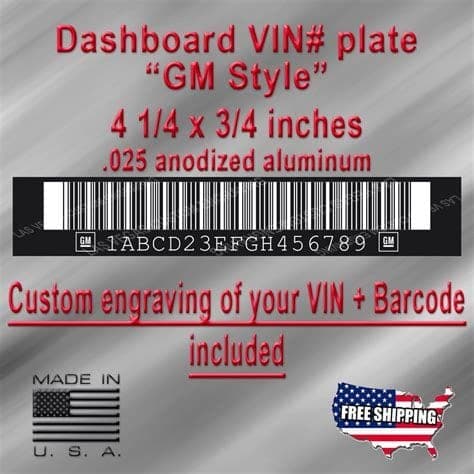
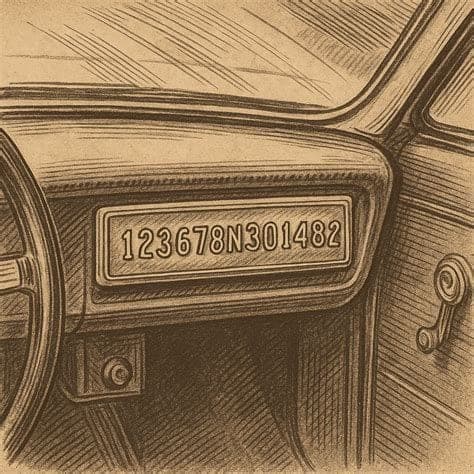
Legitimate private sellers in 2026 have learned to put the VIN — usually a photo of the dashboard plate — directly in their listing photos. It signals seriousness and lets buyers run a history report before driving across town. A listing with no VIN visible isn't necessarily a scam, but you should ask for the VIN before scheduling a viewing. If the seller refuses to share it ('I don't want my car cloned'), end the conversation. VINs are visible to anyone walking past the car on a public street; refusing to share one signals something else is wrong.
Red flag 2: Stock photos instead of the actual car
Marketplace listings using only manufacturer press photos, dealer stock images, or photos with watermarks from other sellers are almost always either scams (no car exists) or relisted dealer inventory (you're not buying from the title holder). Ask the seller to text you photos that include a small handwritten sign with today's date — that takes 30 seconds for a real seller and is impossible for a scammer with stolen photos.
Red flag 3: Title issues mentioned only in private messages
A common pattern: the listing says 'clean title' but in the first private message the seller mentions 'oh, it has a salvage title but it drives perfect' or 'the title is in my brother's name but I have power of attorney.' Both of those should trigger a hard no — not because every salvage car or every power-of-attorney sale is fraudulent, but because the seller already lied in the public listing. If they'll lie about the title status, what else are they lying about?
Red flag 4: Seller's profile is brand new or sparsely populated
Click through to the seller's Facebook profile. A profile created in the last 90 days, with fewer than 50 friends, no tagged photos, and a 'lives in' location that doesn't match the listing's city is the classic scam profile. Real local sellers usually have years-old profiles, school/work history that matches the listing area, and mutual friends with at least one of your connections.
Red flag 5: VIN history shows recent state changes
When you run a VIN history report on a Marketplace listing, look at the state-by-state title history. A car with five different states in the last three years is being commercially flipped — even if the current seller is presenting as a private party. The car was probably bought at a wholesale auction, driven across the country, and is being resold for a margin. That's not illegal, but it usually means the seller knows much less about the car's actual condition than they claim.
Red flag 6: Seller insists on cash and refuses any other payment method
Cashier's checks can be verified directly with the issuing bank in 10 minutes. ACH transfers are reversible for fraud. Escrow services exist specifically for high-value private-party transactions. A seller who refuses every option except physical cash is usually flagging that the title transfer is going to be ugly — fast cash now, then they're gone before you discover the problem.
Counterpoint: many legitimate private sellers prefer cash too. The combination to worry about is cash-only AND any other red flag from this list.
Red flag 7: Pressure to skip the pre-purchase inspection
Any honest seller of a used car will allow a buyer to take the car to an independent mechanic for a pre-purchase inspection (PPI). Reasonable conditions are normal: the buyer pays the inspection fee, the seller drives the car to a mutually agreed location, and the seller is present during the inspection. Sellers who refuse PPIs entirely, demand a non-refundable deposit before the PPI, or insist on using 'their guy' as the inspector are signaling that the car won't pass an honest inspection.
The 'I'm out of state, just send the money' scam
This one targets Marketplace buyers specifically. Listing looks great, photos check out, profile seems legitimate. First message: 'I'm working out of state for the next two weeks, my cousin has the car. Just send a deposit and I'll have a transport service deliver it.' Never. Never wire money for a car you haven't seen in person, regardless of how convincing the story is.
The Marketplace-specific verification stack
- Get the VIN from the listing or by asking. Run a free NHTSA VIN decoder check (vpic.nhtsa.dot.gov) to confirm year/make/model match the listing.
- Run an NMVTIS-backed history report on the VIN. Look for title brands, accident records, state history, and odometer trajectory.
- Click through to the seller's Facebook profile. Check profile age, friends count, mutual friends, and location consistency.
- Schedule an in-person viewing at the seller's home address (or a public location like a police-station meet-up spot in their city — most police departments have a designated parking area for private-party sales).
- Inspect the car. Match all VIN locations (dashboard, door jamb, engine block, title) and seller ID to the name on the title.
- Have an independent mechanic do a pre-purchase inspection before any money changes hands.
- Pay at a bank, with the title transferred in front of you, in exchange for a cashier's check made out to the seller by name.
If you've already been scammed
File a report with the FTC (reportfraud.ftc.gov), your state attorney general's consumer protection division, the local police department in the seller's claimed location, and Facebook (Marketplace > Help > Report). The probability of recovering the money is low, but each report adds to the evidence trail if the scammer is eventually prosecuted.
What to do next
If you're shopping Marketplace, build a quick checklist on your phone: VIN visible in listing, NHTSA decoder match, NMVTIS history report clean, seller profile mature, in-person viewing scheduled, PPI agreed to, payment via cashier's check. Anything that fails closes the deal for you.
About the author
CarCheckerVIN Editorial Team
In-house automotive research team
The CarCheckerVIN editorial team combines decades of automotive industry, dealer, and journalism experience to produce trustworthy buying, selling, and ownership guidance backed by NMVTIS, NICB, and manufacturer data.
Keep reading

Consumers Auto Loan: How to Finance Your Next Car Without Getting Burned
A consumers auto loan is the single biggest variable in your car deal — bigger than the sticker price. Here's how to lock in the best rate before you ever step on a lot.
Oct 16, 2026 · 10 min read
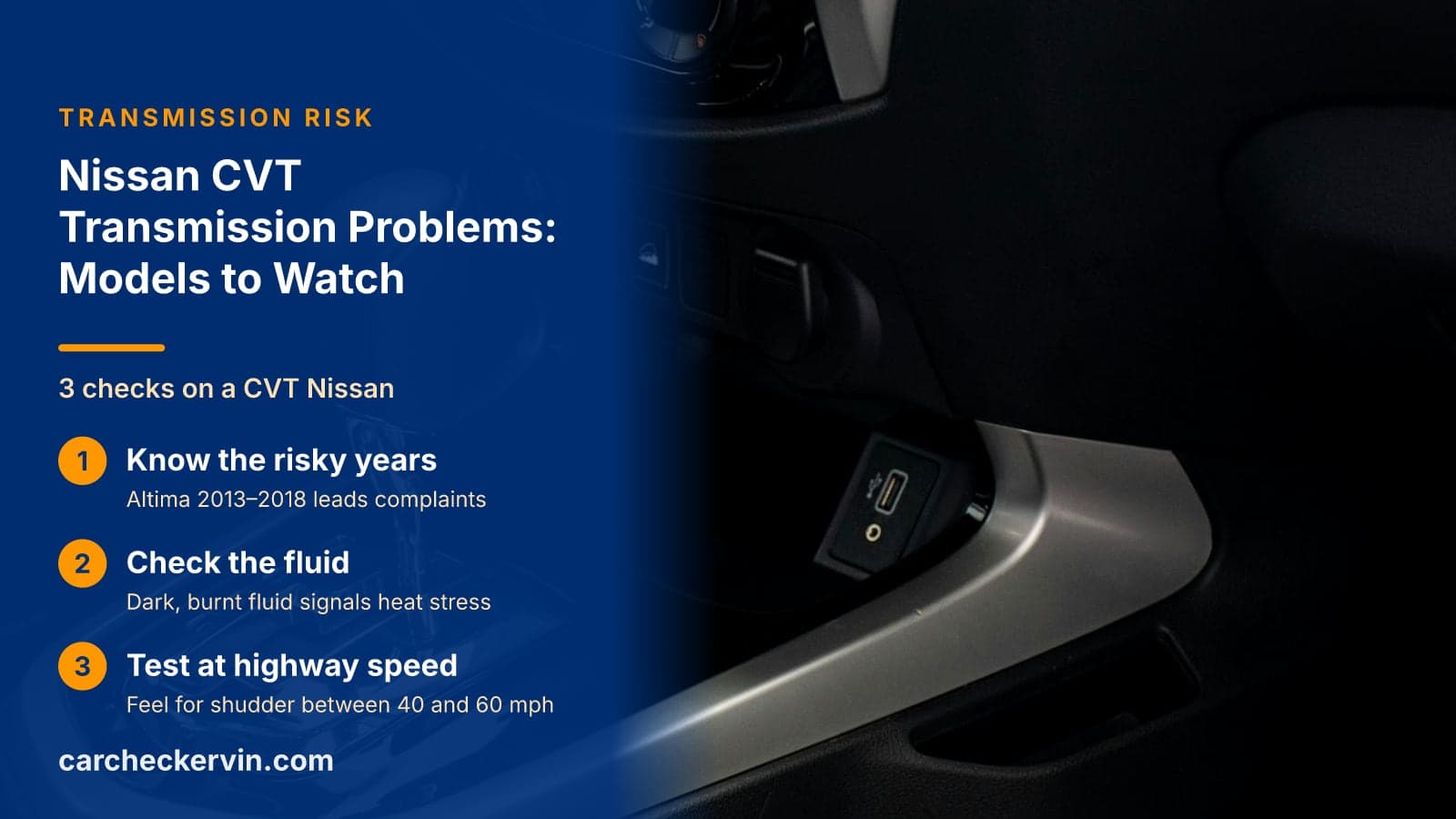
What Nissan Cars Have CVT Transmission Problems — And What to Do Before You Buy
CVT trouble is real across multiple Nissan models. Before you buy a used Altima, Sentra, or Rogue, know which years are risky, what repairs cost, and whether a Nissan CVT transmission recall covers it.
Oct 16, 2026 · 12 min read
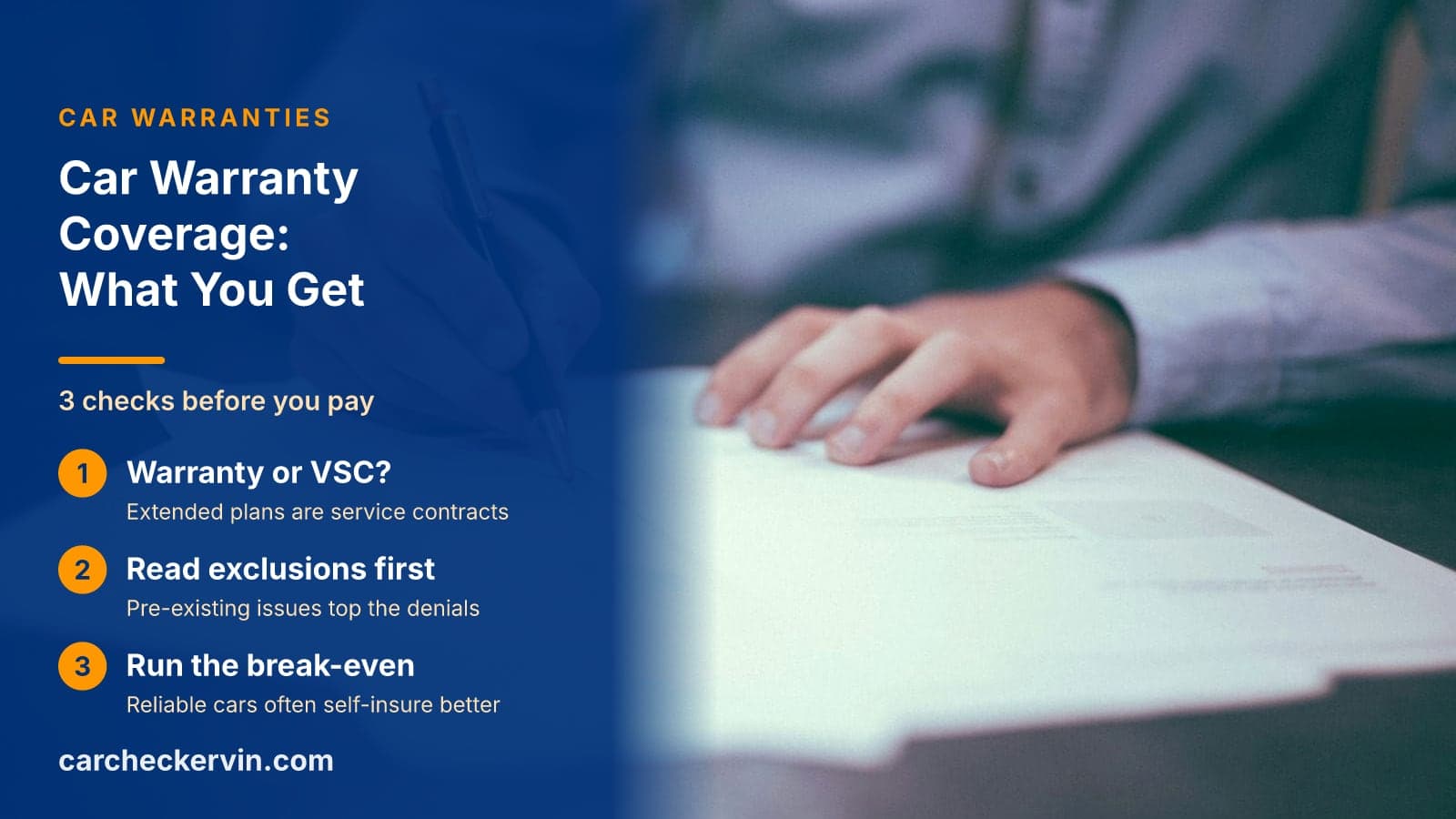
Car Warranty Coverage: What You Actually Get and What to Watch Out For
Before you buy a used car or sign an extended warranty contract, know exactly what car warranty coverage includes, what it excludes, and which plans deliver real value.
Oct 15, 2026 · 11 min read