Dealer Add-Ons on the Window Sticker: Which Ones to Refuse and Which Are Worth It
Dealers pad profits with add-ons slapped next to the factory window sticker. Here's exactly which ones to refuse, which might be worth keeping, and how to negotiate the rest off your deal.
Check the car you're reading about
Free VIN decode and recall check
Factory specs and open NHTSA recalls in seconds. No sign-up.
On this page· 7
- The Monroney Label vs. the Dealer Addendum: Know the Difference
- Common Dealer Add-Ons You Should Almost Always Refuse
- A Few Dealer Add-Ons That Might Actually Be Worth Keeping
- How to Negotiate Dealer Add-Ons Off the Price
- ADM Fees and Hot-Market Markups
- Why a VIN Check Matters Even on New Cars
- The Bottom Line on Dealer Addendum Stickers
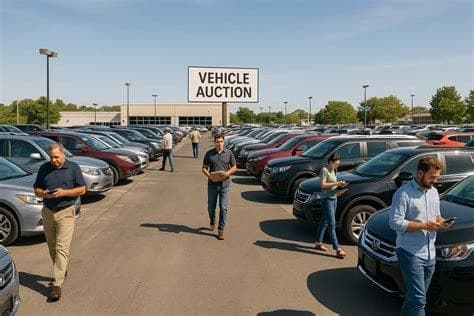
You walk onto the lot, find the car you want, and spot two stickers on the window instead of one. The factory Monroney label is on the left. On the right — or sometimes stuck directly below it — is a supplemental sticker listing dealer add-ons with prices that can total $2,000 to $5,000 or more. The salesperson treats these line items like they're welded to the car. They're not. Understanding dealer add-ons on the window sticker is one of the fastest ways to save real money on your next purchase.
60-second answer
The factory Monroney label is federally required and non-negotiable. The dealer's supplemental sticker — listing items like nitrogen-filled tires, paint sealant, VIN etching, and fabric protection — is almost always negotiable and frequently removable from the deal entirely. Refuse anything you didn't ask for, and negotiate the rest.
The Monroney Label vs. the Dealer Addendum: Know the Difference
Federal law — the Automobile Information Disclosure Act of 1958 — requires every new vehicle sold in the U.S. to carry a Monroney label. It lists the manufacturer's suggested retail price, standard equipment, optional packages, fuel economy ratings, and crash-test scores. Removing or altering this label before sale is illegal. It's your baseline for what the factory built and priced.
The second sticker is the dealer addendum, sometimes called a supplemental sticker or market adjustment label. This one is created entirely by the dealership. It can include genuine installed accessories — think all-weather floor mats or running boards — but it can also include high-margin items the dealer added specifically to inflate the transaction price. Unlike Monroney label add-ons from the factory, these items carry no standardized pricing and no regulatory oversight on markup.
Common Dealer Add-Ons You Should Almost Always Refuse
Not every line item on a dealer addendum is a scam. But several categories consistently deliver poor value relative to their sticker price. These are the ones seasoned buyers cross off first.
- Nitrogen-filled tires — Dealers charge $200–$400 for this. Regular air is already 78% nitrogen. The marginal benefit in tire-pressure stability is negligible for daily drivers, and any tire shop can top off with nitrogen for free or a few dollars.
- Paint sealant or fabric protection — Typically listed at $400–$1,000. The product itself often costs the dealer under $50. A quality spray wax or ceramic coating you apply yourself will perform just as well for a fraction of the cost.
- VIN etching — This involves etching the vehicle identification number onto window glass as a theft deterrent. Dealers charge $150–$400. DIY kits cost about $25, and NICB data doesn't support a significant theft-reduction claim from etching alone.
- Pinstriping — Usually a thin adhesive stripe applied in minutes. Dealers may charge $200–$500 for something that costs under $20 in materials.
- Door-edge guards — Tiny plastic strips glued to door edges. Retail cost: about $15. Dealer charge: $100–$250.
- ADM fee or 'Additional Dealer Markup' — This is pure profit padding, sometimes labeled as a 'market adjustment.' There's no product or service attached — it's simply an upcharge because the dealer believes demand justifies it. In a balanced market, you should refuse this outright or find a dealer that doesn't charge one.
A Few Dealer Add-Ons That Might Actually Be Worth Keeping
Some installed accessories genuinely improve the vehicle and might be tough to replicate cheaply on your own. The key question is whether the dealer's price is reasonable compared to aftermarket alternatives.
- All-weather floor mats and cargo liners — OEM versions fit precisely and often outlast aftermarket options. If the dealer's price is close to what you'd pay on the manufacturer's parts website, it's fair.
- Wheel locks — A $50–$80 set of locking lug nuts is cheap insurance on vehicles with desirable wheels.
- Running boards or bed liners (trucks/SUVs) — Factory or dealer-installed versions typically carry better fit and finish. Negotiate the price, but these can be legitimate value-adds.
- Window tint — If it's a quality ceramic tint and the price is under $400 for a sedan, it may be competitive with local tint shops. Ask about the brand and warranty before agreeing.
How to Negotiate Dealer Add-Ons Off the Price
Dealers will sometimes claim the add-ons are already installed and can't be removed from the price. That's a negotiation tactic — not a fact. The products might physically be on the car, but the price is always negotiable. Here's a practical approach.
- Before visiting the lot, research the vehicle's MSRP on the manufacturer's website so you know exactly what the factory Monroney label should show. Any price above that is dealer territory.
- Ask the salesperson for an itemized out-the-door price. Separate factory MSRP, dealer-installed accessories, any ADM fee, taxes, registration, and doc fees into distinct lines.
- Identify every dealer add-on and state clearly which ones you want removed from the deal. Be polite but firm — 'I'm not paying for nitrogen tires or paint sealant' is a complete sentence.
- If the dealer won't budge, shift the negotiation to total transaction price. Say you'll accept the add-ons if the dealer discounts the overall number to offset them. The effect is the same — you don't overpay.
- Get competing quotes from other dealers. Nothing motivates a sales manager like a printout from a rival store showing a lower number on the same vehicle.
Watch for add-ons buried in F&I
Some dealers strip the addendum sticker but repackage the same products — paint protection, theft deterrent plans, appearance packages — in the Finance & Insurance office. Review every line in the contract before signing. If you refused it on the lot, refuse it again in the back office.
ADM Fees and Hot-Market Markups
During the inventory shortages of 2021–2023, ADM fees — sometimes labeled 'market adjustment' or 'dealer markup' — became widespread. Some dealers tacked on $5,000 to $20,000 above MSRP on high-demand models. As inventory normalizes, these fees are becoming less common but haven't vanished entirely. The FTC's Combating Auto Retail Scams (CARS) Rule, finalized in late 2023 but currently facing legal challenges, specifically targets hidden junk fees in auto transactions. Regardless of regulatory outcomes, you can fight an ADM fee by shopping multiple dealers and being willing to wait or travel.
If you're shopping used vehicles, the dynamic is slightly different — there's no Monroney label, so the dealer's asking price is the only number on the windshield. That makes pre-purchase research even more critical. Running a VIN check through a service like the one on our vin-check page gives you title history, accident records, and odometer data that directly affect fair market value. Comparing that data against KBB or Edmunds valuations helps you spot a dealer markup on a used car that's hiding behind a clean-looking price tag.
Why a VIN Check Matters Even on New Cars
Most buyers associate VIN checks with used vehicles, but they serve a purpose on new inventory too. A VIN lookup confirms the factory build sheet — engine, transmission, packages, and options — so you can verify that what's on the Monroney label matches what's actually in the car. It also reveals whether a 'new' vehicle has been titled before, possibly as a dealer demo or loaner, which would affect its warranty start date and value. NMVTIS-sourced data is the federal standard for this kind of verification.
For used cars, a VIN history report is non-negotiable. Salvage titles, flood damage, odometer rollbacks, and prior accidents all show up — and any of these can justify walking away or negotiating thousands off the asking price. Check our pricing page for options that fit your budget.
The Bottom Line on Dealer Addendum Stickers
The factory window sticker is law. The dealer addendum is a wish list. Treat every item on that supplemental sticker as optional until you've personally decided it's worth the price. Most monroney label add-ons from the factory carry reasonable pricing because they're subject to competitive pressure across thousands of dealers. The dealer's own sticker faces no such pressure — which is exactly why it exists.
Be direct, be informed, and don't let urgency override arithmetic. A $3,000 dealer addendum financed over 72 months at 7% APR costs you roughly $3,700 after interest. That's real money for nitrogen air and a $15 pinstripe.
What to do next
Before your next dealership visit, run the vehicle's VIN through our free vin-check tool to verify the build sheet, confirm the title is clean, and arm yourself with data that puts you in control of the negotiation — not the other way around.
About the author
CarCheckerVIN Editorial Team
In-house automotive research team
The CarCheckerVIN editorial team combines decades of automotive industry, dealer, and journalism experience to produce trustworthy buying, selling, and ownership guidance backed by NMVTIS, NICB, and manufacturer data.
Keep reading

Consumers Auto Loan: How to Finance Your Next Car Without Getting Burned
A consumers auto loan is the single biggest variable in your car deal — bigger than the sticker price. Here's how to lock in the best rate before you ever step on a lot.
Oct 16, 2026 · 10 min read
What Nissan Cars Have CVT Transmission Problems — And What to Do Before You Buy
CVT trouble is real across multiple Nissan models. Before you buy a used Altima, Sentra, or Rogue, know which years are risky, what repairs cost, and whether a Nissan CVT transmission recall covers it.
Oct 16, 2026 · 12 min read
Car Warranty Coverage: What You Actually Get and What to Watch Out For
Before you buy a used car or sign an extended warranty contract, know exactly what car warranty coverage includes, what it excludes, and which plans deliver real value.
Oct 15, 2026 · 11 min read