Free VIN Check vs Paid Report: Honest Comparison
Free VIN checks cover specs and recalls. Paid reports add NMVTIS title history, accident records, and odometer audits. Here's exactly when each is enough.
Check the car you're reading about
Free VIN decode and recall check
Factory specs and open NHTSA recalls in seconds. No sign-up.
Every used-car buyer wonders the same thing eventually: do I need to pay for a vehicle history report, or are the free checks enough? The honest answer depends on what the car costs and how much you trust the seller. Free checks cover the basics — vehicle specification, active manufacturer recalls, and (via NICB) a stolen-vehicle lookup. Paid reports add the layers most buyers actually care about: title brand history, accident records, odometer audit, and total-loss events.
Here's a clear, honest breakdown of what each tier actually delivers, and how to decide which one your specific purchase needs.
Decision rule
If you're spending under $3,000 on a known beater you're rebuilding yourself, free checks may be enough. For any private-party purchase between $3,000 and $30,000, a paid NMVTIS-backed report is the highest-ROI $15-25 in the entire transaction.
What you get for free
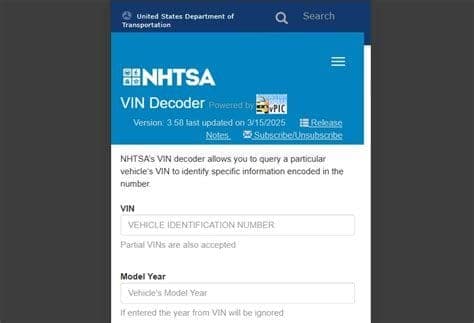
NHTSA VIN Decoder (vpic.nhtsa.dot.gov)
The federal vehicle identification database. Free, unlimited use, no signup. Returns: year, make, model, trim, body style, engine specification, transmission, country of manufacture, plant, restraint system, and a long list of standard equipment fields. Does NOT return: title history, accident records, odometer history, ownership history, or anything that didn't come from the factory.
Use case: confirming a VIN is real and that the decoded vehicle matches the listing photos. Run any VIN you're considering through this first; it costs nothing and immediately catches mismatched or fabricated VINs.
NICB VINCheck (nicb.org/vincheck)
Free stolen-vehicle and salvage-records lookup from the National Insurance Crime Bureau. Limited to 5 searches per IP per day. Returns: yes or no on whether the VIN appears in either of two databases — (1) reported as stolen and not recovered, or (2) reported by a participating insurance carrier as a total-loss salvage.
Use case: a fast first-pass filter. A 'no record' result is necessary but not sufficient — NICB only sees records that participating carriers and law enforcement submitted, and recent thefts can take weeks to appear.
Manufacturer recall lookup
Every major manufacturer plus the NHTSA recall portal lets you enter a VIN and see active, un-completed recalls. Free, unlimited, takes 30 seconds. Use case: pre-purchase 'is this car under any active recall' check, and post-purchase 'what should I get fixed at the dealer this month' check.
State DMV title status lookups
Many states (California, Florida, Texas, Illinois, New York and others) offer free or low-cost VIN-based title status lookups. Returns vary but typically include the current title state, lien status, and whether a brand is recorded. Use case: confirming a private seller's claim that the title is clean before driving across town.
What free checks DON'T tell you
- Title brand history across all states (was this car ever salvage, rebuilt, flood, lemon, etc., even if the current title is clean).
- Number of previous owners and registration transfers.
- Accident records (severity, location, airbag deployment, damage area).
- Odometer readings over time (the only way to catch rollback).
- Service and maintenance records.
- Total-loss insurance events (separate from physical salvage).
- State-by-state title history (the geographic story).
Each of those is a meaningful piece of due diligence for any purchase north of a few thousand dollars.
What you get for paid
A paid NMVTIS-backed vehicle history report accesses the federal National Motor Vehicle Title Information System plus commercial data sources (insurance carriers, salvage yards, auction houses, service-record partners). Typical reports cost $10–25 per VIN and return within a minute. They include:
- Every title brand the car has ever carried, anywhere in the US.
- Complete state title history with issue dates.
- Odometer history with source attribution.
- Accident records with severity and damage detail.
- Total-loss events from participating insurance carriers.
- Salvage and junk-yard records.
- Open safety recalls.
- Service records from data-partner shops (mostly large chains and dealers).
- Theft and recovery events.
When free is enough
- Buying a vehicle from a close family member with full history disclosure and known maintenance.
- Buying a vehicle you're going to scrap or part out (price under $1,500 and you're a mechanic).
- Confirming a VIN before paying for a paid report — NHTSA decoder first, then paid only if the VIN decodes correctly.
- Post-purchase recall checks — free portals are perfect for this.
- Filtering listings before in-person viewings (NICB free check catches obvious stolen cars).
When paid is worth it
- Any private-party purchase over $3,000.
- Any out-of-state purchase regardless of price.
- Any car being sold by a small or unknown dealer.
- Any car with cosmetic indicators of repair (mismatched panels, recent repaint, fresh undercoating).
- Any car whose listing photos show a single hero shot and minimal detail.
- Any car where the seller's story (one owner, garage-kept, low miles) seems too clean for the price.
- Any car for which you're financing — the lender's lien depends on a clean title transfer.
Brand-name reports vs NMVTIS-backed reports
Some heavily advertised 'history reports' don't actually source NMVTIS — they use insurance carrier data and self-reported dealer information. NMVTIS is the federal database mandated by the Anti-Car Theft Act of 1992; only NMVTIS-approved providers can pull it. Check the report provider explicitly lists 'NMVTIS' as a data source before paying.
The realistic stack: what most buyers should do
- Run the NHTSA VIN decoder on every car you're considering. Confirms the VIN is real and matches the listing.
- Run the free NICB VINCheck. Filters obvious stolen cars and salvage records.
- If those pass and you're seriously considering the car, run a paid NMVTIS-backed history report before driving to see it. Costs $15-25.
- Schedule the in-person viewing only after the paid report passes.
- After the test drive, take the car to an independent mechanic for a pre-purchase inspection ($150-250) if you're still interested.
Total cost of the full stack: under $300 for a comprehensive due-diligence package. Compared to the average cost of unwinding a bad used-car purchase ($3,800+ according to FTC data), the math is straightforward.
What to do next
Free checks are great for filtering. Paid reports are great for closing. Use the free tools to weed out the obvious problems, then spend the $15-25 on a paid report for the cars you're seriously considering. The combination catches what either alone would miss.
About the author
CarCheckerVIN Editorial Team
In-house automotive research team
The CarCheckerVIN editorial team combines decades of automotive industry, dealer, and journalism experience to produce trustworthy buying, selling, and ownership guidance backed by NMVTIS, NICB, and manufacturer data.
Keep reading
How Many Owners by VIN: The Real Number Behind 'One-Owner Car'
"One-owner car" sounds great on a listing — but is it true? Here's how to check how many owners by VIN and what the number actually tells you about a used vehicle.
Aug 1, 2026 · 5 min read

JDM Import VIN Decoding: Navigating the 25-Year Rule and Japanese Chassis Numbers
Japanese-market vehicles use chassis numbers that don't follow US VIN standards. Here's how to decode them, verify legal import status, and avoid titling nightmares.
Jul 25, 2026 · 7 min read
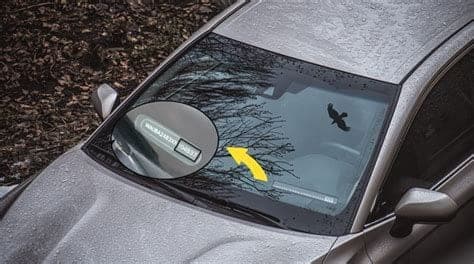
The Monroney Label: How to Read a New Car Window Sticker by VIN
The Monroney label is federally mandated on every new car sold in America. Here's how to read one, retrieve it by VIN, and spot the details most buyers miss.
Jul 20, 2026 · 6 min read