How to Check if a Used Car Has a Lien Against It
Buy a car with an undisclosed lien and the bank can repossess it from you. Here are the three ways to verify the title is free and clear before cash changes hands.
Check the car you're reading about
Free VIN decode and recall check
Factory specs and open NHTSA recalls in seconds. No sign-up.

When someone finances a car, the lender's name goes on the title as the lienholder. Until the loan is paid in full, the lender — not the driver — owns the car in any practical legal sense. If you buy a car with an outstanding lien, the lender can repossess it from you even though you paid the seller in good faith. Your only recourse is to sue the seller for the money you handed over, which is fine if they're solvent and findable, and a catastrophe if they're not.
This guide walks through the three independent ways to verify a car's title is free and clear before you transfer cash. None of them takes more than 15 minutes. All three together cost less than $30.
60-second answer
1. Look at the physical title document — the lienholder section should be either blank or explicitly stamped "released." 2. Run a VIN check through your state DMV or a third-party report. 3. If a lien is shown, get the loan payoff letter from the lender and pay them directly at closing. Never wire money to a private seller who claims they'll "pay off the loan after."
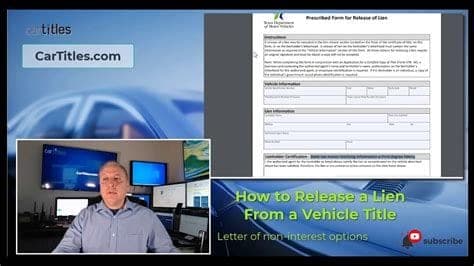
Why an undisclosed lien is the worst-case private-party purchase
In most US states, when you pay a private seller for a car, what you're buying is a piece of paper called a 'Bill of Sale' and (ideally) a signed title transfer. You file these with your state DMV to register the car in your name. If the DMV detects an active lien on the VIN, the title transfer is rejected. You now own a car you can't register, the seller has your cash, and the lender — whose lien is still active — is legally entitled to repossess the vehicle from wherever it sits.
The legal doctrine that protects you in most consumer transactions (the 'bona fide purchaser' rule) is much weaker for cars than for almost anything else. Vehicle titles are governed by state-specific lien-perfection rules, and a lien properly recorded with the DMV survives any private-party transfer — even if you had no idea it existed.
Check 1: Read the physical title carefully
Every state's vehicle title has a 'Lienholder' or 'First Lienholder' section, usually on the front of the certificate. There are three possibilities:
- The section is blank — the car has no recorded lien. This is the easiest case but doesn't prove the absence of a lien added after the title was last printed.
- The section names a lender (e.g. "Chase Auto," "Ally Financial") with no release stamp — there's an active lien. Do not buy the car from a private seller in this state.
- The section names a lender and has a release stamp/signature/perforation — the lien has been paid off and the title is free. Look closely at the release: it should be a physical stamp from the lender, a perforation through the lender's name, or a signed release on lender letterhead attached to the title.
If the seller hands you a printed title with the lienholder section blank but says 'I just paid it off last month, the DMV will update,' that's not enough. Insist on either a fresh title from the DMV with the section blank, or written lien-release documentation from the lender.
Check 2: VIN-based lien lookup
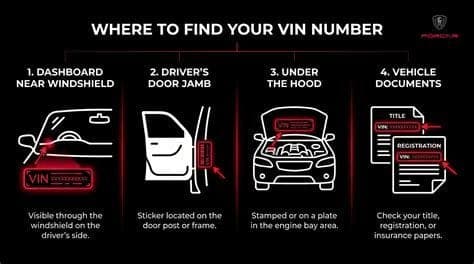
Many states let you check title status by VIN directly through the DMV — California, Florida, New York, Texas, and Illinois all offer free or low-cost lookups. Search your state DMV website for 'VIN title status' or 'lien status check.' Results vary by state but typically tell you whether the title is currently held by the DMV (active lien) or has been mailed to the owner (no lien).
For a more comprehensive view, a paid vehicle history report includes the most recent title status across all states the car has been registered in, plus any reported lien activity. The report won't always show a current lien balance, but it will tell you whether the most recent recorded title was issued to a lienholder or to the owner — which is enough to know whether to proceed.
Check 3: Get the payoff letter from the lender
If the title shows an active lien but the seller wants to sell the car anyway (common when someone needs to sell mid-loan), the only safe way to close the deal is to pay the lender directly at the time of sale.
Ask the seller to call their lender and request a '10-day payoff letter' — a document showing the exact amount needed to satisfy the loan if paid within 10 business days, plus the lender's name, mailing address, and remittance instructions. Most lenders will email or fax this within a few hours.
At closing, instead of paying the seller the full purchase price, you pay the lender directly for the payoff amount (cashier's check or wire) and pay the seller the difference. The lender mails the lien release and the title to you (or to your DMV) typically within 30 days. Some states allow electronic title transfers that complete faster.
Specific red flags for hidden liens
- Seller offers an unusually low price and pressures a same-day cash transaction.
- Title is missing or 'at the bank' (suggests the bank still holds it as collateral).
- Seller's name on the title doesn't match their ID (could be a dealer trying to flip without proper title transfer).
- Title is a duplicate or replacement (any chance it was issued to hide a lien on the original).
- Seller is moving out of state imminently or has another urgent reason to close fast.
- The car is a recent model year (2-5 years old) being sold by a private seller — most are still under loan in that age bracket.
Never wire money to 'pay off the loan after the sale'
A common scam: the seller says "give me $20,000, I'll pay off the loan with it, and the lender will release the title in a week." Once the cash leaves your hands you have no leverage. If the seller doesn't pay the loan, you own a financed car and lose your money. Always pay the lender directly.
What to do at the DMV after a clean purchase
Once you have the signed title, the bill of sale, and (if applicable) the lien release letter, take everything to your state DMV within the title-transfer deadline (typically 10–30 days). The DMV issues a new title in your name. If you financed your own purchase, the new title shows your lender as the lienholder. If you paid cash, the new title shows you as the sole owner and is mailed to your address.
Keep copies of every document for at least seven years. If a dispute over the title ever arises later, this paperwork is your only evidence that you bought the car in good faith.
What to do next
Before you transfer money on any private-party used car: look at the title's lienholder section, run a VIN lookup through your state DMV or a paid report, and — if any lien shows — pay the lender directly at closing. Three checks, under thirty minutes, under $30.
About the author
CarCheckerVIN Editorial Team
In-house automotive research team
The CarCheckerVIN editorial team combines decades of automotive industry, dealer, and journalism experience to produce trustworthy buying, selling, and ownership guidance backed by NMVTIS, NICB, and manufacturer data.
See more of our guides on Google
Add CarCheckerVIN as a preferred source and Google will show our guides more often in your results.

Keep reading

Consumers Auto Loan: How to Finance Your Next Car Without Getting Burned
A consumers auto loan is the single biggest variable in your car deal — bigger than the sticker price. Here's how to lock in the best rate before you ever step on a lot.
Oct 16, 2026 · 10 min read
What Nissan Cars Have CVT Transmission Problems — And What to Do Before You Buy
CVT trouble is real across multiple Nissan models. Before you buy a used Altima, Sentra, or Rogue, know which years are risky, what repairs cost, and whether a Nissan CVT transmission recall covers it.
Oct 16, 2026 · 12 min read
Car Warranty Coverage: What You Actually Get and What to Watch Out For
Before you buy a used car or sign an extended warranty contract, know exactly what car warranty coverage includes, what it excludes, and which plans deliver real value.
Oct 15, 2026 · 11 min read