Out-of-State Used Car Purchase: VIN + Title Checklist
An out-of-state used car can save you thousands or trap you in months of paperwork. Here's the VIN-first checklist that gets the car home and titled cleanly.
Check the car you're reading about
Free VIN decode and recall check
Factory specs and open NHTSA recalls in seconds. No sign-up.
On this page· 8
- Step 1: VIN history report (do this first)
- Step 2: Confirm your home-state title acceptance
- Step 3: Verify the title in person before paying
- Step 4: Sales tax — pay to your home state, not the seller state
- Step 5: Get the car home — transport vs drive
- Step 6: Title and register at your home DMV (within deadline)
- When out-of-state buying actually makes sense
- When it doesn't

Buying a used car in another state is one of the highest-leverage moves a US car buyer can make. Regional pricing differences for popular models can run $1,500–4,000; specialty vehicles (trucks in Texas, low-rust cars from the Southwest, JDM imports in California) often have even bigger spreads. The downside is that out-of-state purchases come with title, tax, registration, and emissions layers that most first-time interstate buyers underestimate — and any one of those layers can turn a great deal into months of paperwork pain.
Here's the VIN-first checklist that gets the car home and titled in your name cleanly. The order matters: do these in sequence, not in parallel.
60-second answer
Run a VIN history report first. Verify the title is in the seller's name and lien-free. Confirm your home state will accept the seller-state title brand (if any). Get a temporary transport permit before driving home. Pay sales tax to your home state, not the seller's. Title and register within your state's deadline (typically 30 days).

Step 1: VIN history report (do this first)
Before you fly anywhere or commit any money, run a full vehicle history report. Out-of-state purchases concentrate certain risks: title washing across state lines, flood vehicles being moved from coastal to inland markets, and salvage titles being rebuilt in lenient states before crossing into stricter ones.
Look specifically for these red flags in the report:
- More than two state title transfers in the last 24 months (commercial flipping).
- Most recent state title issued in a different state than where the car is being sold.
- Any salvage or rebuilt brand currently on the title — your home state may not accept the rebuilt designation.
- Flood total-loss event followed by retitling in a non-coastal state (classic title-washing pattern).
- Odometer history that doesn't match the disclosed mileage on the current listing.
Step 2: Confirm your home-state title acceptance
Title brands don't always carry across state lines identically. A car with a 'rebuilt' brand in Arizona may need additional inspection before being titled in California. A 'flood' brand in Florida is typically accepted as-is in other states, but some states add their own brand on top during transfer. Call your home-state DMV (or check their website) and ask specifically: 'Can I title a car in this state that currently has a [brand] title from [seller state]?'
Several states have rules around emissions equipment that effectively block certain out-of-state purchases:
- California — bars titling of most pre-OBD-II vehicles modified after federal certification expired; check the CARB emissions sticker before buying.
- New York — requires inspection within 10 days of registration and rejects vehicles missing factory emissions hardware.
- Colorado, Washington — require emissions testing before initial registration in certain counties.
- Hawaii, Alaska — require additional documentation for any imported vehicle, including from other US states.
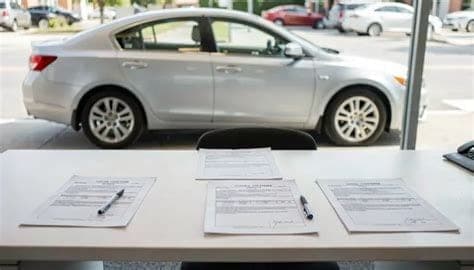
Step 3: Verify the title in person before paying
When you arrive to see the car, the first thing to do is examine the physical title document — not photos, not scans. Verify all of the following:
- VIN on the title matches the dashboard VIN, the door jamb sticker, and the engine block stamping.
- The title is the current original (not a duplicate, not a 'replacement') — duplicates are sometimes issued to hide a lien or a prior brand.
- The seller's name on the title matches their government-issued ID exactly.
- The lienholder section is either blank or explicitly stamped 'released' with the lender's name and date.
- The most recent recorded mileage on the title matches the current odometer reading (within reasonable accumulated miles).
- Any title brand (salvage, rebuilt, flood, hail) is visible — and matches what was on your VIN history report.
If anything on the title looks altered, photocopied, or doesn't match the car, walk away. Forged out-of-state titles are a known scam pattern and you have no leverage once you've handed over cash.
Step 4: Sales tax — pay to your home state, not the seller state
Sales tax on a private-party used vehicle is owed to the state where the buyer will register the car, not where the seller lives. This is standard across all US states. The seller should not collect sales tax from you, and the bill of sale should reflect the actual purchase price (not an inflated 'gift' price meant to dodge tax — your state DMV will use NADA or KBB to set a minimum taxable value if the bill-of-sale price looks unreasonable).
When you register the car in your home state, you'll pay your state's tax rate on the purchase price. Most states accept a properly executed bill of sale; some require a notarized version. Check your state DMV website for the specific requirement before you close the deal.
Step 5: Get the car home — transport vs drive
There are two ways to get the car from seller to home: an enclosed or open transport truck (cost: $600–1,400 depending on distance), or driving it yourself (cost: gas + temporary tags + the risk of breakdown or inspection issues along the route).
Drive-it-home pros and cons
- Pro: Cheaper for short distances (under 500 miles); you get a long test drive.
- Pro: You can stop at a mechanic mid-route if anything feels wrong.
- Con: Requires a temporary transport tag — every state has one and they vary in cost and process.
- Con: You're financially exposed if the car breaks down (no warranty, no roadside coverage).
- Con: Crossing inspection-required states (e.g. driving through Pennsylvania to get to Maryland) can trigger documentation issues.
Transport pros and cons
- Pro: No mileage added to the car en route, no breakdown risk.
- Pro: No temporary-tag paperwork — the car is delivered on a trailer.
- Pro: Insurance is included with most transporters; the car is covered for damage in transit.
- Con: Adds $600-1,400 to the purchase cost, sometimes more for expedited.
- Con: You lose the ability to test the car at highway speed before paying.
Step 6: Title and register at your home DMV (within deadline)
Every state has a deadline for transferring an out-of-state title into your name, typically 10–30 days after purchase. Miss the deadline and you face escalating late fees, sometimes plus penalties. Bring to your DMV appointment:
- Original signed title from the seller (with their odometer disclosure if your state requires it).
- Bill of sale with date, purchase price, both parties' names and addresses.
- Your government-issued ID.
- Proof of in-state insurance (some states issue you a binder until permanent insurance is active).
- Emissions/safety inspection certificate if your state requires it for initial registration.
- Payment for your state's title fee, registration fee, and sales tax.
Most DMVs in 2026 let you schedule an appointment online; walk-in waits can be 2-4 hours in major metro areas. Booking an appointment in advance saves a half-day.
The temporary-tag trap
Several states (Pennsylvania, Texas, Massachusetts) have cracked down on 'paper-plate' fraud — issuing temporary transport tags from dealers that get reused by criminals. Some states now refuse to recognize out-of-state paper plates after 30 days. If you can't title the car in your home state quickly, transport may be the safer choice than driving with paper plates.
When out-of-state buying actually makes sense
- Regional pricing gap of $2,000+ on the specific model you want (check Marketplace listings in your target state vs. yours).
- You're after a vehicle type rare in your area (low-rust truck from the Southwest, JDM import in California, lifted Jeep in Colorado).
- You have a friend or family in the seller state who can do the in-person inspection on your behalf.
- You're buying from a dealer with an established transport relationship and a refundable deposit policy.
When it doesn't
- The price gap is under $1,000 — transport + travel + paperwork erodes the savings.
- The car has a branded title and your home state requires reinspection.
- You're buying a high-mileage budget car (more reliability variance per mile, harder to PPI remotely).
- The seller is unwilling to do a video walkaround inspection or won't extend a refundable deposit window.
What to do next
If you're considering an out-of-state purchase: run the VIN report first, then call your home DMV with the seller-state title brand to confirm acceptance, then negotiate transport vs drive. Skip any of those steps and you're betting on luck.
About the author
CarCheckerVIN Editorial Team
In-house automotive research team
The CarCheckerVIN editorial team combines decades of automotive industry, dealer, and journalism experience to produce trustworthy buying, selling, and ownership guidance backed by NMVTIS, NICB, and manufacturer data.
Keep reading

Consumers Auto Loan: How to Finance Your Next Car Without Getting Burned
A consumers auto loan is the single biggest variable in your car deal — bigger than the sticker price. Here's how to lock in the best rate before you ever step on a lot.
Oct 16, 2026 · 10 min read
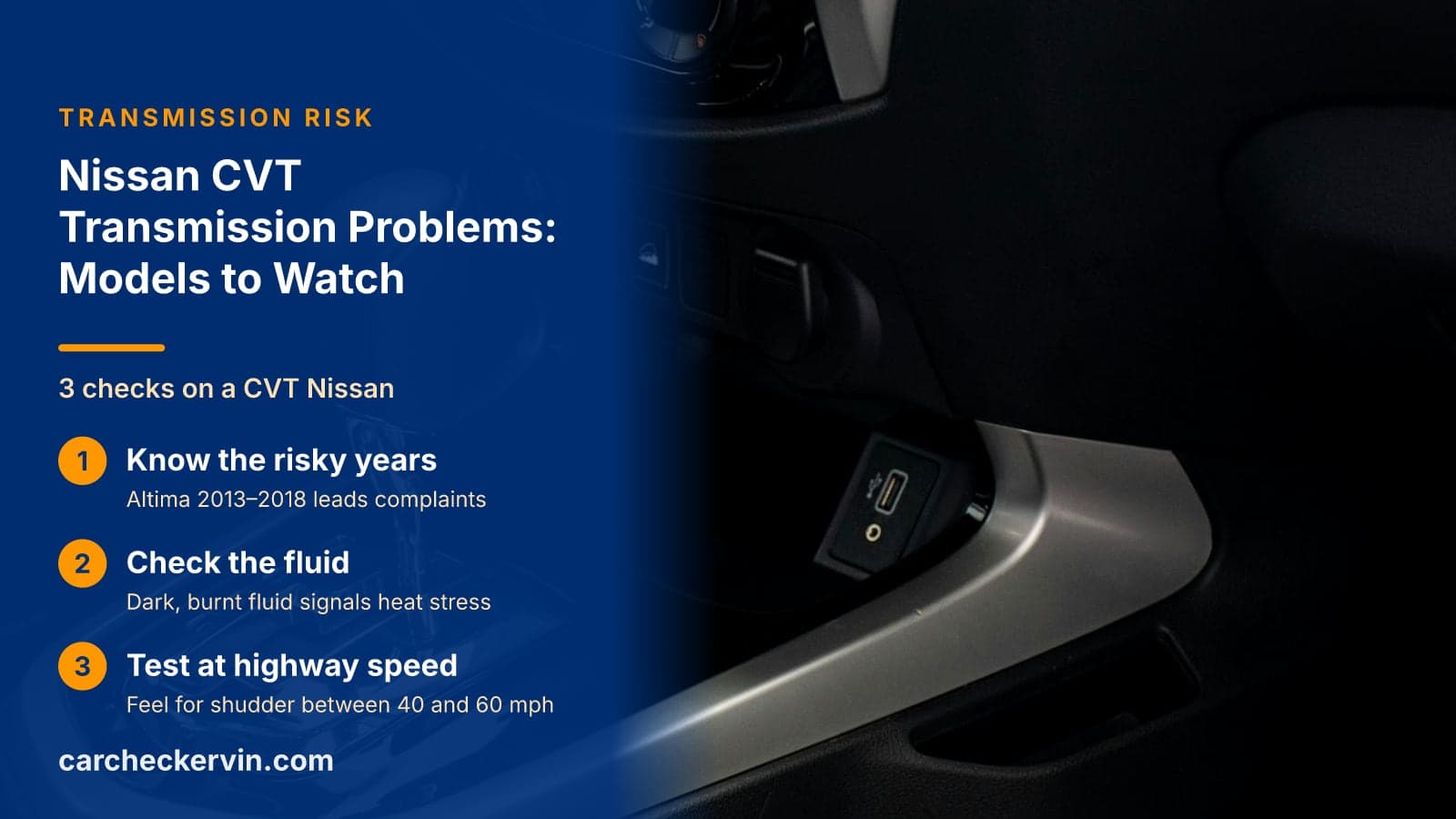
What Nissan Cars Have CVT Transmission Problems — And What to Do Before You Buy
CVT trouble is real across multiple Nissan models. Before you buy a used Altima, Sentra, or Rogue, know which years are risky, what repairs cost, and whether a Nissan CVT transmission recall covers it.
Oct 16, 2026 · 12 min read
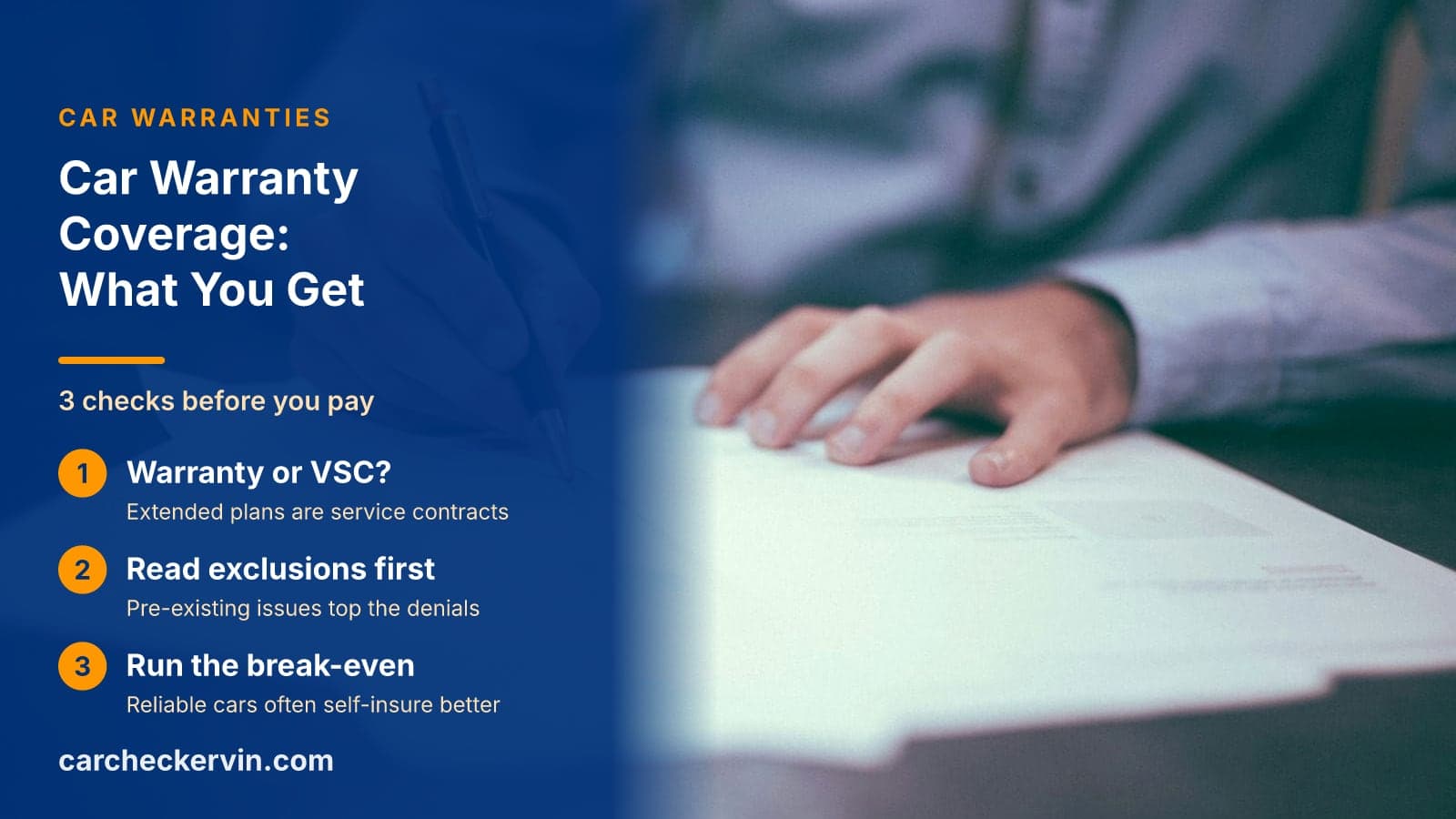
Car Warranty Coverage: What You Actually Get and What to Watch Out For
Before you buy a used car or sign an extended warranty contract, know exactly what car warranty coverage includes, what it excludes, and which plans deliver real value.
Oct 15, 2026 · 11 min read