Salvage Title vs Rebuilt Title: Which Is Safer to Buy?
A salvage title is permanent. A rebuilt title is what comes after. Here's how each one affects insurance, financing, resale value, and whether the discount is worth it.
Check the car you're reading about
Free VIN decode and recall check
Factory specs and open NHTSA recalls in seconds. No sign-up.
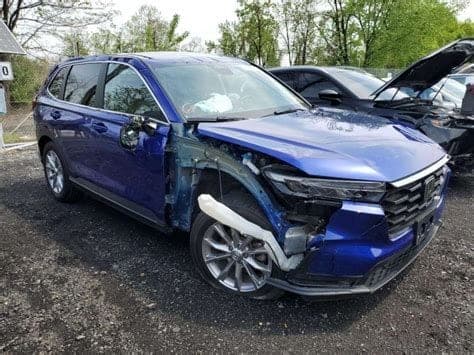
Branded titles are some of the most misunderstood paperwork in the used-car world. People use 'salvage' and 'rebuilt' interchangeably, but they're two distinct legal states, and the difference between them is the difference between a car you can drive and a car you can only sell for parts. Understanding what each brand actually means — and what it means for insurance, financing, and resale — is the first thing to do before you let the price discount tempt you.
Here's the plain-English version, what each brand does to the car's title for the rest of its life, and the honest answer to whether either is ever worth buying.
Bottom line first
Salvage = not legally drivable. Rebuilt = legally drivable but permanently branded. A rebuilt-title car typically sells for 20–40% less than a clean-title equivalent, costs more to insure, can't be financed by most banks, and loses an extra 20% of value when you try to sell it. Sometimes worth it; usually not.
What a salvage title actually means
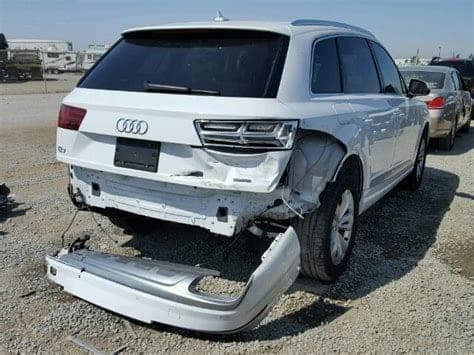
A salvage title is issued by the state DMV when an insurance carrier declares a vehicle a total loss. 'Total loss' doesn't necessarily mean the car is destroyed — it means the cost to repair exceeded a state-set threshold (typically 70–80% of the car's pre-incident actual cash value). A car can be totaled and still be drivable; insurers are math companies, and once repair estimates cross the threshold, paying out is cheaper than fixing.
Once the salvage brand is on the title, the car is not legal to operate on public roads in any US state. It can be sold — usually to a licensed rebuilder or a parts yard via salvage auctions — but it can't be registered, insured for road use, or driven. The brand is permanent: it cannot be removed.
What a rebuilt title means (and how a car gets one)
A rebuilt title is what a salvage-title car becomes after a licensed rebuilder repairs it, gets it inspected by a state inspector, and applies to the DMV for a re-titling. The inspection varies dramatically by state — some require a comprehensive frame, structural, and safety check; others are essentially a paperwork formality. Once the car passes its state's process, the salvage brand is replaced with a 'rebuilt' brand. The car is now legal to register, insure, and drive.
But the brand stays on the title for the rest of the car's life and follows it across state lines. There is no legitimate process to turn a rebuilt title back into a clean one. Anyone who claims otherwise is describing title fraud.
The four things branded titles cost you (beyond the obvious)
Insurance
Most major insurance carriers will write liability insurance on a rebuilt title car, but many won't write comprehensive or collision. The ones that do typically apply a 20–40% premium to account for the unknown repair quality. State Farm, Geico, and Progressive will all quote rebuilt-title vehicles; Allstate and several smaller carriers either won't or will only write a stripped-down policy.
Financing
Most banks and credit unions won't finance a rebuilt-title vehicle at all. The ones that will typically cap loan-to-value at 50–70% and charge a higher rate. If you need financing, you're often forced into specialty subprime lenders with double-digit APRs — which usually erases the savings from the cheaper purchase price.
Resale
When it's your turn to sell, expect to lose an additional 20–25% of the car's already-discounted value. The pool of buyers who will consider a rebuilt title is small, and they all know they have leverage. The closer you can get to selling to a private buyer who needs cheap transportation and knows what they're doing, the better; trading it in to a dealer is usually a 30–50% haircut off retail value.
Hidden mechanical risk
The discount on a rebuilt car factors in known repair costs. What it can't factor in is the second-order problems: a frame straightened to within tolerance but never quite tracking right, an airbag harness re-wired by someone in a hurry, a steering rack from a different model year of the same car, electrical gremlins from sensors that were submerged. These show up in the first 12–24 months of ownership and they're rarely cheap.
States where the brand can disappear
A handful of states historically didn't carry branded titles forward when a car was re-registered ("title washing"). NMVTIS closed most of these loopholes, but a 30–60 day gap between a salvage event and the federal record sometimes still exists. Always pull an NMVTIS-backed report before buying — never trust the title document alone.
When a rebuilt title can be worth it
- You're an experienced mechanic and can verify the repair quality yourself.
- You're paying cash (no financing needed) and don't plan to sell within five years.
- You only need liability insurance for an older, low-value car.
- You've seen the original pre-repair damage photos and the rebuilder's invoice.
- The price discount versus a clean-title equivalent is 40%+, not 15%.
When to walk away
- The discount is less than 25% versus clean-title comparable cars.
- The seller can't show you photos of the original damage or the repair invoice.
- The repair was done in one state, the car was re-titled in another, and you can't see the inspection paperwork.
- The mileage is less than 50,000 — newer rebuilt cars rarely make financial sense after insurance and financing penalties.
- Your gut tells you the seller is hiding something.
How to verify before you buy
Pull a full NMVTIS-backed vehicle history report before any test drive. The report will show the original total-loss event (date, state, cause: collision/flood/hail/theft), every title brand the car has carried, every state it's been registered in, and any insurance claim that prompted the brand. If you see the salvage brand never converted to rebuilt — that car still isn't legal to drive. If you see the rebuilt brand in a state different from where the salvage was issued, that's not necessarily fraud, but it warrants extra inspection rigor.
Then take the car to a mechanic of your choosing — not the seller's mechanic — for a pre-purchase inspection focused on structural integrity, airbag system, and electrical health. Budget $150–250 for a thorough PPI. That fee is the cheapest insurance you'll ever buy on a branded-title vehicle.
What to do next
If a car you're considering has a branded title, the question isn't 'is it a good price' but 'is the inspection good enough.' Pull the NMVTIS report first, then a PPI, then negotiate. In that order.
About the author
CarCheckerVIN Editorial Team
In-house automotive research team
The CarCheckerVIN editorial team combines decades of automotive industry, dealer, and journalism experience to produce trustworthy buying, selling, and ownership guidance backed by NMVTIS, NICB, and manufacturer data.
Keep reading
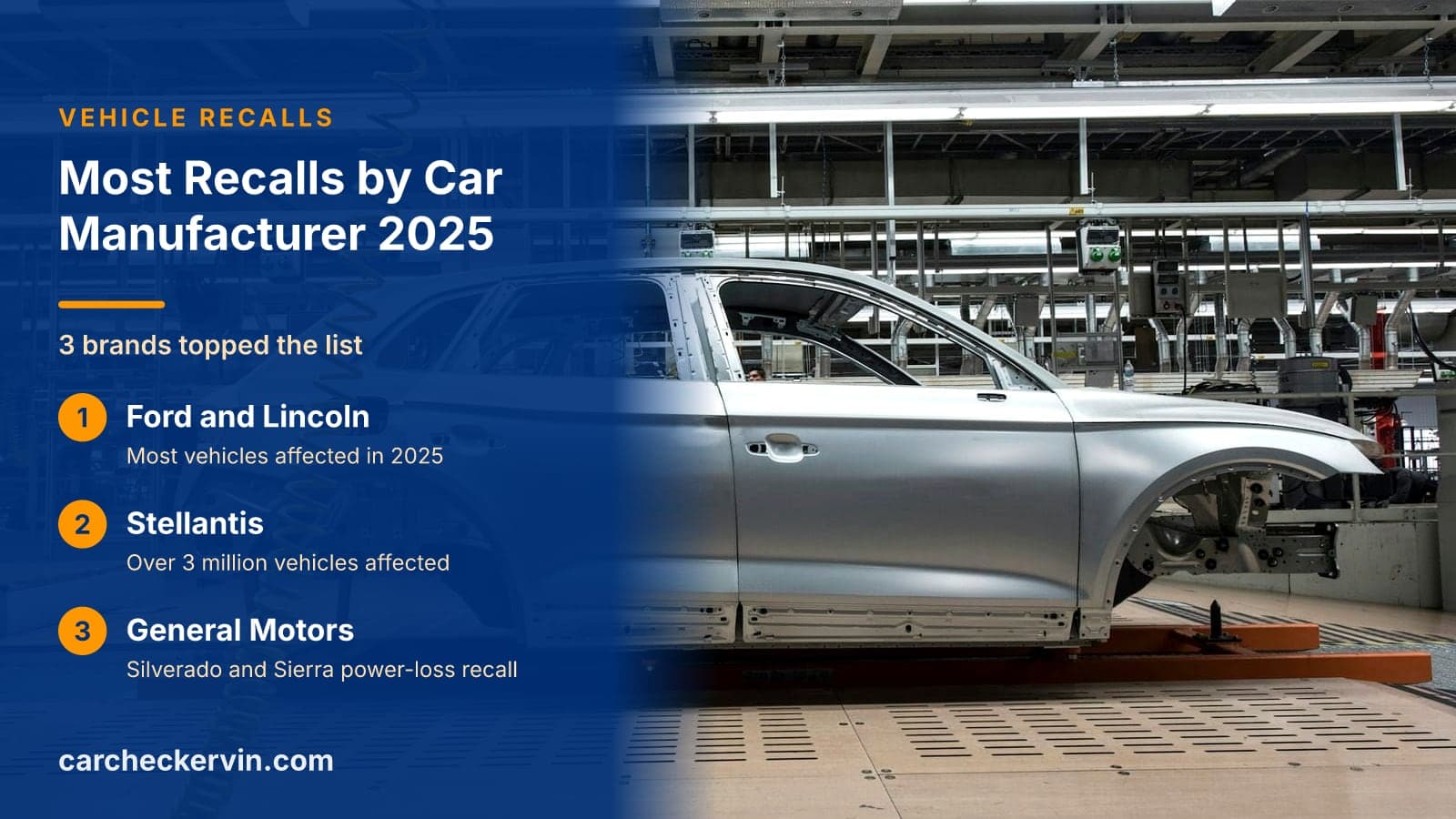
Most Recalls By Car Manufacturer 2025: Which Brands Put Buyers at Risk
Recall volume varies wildly by brand. Before buying used, know which manufacturers topped NHTSA's 2025 recall lists — and what that means for your wallet and safety.
Oct 6, 2026 · 10 min read
Car Frame Damage Repair Cost: What Buyers and Owners Actually Pay
Frame damage can turn a promising used-car deal into a money pit. Here is what repairs actually cost, which damage types are fixable, and when the math says walk away.
Sep 30, 2026 · 11 min read
VIN Etching: What It Is, How It Works, and When It's Worth Paying For
VIN etching engraves your car's 17-character VIN into its window glass so a thief can't resell the car or its parts without replacing every pane. It's a real deterrent, it's often free, and it's also one of the most marked-up add-ons on a dealer's menu. Here's how to tell the two apart.
Sep 16, 2026 · 10 min read