TPMS Sensor Replacement Cost: What You'll Really Pay in 2025
Your TPMS light just won't quit. Before you pay a dealer $250 per sensor, here's what every option actually costs — and when a $15 fix might be all you need.
On this page
- Why TPMS Sensors Fail — and Why It Matters for Your Wallet
- Breaking Down the Real TPMS Sensor Replacement Cost
- Battery Replacement: The $15 Alternative That Sometimes Works
- Where to Get It Done: Dealer, Independent, or Tire Chain?
- Cost vs Risk: When Replacing Sensors Is Worth It
- DIY TPMS Sensor Replacement: What It Takes
- OEM vs Aftermarket vs Universal: Choosing the Right Sensor
- Timing Your Replacement to Save Money
- What Used-Car Buyers Should Watch For
- Common Mistakes That Inflate the Bill
- The Bottom Line on What You'll Spend
Your dashboard's amber tire-pressure light has been glowing for weeks. You've checked the air — all four tires are fine — so the problem is almost certainly a dead or failing sensor inside the wheel. Now you're searching for the real tpms sensor replacement cost before a shop quotes you whatever it wants. You're right to do your homework. Prices swing wildly depending on the sensor type, the vehicle, and who does the work. This guide lays out every cost scenario, tells you where to save, and flags the spots where cutting corners can backfire on your next state inspection or your next sale.
The short answer
Most drivers pay $50–$250 per sensor installed when using aftermarket parts at an independent shop. OEM sensors at a dealership can push that to $200–$350 each. If only the sensor's internal battery is dead — the most common failure after 5–10 years — a battery replacement kit for about $10–$25 per sensor can extend its life, though not every sensor design allows it.
Why TPMS Sensors Fail — and Why It Matters for Your Wallet
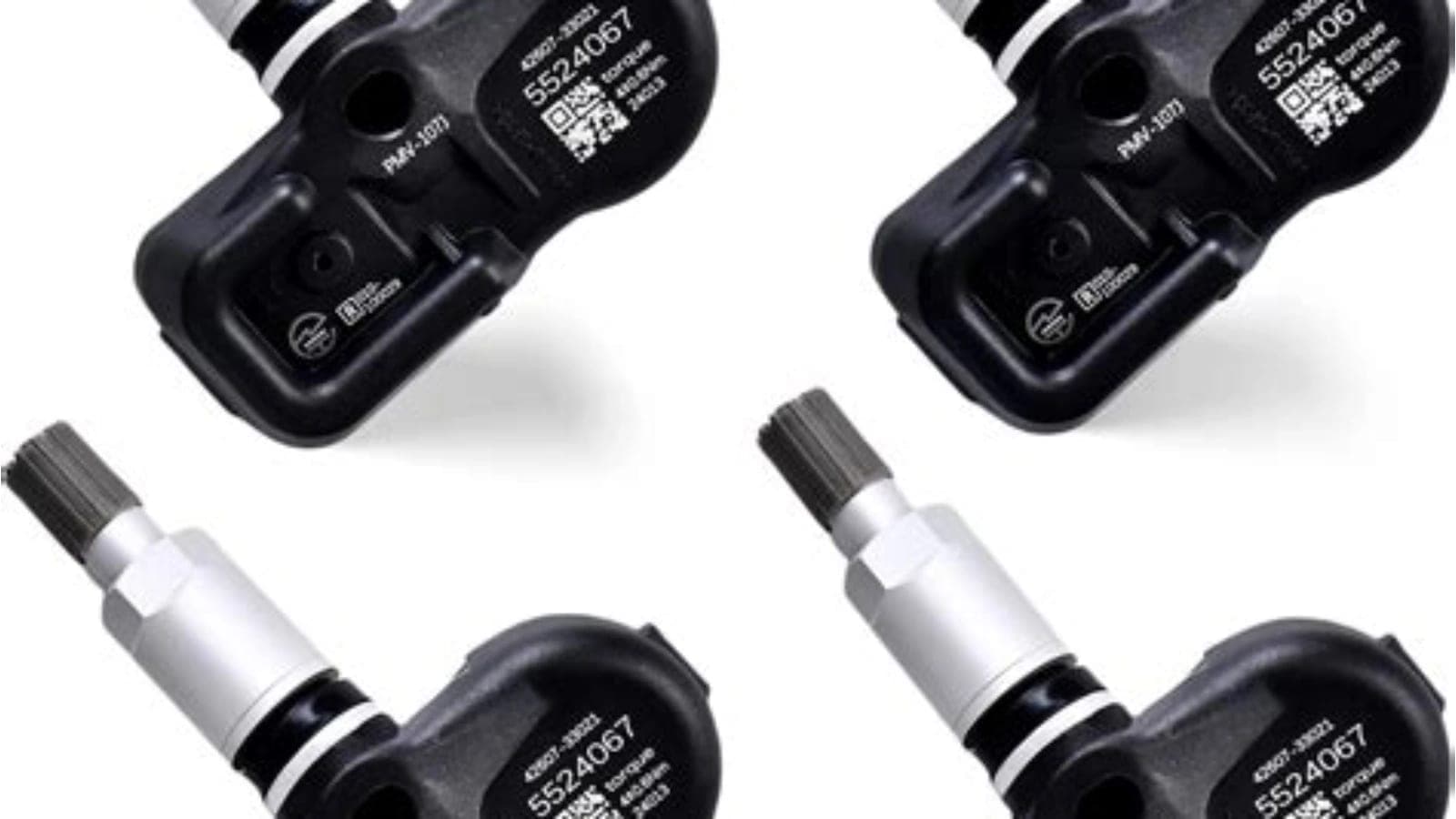
Every passenger vehicle sold in the U.S. since model year 2008 must have a direct or indirect tire-pressure monitoring system — a mandate established by the TREAD Act of 2000 and enforced through FMVSS No. 138 by NHTSA. Direct systems use a sensor-and-transmitter module mounted to each wheel's valve stem. Those modules run on lithium coin-cell batteries that can't be recharged and typically last 5 to 10 years, according to the Tire Industry Association (TIA). Once the battery dies, the sensor stops transmitting and your TPMS warning light illuminates — even if every tire is at the correct PSI.
Other failure modes include corroded valve stems — especially the aluminum snap-in type common on European cars — and physical damage during tire changes. A ham-fisted dismount can crack a sensor housing in seconds. That's worth remembering whenever you're getting tires swapped: always tell the technician your wheels have TPMS sensors.
Breaking Down the Real TPMS Sensor Replacement Cost
The total bill has three components: the sensor itself, the service kit (valve stem, seal, nut, cap), and labor to mount, program, and relearn the sensor to your car's ECU. Here's how each piece stacks up.
Sensor prices: OEM vs aftermarket vs universal
OEM sensors — the exact part your automaker specifies — range from about $40 for a common GM unit to $120 or more for a BMW or Mercedes part, based on current dealer parts-counter pricing aggregated by RepairPal. Aftermarket direct-fit sensors from brands like Dorman, Standard Motor Products, or Schrader often run 30–50% less. Universal programmable sensors — such as the ATEQ or Autel MaxiTPMS line — can be cloned to match almost any protocol for $25–$60 each, though they require a TPMS programming tool the shop must own.
Labor and programming
The tire must come off the rim, the old sensor must be removed, the new one installed with a fresh service kit, and then the sensor ID must be written to the vehicle's body control module. According to RepairPal's 2024 national labor data, this process typically costs $30–$70 per wheel at an independent shop and $70–$120 at a franchised dealer. Some vehicles — many Toyotas and Hondas — support a self-learn relearn triggered by driving at speed, which takes no scan-tool time. Others — most GM and Ford trucks — require an OBD-II relearn procedure that adds a few minutes.
- OEM sensor at dealer: $200–$350 per wheel installed (parts + labor + programming)
- Aftermarket sensor at independent shop: $80–$180 per wheel installed
- Universal/programmable sensor at tire chain: $50–$150 per wheel installed
- TPMS service kit only (valve stem, seal, nut): $5–$15 per wheel — always replace this when swapping sensors
Battery Replacement: The $15 Alternative That Sometimes Works
If the sensor's electronics are fine and only the battery is depleted, a battery replacement can revive it for a fraction of the cost. Kits typically cost $10–$25 per sensor and include a CR1632 or CR2032 lithium cell plus the sealant or housing cap needed to reseal the unit. The catch: many OEM sensors — particularly those from Continental and Pacific Industrial — are sealed units designed to be non-serviceable. Cracking one open risks breaking the antenna or corrupting the seal, which can let moisture in and corrode the circuit board within months.
Sensors that use a replaceable battery sleeve — common on some Schrader and VDO designs — are much better candidates. A skilled DIYer with a soldering iron and a YouTube tutorial can do the swap in 20 minutes per sensor. But you still need to dismount the tire from the rim to access the sensor, which means either owning a tire machine or paying a shop $15–$25 per tire for dismount-and-remount. Factor that cost in before assuming battery replacement is always cheaper.
Where to Get It Done: Dealer, Independent, or Tire Chain?
Each channel trades cost against convenience and expertise. Here's what to expect.
Franchised dealer
Dealers charge premium labor rates — averaging $150 per hour nationally according to AAA's 2024 automotive cost study — and stock OEM-only sensors. The upside is guaranteed compatibility and correct relearn on the first try. If your car is still under the factory bumper-to-bumper warranty — typically 3 years/36,000 miles on most brands — a failed sensor may be covered at no charge.
Independent repair shop
Independents usually charge $80–$130 per hour for labor and are willing to install aftermarket or universal sensors. Many have invested in multi-protocol TPMS tools. Ask whether the shop's tool supports your vehicle's specific relearn — some older scan tools can't handle newer protocols from Hyundai, Kia, or Rivian.
National tire chains
Discount Tire, America's largest independent tire retailer with over 1,100 locations according to the company's 2024 annual report, frequently bundles TPMS sensor replacement with tire purchases. Their typical charge runs $30–$60 per sensor for the part — usually a universal programmable unit — plus a modest install fee of $10–$20 per wheel if you're already buying tires. If you're only replacing sensors without a tire purchase, expect to pay the standard dismount-and-remount fee on top.
Cost vs Risk: When Replacing Sensors Is Worth It
Let's run the numbers on the real trade-off. Ignoring a failed sensor saves you $50–$250 per wheel right now. But that dashboard light masks a genuinely useful safety system. NHTSA estimates that properly inflated tires — monitored effectively by TPMS — prevent approximately 660 fatalities and 33,000 injuries annually on U.S. roads by reducing blowouts and loss-of-control crashes. A tire running 25% under its recommended PSI also burns roughly 2% more fuel, according to the U.S. Department of Energy's fueleconomy.gov. On a vehicle averaging 25 MPG and driving 12,000 miles per year at $3.50 per gallon, that's about $34 wasted annually per underinflated tire.
Then there's resale. A lit TPMS warning is a line item on every pre-purchase inspection and on any vehicle history report or VIN check a savvy buyer pulls. It signals deferred maintenance — and it gives a buyer leverage to negotiate your price down by far more than the repair would have cost you. For sellers prepping a used car, fixing TPMS before listing almost always returns more than its cost at the negotiating table.
State inspection implications
At least 18 states require a functioning TPMS system as part of their annual safety inspection, including New York, Pennsylvania, Virginia, Maryland, and Texas. A lit TPMS warning light is an automatic fail in these states. Driving with a known failure can also void certain extended-warranty powertrain claims if the insurer argues improper tire maintenance contributed to the damage.
DIY TPMS Sensor Replacement: What It Takes
Replacing a sensor yourself is mechanically straightforward but logistically annoying. You need a way to break the tire bead — meaning a tire machine or a trip to a shop for dismount/remount — plus a TPMS programming tool to clone or register the new sensor's ID to your vehicle. Budget TPMS tools like the Autel MaxiTPMS TS408 retail for around $100–$200 and handle most domestic and Asian protocols. Premium units that also cover European vehicles run $300–$600.
- Remove the wheel from the vehicle and break the tire bead on the sensor side.
- Unbolt or unclip the old sensor from the valve stem; remove the old valve stem and service kit.
- Install the new service kit (grommet, nut, valve core, cap) and torque the valve-stem nut to the sensor manufacturer's spec — typically 35–45 in-lb.
- Mount the new or refurbished sensor onto the valve stem, ensuring the antenna faces the correct direction per the sensor's installation guide.
- Reseat the tire on the rim, inflate to the door-jamb placard PSI, and check for leaks with soapy water.
- Use a TPMS tool to program the new sensor's ID, then trigger the vehicle's relearn procedure — either via scan tool, OBD port, or the drive-and-learn method specific to your make.
- Verify the TPMS light extinguishes after driving for 10–20 minutes. If it persists, re-check programming.
The DIY route makes financial sense if you're replacing all four sensors at once — saving $120–$280 in cumulative labor — or if you change your own tires seasonally and already own the equipment. For a single sensor, the hassle and tool investment rarely pencil out.
OEM vs Aftermarket vs Universal: Choosing the Right Sensor
This decision comes down to how long you plan to keep the car and how much you value plug-and-play simplicity.
- OEM sensors: guaranteed protocol match, no programming step beyond relearn, longest expected battery life (7–10 years per TIA data). Best for vehicles you plan to keep long-term.
- Aftermarket direct-fit: matches your car's protocol out of the box but uses a third-party battery and housing. Typically 5–7 year battery life. Good middle ground.
- Universal programmable: one SKU covers hundreds of applications, but requires a TPMS tool to clone or assign the correct protocol. If the shop's tool firmware is outdated, it may not support your car. Cheapest per unit but most dependent on technician skill.
- Rebuilt/refurbished: some vendors replace the battery in a used OEM housing and resell it. Quality varies wildly — check return policies.
Timing Your Replacement to Save Money
The single best time to replace TPMS sensors is when you're already buying tires. The tire is coming off the rim anyway, so you eliminate the $15–$25 per wheel dismount-and-remount charge. Many tire retailers offer discounted sensor pricing when bundled — Tire Rack, for example, sells pre-programmed OEM-equivalent sensors for $30–$55 each and ships them with your tire order so the installer handles everything in one visit.
If your sensors are original equipment on a car with 70,000–80,000 miles, their batteries are likely past the midpoint of their lifespan. Replacing all four proactively during a tire purchase — rather than one at a time as each dies — saves repeat shop visits and ensures uniform battery life across all wheels. The total incremental cost for four aftermarket sensors bundled with a tire purchase is often just $120–$220 — a fraction of what four separate dealer visits would run.
What Used-Car Buyers Should Watch For
If you're shopping for a used car — the core audience reading this — a lit TPMS light is a negotiating chip, not a deal-breaker. But a missing sensor tells a different story. Some sellers or BHPH lots slap aftermarket wheels on a vehicle without transferring or installing TPMS sensors at all. That's technically non-compliant with FMVSS No. 138 for any vehicle originally equipped with TPMS and can signal other corners cut during reconditioning.
Before buying, trigger a TPMS system check with a basic scan tool or ask the seller to drive until the system initializes. Confirm that all four sensor IDs register. Cross-reference the tire and wheel specs with the vehicle's original build data — a quick VIN check can confirm original wheel size and TPMS type. If sensors need replacing, factor $200–$700 for a full set into your offer price.
Common Mistakes That Inflate the Bill
Overpaying for TPMS work usually comes down to one of a few avoidable errors.
- Replacing the entire sensor when only the valve-stem service kit ($5–$15) needs refreshing — corroded caps and cracked grommets cause slow leaks that mimic sensor failure.
- Paying dealer prices for a sensor on a 10-year-old car you plan to sell within a year — an aftermarket unit at half the cost does the same job.
- Skipping the service kit when installing a new sensor — reusing an old grommet virtually guarantees a slow leak within months.
- Not asking whether your vehicle supports a self-learn relearn before paying $50+ for a scan-tool-based procedure.
The Bottom Line on What You'll Spend
For most drivers replacing one sensor at an independent shop with an aftermarket part, expect to pay $80–$180 all in. A full set of four at a tire chain — bundled with a tire purchase — can come in at $180–$400 total. Dealer pricing for four OEM sensors with labor routinely exceeds $800. Battery replacement, where feasible, costs $10–$25 per sensor in parts plus any dismount fees. The right choice depends on your car's age, your plans for it, and whether you're already in the shop for tires.
What to do next
Call two local shops and one tire chain — ask for the installed price on an aftermarket TPMS sensor for your specific year, make, and model. Compare that quote to the cost of a universal sensor from Tire Rack shipped to an installer. If you're buying a used car with a lit TPMS light, run a vehicle history report to check for prior wheel or suspension damage that might explain the failure, and deduct the repair cost from your offer.
CarCheckerVIN Editorial Team
In-house automotive research team
The CarCheckerVIN editorial team combines decades of automotive industry, dealer, and journalism experience to produce trustworthy buying, selling, and ownership guidance backed by NMVTIS, NICB, and manufacturer data.
Frequently asked questions
- Is it worth replacing TPMS sensors?
- Yes — for both safety and money. NHTSA links properly inflated tires to roughly 660 fewer fatalities per year, and the DOE estimates underinflation wastes about 2% in fuel economy. A lit TPMS light also fails state inspections in at least 18 states and gives used-car buyers grounds to negotiate your resale price down by hundreds. At $80–$180 per sensor at an independent shop, the repair almost always pays for itself in avoided risk, fuel savings, and preserved resale value.
- Can I replace my TPMS sensor myself?
- Technically, yes — but you'll need a way to dismount the tire from the rim and a TPMS programming tool ($100–$600) to register the new sensor's ID with your vehicle. If you already own a tire machine and change your own tires, DIY makes sense — especially when doing all four at once. For a single sensor swap, the tool investment and shop dismount fee ($15–$25) usually make a professional install more cost-effective. Battery replacement on compatible sensors is a more practical DIY project.
- How much does it cost to replace a TPMS valve?
- If you mean just the valve-stem service kit — the rubber grommet, retaining nut, valve core, and cap — expect $5–$15 in parts per wheel, plus a dismount-and-remount fee of $15–$25 per tire. This is the fix when the valve stem itself is corroded or leaking but the sensor electronics still function. If the entire sensor module (which includes the valve) needs replacement, you're looking at $50–$250 per wheel installed depending on OEM versus aftermarket parts and the shop you choose.
- How much does Discount Tire charge to replace TPMS sensors?
- Discount Tire typically charges $30–$60 per sensor for a universal programmable unit, plus an installation fee of roughly $10–$20 per wheel when bundled with a tire purchase. Without a simultaneous tire purchase, you'll also pay their standard dismount-and-remount charge — usually around $20–$25 per tire. Prices vary by location, and Discount Tire frequently runs promotions that bundle TPMS sensors at reduced rates with a full set of tires. Always ask for the installed out-the-door price before committing.
Ready to check a VIN?
Run a free VIN check
Decode any vehicle in under 60 seconds.