Used Motorcycle VIN Check: A Complete Guide
Motorcycle VIN checks differ from cars in important ways — shorter VINs on older bikes, a theft-heavy market, and 'parts-only' titles. Here's the complete buyer's guide.
Check the car you're reading about
Free VIN decode and recall check
Factory specs and open NHTSA recalls in seconds. No sign-up.
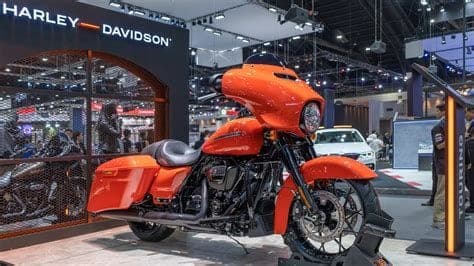
Motorcycle VIN checks share fundamentals with car VIN checks, but they have their own twist: motorcycle theft rates run roughly 3x higher per vehicle than car theft, pre-1981 bikes can have shorter non-standard VINs that confuse most tools, and 'parts-only' or 'restoration-only' titles are far more common in the bike market than the car market. Here's the complete buyer's playbook for used motorcycles in 2026.
60-second answer
Find the VIN at the steering head (right side, stamped into the frame) AND on the engine block — they should both decode to the same model and year. Run the free NICB VINCheck. Pull an NMVTIS-backed history report. Verify the seller's ID matches the title. Match every VIN location before paying.
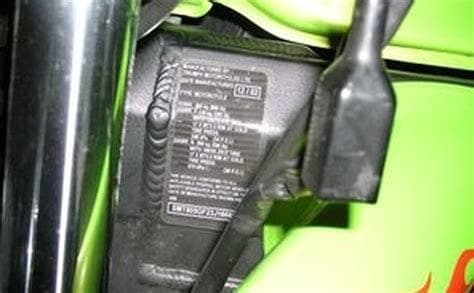
Where to find the VIN on a motorcycle
Unlike cars (which have the VIN in standard locations dictated by federal law), motorcycle VIN locations vary by manufacturer and model year. The common locations:
- Steering head — stamped into the frame on the right side, just below the handlebar mount. Most bikes 1981+ have it here.
- Engine case — separately stamped engine number, often near the cylinder base. On some bikes (especially pre-1981 Japanese imports) this can be the only VIN.
- Frame neck / down tube — older bikes (1960s-70s) often stamp the VIN here instead of the steering head.
- VIN sticker on the lower frame — federal compliance sticker (1981+) usually placed somewhere on the frame, sometimes hidden under panels.
- Title document — should match all of the above exactly.
If you can't find a VIN at all on a bike that should have one, walk away — that's either a stripped/parts bike with no legitimate title, or a stolen bike with the VIN ground off.
Pre-1981 bikes: special considerations
Motorcycles built before 1981 weren't required to use the 17-character VIN standard. Their identification numbers can be anywhere from 5 to 12 characters, with no check digit and no standardized position meanings. Decoding these requires manufacturer-specific reference material — Honda, Harley-Davidson, Triumph, and BSA each have their own conventions.
Title brands and history reporting are also patchier on pre-1981 bikes. NMVTIS coverage is thinner. For vintage bike purchases, lean more heavily on the physical inspection, the bike's title history (specific states have better records than others), and verification with the manufacturer or a marque-specific registry.
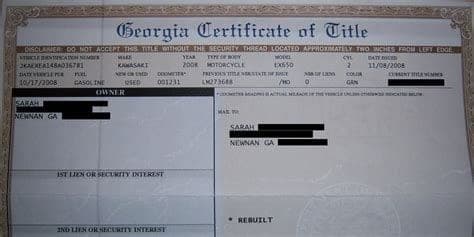
Motorcycle-specific title brands
Most car title brands apply to bikes (salvage, rebuilt, flood, theft recovery). A few are more common or have specific bike-world meanings:
- Parts Only / Non-Repairable — the bike cannot be re-titled for road use. Often a stripped frame or a totaled bike. If you're buying for parts, fine; if you're hoping to register and ride, walk away.
- Salvage — total-loss declared. Re-titleable as 'rebuilt' if inspected and repaired per state law.
- Rebuilt / Restored — was salvage, passed inspection. Insurance premiums roughly double for rebuilt bikes; resale value drops 30-40%.
- Flood / Submersion — water-damaged bike. Engine internals are especially vulnerable; many flood bikes have hidden corrosion that surfaces 12-18 months later.
- Theft Recovery — was reported stolen, then recovered. If undamaged, often a non-issue. If recovered after a chase or crash, frequently followed by a salvage brand.
Theft is the dominant motorcycle risk
Motorcycles are stolen at roughly 3x the per-vehicle rate of cars, per NICB data, and stolen bikes resurface on private-party markets faster than stolen cars (smaller, easier to move, easier to part out).
The free NICB VINCheck is the right first step for every used motorcycle purchase. NICB covers most participating insurance carriers' stolen-vehicle reports and is the easiest way to catch a recently-stolen bike. Five free searches per IP per day, no signup.
Pair NICB with a paid NMVTIS-backed history report for a more comprehensive picture — NMVTIS includes title brand history across all states, ownership transfers, and any state-recorded theft or recovery event going back years.
Physical inspection: motorcycle-specific checks
Frame and steering head
Look closely at the steering head VIN. The numbers and letters should be uniform depth, in a consistent font, with even spacing. Re-stamped VINs are typically uneven and may show grinding marks where the old VIN was removed. The compliance sticker (if present) should be intact and not show signs of being re-applied.
Engine
Compare the engine VIN/serial number to the title. They should match the model and year of the rest of the bike. A 2018 frame with a 2009 engine is either a parts bike or a previously-totaled bike with a swapped powertrain — either case warrants a deep discount and a focused mechanical inspection.
Frame for damage
Look down the frame from the back of the bike to the front. The frame should be perfectly straight; any kink, bend, or paint inconsistency around the steering head, swingarm, or rear shock mount is evidence of a previous crash. Even minor frame damage on a motorcycle is unsafe at speed.
Fluids and engine internals
Check the oil for water (a milky color indicates flooding or coolant intrusion). Listen for unusual engine noises at startup and at idle. Verify the bike starts cleanly without excessive choke or assistance — hard starts on a 'maintained' bike usually signal carb or fuel-injection issues that aren't cheap to fix.
Title-jumping and 'open titles'
A common sketchy practice in the bike world: the seller has the title signed by the previous owner but never actually transferred it to their own name. They then 'jump' the title to you. This is illegal in most states and can leave you unable to register the bike. Always verify the seller's name is on the title document — if it isn't, walk away regardless of how good the story sounds.
Insurance considerations
Motorcycle insurance reacts more strongly to title brands than car insurance does. A rebuilt motorcycle title typically results in:
- Liability-only coverage from major carriers — comprehensive and collision often unavailable.
- 20-40% higher liability premiums.
- Loan-to-value caps from financing lenders, or outright loan denials.
- Resale value 30-50% below clean-title equivalents.
If you're buying a rebuilt-title bike, run the insurance quote before you commit. The premiums and financing constraints can erase the savings from the cheaper purchase price.
The complete used-motorcycle VIN checklist
- Find the VIN at the steering head, on the engine, and on the federal compliance sticker. All three must match.
- Verify the VIN on the title matches all physical locations.
- Verify the seller's name on the title matches their government ID.
- Run the free NICB VINCheck.
- Pull an NMVTIS-backed vehicle history report.
- Inspect the frame for straightness, re-stamped VIN, or paint inconsistency around the steering head.
- Verify the engine number matches the model and year of the rest of the bike.
- Check fluids, start the bike cold, listen for unusual noises.
- Get an insurance quote before agreeing to a price.
- Pay at a bank with the title transferred in front of you.
What to do next
Motorcycles get stolen more often, get parted out more often, and turn up as 'open titles' more often than cars. The VIN-check process is the same fundamentals but the diligence is more critical. Run the free checks before driving to see any bike — then run the paid report before negotiating price.
About the author
CarCheckerVIN Editorial Team
In-house automotive research team
The CarCheckerVIN editorial team combines decades of automotive industry, dealer, and journalism experience to produce trustworthy buying, selling, and ownership guidance backed by NMVTIS, NICB, and manufacturer data.
See more of our guides on Google
Add CarCheckerVIN as a preferred source and Google will show our guides more often in your results.

Keep reading
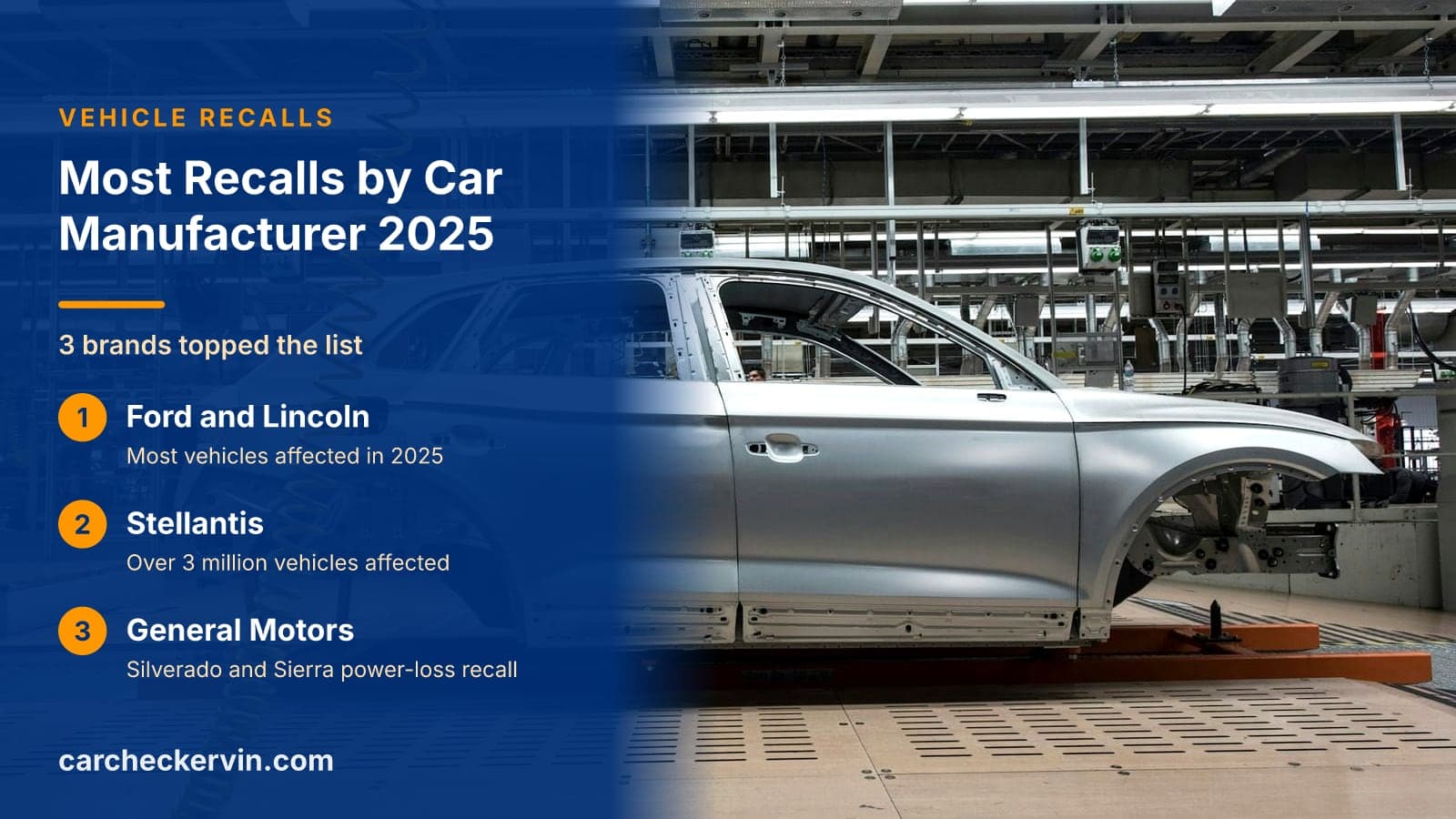
Most Recalls By Car Manufacturer 2025: Which Brands Put Buyers at Risk
Recall volume varies wildly by brand. Before buying used, know which manufacturers topped NHTSA's 2025 recall lists — and what that means for your wallet and safety.
Oct 6, 2026 · 10 min read
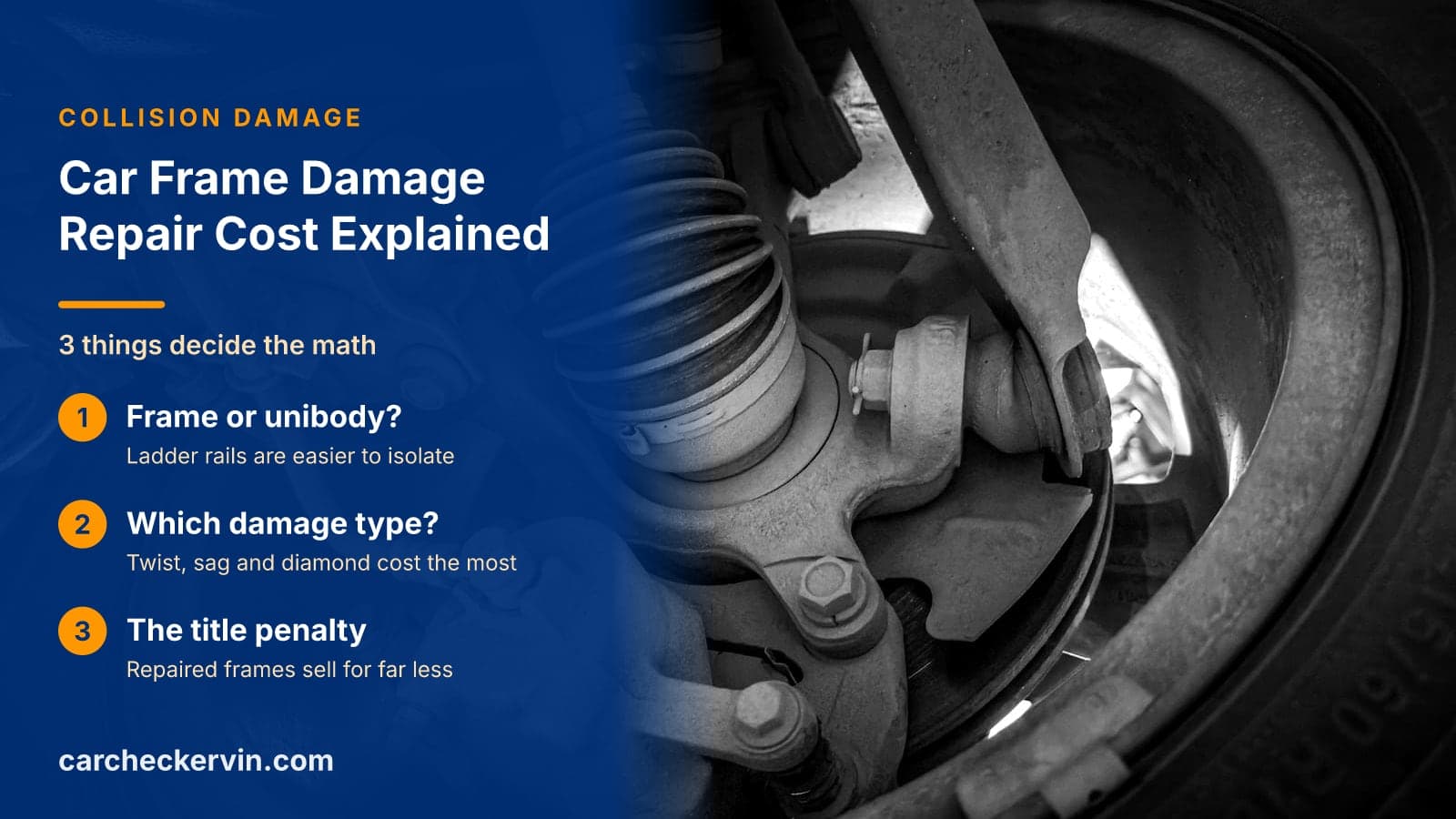
Car Frame Damage Repair Cost: What Buyers and Owners Actually Pay
Frame damage can turn a promising used-car deal into a money pit. Here is what repairs actually cost, which damage types are fixable, and when the math says walk away.
Sep 30, 2026 · 11 min read
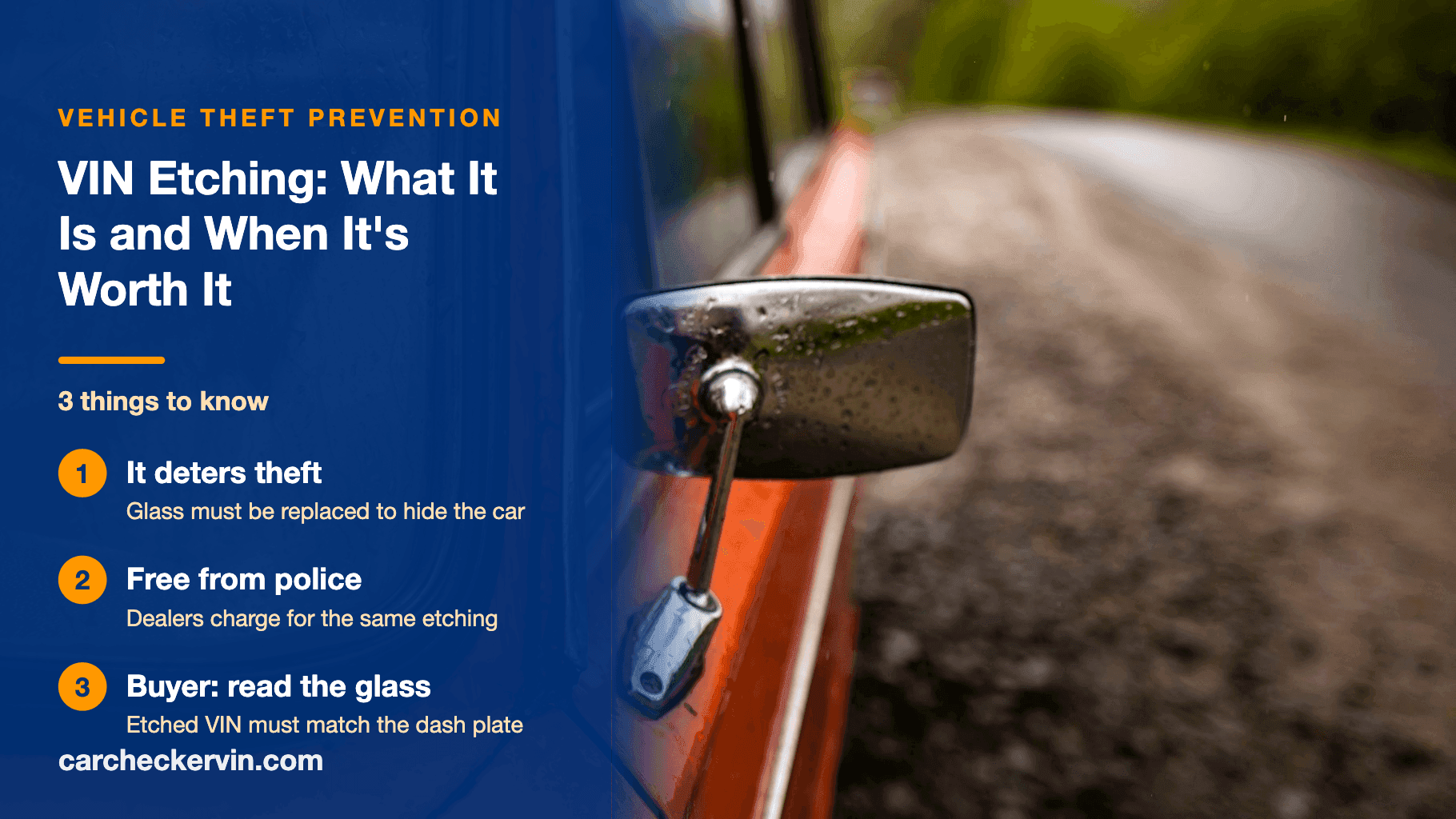
VIN Etching: What It Is, How It Works, and When It's Worth Paying For
VIN etching engraves your car's 17-character VIN into its window glass so a thief can't resell the car or its parts without replacing every pane. It's a real deterrent, it's often free, and it's also one of the most marked-up add-ons on a dealer's menu. Here's how to tell the two apart.
Sep 16, 2026 · 10 min read