VIN Check for Cars Under $5,000: What to Watch For
Sub-$5K used cars hide more problems per dollar than any other category. Here's the VIN check, physical inspection, and walk-away rules that protect you.
Check the car you're reading about
Free VIN decode and recall check
Factory specs and open NHTSA recalls in seconds. No sign-up.

The under-$5,000 used-car market is the riskiest segment of the entire used-vehicle world — and it's also the most important to get right, because buyers in this price band typically have the least margin for a bad purchase. A $4,000 car that needs a $3,000 transmission within six months is a financial disaster; the same problem on a $25,000 car is an annoyance.
Here's the focused VIN-and-physical checklist that catches the worst risks in this price band before you commit cash. The order matters: cheaper risks to check come first, expensive ones last.
60-second answer
Run a VIN history report (~$15) before the test drive. Check the title brand, the odometer history, and any reported total-loss events. Then do a 15-minute physical inspection focused on fluid leaks, frame straightness, and electrical health. Reject anything with a salvage or rebuilt title at this price band unless you have a mechanic backing you up.
Why sub-$5K is the highest-risk segment
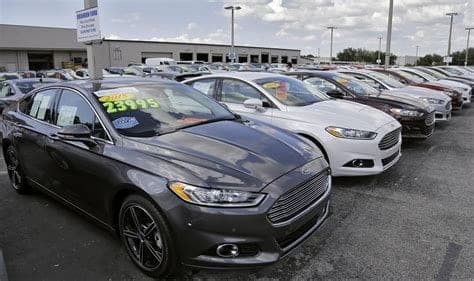
Cars selling for less than $5,000 in 2026 fall into a few specific buckets. Each has its own risk profile.
- 10-15 year old mainstream sedans (Camry, Accord, Corolla) with 150,000+ miles — usually mechanically sound but with deferred maintenance.
- 8-12 year old US-brand vehicles (Focus, Cruze, Cobalt) — known model-specific issues that depress value.
- Salvage / rebuilt title vehicles of more recent vintage — drivable but with all the branded-title downsides.
- Flood, hail, or accident vehicles being moved through low-end dealer lots after light cosmetic repair.
- First-generation hybrid or EV vehicles with battery degradation that's not yet catastrophic.
Each bucket can produce a great deal or a disaster. The only way to know which one a specific car belongs to is the combination of a vehicle history report and a competent inspection.
Step 1: Vehicle history report (before the test drive)
Spend the $10–20 on a full NMVTIS-backed history report before you drive to see the car. The report will surface every title brand, every state of registration, every reported total-loss event, every odometer reading, and every recorded insurance claim. In the under-$5K segment, the things you're most likely to find that should kill the deal are:
- Salvage or rebuilt title — at this price band you usually can't afford the insurance and resale penalties.
- Flood total-loss event in the last 10 years — corrosion is a permanent enemy.
- Multiple state-hopping in a short window (e.g. 3 states in 2 years) — strong indicator of title washing or commercial flipping.
- Odometer history with a downward step — the car was rolled back.
- Recent (last 12 months) total-loss event with no rebuilt title issued — title may not be valid for road use.
Step 2: Physical inspection (the 15-minute version)
If the history report passes, drive to see the car with a flashlight, a pair of cheap nitrile gloves, and a magnet. The walk-around takes 15 minutes and catches 80% of the problems that should kill a sub-$5K purchase.
Outside
Look down the side panels at a shallow angle. Paint waves and color mismatches indicate body work — fine on its own, but a clue to look harder elsewhere. Use the magnet on metal body panels to test for filler (the magnet won't stick to filler). Examine every panel gap; uneven gaps indicate either a previous accident or a poor reassembly.
Under the hood
Look for oil leaks at the valve cover, the oil pan, and the transmission case. Surface dust or grease is normal; wet, oily residue with road grime stuck to it is a leak. Smell the engine oil on the dipstick — gasoline or coolant smell indicates internal damage. Pull the radiator cap (cold engine only) and look for an oil sheen on the coolant; that's a head gasket telltale.
Underneath
Crawl under the car (or have a mechanic do it). Look at the frame rails and floor pans. Surface rust is normal; flaking, pitted, or perforated metal is not. Look at the brake lines, fuel lines, and exhaust hangers — wholesale corrosion replacement is a $1,500+ job and on a $4,000 car the math doesn't work.
Inside
Smell for mildew. Lift the floor mats and feel the carpet. Pull the back seat (most lift out with a tug). Check that every electrical accessory works: windows, locks, heated seats, infotainment, climate, defroster, mirrors. Multiple electrical glitches on an older car suggest flood damage or rodent-chewed wiring.
Test drive
Drive at least 15 minutes including stop-and-go, highway speed, and a full-throttle acceleration. Listen for transmission slippage, drivetrain clunks, and brake pulsation. Pull over and check fluid levels are unchanged. Park, leave the engine running, and walk around looking for new leaks dripping onto the ground.
Walk-away triggers at this price point
- Salvage or rebuilt title (unless you're a mechanic and have inspected the original repair invoice).
- Any check-engine light that the seller hasn't already diagnosed — the diagnosis often costs more than the car's worth.
- Frame rust beyond surface staining — structural welding is uneconomical at this price.
- Transmission slippage under load — replacement averages $2,500-4,000.
- Multiple flood indicators on a car not titled in a coastal state — title washing.
- Seller won't release the VIN for a history report or won't allow a pre-purchase inspection.
The 30% rule for cheap cars
Budget a repair fund equal to 30% of the purchase price for the first 6 months of ownership. A $4,000 car needs a $1,200 cushion. If you can't put that aside, you can't actually afford that car — buy something cheaper and bank the difference, or wait until you can afford to buy in the $7,000–$9,000 band where reliability sharply improves.
The case for spending slightly more
Reliability data on used vehicles in 2026 shows a clear inflection point at the $7,000–$10,000 mark for typical 8–12 year old sedans. Below that line, the cars selling are largely those with significant deferred maintenance, branded titles, or known mechanical issues. Above that line, the same models from the same year typically have full service history, clean titles, and lower remaining-life risk.
If you can stretch to $7,500 instead of $4,500, the expected total cost of ownership over three years often comes out lower despite the higher entry price. Run the numbers on a few candidates before committing to the cheapest option.
What to do next
Decide on a maximum total budget (purchase + first-6-month repair cushion). Run a VIN history report on any car you're considering before you drive to see it. Reject anything with a salvage title, flood total-loss, or odometer rollback indicators. The cheapest car you can find is rarely the cheapest car you can own.
About the author
CarCheckerVIN Editorial Team
In-house automotive research team
The CarCheckerVIN editorial team combines decades of automotive industry, dealer, and journalism experience to produce trustworthy buying, selling, and ownership guidance backed by NMVTIS, NICB, and manufacturer data.
Keep reading

Consumers Auto Loan: How to Finance Your Next Car Without Getting Burned
A consumers auto loan is the single biggest variable in your car deal — bigger than the sticker price. Here's how to lock in the best rate before you ever step on a lot.
Oct 16, 2026 · 10 min read
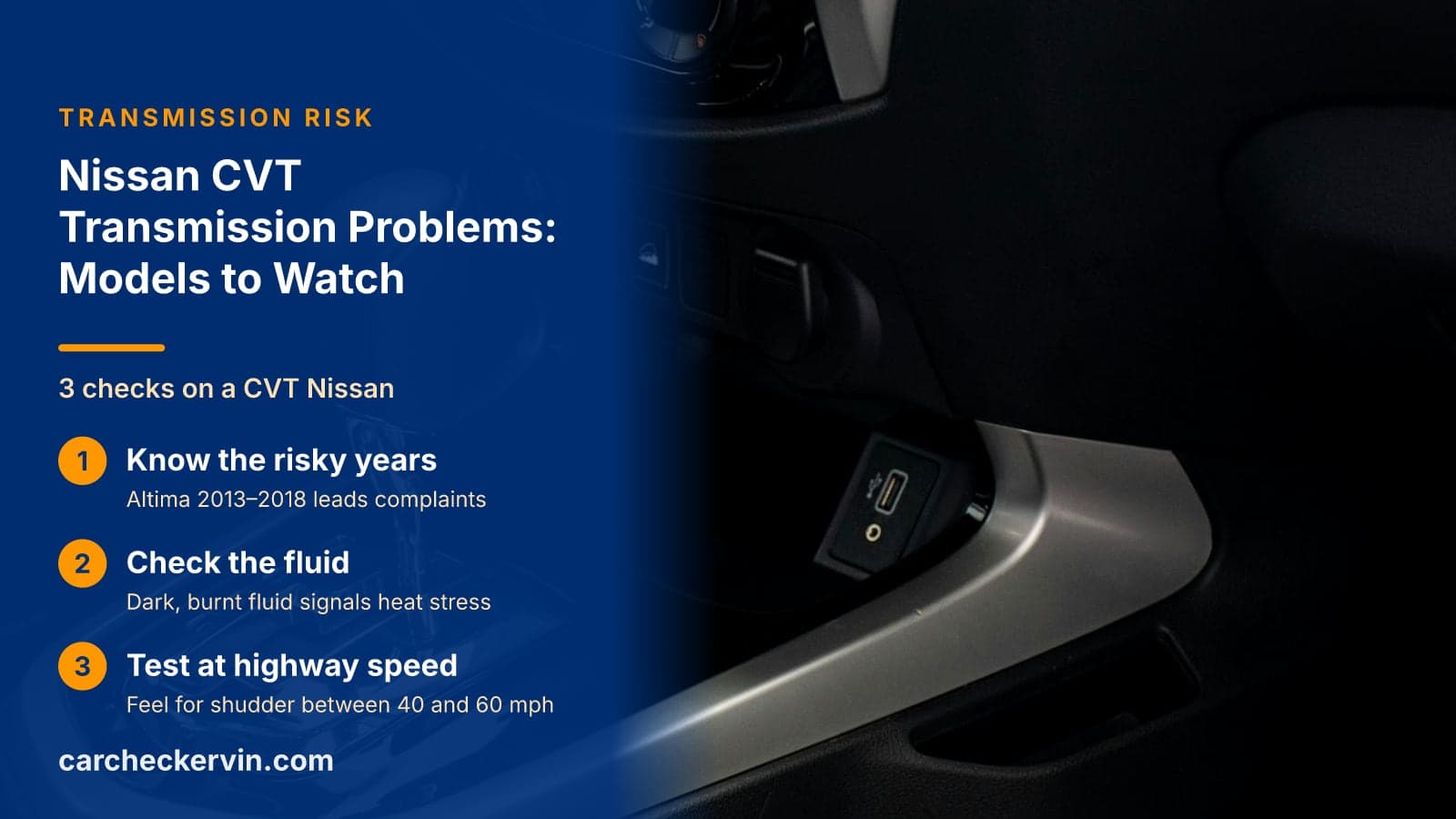
What Nissan Cars Have CVT Transmission Problems — And What to Do Before You Buy
CVT trouble is real across multiple Nissan models. Before you buy a used Altima, Sentra, or Rogue, know which years are risky, what repairs cost, and whether a Nissan CVT transmission recall covers it.
Oct 16, 2026 · 12 min read

Car Warranty Coverage: What You Actually Get and What to Watch Out For
Before you buy a used car or sign an extended warranty contract, know exactly what car warranty coverage includes, what it excludes, and which plans deliver real value.
Oct 15, 2026 · 11 min read