VIN Check for Classic & Vintage Cars: How to Verify Pre-1981 Vehicles
Pre-1981 VINs lack a standard format, making classic car history verification harder — and fraud easier. Here's how to navigate the process before you spend five figures on a vintage ride.
On this page
- Why Pre-1981 VINs Are a Different Animal
- Where to Find — and Physically Verify — a Vintage VIN
- The Limits of Digital Databases for Classic Car History
- Offline Verification: Factory Records and Marque-Specific Resources
- Title Washing and Odometer Fraud on Vintage Vehicles
- What a Professional Pre-Purchase Inspection Should Cover
- Red Flags That Should Stop a Purchase Cold
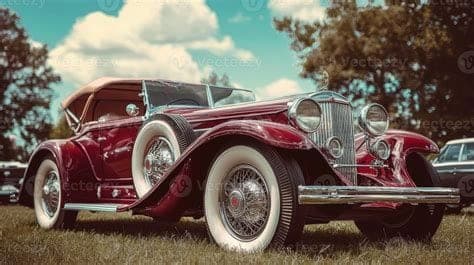
Someone lists a 1967 Shelby GT500 for $145,000 with a VIN stamped into the inner fender — and the buyer, understandably excited, wires a deposit before running any verification. Three months later, a Marti Report reveals the VIN belongs to a base-model Mustang, and the "Shelby" is a well-executed clone with a swapped tag. This is not a hypothetical; the National Insurance Crime Bureau (NICB) has flagged VIN cloning and re-stamping on classic vehicles as a persistent fraud vector, and the problem is structurally worse on pre-1981 cars because there was no federally mandated 17-character VIN standard before that model year. Running a classic car VIN check demands a fundamentally different approach than checking a 2019 Camry, and buyers who skip the extra legwork are the ones who end up owning $80,000 problems disguised as six-figure collectibles.
60-second answer
Pre-1981 vehicles used manufacturer-specific VIN formats that vary in length, location, and encoding, so a classic car VIN check requires cross-referencing the stamped number against factory records, state title history, and physical inspection — standard NMVTIS databases often have limited or no data on these vehicles.
Why Pre-1981 VINs Are a Different Animal
The 17-character VIN system Americans take for granted traces back to 49 CFR Part 565, which NHTSA finalized in 1981 to create a uniform identification standard across all manufacturers selling vehicles in the United States. Before that cutoff, automakers used their own proprietary numbering schemes — General Motors might stamp a 13-character code on the dashboard pillar, while Ford used an 11-character sequence on the driver's door jamb, and Chrysler placed its own format on multiple body locations. The lack of uniformity means that the National Motor Vehicle Title Information System (NMVTIS), which aggregates title, salvage, and insurance data from all 50 states, typically has sparse or nonexistent records for vehicles manufactured before 1981. When a buyer runs a pre-1981 VIN through a standard database, the result is often a blank screen rather than a reassuring green checkmark — and that absence of data is precisely what fraudsters exploit.
Where to Find — and Physically Verify — a Vintage VIN
The first challenge with any vintage VIN verification is simply locating every instance of the number on the vehicle. Unlike modern cars, where the VIN appears in a standardized dashboard location visible through the windshield plus the driver's door jamb, classic vehicles often carried their identification numbers stamped into the frame rail, the inner fender, the firewall, the engine block, and sometimes the transmission housing. A legitimate matching-numbers vehicle will have consistent codes across all these locations, and any discrepancy — different fonts, uneven stamping depth, signs of grinding or re-stamping — is an immediate red flag that the car's identity may have been altered. Serious buyers should bring a flashlight, a mirror, and a healthy dose of skepticism to any in-person inspection.
- Dashboard or windshield pillar plate — common on GM vehicles from the late 1960s onward.
- Driver's door jamb or door data plate — Ford and Chrysler frequently used this location, encoding body style, paint code, and trim level alongside the serial number.
- Frame rail and engine block stampings — these are the hardest to forge convincingly because they are cast or deeply stamped into raw metal, and a mismatch here often signals a replacement engine or, worse, a re-VINed chassis.
- Cowl tag or firewall plate — typically riveted in place; look for non-original rivets, mis-aligned holes, or solder marks indicating a replacement tag.
The Limits of Digital Databases for Classic Car History
Modern VIN check services — including Carfax, AutoCheck, and the free NICB VINCheck tool — were built around the 17-character standard, and their data coverage drops off dramatically for vehicles titled before the early 1980s. Carfax, for instance, openly states that its records are most reliable from the mid-1980s forward, and AutoCheck draws from Experian's database, which has similar temporal limitations. Running a classic car VIN check on the CarCheckerVIN vin-check page can still surface useful title and theft records when a state DMV has digitized its older files, but buyers should treat any digital result on a pre-1981 vehicle as a starting point rather than a final verdict. The real investigative work happens offline.
Offline Verification: Factory Records and Marque-Specific Resources
For high-value classics, the gold standard of classic car history verification is a factory build record or production database maintained by marque-specific organizations. Ford owners can order a Marti Auto Works report, which draws from Ford's original production database and can confirm the original engine, transmission, axle ratio, and color for most 1967–2012 Ford, Lincoln, and Mercury vehicles. Pontiac Historic Services (PHS) provides similar documentation for Pontiac models from 1960 through 1979, while the Corvette community relies on the National Corvette Museum and tank sticker reproductions derived from GM's Tonawanda or St. Louis plant records. These reports typically cost between $25 and $80, a negligible expense on a car that might sell for $50,000 to $500,000, yet a surprising number of buyers skip them entirely.
- Run the vintage VIN through the NICB's free VINCheck tool at nicb.org to screen for active theft records — this is the one federal-level database that sometimes contains pre-1981 entries because stolen vehicle reports are filed regardless of model year.
- Order a state title history from the DMV in every state where the car was previously registered; some states, including California, Ohio, and Pennsylvania, maintain records going back decades and can reveal prior salvage brands or odometer discrepancies.
- Request a marque-specific build record (Marti Report, PHS documentation, or equivalent) to confirm the vehicle's original factory specifications against what the seller claims.
- Hire a qualified appraiser or marque specialist to perform a hands-on inspection of all VIN locations, verifying stamp consistency, font correctness, and the absence of re-stamping indicators.
- Cross-reference the VIN against auction house records from Mecum, Barrett-Jackson, Bring a Trailer, or Hagerty's valuation tools, which often maintain provenance histories for vehicles that have passed through their platforms.
Re-Stamped and Cloned VINs Are More Common Than You Think
The NICB's annual reports consistently identify VIN cloning as a top method of vehicle fraud, and classic cars are disproportionately targeted because a $3,000 base-model Chevelle can be re-tagged and resold as a $75,000 SS 396 with relatively minor cosmetic work. Federal law under 18 U.S.C. § 511 makes it a crime to alter, remove, or tamper with a VIN, but enforcement on pre-1981 vehicles is difficult precisely because there is no centralized standard to check against. If a deal seems too good relative to Hagerty or KBB Classic values, treat that price gap as a warning, not a bargain.
Title Washing and Odometer Fraud on Vintage Vehicles
Federal odometer disclosure requirements under 49 U.S.C. § 32703 exempt vehicles that are 10 model years old or older from mandatory mileage reporting on title transfers, which means that for any classic car, the title will almost certainly read "odometer exempt." This exemption, while logical for vehicles with five- or six-digit mechanical odometers that have long since rolled over, creates an information vacuum that unscrupulous sellers exploit by misrepresenting total mileage or the extent of a restoration. Similarly, title washing — the practice of re-titling a salvage-branded vehicle in a state with weaker branding laws to obtain a clean title — is easier with older vehicles because many states never issued salvage brands for cars damaged before their salvage-title statutes took effect. A thorough classic car VIN check therefore needs to include a manual review of every prior title, not just the current one.
What a Professional Pre-Purchase Inspection Should Cover
Beyond VIN verification, any pre-purchase inspection on a classic vehicle should address structural integrity (checking for Bondo-filled rust, frame cracks, and poorly executed panel replacement), drivetrain originality (matching casting numbers on the engine block, heads, intake manifold, and transmission case), and documentation provenance (original window stickers, dealer delivery receipts, service records, and prior registration cards). Services like Inspection Heroes and LemonSquad offer nationwide classic car inspections starting around $200 to $350, though for rarities worth six figures, engaging a recognized marque expert — someone with Automotive Fine Arts Society connections or AACA judging credentials — is the smarter spend.
Red Flags That Should Stop a Purchase Cold
- The seller refuses to allow an independent inspection or will not provide the VIN before a deposit.
- VIN stampings on different parts of the car do not match, or the stamping appears unusually shallow, crooked, or inconsistent with factory tooling for that make and year.
- No prior title history is available, and the car is being sold on a bill of sale only — while some states allow this, it dramatically increases the risk of purchasing a stolen or illegally re-VINed vehicle.
- The asking price is significantly below Hagerty, Edmunds Classic, or recent Bring a Trailer results for a comparable example, with no clear explanation such as needed mechanical work or incomplete restoration.
What to do next
Before spending a dollar on any pre-1981 classic, run the VIN through our vin-check tool to capture whatever digital records exist, then layer on a marque-specific factory report and a hands-on inspection by a qualified specialist. The combination of a digital classic car VIN check, offline documentation, and physical verification is the only reliable way to separate a genuine matching-numbers classic from an expensive fake — and it typically costs less than $500 total, a fraction of the financial pain of buying the wrong car.
CarCheckerVIN Editorial Team
In-house automotive research team
The CarCheckerVIN editorial team combines decades of automotive industry, dealer, and journalism experience to produce trustworthy buying, selling, and ownership guidance backed by NMVTIS, NICB, and manufacturer data.
Ready to check a VIN?
Run a free VIN check
Decode any vehicle in under 60 seconds.