Is a Rebuilt Title Car Worth Buying? A Straight-Talk Buyer's Guide
Rebuilt-title cars can save you real money — or cost you more than you saved. Here's how to tell which situation you're walking into before you hand over a check.
On this page
- What 'Rebuilt Title' Actually Means Under U.S. Law
- Is a Rebuilt Title Car Worth Buying? The Price Discount Explained
- Types of Damage: What's Repairable and What Isn't
- The Insurance Reality Nobody Mentions in the Listing
- Cost vs. Risk: Running the Numbers on a Real Scenario
- The Pre-Purchase Inspection: Non-Negotiable on a Rebuilt Title
- Financing, Registration, and Legal Disclosures You Need to Know
- Where Rebuilt Title Cars Come From: Auctions and the Supply Chain
- When a Rebuilt Title Is Actually a Smart Buy
- The Bottom Line: How to Make the Decision
So you've found a car priced well below market, and the listing mentions a rebuilt title. Now you're staring at it wondering: is a rebuilt title car worth buying, or is this the automotive equivalent of buying a lottery ticket? The honest answer is that it depends heavily on what damaged the car, how well it was repaired, and what you plan to do with it — and those three variables swing the outcome from 'smart buy' to 'money pit' pretty decisively. This guide walks you through the real trade-offs so you can make the call with open eyes.
The short answer
A rebuilt title car can be worth buying if the damage was minor and well-documented, the price discount is large enough to absorb ongoing insurance and resale penalties, and an independent mechanic has inspected every repaired system. Skip any of those three conditions, and the math rarely works in your favor.
What 'Rebuilt Title' Actually Means Under U.S. Law
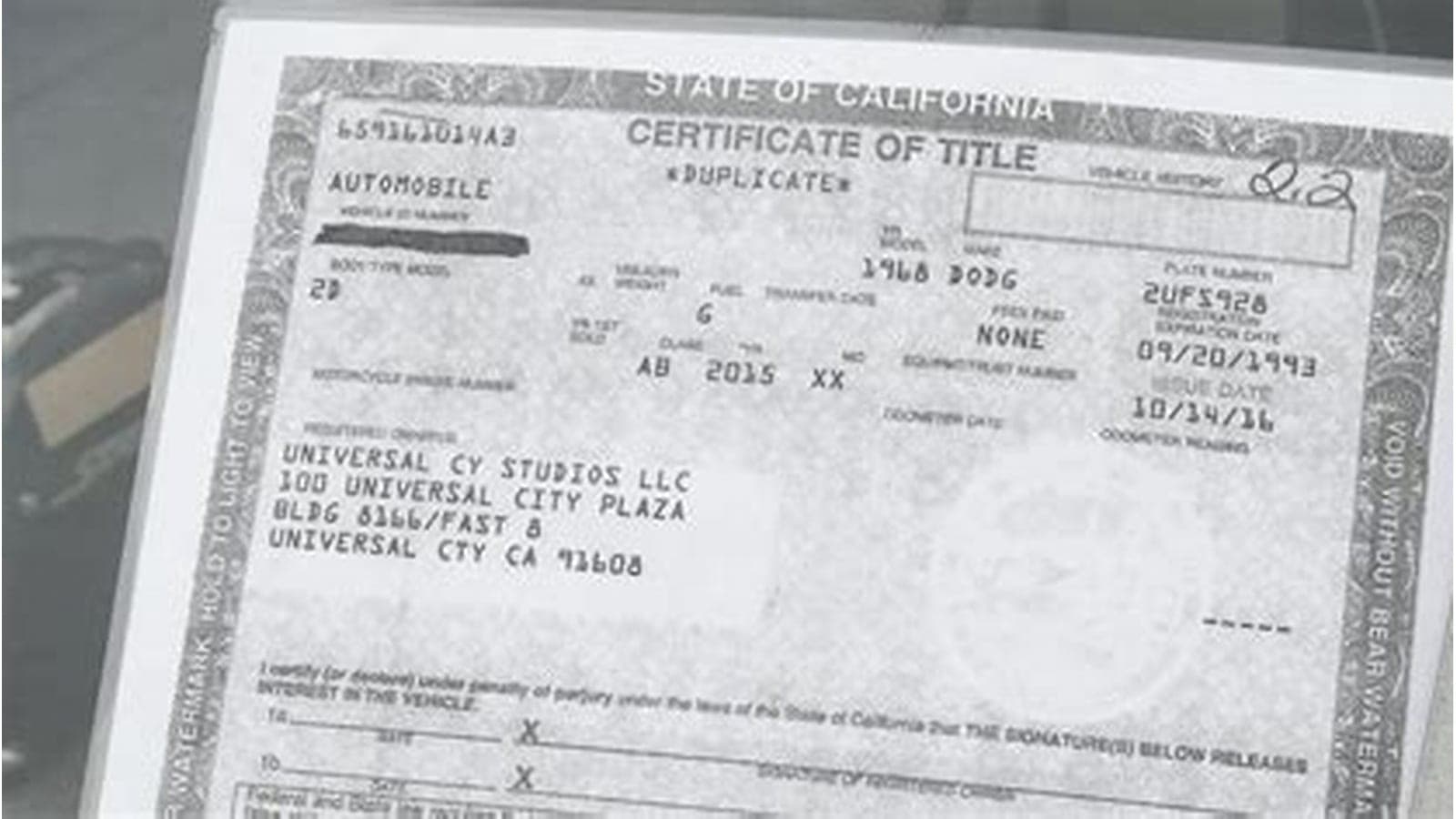
A rebuilt title — sometimes called a 'rebuilt salvage' or 'reconstructed' title depending on the state — is issued after a vehicle that previously received a salvage title has been repaired and passed a state inspection. The National Motor Vehicle Title Information System (NMVTIS), the federal database that aggregates title histories across all 50 states, records both the original salvage brand and the subsequent rebuilt brand permanently. There is no way to wash that record clean. The trigger for a salvage declaration is usually an insurer's total-loss decision, which under most state statutes kicks in when repair costs reach or exceed a threshold — commonly 75 percent to 80 percent of the vehicle's actual cash value, though the exact percentage varies by state.
The category of damage that caused the salvage determination matters enormously. Flood damage, fire damage, and major structural damage to the unibody or frame are very different propositions from hail or theft-recovery salvage where the car was technically totaled by paperwork rather than physics. NMVTIS title brand definitions are standardized at the federal level, but state DMVs add their own sub-brands — Texas uses 'non-repairable,' California uses 'dismantler,' and so on — so the exact language on the title tells you something about origin, even if it doesn't tell you everything.
Salvage vs. Rebuilt: The Two-Step Process
A salvage title means the car has been declared a total loss but has not yet been inspected post-repair. A rebuilt title means it has been repaired and passed the state's inspection — though those inspections vary widely in rigor. Some states send a licensed inspector to physically examine the vehicle; others require only paperwork and a VIN verification. Neither guarantees the quality of the underlying repair work.
Is a Rebuilt Title Car Worth Buying? The Price Discount Explained
The financial case for a rebuilt title vehicle rests almost entirely on purchase price. According to Kelley Blue Book's valuation methodology, a rebuilt or salvage title typically reduces a vehicle's private-party market value by 20 percent to 40 percent compared to a clean-title equivalent. That's a meaningful discount — on a $25,000 comparable clean-title sedan, you might pay $15,000 to $20,000 for the rebuilt version. Whether that spread adequately compensates for the risks and ongoing costs is the core question this guide exists to answer.
The discount you see at purchase is only the beginning of the financial story. Resale value compounds the penalty: when you go to sell, the next buyer will apply the same 20-to-40-percent haircut to whatever the car is worth at that point. If you hold the vehicle for five years and plan to trade it in at a dealership, be aware that many franchise dealers refuse rebuilt-title trade-ins entirely, or offer nominal amounts and wholesale them to auction. The exit matters as much as the entry.
Buyers who get the most value from rebuilt-title vehicles tend to plan to hold them for the long term, pay cash, don't need to finance through conventional lenders (many of whom will not write loans on rebuilt titles), and have access to a trusted mechanic who can assess repair quality before purchase. If you're financing at a buy-here-pay-here lot, a rebuilt title adds another layer of risk you probably don't need.
Types of Damage: What's Repairable and What Isn't
Not all total-loss declarations reflect catastrophic structural failure. Understanding what caused the salvage title is arguably more important than the title brand itself. Hail damage, for example, can produce repair estimates that exceed 75 percent of a vehicle's value on a newer car — even though the car's mechanicals, frame, and safety systems are completely untouched. The same logic applies to theft-recovery vehicles where the stereo was ripped out and the ignition punched. These categories often represent the best rebuilt-title opportunities.
At the other end of the spectrum sit flood, fire, and rollover vehicles. The National Highway Traffic Safety Administration (NHTSA) has documented that flood-damaged vehicles can suffer long-term electrical degradation that doesn't manifest immediately — corrosion works slowly, and a car that runs fine at inspection may develop cascading electrical failures over 12 to 24 months. Rollover vehicles frequently sustain roof crush and pillar damage that compromises occupant protection in a future crash even after cosmetic repair. Frame and unibody repairs are only as good as the shop that performed them, and improper repairs can affect airbag deployment thresholds.
Damage Categories Ranked by Buyer Risk
- Hail or cosmetic damage only — lowest mechanical risk, easiest to verify with a visual inspection and vehicle history report
- Theft recovery (stripped interior or ignition) — verify VIN plates are intact and no structural damage occurred during the theft
- Minor collision damage — get the repair records and have a frame measuring check performed; misaligned geometry is a silent safety issue
- Major collision with airbag deployment — airbag module replacement and clockspring integrity must be independently verified
- Flood damage — highest ongoing risk; pull the vehicle history report and look for salt or sediment in carpets, electrical connectors, and HVAC housing
- Fire damage — often non-repairable in practice; walk away unless you have extraordinary documentation of the repair scope
The Insurance Reality Nobody Mentions in the Listing
Insurance is where many rebuilt-title purchases quietly fall apart. Most major carriers will write liability coverage on a rebuilt-title vehicle without issue — you can legally drive it. The problem is comprehensive and collision coverage. According to the Insurance Information Institute, many insurers either refuse to write comp and collision on rebuilt-title vehicles entirely, or they will write it but cap the payout at a significantly lower actual cash value than a clean-title equivalent would receive, because they price in the pre-existing title brand when calculating settlement.
Practically speaking, if you're financing the vehicle, your lender will require full coverage — and if your insurer won't write it or quotes it at a premium that effectively erases your purchase-price savings, you have a problem before you've driven the car home. Call your insurance agent before you make an offer, not after. Get a written quote for comprehensive and collision on the specific VIN, and factor that annual premium into your cost-of-ownership math. Some specialty insurers — including State Auto and certain Lloyd's of London-backed surplus-line carriers — do offer competitive comp and collision on rebuilt titles, so shop specifically for those.
Cost vs. Risk: Running the Numbers on a Real Scenario
Let's put actual numbers on this decision. Take a three-year-old midsize SUV with a clean-title private-party value of $28,000 per Kelley Blue Book. A comparable rebuilt-title example is listed at $19,500 — a discount of roughly 30 percent, or $8,500 in upfront savings. Sounds compelling. Now subtract: a pre-purchase inspection from an independent mechanic runs $150 to $300 nationally according to RepairPal data. Specialty comp/collision insurance might cost $400 to $600 more per year than the clean-title equivalent, per Insurance Information Institute survey data. Over a five-year hold, that's $2,000 to $3,000 in additional insurance cost alone.
At resale, apply another 25-percent rebuilt-title penalty to the vehicle's future clean-title value. If the SUV would be worth $18,000 clean-titled in five years, you'll likely get $13,500 or less — a resale penalty of roughly $4,500. Add the insurance overage and you've consumed $6,500 to $7,500 of that $8,500 initial saving. Your actual net benefit may be $1,000 to $2,000 — before any repairs attributable to the prior damage surface. That math changes significantly if the damage was minor (hail, theft recovery) and the inspection comes back clean. But it argues strongly against rebuilt-title vehicles with uncertain damage histories or flood brands.
The scenario also assumes you can get financing. The Consumer Financial Protection Bureau (CFPB) has noted that many conventional auto lenders exclude rebuilt and salvage titles from their eligible collateral lists, which means you may be limited to cash purchases, credit unions with flexible policies, or buy-here-pay-here lots — the last of which typically charge interest rates that can exceed 20 percent APR in states without rate caps, quickly demolishing any purchase-price advantage.
The Pre-Purchase Inspection: Non-Negotiable on a Rebuilt Title
If there is one absolute rule for buying a rebuilt-title vehicle, it's this: never skip the independent pre-purchase inspection. This isn't the same as having the selling dealer's service department look it over — that's a bit like asking the chef whether the food is good. You want a licensed mechanic with no financial stake in the sale to put the car on a lift and inspect every system that could have been affected by the declared damage type.
For collision-related titles, that means frame and unibody measurement, airbag system scan, and a check of all four corners for suspension geometry. For flood vehicles — and yes, some buyers still attempt them — look for moisture intrusion behind the instrument cluster, corrosion on ECU connectors, and sediment residue in the spare tire well. Ask the seller for repair invoices, parts receipts, and the name of the shop that performed the work. A reputable repair shop will have transferred documentation. A lack of documentation is itself a red flag that tells you the repair was done on the cheap, possibly at an unregulated shop.
What Your Inspector Should Check on a Rebuilt Title
- Frame and unibody geometry measurement with a dedicated frame rack or measuring system — not just a visual check
- OBD-II scan for all modules, including airbag control module (ACM) fault codes and seatbelt pretensioner status
- Paint thickness meter reading at all body panels to identify repainted areas and confirm repair scope matches the claimed damage
- Structural welds: check for quality, coverage, and whether factory spot-weld patterns have been respected or bypassed
- All four-wheel alignment check — improper geometry after collision repair causes uneven tire wear and affects handling
- Fluid sampling or at minimum visual inspection of brake, transmission, and coolant reservoirs for contamination consistent with flood or fire exposure
Financing, Registration, and Legal Disclosures You Need to Know
Federal law requires that dealers give buyers a completed FTC Buyers Guide (also called the 'as-is' sticker) on every used car sale. On a rebuilt-title vehicle sold 'as-is,' that sticker is effectively the dealer's legal disclaimer that no implied warranty of merchantability attaches to the sale. Read it. If the dealer is offering a dealer warranty or certified-pre-owned coverage on a rebuilt title, get every promise in writing — verbal assurances on a rebuilt title are worth exactly nothing if the car has a transmission failure next month.
Registration can also be a minor headache at the DMV depending on your state. Some states require a rebuilt-title vehicle to pass a specific salvage inspection before it can be retitled in the new owner's name — California's Salvage Vehicle Inspection Program administered by CHP, for example, requires a physical inspection of repaired vehicles before a rebuilt title is issued. If you're buying across state lines, verify that the sending state's rebuilt title will be accepted and retitled cleanly by your home state's DMV, because a handful of states will not register another state's 'rebuilt' brand without their own inspection.
Where Rebuilt Title Cars Come From: Auctions and the Supply Chain
The majority of rebuilt-title vehicles available to retail buyers started their post-total-loss life at a salvage auction — primarily Copart or Insurance Auto Auctions (IAA), the two dominant platforms where insurance companies sell total-loss inventory. These auctions sell hundreds of thousands of vehicles per year; Copart alone reported over 1.7 million vehicles sold in its fiscal year 2024 according to the company's annual report. Most buyers at these auctions are licensed dealers, rebuilders, or exporters. The vehicles that get repaired and relisted on retail markets like Craigslist, Facebook Marketplace, or used-car lots represent a fraction of that volume.
The rebuilder's margin matters to you as a buyer. A professional rebuilder buys a flood-damaged SUV at auction, repairs it at a shop they control for costs well below retail labor rates, and resells it at a markup that still looks like a deal to the retail buyer. That's not inherently dishonest — it's how the secondary market works. But it means the quality of the repair is largely determined by how much margin the rebuilder wanted to preserve. Run a vehicle history report on any rebuilt title you consider; that report will often show the auction sale, the selling insurer, and the original loss event, giving you a much clearer picture of what you're actually buying.
When a Rebuilt Title Is Actually a Smart Buy
There are genuine scenarios where buying a rebuilt-title vehicle is the right financial decision. Cash buyers who don't need the vehicle to serve as collateral, who have access to a trusted mechanic, and who plan to hold the vehicle for years rather than months are the classic good candidates. Vehicles with hail damage or theft-recovery histories, where the mechanical and structural systems are intact, often represent the best risk-adjusted value in the used-car market — especially for buyers in regions where hail events are common and supply is predictable.
High-mileage luxury vehicles are another interesting category. A rebuilt-title German luxury sedan at 90,000 miles might sell for $12,000 where a clean-title equivalent is $18,000 — and if you already budget for elevated maintenance costs on that badge, the additional rebuilt-title discount effectively pre-funds those expenses. The math tends to work best when the vehicle's original damage is well-documented, the repair quality is verifiable, and the buyer's holding period is long enough to amortize the ongoing insurance and resale penalties over more miles.
Never skip this step on a rebuilt title
Do not complete a rebuilt-title purchase without pulling a vehicle history report and ordering an independent pre-purchase inspection. The history report tells you what happened and when; the inspection tells you whether the repair holds up. Skipping either one means you're trusting the seller's description of a car that was already damaged once — which is a remarkable amount of faith to place in a Craigslist listing.
The Bottom Line: How to Make the Decision
The rebuilt-title decision boils down to a checklist, not a gut feeling. Pull the vehicle history report first — if it shows a flood or fire brand, most buyers should stop there. If the brand is collision or hail, continue to a pre-purchase inspection from an independent mechanic. Verify insurance availability and cost before making an offer. Request all repair documentation from the seller and confirm the shop that did the work was licensed and insured. If all of those boxes check out and the price discount is at least 20 percent below comparable clean-title examples per Kelley Blue Book, you may have found a genuine value.
If the seller resists inspection, can't produce repair records, or the vehicle history report shows gaps between the salvage declaration and the rebuilt title that don't line up with a credible repair timeline, those are exits, not speed bumps. The supply of used vehicles in the U.S. is large enough that you don't have to force a deal on a car that raises red flags. Patient buyers who run the due-diligence process correctly are the ones who come out ahead on rebuilt-title purchases. Buyers who rush because the price looks irresistible are the ones writing angry forum posts six months later.
What to do next
Before contacting the seller, run a vehicle history report on the VIN to confirm the title brand, the original loss event, and whether the salvage and rebuilt dates form a plausible repair timeline — that single step will tell you whether it's worth spending money on an inspection at all.
CarCheckerVIN Editorial Team
In-house automotive research team
The CarCheckerVIN editorial team combines decades of automotive industry, dealer, and journalism experience to produce trustworthy buying, selling, and ownership guidance backed by NMVTIS, NICB, and manufacturer data.
Frequently asked questions
- Should I avoid buying a car with a rebuilt title?
- Not automatically — but you should avoid buying one without thorough due diligence. Flood, fire, and structural-rollover rebuilt titles carry risks that rarely justify the discount. Hail and theft-recovery rebuilt titles are a different story. The decision depends on damage type, repair documentation, inspection results, and your ability to absorb insurance limitations and resale penalties. Blanket avoidance means missing real value; blanket acceptance means real financial pain.
- What is the $3000 rule for cars?
- The '$3,000 rule' is an informal used-car buyer guideline suggesting you should not spend more than about $3,000 on repairs to make a used car purchase worthwhile — meaning a lower-priced car requiring that much work offers diminishing returns versus buying something better. It's a rough heuristic, not a statute. For rebuilt titles, apply it by estimating deferred repair costs from your inspection report and factoring them into your effective purchase price before deciding.
- How much longer will a rebuilt engine last?
- A professionally rebuilt engine using OEM or equivalent parts can last 100,000 miles or more if properly broken in and maintained — comparable to a factory engine at the same mileage. Quality varies enormously by shop. Ask for the rebuild invoice showing parts used, machine work performed, and warranty offered by the rebuilder. A rebuilt engine with no documentation and no warranty is a coin flip; one with a 12-month parts-and-labor warranty from a reputable shop is a calculable risk.
- How bad is insurance on a rebuilt title?
- Liability coverage is generally available and affordably priced on rebuilt titles. The real problem is comprehensive and collision: many major carriers decline to write it, and those that do often cap actual cash value payouts below what you paid. According to the Insurance Information Institute, the title brand directly affects insurer loss calculations. Get a written full-coverage quote on the specific VIN before you buy — some specialty and surplus-line insurers compete for this business at reasonable rates.
Ready to check a VIN?
Run a free VIN check
Decode any vehicle in under 60 seconds.