Best Used Pickup Trucks To Buy: Top Picks for Every Budget
Whether you need a workhorse or a daily driver, the best used pickup trucks to buy depend on budget, mileage, and history. Here's what to look for — and what to skip.
On this page
- Why the Used-Truck Market Still Favors Buyers
- The Best Used Pickup Trucks To Buy Under $25,000
- Best Used Trucks To Buy Under $15,000
- Best Used Trucks To Buy Under $10,000
- Cost vs. Risk: Full-Size vs. Mid-Size at the Same Price Point
- Heavy-Duty Pickups: When a Three-Quarter-Ton Makes More Sense
- Trim Levels That Offer the Best Value
- Checking Title History and Ownership Records
- Extended Warranties and BHPH Lots: Know the Risk Calculus
You're staring at a lot full of used trucks, or scrolling through Autotrader at midnight, and you need to make a real decision — not read a list of specs. The best used pickup trucks to buy right now are concentrated in a handful of nameplates with proven track records, but the wrong model year or the wrong seller can turn any of them into a money pit. Used-truck prices have cooled from their post-pandemic peak, and according to Cox Automotive's Manheim Used Vehicle Value Index, full-size pickup values dropped roughly 8 percent year-over-year through mid-2025, giving buyers more room to negotiate than they've had in years. That's good news — but it also means more distressed inventory is floating through auctions onto dealer lots. This guide cuts straight to the trucks worth your money, the price bands that make sense, and the years and trim levels to avoid.
The short answer
A 2017–2021 Ford F-150 with a 5.0L V8 or 2.7L EcoBoost, or a 2015–2022 Toyota Tacoma, will give most buyers the best combination of reliability, parts availability, and resale value — run a vehicle history report before signing anything.
Why the Used-Truck Market Still Favors Buyers
Full-size and mid-size pickups dominated new-vehicle sales for decades, which means supply of used examples is enormous. The Ford F-Series has been the best-selling vehicle in the United States for 48 consecutive years according to Ford Motor Company's annual sales data, and that volume translates directly into used inventory. More trucks in the market means more competition between sellers, more parts in junkyards, and more independent mechanics who know these platforms cold. That's a structural advantage you simply don't get with a niche model.
At the same time, the FTC Used Car Rule — enforced through the Buyers Guide sticker that must be posted on every dealer-sold used vehicle — requires dealers to disclose whether the truck comes with any warranty and what systems are covered. Private-party sellers carry no such obligation, which is why a vehicle history report becomes even more critical in those transactions. If you're looking at auction-sourced inventory on a BHPH lot, know that many of those trucks moved through Copart or IAA after an insurance claim, and the NMVTIS title brand may or may not follow the vehicle clearly into the new title.
The Best Used Pickup Trucks To Buy Under $25,000
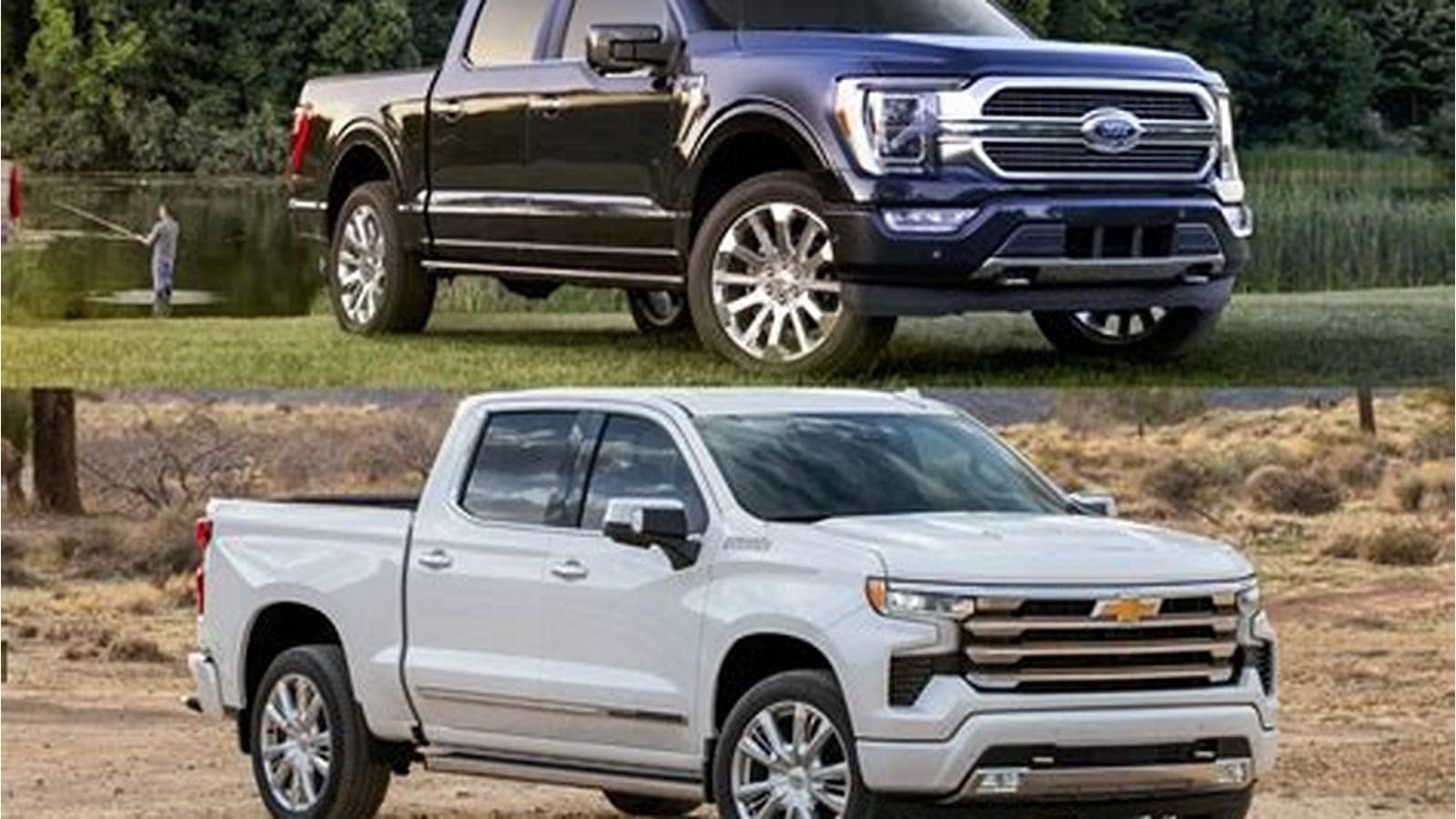
The $20,000–$25,000 range is the sweet spot for late-model, low-mileage used trucks — you can find a 2019–2021 F-150 XLT with under 60,000 miles in this band at most large dealerships. J.D. Power's 2024 U.S. Vehicle Dependability Study ranked the Ford F-150 above the segment average for long-term reliability among full-size light-duty pickups, making it a logical starting point. Look specifically for the 5.0L Coyote V8 or the 2.7L EcoBoost; the 3.5L EcoBoost is capable but carries higher repair costs when the turbos eventually need attention.
The Chevrolet Silverado 1500 and GMC Sierra 1500 from the same generation — 2019–2022, the T1 platform — are strong alternatives. The 5.3L V8 in these trucks is one of the most bulletproof engines GM has ever shipped, with a well-documented service life past 200,000 miles in owner communities tracked by sites like TruckTrend. Avoid the 8-speed automatic paired with the 4-cylinder turbo in early T1 builds; GM issued Technical Service Bulletins addressing transmission shudder, and those fixes aren't always documented in the vehicle's service history.
RAM 1500 Classic vs. RAM 1500 (DT): Which Generation Is Safer?
RAM's split lineup confuses buyers. The RAM 1500 Classic is the old DS-body truck built through 2021 — simpler, cheaper to fix, and plentiful in the $18,000–$23,000 range. The modern DT-body RAM 1500 (2019+) is more refined but carries a higher parts cost. For buyers prioritizing low maintenance bills over comfort, the Classic is the pragmatic choice. Either way, inspect the rear coil-spring suspension — a RAM-specific feature — for signs of sag or previous overloading before committing.
Best Used Trucks To Buy Under $15,000
The best used trucks to buy under $15,000 cluster around the 2014–2018 model years for full-size trucks and 2012–2016 for mid-size. At this price point you're most likely looking at 80,000–130,000 miles on the odometer — which is not a problem if maintenance records are present. According to the American Automobile Association (AAA), the average annual cost of vehicle ownership for a truck-class vehicle exceeds $12,000, and deferred maintenance is the single biggest driver of ownership cost spikes in the first year of ownership.
A 2014–2017 Ford F-150 aluminum-body truck in this range is one of the best values available. The aluminum controversy has long since settled — body repair costs are higher if you wreck it, but the lighter body reduces drivetrain wear over time. A 2015–2018 Toyota Tacoma is the gold standard if you can find one — expect to pay a significant premium for Tacoma's legendary resale value, but even at $14,500 you're buying a truck that Consumer Reports has ranked as the most reliable mid-size pickup in eight of the last ten model years. Run a VIN check to confirm the frame isn't one of the units covered by Toyota's earlier frame-rust remediation program.
- 2014–2017 Ford F-150 (5.0L V8 preferred): proven powertrain, wide parts availability, aluminum body not a reliability concern
- 2015–2020 Toyota Tacoma: Consumer Reports top-rated mid-size reliability, strong resale, worth paying a small premium
- 2014–2018 Chevrolet Silverado 1500 (5.3L V8): near-indestructible engine, massive used inventory, easy to find clean examples
- 2012–2018 GMC Sierra 1500: mechanically identical to the Silverado, often priced slightly lower due to less brand recognition
- 2016–2021 Nissan Frontier (older-gen): crude but nearly unbreakable 4.0L V6, excellent for pure utility work use
- 2014–2018 RAM 1500 (DS body): comfortable, competitive payload, simpler than the later DT generation
Best Used Trucks To Buy Under $10,000
Finding the best used trucks to buy under $10,000 requires lowering expectations about mileage — you're typically looking at 120,000–180,000 miles — but not about history. This is precisely the price band where NMVTIS title brands matter most, because distressed vehicles from Copart and IAA auctions filter into this range at volume. A rebuilt or salvage title doesn't automatically mean the truck is unsafe, but the FTC warns consumers that salvage-titled vehicles can be worth 20–40 percent less than comparable clean-title vehicles, making financing and future resale significantly harder.
The Toyota Tacoma from 2005–2012 remains a legitimate contender even at this mileage, as long as you've confirmed frame condition — the NHTSA opened a formal investigation into frame corrosion on these years, and Toyota extended its frame replacement program. A 2010–2014 Ford F-150 with the 5.0L or the older 4.6L V8 is a workhorse at this price. The 3.5L EcoBoost in this vintage is a harder sell — twin turbos plus high miles is a risk equation that doesn't pencil out for buyers trying to keep annual costs low.
Cost vs. Risk: Full-Size vs. Mid-Size at the Same Price Point
Here's the genuine trade-off buyers face. A $15,000 budget gets you either a 2016 F-150 XLT with 95,000 miles or a 2017 Toyota Tacoma SR5 with 85,000 miles — and these are not equivalent purchases despite the identical sticker price. The Tacoma will cost you less in unplanned repairs over a three-year ownership window, according to RepairPal's reliability scoring, which places Toyota mid-size trucks at an average annual repair cost of approximately $478 versus $936 for full-size half-ton trucks in the same age band.
But the F-150 tows more — a 2016 F-150 3.5L EcoBoost is rated up to 12,200 lbs towing capacity per Ford's published spec sheets — and carries a higher payload rating that matters if you haul materials regularly. The Tacoma's max tow rating for the same year peaks at 6,800 lbs with the V6 and tow package per Toyota's specifications. If your use case is a weekend hauler or light daily driver, the Tacoma's lower operating cost wins. If you're pulling a trailer, the F-150's capability gap is real and shouldn't be rationalized away.
The third path is a 2016–2018 Nissan Frontier — still available well under $15,000 with moderate miles — which sits between both options on capability and repair cost. It won't win a comparison test, but for buyers who need basic truck utility without complexity, the old-gen Frontier's near-zero technology footprint is genuinely low-maintenance. There are no lane-keep systems to recalibrate, no panoramic sunroofs to leak, and no multi-speed transmissions with documented shudder TSBs.
Watch for These Red Flags Before You Buy
An NMVTIS title brand — salvage, rebuilt, flood, or junk — will appear on a vehicle history report and signals insurance-declared damage. Flood-damaged trucks are particularly common in used inventory after Gulf Coast hurricane seasons, and corrosion inside electrical connectors can take 12–24 months to cause failures that weren't visible at purchase. Always check NHTSA's recall database at nhtsa.gov before finalizing any used truck purchase — open recalls on safety-critical systems like airbags or fuel systems must be disclosed by dealers under federal law, and private sellers are not required to mention them.
Heavy-Duty Pickups: When a Three-Quarter-Ton Makes More Sense
If you're routinely towing over 8,500 lbs or hauling payloads above 1,500 lbs, a used HD truck — the Ford F-250/F-350, Chevrolet Silverado 2500HD/3500HD, or RAM 2500/3500 — deserves serious consideration. The 6.7L Power Stroke diesel in a 2015–2019 F-250 Super Duty is one of the most durable diesel powerplants available in the used market, with documented examples exceeding 300,000 miles in commercial fleet use per Ford's fleet data publications. Budget $20,000–$30,000 for a clean example in this range.
The Cummins 6.7L diesel in a RAM 2500 from the same era is equally strong, and RAM's heavier-duty front axle and leaf-spring rear suspension make it the preferred platform for gooseneck and fifth-wheel towing in agricultural applications. Be aware that used diesel pickups at auction frequently come from fleet or commercial service — check for high idle hours, which don't show on an odometer, and inspect the DEF system, EGR, and DPF components, as replacement costs for emissions hardware can run $2,000–$5,000 per repair according to shop estimates published by DieselTech industry sources.
Gas vs. Diesel in a Used HD: The Honest Math
A gas-powered 2017 F-250 with the 6.2L V8 will run $4,000–$6,000 less than a comparable diesel at the same mileage. If you're not towing maximum loads regularly, the gas variant often wins on total cost of ownership when you factor in diesel-specific maintenance — dual fuel filters, DEF fluid, and emissions system upkeep. Buy the diesel only if the capability genuinely justifies it.
Trim Levels That Offer the Best Value
Mid-grade trims — XLT on Ford, LT on Chevrolet, Big Horn on RAM, SR5 on Toyota — consistently represent the best value in used trucks. They carry enough features to be livable as daily drivers (power windows, sync infotainment, trailer wiring) without the complexity of the top-tier Lariat, High Country, or Limited trims, which add panoramic roofs, air suspension, and 360-degree camera systems that are expensive to repair out of warranty. Consumer Reports has noted that complexity-related reliability scores drop measurably in top-trim pickups compared with mid-grade equivalents.
Work-trim trucks — XL, WT, Tradesman, SR — can be excellent buys if they were fleet-maintained, but fleet trucks often have deferred cosmetic maintenance and high worksite mileage. Ask for fleet service records, which are typically more detailed than private-owner records, and inspect the bed liner, tailgate, and cab floor for signs of heavy commercial use. A truck with documented fleet service from a municipality or utility company is often a better buy than a private-owner truck with a clean-looking exterior and no service history.
Checking Title History and Ownership Records
NMVTIS — the National Motor Vehicle Title Information System, administered by the U.S. Department of Justice — aggregates title and branding data from all 50 state DMVs, insurance companies, and salvage yards. Any vehicle history report drawn from NMVTIS-connected data sources will surface brands that a seller might try to obscure through title washing — the practice of retitling a vehicle in a state with looser branding rules to eliminate the salvage designation. Title washing is illegal under federal law but continues to occur, particularly with vehicles that moved through multiple state registrations in a short period.
Beyond the title brand, look at the number of reported owners and the ownership duration. A truck with four owners in six years is a truck that four different people decided to sell quickly — that pattern warrants more scrutiny than a two-owner truck held for four years each. State DMV title transfer records, accessible through NMVTIS-connected reports, can reveal these patterns even when a seller presents a clean-looking story. A clean VIN check and a pre-purchase inspection by an independent mechanic are the two steps that consistently save buyers from expensive mistakes.
Extended Warranties and BHPH Lots: Know the Risk Calculus
Buy-here-pay-here dealerships frequently offer extended warranties as part of their financing packages, and the markup on those contracts is substantial — the National Automobile Dealers Association (NADA) has noted that F&I product margins can represent 25–40 percent of a dealership's net profit per vehicle. That doesn't mean every extended warranty is a bad deal, but it means you should read the contract before signing and specifically check the deductible per visit, the list of covered components, and whether the administering company is licensed in your state.
For trucks with under 80,000 miles in the $18,000–$25,000 range, a manufacturer-certified pre-owned program — where available — offers better protection than a third-party contract. Ford's Blue Advantage CPO program and Toyota's Certified Used Vehicles program both include a multi-point inspection and a limited powertrain warranty with roadside assistance. These programs aren't available on every lot, but they're worth seeking out specifically because the inspection criteria are public and the warranty is backed by the manufacturer rather than a third-party administrator.
- Pull a vehicle history report immediately — before you negotiate price, before you schedule a test drive, before anything else.
- Cross-reference the VIN against NHTSA's recall database at nhtsa.gov to identify any open safety recalls.
- Inspect the frame in person — crawl under the truck and look for rust perforation, welded patches, or signs of previous straightening on HD models.
- Verify ownership and title brand through NMVTIS data included in any reputable vehicle history report.
- Budget $150–$200 for a pre-purchase inspection by an independent mechanic — this is the single best money you'll spend before buying.
- Request all available service records; fleet-maintained trucks often have the most complete documentation.
- Negotiate based on condition, mileage, and any findings from the inspection — not the asking price alone.
- If buying from a dealer, read the Buyers Guide (FTC Used Car Rule) sticker for warranty disclosures before signing any contract.
What to do next
Before you talk price with any seller, run a full vehicle history report on the specific VIN — it takes three minutes and will surface title brands, accident records, and odometer flags that change everything about what a fair offer looks like.
CarCheckerVIN Editorial Team
In-house automotive research team
The CarCheckerVIN editorial team combines decades of automotive industry, dealer, and journalism experience to produce trustworthy buying, selling, and ownership guidance backed by NMVTIS, NICB, and manufacturer data.
Frequently asked questions
- What's the most reliable used truck to buy?
- The Toyota Tacoma consistently earns the top reliability ranking among used pickups — Consumer Reports has rated it the most reliable mid-size truck in the majority of the last ten model years. Among full-size trucks, the 2017–2021 Ford F-150 with the 5.0L V8 and the 2014–2022 Chevrolet Silverado 1500 with the 5.3L V8 are the most defensible choices based on long-term owner data and repair cost averages published by RepairPal.
- What is the best second hand pickup to buy?
- For most buyers, the best second-hand pickup is a 2016–2021 Ford F-150 XLT with the 5.0L V8 or the 2.7L EcoBoost — it offers the widest availability, the most service support, and proven durability. If towing capacity isn't a priority and you want lower long-term repair costs, a 2015–2020 Toyota Tacoma SR5 with the V6 is the stronger choice. Always run a vehicle history report and have an independent mechanic inspect any candidate before purchase.
- What is the most reliable pickup truck in the last 10 years?
- The Toyota Tacoma stands above the field for reliability over the last decade. Consumer Reports' annual reliability surveys have placed it at or near the top of the mid-size segment consistently. Among full-size trucks, the Chevrolet Silverado 1500 and GMC Sierra 1500 with the 5.3L V8 rank highest in J.D. Power's Vehicle Dependability Study for long-term ownership. The Toyota Tundra, though less common, also posts above-average reliability scores across this period.
- What used trucks to stay away from?
- Avoid the 2013–2014 RAM 1500 with the 8-speed ZF transmission — early versions had documented shudder and hunting issues that weren't fully resolved. The 2011–2014 Ford F-150 with the 3.5L EcoBoost at high mileage carries turbo and carbon-deposit risk. Any truck with a flood, salvage, or rebuilt NMVTIS title brand warrants extreme caution. Also avoid trucks where the seller can't produce any service history — the absence of records is itself a red flag.
Ready to check a VIN?
Run a free VIN check
Decode any vehicle in under 60 seconds.