SUV Best Seller Buyer's Guide: Which One Is Worth Your Money and Which Is Just Hype
The SUV best seller lists are long and loud. This guide cuts the noise with real ownership costs, financing traps, and head-to-head comparisons so you buy the right one.
On this page
- Why SUV Sales Dominate the US Market
- The Top-Selling SUVs Right Now: Rankings and What Drives Them
- Is Car Leasing Cheaper Than Buying an SUV? A Real Cost Comparison
- Financing and Getting Approved: What Your Credit Score Actually Costs You
- How to Buy a Car Online Without Handing Over Your Leverage
- Reliability Tiers: Which Best Sellers Actually Hold Up
- Three-Row SUVs vs. Minivans: The Comparison Nobody Wants to Have
- Extended Warranties and Service Contracts on Used SUVs
- The Buying Decision Framework: What to Prioritize in Order
Every year, the SUV best seller rankings get cited in commercials, dealer window stickers, and breathless press releases — as if being the most popular thing automatically makes it the smartest buy. It doesn't. Millions of buyers are drawn to the same handful of models because they're reliable, spacious, and easy to resell, but the details — trim level, powertrain, purchase method, and your own credit score — can swing your total cost by tens of thousands of dollars. Whether you're weighing a certified pre-owned crossover at a franchise dealer, something suspiciously cheap at a buy-here-pay-here lot, or trying to figure out how to buy a car online without getting burned, this guide gives you the specific numbers and trade-offs you need before you sign.
The short answer
The Toyota RAV4 is the consistent SUV best seller in the United States, but 'best seller' does not equal 'best for you' — your credit, driving habits, and how you plan to finance or lease will determine which of the top contenders actually saves you money.
Why SUV Sales Dominate the US Market
Sedans are not dead — they're just irrelevant to most American buyers. According to the Bureau of Transportation Statistics, SUVs and light trucks now account for roughly 78 percent of new-vehicle sales in the United States, a share that has climbed steadily since 2015. The practical reasons are real: higher ride height, flexible cargo space, standard all-wheel drive on many trims, and towing capacity that sedans simply can't match. Automakers have responded by pouring their engineering budgets into crossovers and body-on-frame SUVs while quietly shrinking their car lineups.
But popularity creates its own distortions. Dealers know which models move quickly and price them accordingly. A top-selling SUV trim can carry a market adjustment of $2,000 to $5,000 above MSRP at busy franchises, even in a normalizing market. Understanding why these vehicles sell so well is the first step toward not overpaying for the badge.
The Segment Breakdown You Actually Need
Not all SUVs compete with each other. Compact crossovers (RAV4, CR-V, Escape) battle for different buyers than three-row midsize SUVs (Highlander, Pilot, Traverse) or full-size body-on-frame trucks-in-disguise (Tahoe, Expedition). Before you let a ranking sway you, confirm which segment fits your household size and parking situation.
The Top-Selling SUVs Right Now: Rankings and What Drives Them
Based on full-year sales data published by Good Car Bad Car and cross-referenced with manufacturer press releases, the Toyota RAV4 has led compact SUV sales in the US for multiple consecutive years, routinely moving more than 400,000 units annually. The Honda CR-V consistently finishes second in the compact class. In the midsize three-row category, the Toyota Highlander and Kia Telluride trade positions depending on the quarter, while the Ford Explorer remains the volume leader in its own midsize segment.
Volume tells you what's widely available, which matters for insurance rates, parts pricing, and used-market supply. A Kia Telluride might be the critical darling, but low production numbers have historically kept used prices stubbornly high. The RAV4's enormous sales volume means used examples are everywhere, certified pre-owned programs are well-stocked, and independent mechanics have seen enough of them to diagnose problems quickly.
Certified Pre-Owned vs. Private Party: Where the Volume Leaders Shine
Toyota's CPO program covers vehicles up to 85,000 miles and provides a 12-month/12,000-mile comprehensive warranty plus a 7-year/100,000-mile powertrain warranty from the original sale date, according to Toyota's published CPO terms. On a high-volume model like the RAV4, that supply of CPO units gives you negotiating leverage that you simply won't find with lower-volume alternatives.
Is Car Leasing Cheaper Than Buying an SUV? A Real Cost Comparison
This is the section where we weigh your two main options head-to-head with actual numbers, because the answer to 'is car leasing cheaper than buying' is maddeningly: it depends on how you define cheaper. A lease on a compact SUV — say, a Honda CR-V EX — typically runs $350 to $450 per month for a 36-month term with roughly $2,000 to $3,000 due at signing, based on Edmunds market data. Over three years, your out-of-pocket cash is approximately $15,600 to $19,200 before taxes and fees. You own nothing at the end.
Finance the same vehicle over 60 months at a 7.1 percent APR — the average new-car rate cited by Experian's State of the Automotive Finance Market report — and your monthly payment is higher, perhaps $550 to $620, but you build equity. At 60 months, you own an asset with real resale value. If you drive fewer than 12,000 miles per year (how long is a car lease matters here — most run 24 to 36 months with mileage caps of 10,000 to 15,000 per year), leasing can pencil out. If you drive 18,000 miles annually and would face overage fees at $0.20 to $0.25 per mile per the Federal Reserve Bank of Boston's consumer finance research, buying is almost always cheaper long-term.
When Leasing Makes Sense for SUV Buyers
Leasing works best when residual values are high (meaning the manufacturer supports the payment by assuming the car holds its value) and money factors are low. Plug-in hybrid and EV SUVs sometimes carry federal tax credits that dealers can pass through on a lease but not a financed purchase, so run both scenarios before you dismiss either option.
Financing and Getting Approved: What Your Credit Score Actually Costs You
If you need to get approved for a car loan, your credit tier determines your rate more than your negotiating skills do. According to Experian's automotive finance data, buyers in the super-prime tier (781 and above) received average new-car APRs around 5.25 percent, while subprime buyers (501 to 600) faced average rates above 12.8 percent on new vehicles and over 18 percent on used ones. On a $35,000 SUV financed over 60 months, that gap in interest rate means paying roughly $5,800 more in interest over the life of the loan — nearly enough to buy a solid set of all-season tires and a few years of oil changes.
Buy-here-pay-here dealers, who are common in markets where subprime buyers struggle to qualify elsewhere, often charge rates that exceed 24 percent APR and report to only some credit bureaus, limiting your ability to build credit while you pay. The FTC has published consumer guidance specifically warning buyers that BHPH financing is structurally expensive and that the 'Buyers Guide' required by the FTC Used Car Rule must be displayed on every used vehicle at a dealer — check it before you negotiate.
How to Buy a Car Online Without Handing Over Your Leverage
Figuring out how to buy a car online has become a legitimate strategy, not just a pandemic workaround. Platforms like Carvana, Vroom, CarMax, and dealer-owned digital storefronts let you complete financing, sign contracts, and arrange delivery without stepping onto a lot. That's genuinely useful for avoiding the four-square pricing games. The trade-off is that you can't do a pre-purchase inspection before the vehicle arrives, which matters enormously on a used SUV.
Always pull a vehicle history report before purchasing any used SUV online — NMVTIS-compliant reports will flag title brands (salvage, flood, junk, rebuilt) that a seller photo will not. Most reputable online sellers offer a return window of 7 days, but the burden of a return is on you: scheduling pickup, being without a vehicle, and potentially losing a delivery fee. On a CPO vehicle from a franchise dealer's digital portal, the FTC Buyers Guide is still required to be provided — ask for the digital version before you sign.
Red Flags in Online SUV Listings
- Price more than 15 percent below the Edmunds or KBB market average for the trim and mileage — something is wrong or the history is ugly.
- No CARFAX or AutoCheck link provided; a legitimate seller has nothing to hide from a VIN check.
- Photos taken exclusively indoors or at night — classic way to hide paint damage and rust.
- Seller pushes you to wire funds or use Zelle before you've physically verified the title — that's fraud, not a deal.
- Mileage listed as 'exempt' on a vehicle under 10 years old, which should trigger your suspicion under federal odometer disclosure law.
Auction-Source SUVs: Proceed with Paperwork
SUVs sold through Copart and IAA are frequently flood or collision total-losses. Their titles are branded by state DMVs under NMVTIS reporting requirements, meaning a salvage or rebuilt title must appear in any compliant vehicle history report. Never skip that step on a deal that looks too cheap — the repair costs on a flood-damaged RAV4 or Highlander can exceed the vehicle's clean retail value.
Reliability Tiers: Which Best Sellers Actually Hold Up
J.D. Power's US Vehicle Dependability Study (VDS), which measures problems per 100 vehicles at three years of ownership, consistently places Toyota and Honda products in the top half of the industry, while certain domestic full-size SUVs score below the industry average of approximately 190 problems per 100 vehicles. That gap compounds over a 100,000-mile ownership period, particularly in powertrain and electronics reliability, which are the two categories that generate the most expensive repair bills.
Consumer Reports' owner satisfaction and predicted-reliability data tells a similar story: the Toyota RAV4 Hybrid and Honda CR-V regularly earn 'Recommended' status, while some versions of the Chevrolet Traverse and Ford Explorer have carried reliability ratings below average in their class. That doesn't mean those vehicles are disasters — it means budget for more maintenance, buy an extended service contract from a reputable third party (not the dealer's F&I office at 300 percent markup), and keep your emergency fund intact.
Three-Row SUVs vs. Minivans: The Comparison Nobody Wants to Have
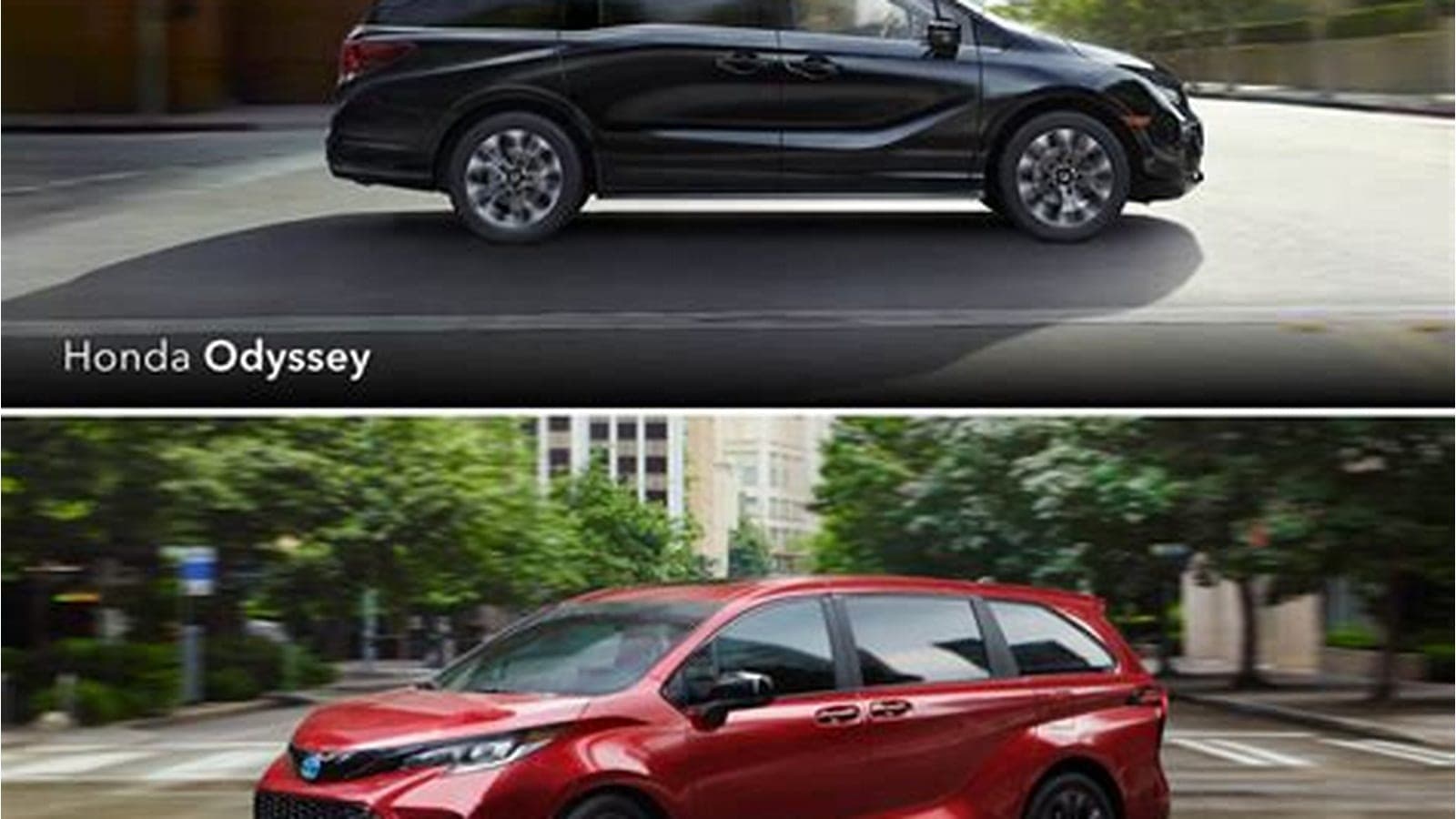
If you're shopping a three-row SUV for family hauling, you owe yourself an honest look at the best minivan to buy, because the math is ruthless. The Toyota Sienna and Chrysler Pacifica routinely offer more interior cubic footage, lower step-in height for car-seat installation, and lower transaction prices than equivalent three-row crossovers. According to Consumer Reports, the Toyota Sienna Hybrid achieved an owner satisfaction score in the top quarter of all family vehicles, with EPA-estimated fuel economy of 36 MPG combined — a figure that no three-row SUV in its price range comes close to matching.
The only honest argument for a three-row SUV over a minivan is towing capacity, off-road clearance, or social preference — which is a real factor, not one to be sneered at, but you should know what you're paying for it. A loaded Kia Telluride SX Prestige carries an MSRP north of $52,000. A loaded Toyota Sienna Platinum is less. You are paying a significant premium for the higher beltline.
Extended Warranties and Service Contracts on Used SUVs
The F&I office is where the margin lives. A dealer-sold vehicle service contract on a used SUV often costs $2,500 to $4,500 — figures that reflect the Consumer Financial Protection Bureau's findings on add-on product pricing — and may be financed into your loan, adding interest on top of a product you may not fully use. The better play: buy the vehicle, then shop third-party service contracts from companies like Endurance, CARCHEX, or the manufacturer's own after-market program, and compare coverage terms line by line.
For high-volume SUVs like the RAV4, independent repair data suggests that powertrain failures before 150,000 miles are uncommon enough that a comprehensive extended warranty may not pencil out for buyers who plan to sell before 80,000 miles. For a used Explorer or Traverse purchased past 60,000 miles, the calculation can reverse quickly. Run the expected annual repair cost against the contract premium before deciding.
The Buying Decision Framework: What to Prioritize in Order
Decision paralysis is real when there are fourteen crossovers in your price range. Use this sequence to cut the list in half before you test-drive anything.
- Set your true monthly budget first — including insurance, fuel, registration, and maintenance — not just the payment a dealer quotes. The rule of thumb from financial planners is total vehicle costs under 15 percent of monthly take-home pay.
- Decide whether you're buying new, CPO, or used private-party. Each channel has different title-brand risks, warranty implications, and pricing norms. Private-party used requires the most due diligence, including a vehicle history report and a pre-purchase inspection by an independent mechanic.
- Narrow by segment: compact, midsize two-row, or midsize three-row. Anything above your actual need is money left on the table — or in the dealer's pocket.
- Run the lease-vs-finance comparison with real rate quotes from at least two lenders (your bank or credit union plus the manufacturer's captive finance arm) before you walk into a dealership.
- Check reliability ratings from J.D. Power VDS and Consumer Reports for the specific model year you're targeting — not the nameplate's reputation from five years ago.
- Verify title and history on any used finalist. A clean report doesn't guarantee a clean car, but a flagged one should kill the deal immediately.
- Negotiate out-of-the-door price, not monthly payment. Dealers can make a bad deal look affordable by stretching the term to 72 or 84 months.
What to do next
Run a vehicle history report on the specific VIN of every used SUV finalist before you negotiate price or accept a test drive — it takes five minutes and can save you from a salvage-title surprise that no amount of test-drive enthusiasm will fix.
CarCheckerVIN Editorial Team
In-house automotive research team
The CarCheckerVIN editorial team combines decades of automotive industry, dealer, and journalism experience to produce trustworthy buying, selling, and ownership guidance backed by NMVTIS, NICB, and manufacturer data.
Frequently asked questions
- What is the #1 selling SUV?
- The Toyota RAV4 is the consistent #1 selling SUV in the United States, routinely surpassing 400,000 units in annual sales according to manufacturer-reported figures compiled by Good Car Bad Car. Its combination of hybrid availability, reliability ratings, and strong resale value keeps it at the top. High sales volume also means abundant inventory in the used and certified pre-owned market, which benefits buyers.
- What are the 5 worst SUVs to avoid?
- Models with persistent reliability problems include certain model years of the Ford Explorer (transmission and coolant issues), Jeep Compass (powertrain concerns flagged by Consumer Reports), Chevrolet Traverse (electronics reliability below segment average per J.D. Power VDS), Nissan Murano (CVT longevity concerns), and Volkswagen Tiguan (repair cost and reliability scores in the lower tier of its class). Always verify specific model-year data before ruling out or selecting any vehicle.
- What is the #1 best SUV for the money?
- The Kia Telluride and Toyota RAV4 Hybrid repeatedly top 'value' rankings from Edmunds and Consumer Reports, but 'best for the money' depends on your financing. A Telluride at invoice with favorable APR beats a RAV4 at market adjustment. For used buyers on a tighter budget, a CPO Honda CR-V or RAV4 under 40,000 miles often delivers the strongest combination of warranty coverage, reliability history, and resale protection per dollar spent.
- Which is the most selling SUV?
- Globally, the answer varies by region, but in the United States the Toyota RAV4 holds the top position in unit sales among SUVs. Ford's F-Series trucks outsell it overall, but within the traditional SUV and crossover category, the RAV4 leads. Honda CR-V, Chevrolet Equinox, and Ford Explorer round out the top tier of volume sellers based on annual manufacturer sales disclosures.
Ready to check a VIN?
Run a free VIN check
Decode any vehicle in under 60 seconds.