What Nissan Cars Have CVT Transmission Problems — And What to Do Before You Buy
CVT trouble is real across multiple Nissan models. Before you buy a used Altima, Sentra, or Rogue, know which years are risky, what repairs cost, and whether a Nissan CVT transmission recall covers it.
On this page
- Why Nissan's CVT Became a Recurring Problem
- The Model-by-Model Risk Map: What Nissan Cars Have CVT Transmission Problems
- Nissan CVT Transmission Recall History: What's Official
- The Extended Warranty Question: Coverage vs. Cost
- Pre-Purchase Inspection: What to Check on a CVT Nissan
- Auction-Sourced CVT Nissans: Extra Caution Required
- Weighing the Decision: CVT Risk Cost vs. Price Discount
- Newer Nissan CVTs: Has the Problem Been Solved?
- How to Negotiate Price Based on CVT Risk
You're eyeing a used Nissan — maybe an Altima with reasonable mileage, or a Sentra priced well below the competition — and somewhere in your research the phrase 'CVT problems' keeps surfacing. That's not paranoia. If you're trying to pin down exactly what Nissan cars have CVT transmission problems, the answer is uncomfortably broad: the continuously variable transmission Nissan rolled into mainstream production through the mid-2000s has generated more owner complaints, class-action lawsuits, and NHTSA investigations than almost any other powertrain decision in the brand's recent history. This guide names the specific models and model years, explains the failure patterns in plain terms, and gives you a concrete framework for deciding whether any given Nissan CVT car is worth your money.
The short answer
The most problem-prone Nissan CVT models are the Altima (2013–2018), Sentra (2013–2017), Rogue (2014–2018), Versa (2012–2019), Maxima (2016–2018), and Pathfinder (2013–2016). Pre-purchase, always pull a vehicle history report and confirm any open Nissan CVT transmission recall has been completed.
Why Nissan's CVT Became a Recurring Problem
Nissan bet heavily on Jatco-built CVTs — Jatco being a joint venture majority-owned by Nissan itself — as a fuel-economy and cost-saving tool starting in the early 2000s. The concept is sound: a belt-and-pulley system that varies ratios infinitely avoids the efficiency losses of fixed gear steps. The execution, however, exposed durability gaps. The transmissions ran hot under load, the cooling circuits were undersized for real-world driving, and software calibration often masked developing mechanical stress with throttle hesitation rather than triggering warning lights. Owners noticed shuddering, surging, and what mechanics describe as 'belt slip' — the transmission hunting between ratios instead of holding a steady ratio under acceleration.
According to NHTSA's complaint database, the Nissan CVT has accumulated thousands of individual owner complaints across multiple investigation files spanning more than a decade. The agency opened formal Preliminary Evaluations on CVT-related hesitation and stalling in the Altima, Sentra, and Versa families. What made this uniquely painful for buyers is timing: many failures arrived after the powertrain warranty expired, leaving owners with a five-figure repair bill on a car that might be worth less than the fix.
The Core Failure Modes
Three mechanical patterns dominate CVT complaints: (1) shudder and surging at highway speeds, caused by belt wear and fluid breakdown; (2) delayed engagement when shifting from Park or Reverse, linked to valve-body wear and cooling issues; and (3) catastrophic internal failure — pulley or belt damage — that requires a full transmission replacement rather than a repair. A full replacement at an independent shop typically runs $3,500 to $5,000 according to RepairPal pricing data, and Nissan dealer quotes routinely reach $4,000 to $8,000 depending on the model.
The Model-by-Model Risk Map: What Nissan Cars Have CVT Transmission Problems
Not every Nissan with a CVT is equally risky. The failure rate and severity vary meaningfully by model, model year, and powertrain pairing. High-torque applications — think the Pathfinder's V6 or the Murano — stress the transmission more than a Versa's 1.6-liter. The following breakdown covers the platforms that generated the most documented problems.
- Altima (2013–2018): The highest complaint volume in NHTSA's database for Nissan CVT. The 2.5-liter four-cylinder paired with the JF015E/RE0F11A unit shows shudder, stall, and complete failure often before 100,000 miles. The 2015–2017 model years drew the most criticism.
- Sentra (2013–2017): Shares the same JF015E CVT as the Altima's four-cylinder. Owners frequently report hesitation from a stop, surging at 30–50 mph, and sudden loss of drive. The 2016 model year is particularly well-documented in NHTSA complaints.
- Rogue (2014–2018): A higher-volume seller that exposed CVT durability issues under family-use loads — roof cargo, trailer hitching, and hilly terrain accelerated wear. Consumer Reports flagged transmission reliability as a persistent issue for this generation.
- Versa / Versa Note (2012–2019): The entry-level platform amplified complaints because buyers expected low maintenance costs. The CVT in this application developed shudder and jerking well within normal ownership windows.
- Pathfinder (2013–2016): The V6 application pushed heat stress beyond what the CVT cooling system could manage. Nissan issued a Technical Service Bulletin (TSB NTB13-111) addressing CVT fluid overheating on these trucks.
- Maxima (2016–2018): Less volume than the Altima but similar complaint profiles — hesitation under load and premature wear requiring fluid changes far more frequently than the owner's manual suggested.
- Murano (2015–2017): Owners report the same shudder-and-surge pattern, though failure rates appear somewhat lower than the Altima or Sentra in NHTSA's complaint counts.
Nissan CVT Transmission Recall History: What's Official
The distinction between a recall and a Technical Service Bulletin matters enormously at the point of purchase. A federal recall — issued under the National Highway Traffic Safety Administration's authority, codified in 49 U.S.C. § 30118 — is free to the owner regardless of mileage, must be completed by a dealer, and shows up on NHTSA's recall database. A TSB is a repair instruction for dealers that fixes a known issue but is only free if the vehicle is still under warranty.
Nissan issued a significant recall — NHTSA Campaign Number 20V-198 — covering certain 2018–2019 Nissan Rogue models for a CVT secondary pulley issue that could cause a loss of drive power without warning. That recall covered approximately 394,000 vehicles in the United States according to NHTSA's official recall database. However, most CVT complaints on earlier Altima, Sentra, and Versa models were addressed through TSBs and extended warranty programs rather than mandatory federal recalls. Nissan's customer service extended the powertrain warranty on some CVT-equipped models to 84 months or 84,000 miles through a special coverage program — but the eligibility window for many affected owners has now closed. Always run a VIN check through NHTSA's safercar.gov tool and pull a full vehicle history report to confirm recall completion status before you negotiate.
Class-Action Settlements: What They Mean for a Private Buyer
Multiple class-action lawsuits reached settlements requiring Nissan to reimburse repair costs for qualifying owners. The Ponzio v. Nissan settlement — filed in the U.S. District Court for the District of New Jersey — covered certain Altima, Sentra, Versa, Rogue, and Pathfinder owners and allowed claims for CVT repairs up to $3,000 per incident under defined conditions. If you're buying a used Nissan privately, those settlement claim windows are likely closed for the previous owner, and you — as the new owner — start fresh with whatever warranty, if any, remains.
The Extended Warranty Question: Coverage vs. Cost
This is the section where the buying decision gets real. A CVT replacement on a 2015 Altima at a Nissan dealership can reach $4,500 to $7,200 depending on labor rates in your region, based on RepairPal and Edmunds repair cost data. A third-party extended warranty — sometimes sold as a Vehicle Service Contract under the FTC's Used Car Rule framework — can be structured to cover CVT failure, but the premiums and deductibles vary wildly. A powertrain-level VSC for a high-mileage Altima might cost $1,800 to $3,500 upfront with a $200 deductible per claim from national providers like Endurance or CARCHEX.
The trade-off is straightforward: if the vehicle you're considering has fewer than 60,000 miles and you can negotiate a price that reflects the CVT risk — say, $1,500 to $2,000 below comparable non-CVT competitors — and then add a powertrain VSC, you may come out ahead even if the CVT eventually fails. If the car has 90,000 or more miles, the calculus tilts sharply negative. CVT failures most commonly present between 80,000 and 120,000 miles in high-complaint models, and many VSC providers exclude pre-existing conditions or use waiting periods of 30 days and 1,000 miles before coverage activates.
Dealer vs. Private Sale: Who Bears the Risk
Under the FTC's Used Car Rule (16 C.F.R. Part 455), licensed dealers must post a Buyers Guide disclosing whether a vehicle is sold 'As Is' or with a dealer warranty. An 'As Is' Buyers Guide means you absorb every repair cost the moment you drive off the lot. Private-party sales carry no such disclosure requirement — and no dealer warranty option. A BHPH (buy-here, pay-here) lot may offer an in-house 30-day warranty that sounds helpful but rarely covers a catastrophic CVT failure requiring full replacement.
Pre-Purchase Inspection: What to Check on a CVT Nissan
A thorough pre-purchase inspection by an independent mechanic — not a dealer affiliated with the sale — is non-negotiable on any Nissan CVT vehicle. The inspection should include a transmission fluid condition check: Nissan CVT fluid (NS-3 or NS-2 specification) should be pinkish-red and nearly odorless. Dark brown fluid with a burnt smell indicates heat stress and deferred maintenance. Ask for a scan of transmission-specific fault codes, not just the powertrain OBD-II codes a basic code reader pulls.
During the test drive, accelerate firmly from a stop to highway speed and hold a steady 65–70 mph for several minutes. Listen for shudder — a rhythmic vibration that often appears between 40 and 60 mph — and watch for any hesitation or 'rubber band' lag when you press the accelerator from a rolling stop. These are early CVT warning signs that a seller may have masked by doing a fresh fluid change right before listing the car. An independent pre-purchase inspection typically costs $100 to $200 at a reputable shop, and that fee is the best $150 you'll spend in any used-car transaction.
Fluid Change History: The Single Biggest Red Flag
Nissan's owner's manuals for many CVT models listed the CVT fluid as a 'lifetime fill' requiring no scheduled changes. That guidance proved catastrophically wrong in real-world use — many mechanics now recommend changing CVT fluid every 30,000 to 40,000 miles in high-stress applications. A vehicle history report showing no recorded fluid service combined with high mileage is a concrete reason to walk away, or at minimum to demand a significant price reduction that covers the cost of a fluid service and a professional inspection before any further negotiation.
Auction-Sourced CVT Nissans: Extra Caution Required
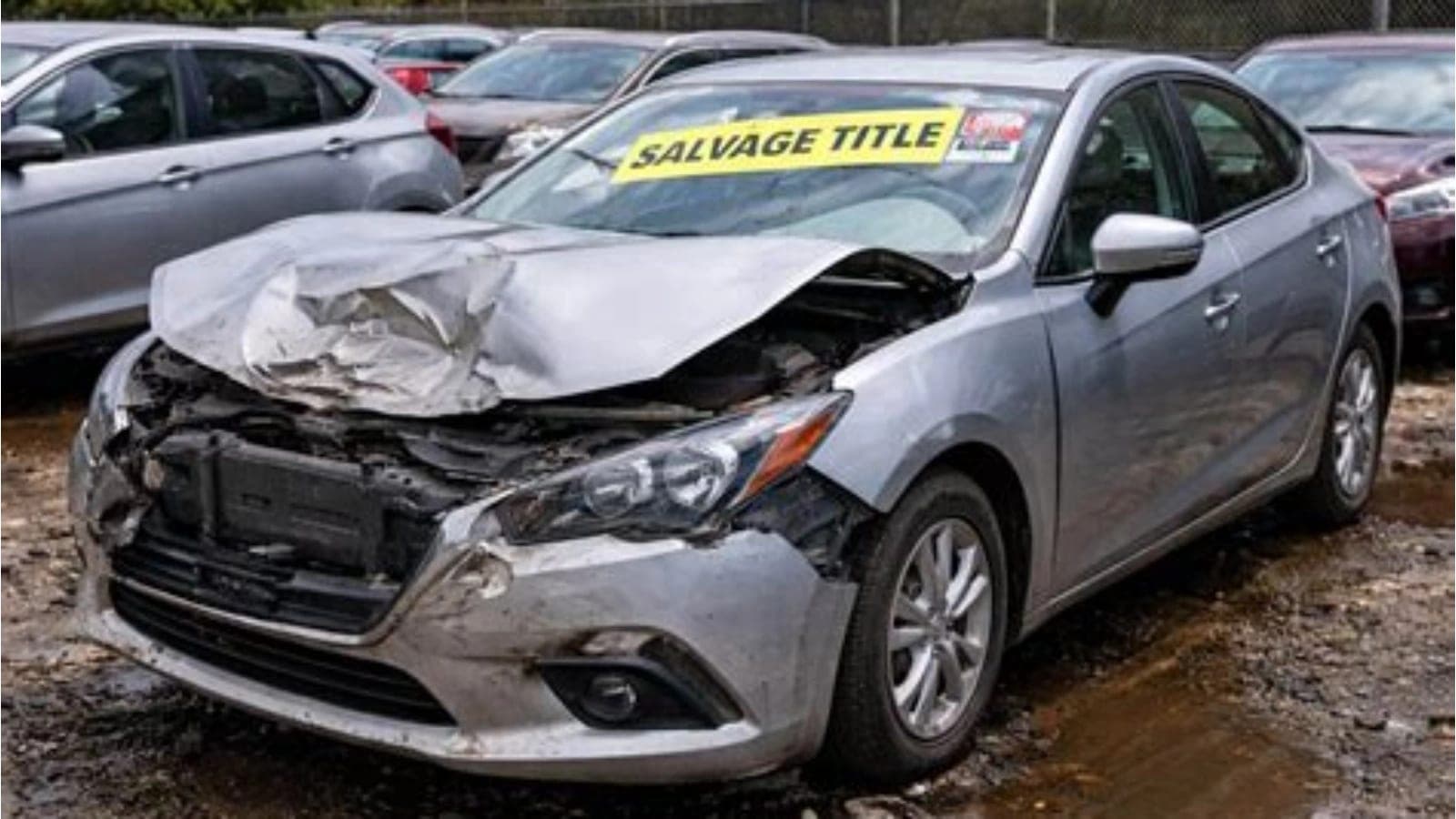
Copart and IAA list thousands of Nissan CVT vehicles annually — some clean-title, many branded. Insurance auction vehicles in particular carry elevated CVT risk because flood damage (a common source of salvage titles on these platforms) destroys CVT electronics and fluid chemistry quickly and invisibly. An NMVTIS title brand check — NMVTIS being the federally mandated National Motor Vehicle Title Information System operated under 49 U.S.C. § 30502 — is your first filter. A salvage or flood brand on a CVT Nissan is an automatic disqualifier for most buyers.
Even clean-title auction Nissans can arrive with CVT damage that doesn't surface until the vehicle is driven under load. Auction platforms typically offer a window of 15 to 30 minutes for an on-site inspection, and many remote bidders skip this entirely. If you're buying through Copart or IAA, budget for an independent inspector to evaluate the vehicle before you bid — services like AutoCheckBid or local mobile mechanics who work auction sites charge $75 to $150 for a walk-around report.
Weighing the Decision: CVT Risk Cost vs. Price Discount
Let's put the numbers together for a concrete example. A 2015 Nissan Altima 2.5 S with 85,000 miles in average condition is listed at roughly $9,500 on a dealer lot in a mid-size U.S. city — in line with Kelley Blue Book Fair Purchase Price data for that model. A comparable non-CVT sedan — say, a 2015 Honda Accord 2.4 — in similar condition lists closer to $12,500. The Altima's $3,000 price gap feels like a deal.
Run the math: add a $200 pre-purchase inspection, a $2,000 powertrain VSC (with a $200 deductible), and a $150 fluid change with fresh NS-3 fluid. You're now at $11,850 all-in — still below the Accord, but the protection layers are in place. If the CVT does fail, you pay the $200 deductible instead of $5,000. If it doesn't fail in your ownership window, you've spent about $2,350 more than the sticker price for peace of mind. That's a defensible trade-off — provided the VSC provider is financially solvent and the contract language explicitly covers CVT internal components. Read the exclusions section before you sign anything.
When to Walk Away Entirely
Some combinations of risk factors should end the conversation: a CVT Nissan with over 100,000 miles and no documented fluid service history; any auction vehicle with a flood or salvage NMVTIS brand; a seller who refuses a pre-purchase inspection; or a dealer who won't provide the FTC Buyers Guide before you discuss price. None of these situations are negotiable. The used-car market has enough inventory that patience is a legitimate strategy.
High-Mileage CVT Nissans: Know the Cliff
CVT failure in affected Nissan models concentrates heavily in the 80,000–120,000 mile band. If the vehicle you're considering is already in that range without a documented fluid service history, the probability of a costly repair in your ownership window rises sharply — and most VSC providers will impose exclusions or waiting periods that leave you exposed for the first 30 days. Price the car as if a $3,500 CVT repair is coming, and only proceed if that math still works.
Newer Nissan CVTs: Has the Problem Been Solved?
Nissan has revised its CVT hardware and software multiple times since the peak complaint years of 2013–2018. The Jatco JF018E units used in more recent Altima and Rogue models include redesigned cooling circuits and updated belt materials. Consumer Reports' reliability surveys for 2020 and newer Altima and Rogue models show improved transmission scores compared to the 2015–2018 generation — though 'improved' doesn't mean 'problem-free.' Complaints have diminished in volume but not disappeared entirely.
If you're open to a newer model year, the 2020-and-later Altima and Rogue represent meaningfully lower CVT risk than the 2013–2018 generation. The Versa's updated CVT in 2020+ models has also drawn fewer complaints. That said, the used-car price premium for a 2020–2022 model over a 2015–2017 equivalent is substantial — typically $5,000 to $8,000 in current market conditions according to Kelley Blue Book historical transaction data — and for many buyers in the sub-$15,000 segment, that premium takes the newer model out of reach.
Alternative Models Worth Considering
If CVT risk is a dealbreaker, the used-car market offers strong alternatives at similar price points. The Toyota Corolla and Honda Civic in similar vintage years use conventional automatic or CVT transmissions with substantially better long-term reliability records according to J.D. Power's Vehicle Dependability Study. The Mazda3 uses a traditional torque-converter automatic in most trims and consistently scores near the top of compact reliability rankings. These alternatives are worth a VIN check and vehicle history report of their own — no used car is risk-free — but the CVT failure exposure is categorically lower.
How to Negotiate Price Based on CVT Risk
CVT risk is documented, quantifiable, and therefore negotiable. Walk into the conversation with the NHTSA complaint count for the specific model and year printed out. Reference the class-action settlement history — the Ponzio v. Nissan case in the District of New Jersey is public record. Ask the dealer to confirm the open recall status and provide proof that any Nissan CVT transmission recall has been completed. Each unresolved risk factor you can document is leverage for a price reduction.
- Pull the NHTSA recall and complaint data for the specific VIN before your appointment — this takes five minutes at safercar.gov and costs nothing.
- Get a vehicle history report to check for title brands, accident records, and any CVT-related repair entries that the seller may not volunteer.
- Schedule an independent pre-purchase inspection with a mechanic who has CVT scan tools — budget $100 to $200 and make it a condition of proceeding.
- Request documented CVT fluid service history. If it doesn't exist for a vehicle over 60,000 miles, treat the fluid change as a necessary immediate cost and deduct it from your offer.
- Compare final all-in cost — purchase price plus inspection plus VSC plus immediate service needs — against a non-CVT alternative before you sign the Buyers Guide.
- If buying from a dealer, read the FTC Buyers Guide 'As Is' vs. warranty disclosure before any paperwork discussion. An 'As Is' sale for a high-risk CVT model at full market price is not a fair deal.
What to do next
Run a full vehicle history report on the Nissan you're considering right now — it takes under five minutes and will surface title brands, accident records, and any odometer discrepancies before you invest time in an inspection or negotiation. Pair that with a free NHTSA recall check at safercar.gov to confirm whether any Nissan CVT transmission recall on that specific VIN has been completed or is still open.
CarCheckerVIN Editorial Team
In-house automotive research team
The CarCheckerVIN editorial team combines decades of automotive industry, dealer, and journalism experience to produce trustworthy buying, selling, and ownership guidance backed by NMVTIS, NICB, and manufacturer data.
Frequently asked questions
- Has Nissan fixed the CVT transmission?
- Partly. Nissan revised CVT hardware and software in post-2019 models, and Consumer Reports data shows improved reliability scores for the 2020-and-later Altima and Rogue. However, 'improved' isn't the same as 'solved' — complaints have declined but not vanished. For 2013–2018 models already in service, the fixes are TSB-based corrections and fluid revisions, not a wholesale redesign. Pre-purchase inspection remains essential regardless of model year.
- What are the disadvantages of CVT?
- A CVT eliminates fixed gear ratios, which improves fuel economy but often produces a disconnected, 'rubber band' throttle feel under hard acceleration. Repair costs when failures occur are higher than a conventional automatic because the entire unit typically requires replacement rather than targeted component repair. CVTs are also sensitive to fluid condition and overheating — maintenance neglect accelerates wear faster than in conventional transmissions, and many buyers don't realize that until significant damage has already occurred.
- What are the transmission problems reported in 2016 Nissan Sentra models?
- The 2016 Sentra uses the JF015E CVT and generated NHTSA complaints centered on three issues: hesitation or jerking from a stop, shuddering between 40 and 55 mph under steady acceleration, and sudden loss of drive power — the car revs but doesn't move. Several owners reported failures before 80,000 miles. Nissan issued TSBs addressing software calibration and fluid specification, but many owners found the problems returned after temporary improvement.
- Was there a recall on the transmissions of the 2015 Nissan Sentra?
- No federal NHTSA safety recall specifically targeted the 2015 Sentra's CVT. Nissan addressed complaints through Technical Service Bulletins and an extended powertrain warranty program covering CVT repairs on some models up to 84 months or 84,000 miles — whichever came first. That extended coverage window has expired for most 2015 Sentras now in circulation. Always verify current recall status for any specific VIN at NHTSA's safercar.gov before purchasing.
Ready to check a VIN?
Run a free VIN check
Decode any vehicle in under 60 seconds.