How to Find OEM Parts by VIN (Without Getting the Wrong Ones)
Ordering OEM parts by VIN is the surest way to get exact-fit components — but only if you know how the system actually works. Here's the real-world process.
Check the car you're reading about
Free VIN decode and recall check
Factory specs and open NHTSA recalls in seconds. No sign-up.
On this page· 7
You're staring at a parts counter — online or in person — and the catalog shows three different versions of the same brake caliper for your 2018 F-150. One fits the Heavy Duty Payload Package, one fits the standard model, and a third is for the Raptor. Your truck has the tow package but not the Heavy Duty upgrade. Or does it? You bought it used, and the window sticker is long gone. This is exactly the moment where ordering OEM parts by VIN stops being optional and becomes the only reliable move.
60-second answer
Your 17-digit VIN encodes your vehicle's exact build specifications — engine, transmission, trim, and factory options. Plug it into the manufacturer's OEM catalog (or a dealer's parts counter) to narrow every part number down to the ones that actually fit your specific build, eliminating guesswork entirely.
Why Year, Make, and Model Aren't Enough
Most aftermarket parts sites filter by year, make, model, and maybe trim. That works fine for universal items like wiper blades or cabin air filters. It falls apart for anything tied to a specific factory configuration — suspension components, engine sensors, body panels with integrated tech, wiring harnesses. A single model year of the Toyota Camry, for example, can have dozens of sub-configurations depending on the powertrain, option packages, and production-date changes. The VIN is the decoder ring that cuts through all of that ambiguity.
Positions 4 through 8 of your VIN carry the Vehicle Descriptor Section, which encodes engine type, body style, restraint system, and GVWR. Position 10 is the model year. Position 11 is the assembly plant. But the real magic happens when a manufacturer's internal system reads those characters together and cross-references them against the original build sheet — the exact list of every component installed at the factory.
Where to Look Up OEM Parts by VIN
Several paths lead to the correct OEM part number. Some are free; some cost money. All of them are better than guessing.
- Manufacturer dealer parts sites — Ford Parts (parts.ford.com), GM Parts Direct, Toyota Parts Deal, and similar OEM-affiliated sites let you enter your VIN and pull factory diagrams. Ford parts VIN lookup is especially well-developed, showing exploded diagrams for every assembly on the vehicle.
- Dealership parts counters — Any franchised dealer can run your VIN through their OEM catalog VIN tool (Ford uses Microcat/PARTSplus, GM uses EPC, Toyota uses their Electronic Parts Catalog). They'll identify the exact part number in seconds.
- Third-party OEM catalog tools — Sites like OEMPartSource, RealoOEM (popular for BMW), and PartsGateway aggregate manufacturer catalog data and let you search by VIN or by assembly diagram.
- Independent repair shops with OEM subscriptions — Many well-equipped independents subscribe to OE catalog databases. If your regular mechanic has this access, they can look up the correct part number before ordering.
Step-by-Step: Getting the Right Part Number
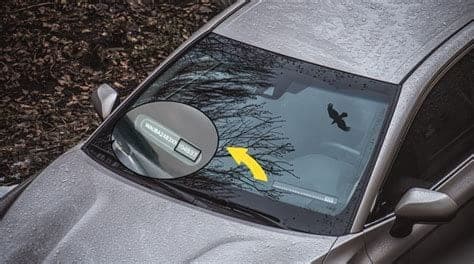
- Locate your VIN — it's on the driver's side dashboard (visible through the windshield), the driver's door jamb sticker, your registration, or your insurance card. If you bought the car used and want to verify the VIN hasn't been tampered with, running a VIN check through a service like CarCheckerVIN's vin-check page confirms the vehicle's identity and history first.
- Go to the manufacturer's parts site or call the dealer — enter the full 17-digit VIN. The system will pull your vehicle's build data and restrict the catalog to parts that match your exact configuration.
- Navigate to the correct assembly group — OEM catalogs organize parts by system (engine, brakes, electrical, body). Use the exploded diagram view when available — it shows every bolt, gasket, and clip in context.
- Write down the OEM part number — this is a manufacturer-specific string (e.g., Ford part numbers follow a format like FL3Z-2001-A). With this number in hand, you can price-shop across dealers, OEM parts websites, or even find the aftermarket equivalent if you prefer.
- Cross-check superseded numbers — manufacturers occasionally update or supersede part numbers. The dealer catalog usually flags this automatically, but ask if the part has been replaced by a newer revision.
Common Mistakes That Lead to Wrong Parts
Even with a VIN lookup, people still get burned. Here's what goes wrong — and how to avoid it.
Previous owner modifications are the biggest trap. If someone swapped in a different engine, changed the suspension, or replaced a body panel with one from a higher trim, the VIN-based catalog won't reflect those changes. The VIN tells you what left the factory, not what's on the car today. Before ordering parts for a used vehicle, especially one with a salvage or rebuilt title, verify what's actually installed. A thorough parts lookup VIN process should always be paired with a visual inspection of the component you're replacing.
Watch for mid-year production changes
Manufacturers sometimes change suppliers or part specs partway through a model year. A 2019 Silverado built in October 2018 might use a different headlight assembly than one built in April 2019 — same VIN pattern, different part. The OEM catalog should flag this based on your production date, but always confirm the production date on your door jamb sticker if the catalog asks for it.
OEM vs. OE-Equivalent vs. Aftermarket
Once you have the correct OEM part number, you have a choice. Genuine OEM parts come in the manufacturer's branded box and carry the highest price — often 40-60% more than aftermarket alternatives. OE-equivalent parts are made by the same supplier that builds the part for the factory (companies like Denso, Bosch, Aisin, or Continental) but sold under the supplier's own brand at a lower price. Aftermarket parts are built by third-party manufacturers to fit the same application.
For safety-critical components — airbag sensors, brake hardware, steering parts — many experienced mechanics and editors recommend sticking with OEM or OE-equivalent. For wear items like brake pads, filters, and spark plugs, quality aftermarket brands often perform identically. The key is that you start with the correct OEM number. That number is the Rosetta Stone — it lets you cross-reference to any aftermarket catalog with confidence.
Why Vehicle History Matters for Parts Accuracy
If you're buying parts for a vehicle you recently purchased — or one you're considering buying — the vehicle's history has a direct impact on parts compatibility. A car that's been in a serious collision may have had structural or mechanical components replaced with non-OEM parts. A flood-damaged vehicle might have corroded connectors that don't match the factory wiring diagrams. Running a vehicle history report before you start ordering parts can save you from chasing fitment issues caused by undisclosed repairs.
Services that pull data from NMVTIS, insurance records, and auction histories — like the reports available on our pricing page — can reveal whether a vehicle has a branded title, prior structural damage, or odometer discrepancies. That context helps you understand whether the car's current configuration matches what the VIN says it should be.
Quick Reference: Best Free VIN Parts Tools by Brand
- Ford — parts.ford.com (full VIN decode, diagrams, online ordering)
- GM (Chevrolet, GMC, Buick, Cadillac) — parts.gm.com
- Toyota/Lexus — parts.toyota.com (VIN-filtered catalog with diagrams)
- Honda/Acura — estore.honda.com
- BMW — realoem.com (unofficial but widely trusted for BMW/MINI parts diagrams)
- Mopar (Chrysler, Dodge, Jeep, Ram) — parts.mopar.com
Each of these sites lets you enter a VIN and immediately narrows the catalog to your specific build. Bookmark the one for your brand. It's the single most useful tool for DIY maintenance and repair.
What to do next
Before you order a single part for a used vehicle, run the VIN through a vehicle history check to confirm the car's build matches its current condition. Then take that same VIN to the manufacturer's parts catalog to pull the exact OEM part numbers. Start with a VIN check at CarCheckerVIN — it takes less than a minute and can prevent hours of fitment headaches.
About the author
CarCheckerVIN Editorial Team
In-house automotive research team
The CarCheckerVIN editorial team combines decades of automotive industry, dealer, and journalism experience to produce trustworthy buying, selling, and ownership guidance backed by NMVTIS, NICB, and manufacturer data.
Keep reading
TPMS Sensor Replacement Cost: What You'll Really Pay
Your TPMS light just won't quit. Before you pay a dealer $250 per sensor, here's what every option actually costs — and when a $15 fix might be all you need.
Sep 28, 2026 · 10 min read
Alternator Replacement Cost: What You'll Actually Pay
Your alternator is dying and you need a number. Here's what alternator replacement actually costs by vehicle type, where to save, and when the repair bill should change your plans for the car.
Sep 28, 2026 · 10 min read
Brake Pad Replacement Cost: What You'll Actually Pay
Brake pad replacement cost varies widely by vehicle and shop. Here's what you'll actually pay per axle, when you can skip rotors, and how to avoid overpaying at chains or dealerships.
Sep 28, 2026 · 9 min read