Paint Code by VIN: How to Find Your Car's Exact OEM Color for Every Brand
Your VIN alone won't always reveal your exact paint code, but it gets you close. Here's how to find the OEM color for every major brand—and why it matters more than most owners realize.
Check the car you're reading about
Free VIN decode and recall check
Factory specs and open NHTSA recalls in seconds. No sign-up.
On this page· 7
- Why the VIN Alone Isn't Always Enough
- Where Every Major Brand Hides the Paint Code
- Using a VIN Decode to Confirm or Cross-Reference
- Touch Up Paint VIN Services: What to Trust
- Tri-Coat, Pearl, and Metallic: When the Code Alone Isn't Enough
- A Step-by-Step Method That Works Every Time
- Why Accuracy Matters Beyond Cosmetics
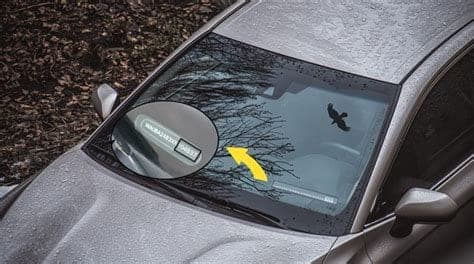
Anyone who has ever stood in the touch-up paint aisle at an auto parts store, staring at a wall of tiny bottles with names like "Magnetic Gray Metallic" and "Lunar Silver," knows the frustration: one shade off and the repair looks worse than the chip it was supposed to fix. The root of the problem is deceptively simple—most car owners do not know their vehicle's exact OEM paint code, and they assume a paint code VIN lookup will instantly produce it. The reality, as with most things in the automotive world, is more nuanced, more brand-specific, and occasionally more maddening than that assumption suggests.
60-second answer
Your VIN can narrow down possible paint colors through manufacturer databases and dealer parts systems, but the fastest, most reliable way to get your exact car paint color code is to find the physical paint code sticker or plate on the vehicle itself—its location varies by brand.
Why the VIN Alone Isn't Always Enough
A Vehicle Identification Number encodes a great deal about a car—its manufacturer, country of origin, model year, engine type, assembly plant, and production sequence. What it does not always encode directly is the paint color. Some manufacturers, particularly European ones like BMW and Mercedes-Benz, embed exterior color information in what's called the "option code" string tied to the VIN in their internal production databases, but that data is not part of the 17-character VIN itself. When a dealer runs your VIN through their OEM parts system—BMW's ETK, Toyota's TIS, GM's Global Connect—the system pulls the build sheet, which does list the paint code. So technically a VIN-based lookup works, but only because the VIN is a key to a separate database, not because the color is baked into those 17 digits.
This distinction matters because third-party paint code VIN lookup tools on the internet vary wildly in accuracy. Some pull from comprehensive OEM datasets; others rely on crowd-sourced data that may associate the wrong code with a given VIN. A 2019 survey by paint supplier PPG Industries found that color-match complaints remain one of the top three issues reported by body shops, and a meaningful share of those mismatches originate from incorrect code identification before the paint is even mixed.
Where Every Major Brand Hides the Paint Code
The most foolproof method is still the low-tech one: find the manufacturer's paint code label on the car. Every vehicle sold in the United States carries one, but the location is far from standardized. Some brands label it clearly as "Color" or "EXT COL"; others bury it in a string of production codes that requires a decoder ring. Below is a brand-by-brand guide to the most common sticker or plate locations.
- Toyota / Lexus: Driver's side door jamb or B-pillar. Code is typically a three-character alphanumeric (e.g., 1G3 for Magnetic Gray Metallic).
- Honda / Acura: Driver's side door jamb. Look for a label starting with "COLOR" followed by a code like NH-797M.
- Ford / Lincoln: Driver's side B-pillar sticker, often near the bottom. The code appears on the line starting with "EXT PNT" (e.g., J7 for Oxford White).
- GM (Chevrolet, GMC, Buick, Cadillac): Glove box area or driver's door jamb. The code is typically listed on the Service Parts Identification label under "BC/CC" (base coat/clear coat), such as WA8624 for Summit White.
- BMW: Driver's side door jamb or under the hood on the strut tower. Alphanumeric codes like 475 (Black Sapphire Metallic) are common.
- Mercedes-Benz: Driver's side B-pillar or inside the driver's door jamb. The code appears as a three-digit number (e.g., 992 for Selenite Grey).
- Hyundai / Kia / Genesis: Driver's side door jamb. Codes like YAC (Quartz White) are printed on the vehicle specification sticker.
- Subaru: Typically found under the hood on the passenger-side strut tower or on the driver's door jamb (e.g., 61K for Dark Blue Pearl).
- Nissan / Infiniti: Driver's side B-pillar or firewall. Codes appear as alphanumeric strings like KAD (Gun Metallic).
Using a VIN Decode to Confirm or Cross-Reference
Even after locating the sticker, running a VIN check is good practice—particularly on a used vehicle where the car may have been repainted, either after collision repair or to mask flood or hail damage. A vehicle history report can flag prior insurance claims, which often correspond to body work. If a report from a service like those available on our vin-check page shows a front-end collision claim, and the front fender's paint code sticker has been replaced or is suspiciously pristine, that's a red flag worth investigating before buying touch up paint for what you assume is the original color.
Dealers and body shops with OEM database access can also perform a paint code VIN lookup through the manufacturer's portal. At a Chevrolet dealer, for example, a parts technician can pull up the RPO (Regular Production Option) codes from the VIN, and the exterior color RPO—say, GAN for Red Hot—maps directly to the OEM paint code. This service is sometimes free, sometimes not; expect to pay $0 to $25 depending on the dealer and whether they're also selling you the paint.
Touch Up Paint VIN Services: What to Trust
A growing number of websites offer touch up paint VIN lookup services where buyers enter their 17-digit VIN and receive a matched paint pen, bottle, or aerosol. Companies like PaintScratch, AutomotiveTouchup, and Dr. ColorChip operate in this space, and the better ones cross-reference the VIN against OEM databases to identify the exact car paint color code before mixing. The prices typically range from $20 to $50 for a touch-up pen or bottle kit, and $30 to $70 for an aerosol can of OEM-formula paint.
The risk, however, comes from services that guess at the color based on limited VIN data. If a manufacturer offered four shades of white for a given model year, and the service only narrows it to "white," the buyer might receive Blizzard Pearl when they needed Super White—two Toyota codes (070 vs. 040) that look noticeably different in sunlight. Always verify the specific code on your vehicle's label before ordering.
Repainted vehicles can mislead you
If a used car was repainted after a collision, the factory paint code on the door jamb sticker may no longer match the actual paint on the body panels. NICB's VINCheck and a thorough vehicle history report can surface prior damage claims that hint at repainting. On a pre-purchase inspection, a paint depth gauge—available for $20 to $200—can reveal panels with thicker-than-factory coatings, a strong indicator of aftermarket paint.
Tri-Coat, Pearl, and Metallic: When the Code Alone Isn't Enough
Certain OEM finishes—particularly tri-coat pearl and candy colors—require a multi-stage application process that a single paint code doesn't fully describe. Ford's Ruby Red Metallic Tinted Clearcoat (code RR), for instance, involves a base coat, a midcoat tint, and a clearcoat. A body shop that only matches the base color code without applying the correct mid-stage will produce a finish that looks flat and lifeless next to the original panels. When shopping for touch up paint for a tri-coat color, verify that the product includes all necessary stages; reputable suppliers will note this in their product descriptions.
A Step-by-Step Method That Works Every Time
- Open the driver's side door and inspect the door jamb, B-pillar, and any stickers for a color or paint code designation. Photograph it.
- If the label is missing or illegible, check the owner's manual or the glove box for a build sheet—many manufacturers include one at delivery.
- Run your VIN through the manufacturer's online portal or call a dealership parts counter and ask them to look up the exterior color RPO or option code.
- Cross-reference the code you found against a reputable paint supplier's database (PaintScratch, AutomotiveTouchup, or the OEM parts site) to confirm the color name and formula.
- If buying a used vehicle, run a vehicle history report through our vin-check page to see whether prior body work may have altered the exterior color.
Why Accuracy Matters Beyond Cosmetics
Getting the OEM paint code right isn't just a vanity concern—it has financial consequences. Kelley Blue Book and Edmunds both factor paint condition into their used car valuations, and a visibly mismatched repair can knock hundreds of dollars off a trade-in appraisal. Worse, a sloppy repaint can raise suspicion at auction houses like Manheim, where inspectors flag paint inconsistencies as potential indicators of undisclosed damage, which in turn can trigger title-branding inquiries under NMVTIS. For sellers, that means lower bids; for buyers, it means a car that may be harder to resell later.
In the context of insurance claims, the OEM paint code is the standard that insurers use when authorizing repair estimates. If a body shop uses a non-OEM color match and the result is visibly off, the vehicle owner may have grounds to demand a re-do under the terms of the policy—but that fight is far easier to win when the correct code was specified from the start.
What to do next
Find your paint code label right now—photograph it and store the image in your phone. If you're shopping for a used car and want to verify that the exterior paint matches the factory specification, run the VIN through our vin-check page to check for prior collision or insurance claims that may indicate a repaint.
About the author
CarCheckerVIN Editorial Team
In-house automotive research team
The CarCheckerVIN editorial team combines decades of automotive industry, dealer, and journalism experience to produce trustworthy buying, selling, and ownership guidance backed by NMVTIS, NICB, and manufacturer data.
Keep reading
TPMS Sensor Replacement Cost: What You'll Really Pay
Your TPMS light just won't quit. Before you pay a dealer $250 per sensor, here's what every option actually costs — and when a $15 fix might be all you need.
Sep 28, 2026 · 10 min read
Alternator Replacement Cost: What You'll Actually Pay
Your alternator is dying and you need a number. Here's what alternator replacement actually costs by vehicle type, where to save, and when the repair bill should change your plans for the car.
Sep 28, 2026 · 10 min read
Brake Pad Replacement Cost: What You'll Actually Pay
Brake pad replacement cost varies widely by vehicle and shop. Here's what you'll actually pay per axle, when you can skip rotors, and how to avoid overpaying at chains or dealerships.
Sep 28, 2026 · 9 min read